

Roie Natan, 32, originally from Safed in northern Israel, can barely remember what his childhood bed looks like. Since 2019, he’s been living between Asia, Europe and Africa—working from his laptop and traveling nonstop. “I’ve been a digital nomad and remote worker for six years now,” he told Ynet.
“It all started in 2016, when I was 23 and traveled to India for the first time. It changed the course of my life. I experienced something different—complete freedom, endless nature, open-minded people, deep conversations. I met people who showed me it was possible to live differently—without a fixed routine or office job. It really opened up my chakras. I’d always loved traveling, but India made it sink in for real.”
After returning to Israel, Natan completed a coveted university degree and began working in tech. “I worked in the industry for seven years. I loved the job, the challenges, the good salary, but something in me kept yearning for that feeling I had in India—the lightness, the adventure, the freedom. So I started planning how to turn that desire into reality.”
In 2019, Natan decided to take the leap. “I saved up some money, quit my job and bought a one-way ticket to Nepal. That was the point of no return. I told myself: I don’t know exactly where I’m going, but I want to find out what it’s like to live without a permanent address. I flew alone with a backpack, a laptop and one thought in mind—to start my new life. From there, I went on to Southeast Asia: Thailand, Vietnam, Laos, Cambodia—nearly two years of wandering without working at all. Just traveling, a backpack and a travel journal.”
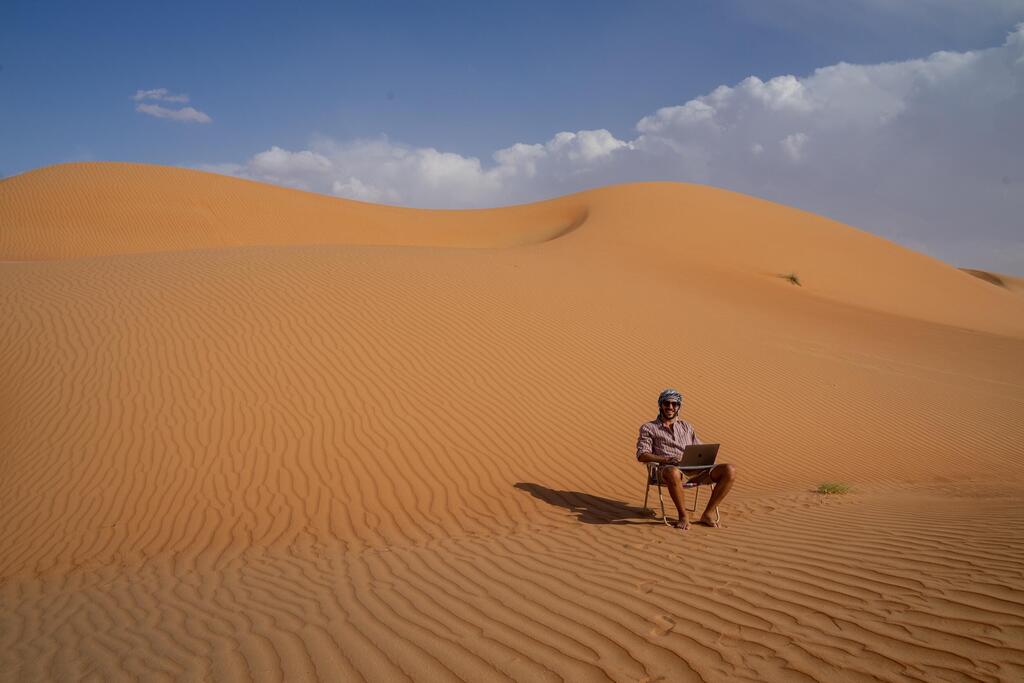
Then the world came to a halt. “In April 2020, I arrived in Taiwan. A few months later, COVID broke out. All the borders closed, and the world froze. I found myself stuck, unable to move forward. I didn’t have a foreign passport, so Europe wasn’t an option either. In the end, I had no choice but to return to Israel. That was a tough moment. It felt like someone hit pause on your life.”
It didn’t take long before Natan was packing again. “The moment I got Portuguese citizenship, the world opened up for me. That was a life-changing moment. Suddenly, I could work and live almost anywhere. So in 2021, I set out again—not just as a backpacker, but as a true digital nomad—with a job, steady income and a flexible schedule. I’ve been living like this ever since, rotating through countries that feel like ‘temporary homes.’ The key is fast internet and good coffee. I don’t need an office—just a laptop and peace of mind.”
In each country, Natan creates his own routine. “I rent a small apartment, work from a café in the morning, go exploring in the afternoon and then return to work or write in the evening.”
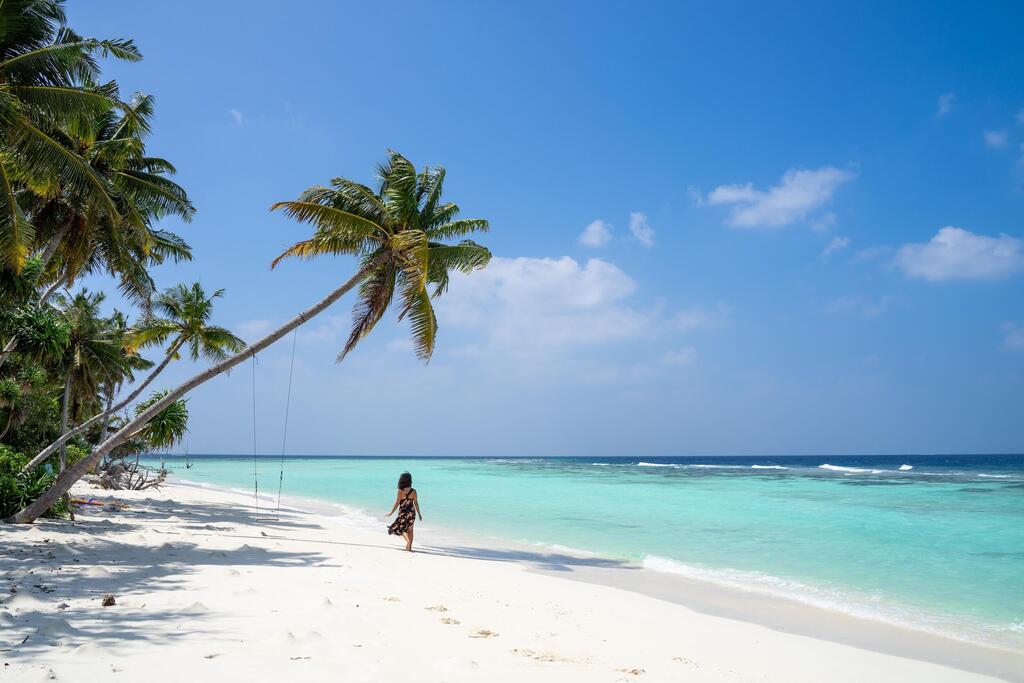
On the white beaches of the Maldives
(Photo: Courtesy of Roie Natan)
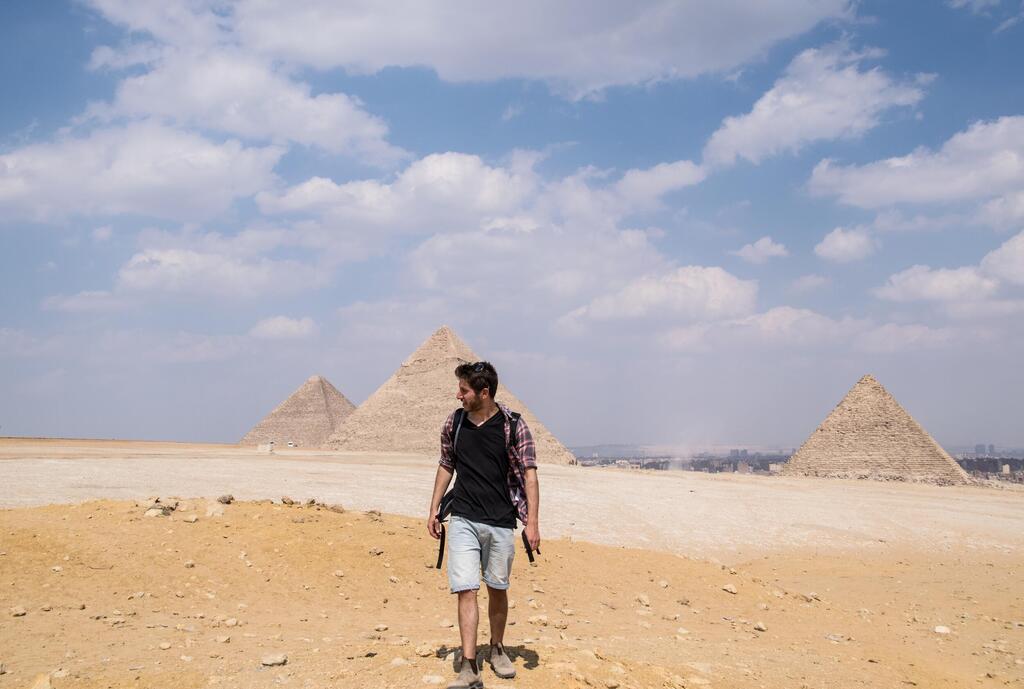
Close to home – at the pyramids in Egypt
(Photo: Courtesy of Roie Natan)
When asked what the hardest part is, he pauses. “Sometimes it’s the longing for family, for friends, for your language. You see everyone moving forward: couples, kids, stability—and you’re living in your own time zone. But on the other hand, I wake up every morning in a different part of the world. I feel alive. I meet people from all cultures, eat strange foods and learn something new about myself every day. So the difficulty melts into the experience.”
And so began the never-ending journey. “From Portugal, I went to the Canary Islands, then to Morocco and Central America, followed by Mauritius, Madagascar, Singapore, Indonesia, Australia, Bahrain, the Philippines, the Maldives, Sri Lanka and Oman. After that, I continued to Uzbekistan, Kazakhstan, Tajikistan and Malaysia.”
Roie pauses, takes a breath, and continues: “Then I reached the Pacific Ocean—Vanuatu, Tonga, Samoa, Fiji. Countries I never imagined I’d ever visit. I returned to Israel for a month, saw family and friends, and then flew out again—this time back to Central America: Cuba, Jamaica, El Salvador, Argentina. From there, I traveled all the way south to the Falkland Islands, which really feels like the edge of the world.”
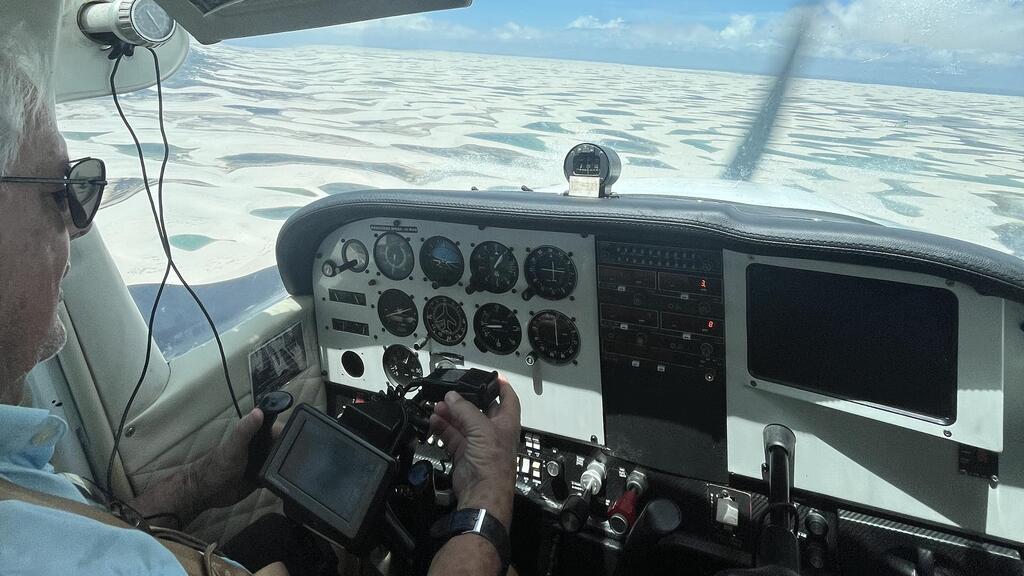
Flight over Lençóis Maranhenses, Brazil
(Photo: Courtesy of Roie Natan)
And the journey hasn’t stopped since. “After the Falklands, I went back to South America—Bolivia, Uruguay, Brazil, Peru. Then I returned to Europe, this time to the eastern part of the continent—Bosnia and Herzegovina, Montenegro, Albania, North Macedonia, Kosovo, Romania and Moldova. Every country has its story, every place its people.”
When asked whether he plans his trips ahead of time, he says no. “I didn’t plan anything, really. At first, I told myself: Let’s give it a try—see if it works with the job, the internet and life. I had a lot of doubts and challenges—sometimes I was alone, sometimes tired, sometimes homesick. But each time I told myself: Just a bit more, one more destination. And so it went—one year, two, three, four, five, six—and now I look back and I’m just happy. It was a decision that changed my life.”
Roie has already traveled to 78 countries—but it was Madagascar, one of the poorest countries in the world, that left the deepest impression. “I went there alone,” he recalls. “Madagascar is often ranked the poorest country in the world, and that’s exactly what makes it so authentic and special. You feel like you’re stepping into a different world—untouched by Western influence. Madagascar is known for its lemurs—endemic animals that don’t exist anywhere else in the world. It’s incredible to see them up close, to take pictures, to feel like you’re meeting an ancestor of all primates. And then there are the baobab trees, a national symbol. There are nine species in the world, and six of them are found only there. It’s a massive, awe-inspiring tree—almost mythical.”
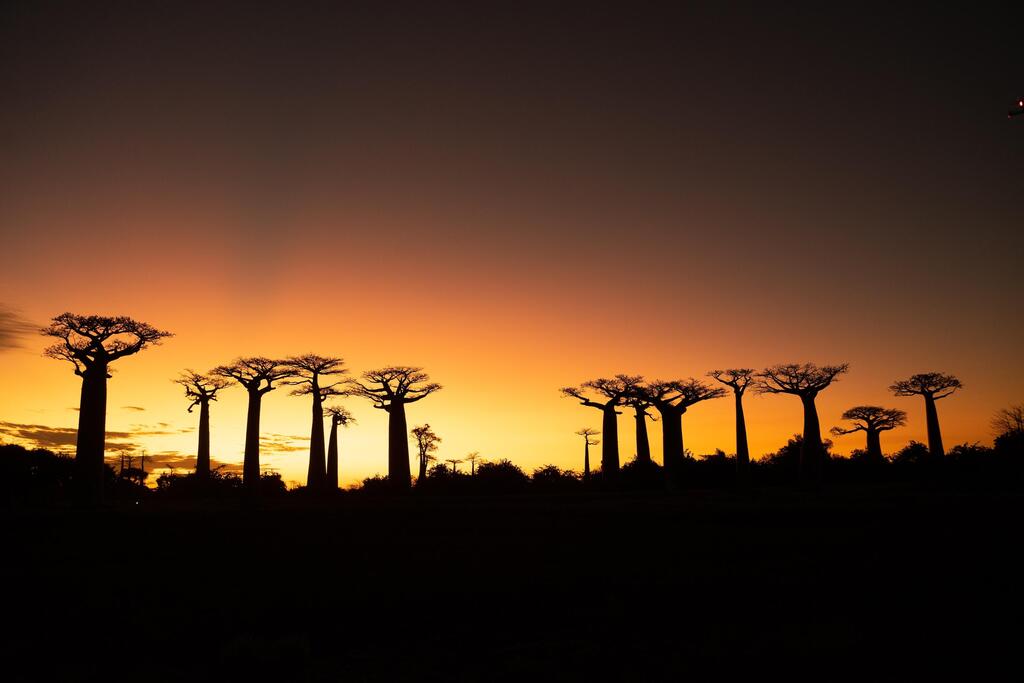
The Avenue of the Baobabs in Madagascar
(Photo: Courtesy of Roie Natan)
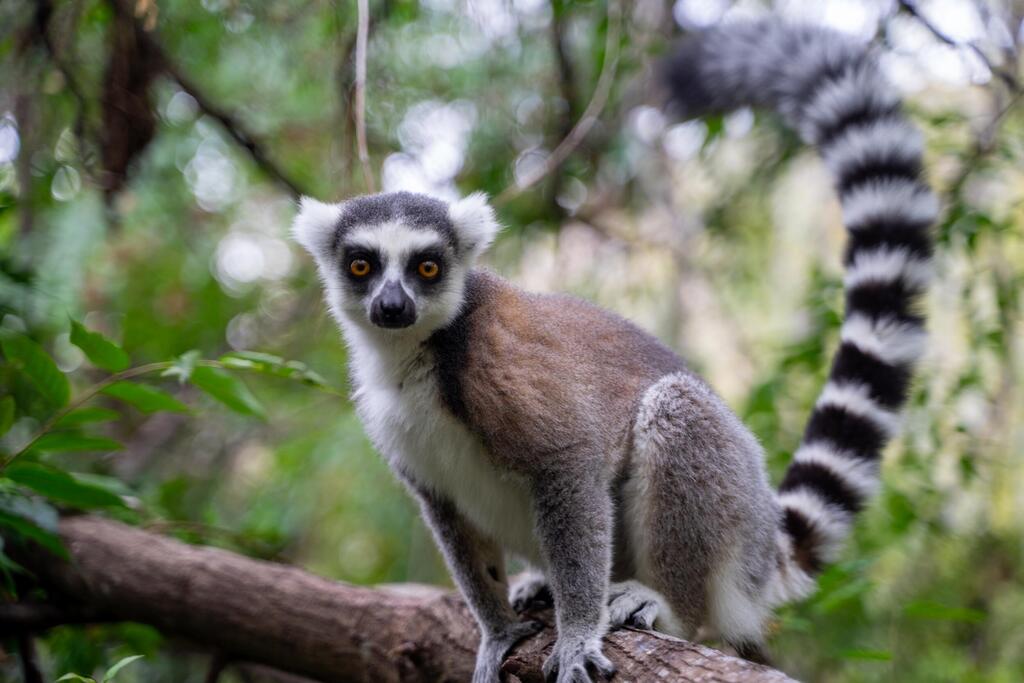
A cute lemur in Madagascar
(Photo: Roie Natan)
But alongside the beauty comes culture shock. “The first thing I encountered there was poverty,” he says frankly. “To get to special places in Madagascar, you need a 4x4 and a driver, because all the roads are broken. You drive and see little kids, six or seven years old, standing by the side of the road with buckets of sand, filling potholes so jeeps won’t get stuck—then they stop you and ask for money or a bottle of water. They work for a coin or a sip. It’s wild to witness. And then you ask yourself—what was I doing when I was six? Where was I? It hits you hard. It’s a completely different world. You realize you come from a place of total privilege. These kids live from one day to the next, and you—with your passport, your job, your choices—suddenly understand how lucky you are.”
Along his journey, Roie encountered a disturbing and deeply unsettling phenomenon—a market for women. “In Madagascar, there’s a culture of cattle herding, and the zebu—a massive species of cow—acts as a kind of social currency representing wealth and status. Men use zebus to trade or pay dowries.”
He describes the shocking scene in matter-of-fact terms that make it even more chilling. “It looks just like a regular market—stalls, noise, people eating and chatting. But instead of vegetables and fruit, there's a kind of matchmaking market. Men offer zebus in exchange for the woman they want to marry. It’s all very direct, very primitive, but for them it’s normal. It’s not a grand ceremony—it’s simply part of life.”
Roie adds, “We tend to forget how good we have it. We have wars and politics, sure—but when you come back from a country where children work on the roads and women are traded for cattle, you realize just how far ahead we are compared to most of the world. Being born in a place like Israel—with freedom, technology and clean water—is a huge privilege. After these journeys, I feel like I’m living a life fit for a king.”
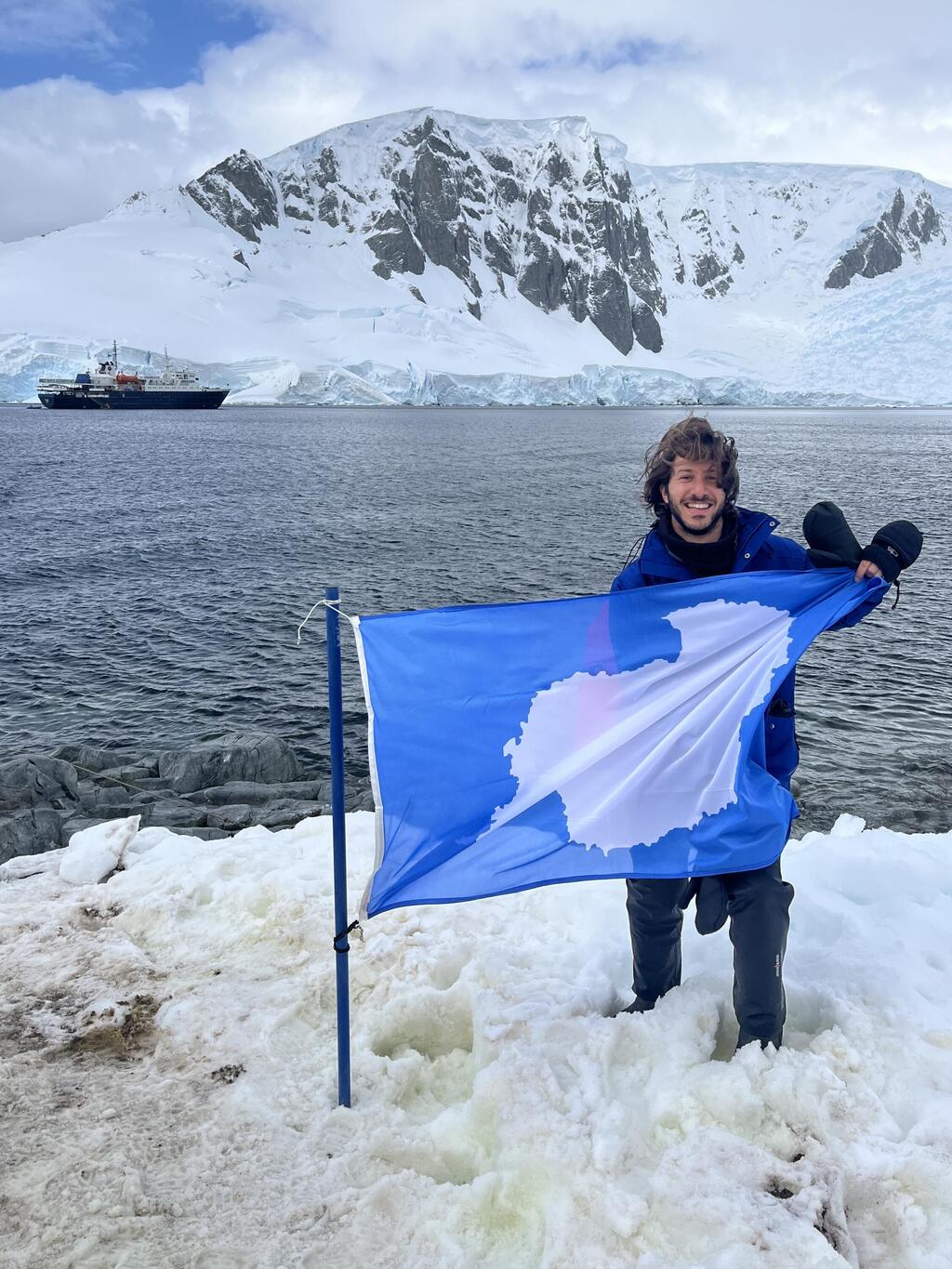
Roie in Antarctica
(Photo: Courtesy of Roie Natan)
Recently, this dedicated digital nomad fulfilled another dream—setting foot on the seventh continent. “Antarctica is truly something else,” he says. “It’s the only continent in the world without permanent residents. You arrive there and feel like you’ve landed on another planet. Everything is white, quiet, scentless—no plants, no trees. Just endless ice, gray seas and a silence that cuts through the air.”
Roie describes the journey like a film production. “It was a three-week voyage from Argentina. We started in the Falkland Islands, then sailed to South Georgia—a place famous for its massive penguin colonies. It’s absolutely surreal. You’re standing right next to groups of 30 or 40 thousand penguin pairs—the whole shore covered in them.”
After several days in South Georgia, the ship continued to the continent itself. “When you reach Antarctica, you disembark at a few landing points. Everyone wears special gear—thick suits, oil-coated fabrics for insulation, heavy boots, gloves.”
So how cold is it, really? Roie smiles. “It was Antarctica’s summer—because in winter it’s simply unreachable. At night, temperatures were between minus five and minus ten degrees Celsius, and during the day around minus five. It’s cold—but bearable. In winter, it drops to minus fifty or sixty, and no one goes there. It’s one of the last places on Earth that’s still almost untouched. It also makes you think about global warming. You see these massive glaciers, hear the cracking as they break into the sea and realize just how fragile everything is.”
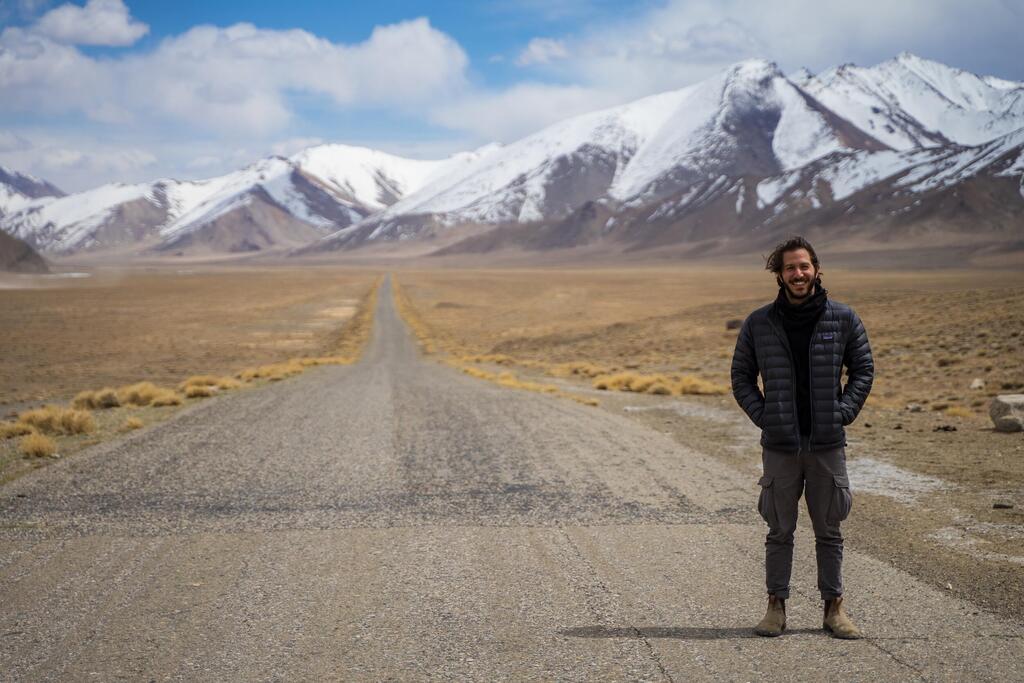
Roadside in Tajikistan
(Photo: Courtesy of Roie Natan)
Though Roie is used to living out of a suitcase, even he was surprised by Central Asia. “Tajikistan is a small and stunning country, part of the historic Silk Road that once connected the Far East with Europe.” He describes the journey there with a near dreamlike tone. “You drive through the snow-covered Pamir Mountains—breathtaking landscapes, small villages, simple people inviting you into their homes for a meal. The part that moved me most was the drive along the Afghan border. Only a narrow river—maybe ten meters wide—separates the two countries. You can actually see the other side—see the people, even the Taliban’s white flag flying across.”
“At one point, I saw a Taliban soldier standing across from me. Instinctively, I raised my hand and waved hello—and he waved back! It was such an absurd moment. Just 30 meters between us. I thought—if he knew I was Israeli, maybe I’d be shot. But in that moment, we were just two human beings, exchanging a gesture of peace from two completely different worlds.”
From there, he continued north. “Mongolia is an entirely different world,” Roie says. “It’s a massive country, almost empty. It has three million people—half live in the capital, Ulaanbaatar, and the rest are nomads. Think of a land many times the size of Israel, with barely any roads, no electricity, just endless skies and open spaces.”
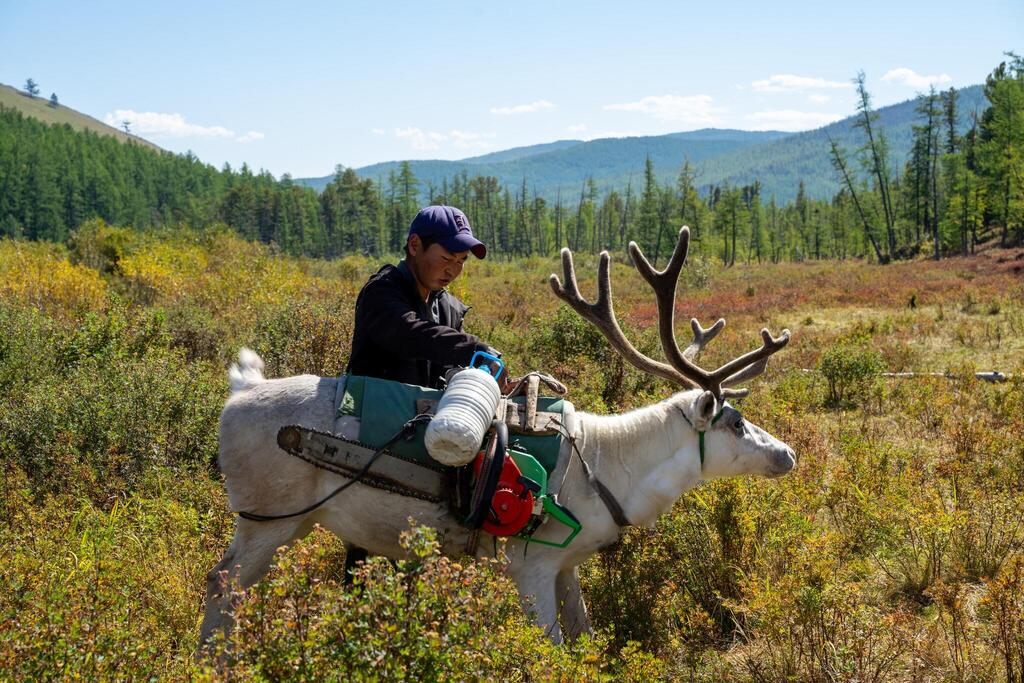
The journey to Mongolia
(Photo: Roie Natan)
He describes the journey there as almost meditative. “Most of the time you’re riding in a jeep—90 percent of the way there’s no road, no signal, just you, the driver, and the landscape. At night, you sleep with local families in yurts—their round tents. It’s an experience unlike anything else.”
Roie celebrated his 30th birthday in one of those yurts. “It was a moment I’ll never forget. We stayed with a lovely Mongolian family, and they gave us a yurt that served as a storage shed. I walked in and saw what they were storing—meat. Dozens of chunks of raw meat hanging from the ceiling. Turns out, that’s their fridge—no electricity, so the meat just hangs in the frozen air. That night, on my birthday, I slept under raw meat. It sounds bizarre, but for them, it’s the most natural thing in the world.”
Despite six years of traveling the world, nothing prepared Roie for what he saw in Bolivia. “It was one of the most powerful—and most difficult—places I’ve ever been,” he says, visibly moved. “In the city of Potosí, there are massive mines. In the past, they were mined for silver and gold. Today, they extract other minerals. But the horrifying part is that children still work there.”
Roie recounts entering the mine like a scene from a film. “I went in about a kilometer into the mountain. It’s completely dark, the air is thick, there’s a metallic smell, water dripping from the ceiling. You hear the drops fall, and the deeper you go, the more your body starts to react. Your mouth tastes like metal, your breathing gets heavy. You’re inhaling gases, dust, toxic materials. There’s no safety equipment—no helmets, no masks. Just people digging into the rock with bare hands.”
Then he adds, quietly: “And among them, you see kids. Fourteen, maybe fifteen years old. There every day, for 14 hours. They come out covered in black soot, with glazed eyes. They earn maybe 20 dollars a day—that’s their whole world. Most won’t live past 40—lung disease, accidents, collapses. You see it with your own eyes, and you can’t stay indifferent. At one point, I felt claustrophobic—real, physical fear. You’re so deep there’s no signal, no light, no air. Just you, the darkness, and these people digging. That’s when you realize how easy your life is in comparison.”
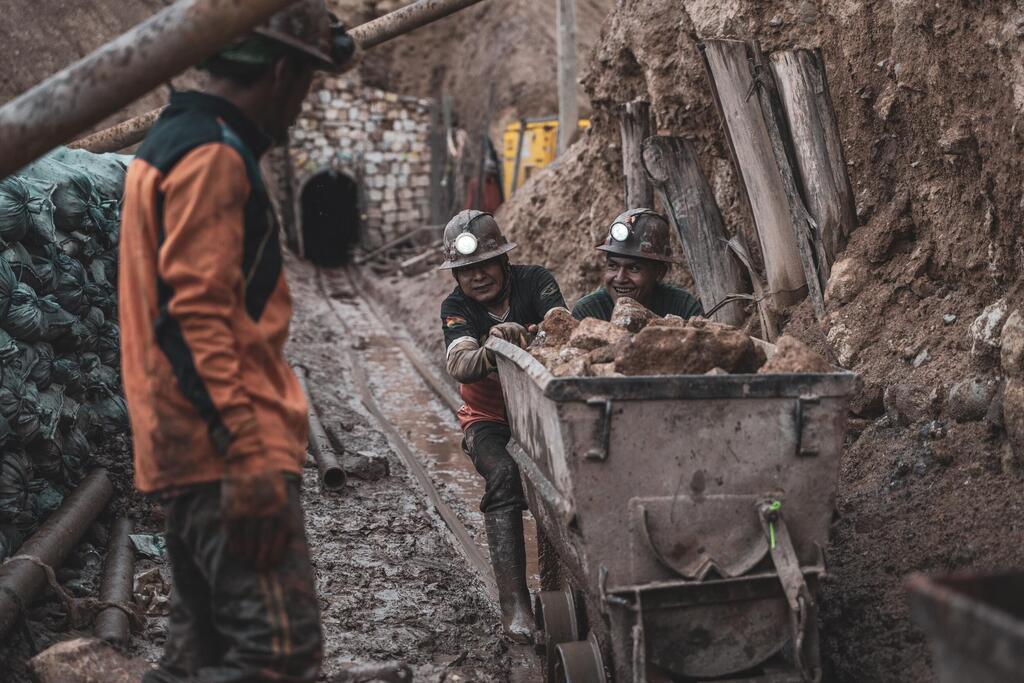
The Potosí mines, Bolivia
(Photo: Roie Natan)
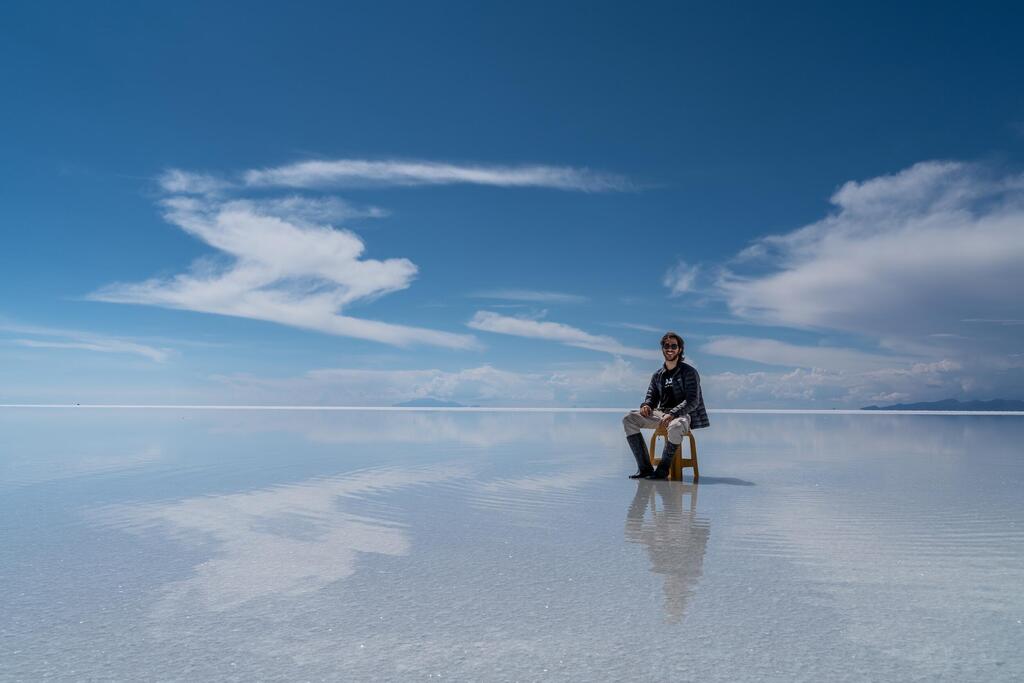
The salt flats in Bolivia
(Photo: Courtesy of Roie Natan)
Roie emphasizes that his choice to speak about the harsh realities of his travels is intentional. “Everyone asks me why I don’t talk more about the views, the sunsets, the beautiful islands,” he says. “I could spend hours telling you about the Northern Lights in Iceland or the beaches in Fiji—but those don’t stay with me. What stays are the people and the places where you come face-to-face with life as it is. Those are the real stories.”
When the conversation shifts to personal topics like love and loneliness, the tough traveler’s voice softens. “In Mauritius, I had a relationship with a local woman. I lived with her for three months, and she had a sweet little girl. I became a father for three months. Suddenly, you’re living a regular life—you come home, there’s a child, dinner, a routine. It was beautiful.”
But like every journey, that one came to an end. “In Mauritius, the visa expires after three months, so I had to leave. That’s one of the hardest parts of this lifestyle—you meet people, make real connections and then you have to say goodbye. Sometimes it’s because of a visa, sometimes someone runs out of money, sometimes life just moves on. It’s hard. You’re always saying goodbye.
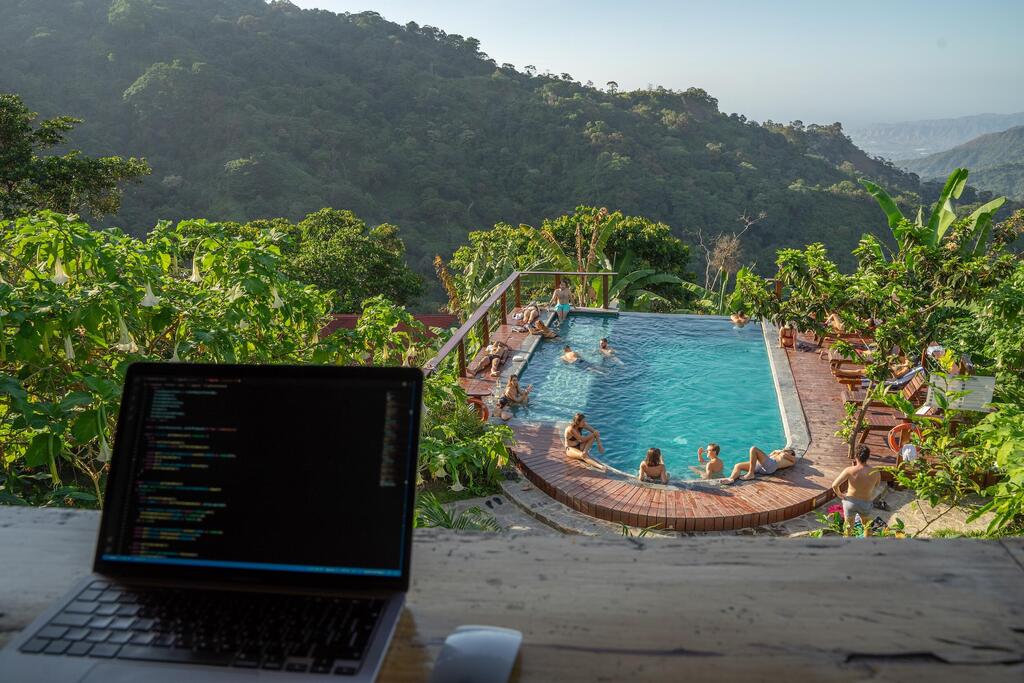
What’s stopping you from working like this?
(Photo: Courtesy of Roie Natan)
“There was a year I traveled with a Colombian woman—we lived together in Medellín and traveled the world. There were also shorter relationships—a little bit of everything. You meet all kinds of people, but you also get used to parting ways. I’m open to love, as long as it can keep moving with me.”
Just when it seems like the conversation is winding down, Roie opens up a story that reignites curiosity. “In northeastern India, there’s a region called the ‘Seven Sisters.’ It’s barely visited by tourists, near the border with Myanmar—and that’s where I met the Apatani tribe.”
He describes the experience with excitement. “The women there have tattoos on their faces and black plugs in their noses. It looks strange at first, but behind it is a wild story. According to tradition, the women were once so beautiful that other tribes would kidnap them to take them as wives. To prevent this, the men in the tribe decided to ‘make them less attractive’—they tattooed their faces and inserted plugs in their nostrils. This way, they’d be recognized as belonging to the tribe, and no one would dare touch them. It was their way of protecting themselves.”
Roie is visibly moved when speaking about the elderly women he met. “Today, that tradition is gone. Only a few hundred elderly women remain—now in their 80s—who are the last in the world with these tattoos. It’s the final chapter of a human culture. As foreign as it may seem to us, this is their pride.”
He takes a long breath and concludes: “That’s what I love most about these journeys—meeting people, traditions and entire worlds that are on the verge of disappearing. You feel like the last witness to something that’s been here for thousands of years. One day, our kids will only see it in photos. And I was there.”