

A vacation without the kids, a night in a hotel that looks like something out of a horror movie, a ghost-hunting expedition or an artificial intelligence assistant handling your office workload while you lounge by the pool. If you thought the travel industry had run out of new ideas, the trends predicted for 2027 suggest otherwise.
Travel giants Booking.com and Expedia have released their forecasts for the coming year, drawing on surveys of tens of thousands of travelers worldwide. Expedia's report also incorporates actual search data, providing a glimpse into how some of these emerging preferences are already influencing travel planning.
Alongside familiar vacation habits, the reports identify some surprisingly unconventional trends. According to Booking.com's survey, 77% of respondents expressed interest in taking a trip that would allow them to do something completely out of character.
So who will we travel with, how long will we stay and what will determine our next destination? Here are the trends that could reshape vacations in 2027.
Leaving the kids at home to become kids again
Many parents dream of taking a vacation without their children. According to Booking.com's survey for 2027, 61% of parents surveyed said they would like to travel without their kids so they could spend more money on themselves.
Meanwhile, Expedia has identified a trend it calls "Un-Adulting," essentially taking a vacation from being a responsible grown-up. Rather than spending their time quietly relaxing, adults increasingly want to revisit the experiences they loved as children, only this time without having to ask anyone's permission.
Some 57% of respondents to Expedia's survey said they would be likely to book an Un-Adulting vacation in 2027. Among Gen Z and millennial travelers, that figure climbed to 71%. The report highlights amusement parks, nostalgic activities, adults-only cruises and experiences that allow grown-ups to indulge their inner child without the responsibilities of everyday adult life.

You don't need children to enjoy a water park
(Photo: shutterstock / Jaroslav Moravcik)
Want to meet a ghost? You're not alone
If lounging on a beach no longer provides enough excitement, perhaps it is time to consider communicating with the dead.
One of the more unusual trends identified by Booking.com is supernatural tourism. According to its survey, 65% of respondents expressed interest in experiences involving ghosts and mysterious phenomena. Nearly half, 48%, said they would be willing to participate in an activity in the hope of contacting someone from beyond the grave.
Expedia's findings point to a similar fascination with dark and mysterious atmospheres, even among travelers who have no intention of summoning spirits.
According to a survey conducted for Expedia Group, 65% of respondents said they would be interested in staying at a Gothic-style hotel, complete with dimly lit corridors, antique furniture, dramatic lighting and an atmosphere reminiscent of a fairy-tale castle or horror film. Among Gen Z and millennials, the figure reached 71%.
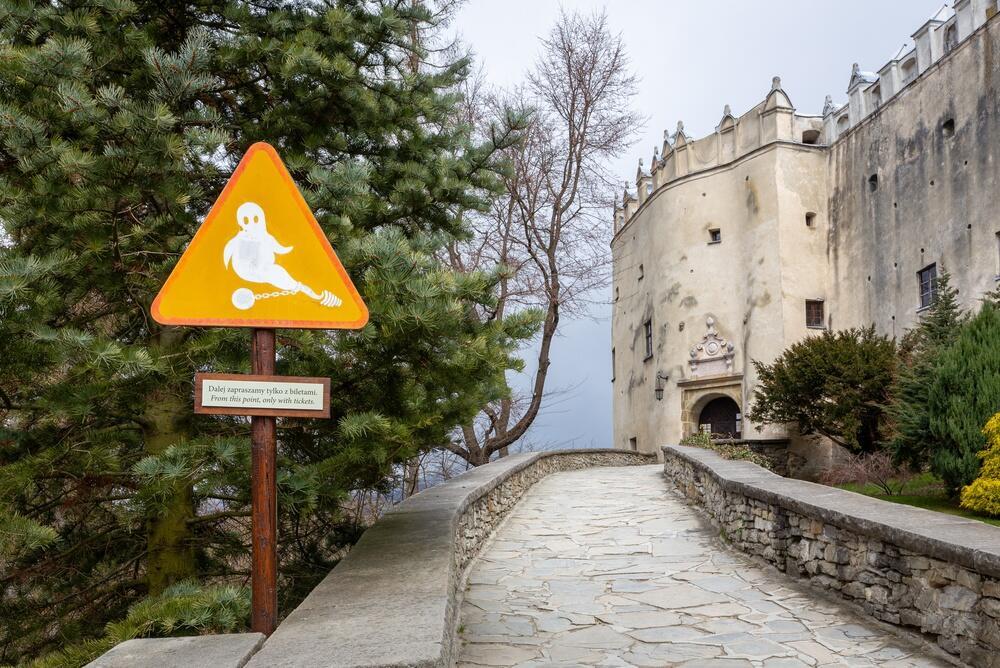
Beware of ghosts: A warning sign along the path to Niedzica Castle in Poland
(Photo: shutterstock / Aleksandra Tokarz Similar)
The fascination is not entirely hypothetical. Hotels.com, part of Expedia Group, reported a 20% year-over-year increase in searches for castle accommodations. Online mentions of Gothic-style tourism also rose by 38%.
The report highlights several hotels that fit the trend, including The Bowery Hotel in New York, L'oscar in London and Hôtel de la Cité in the fortified French city of Carcassonne.
Apparently, travelers who prefer a mysterious old hotel to a bright, modern resort have plenty of company.
Let AI work while you keep vacationing
You know that sinking feeling on the final day of a vacation, when you suddenly remember the mountain of emails waiting at work? According to Booking.com, 58% of respondents said thoughts about returning to work interfere with their enjoyment of the last day of their trip. Another 38% said they bring a laptop on vacation to stay up to date.
The potential solution, unsurprisingly, involves artificial intelligence. Some 64% of respondents expressed interest in an AI agent that would handle work matters while they were away. Such a tool could monitor messages, identify urgent issues, respond to inquiries and manage administrative tasks while employees disconnect from their routines.
But an even more revealing finding concerns what travelers might do with the extra freedom. Some 44% said they would be willing to use AI to catch up on work they had missed in a way that would allow them to enjoy an additional day off without anyone noticing.
Importantly, this reflects respondents' willingness to consider such a scenario, not evidence that large numbers of employees are already secretly extending their vacations with AI.
The rise of the one-night vacation
Who decided a vacation has to last an entire week? Expedia has identified a trend called "Trip Snacking," referring to extremely short getaways, sometimes lasting just one night. Instead of waiting for a lengthy annual vacation, travelers are increasingly interested in taking brief breaks throughout the year.
According to an Expedia Group survey, 79% of respondents plan to book a one-night stay in the coming year. Among Gen Z and millennials, the figure rises to 83%. Unlike some of the other trends, this one is supported by evidence of actual search behavior. Hotels.com recorded an increase of nearly 10% in searches for one-night stays compared with the previous year.

"Trip Snacking"
(Photo: Shutterstock)
The motivations vary. Some 34% of respondents said they wanted a short getaway to celebrate a milestone, 32% were interested in combining an overnight stay with a concert or sporting event, and 28% simply needed a brief break between longer vacations.
For travelers who struggle to take several consecutive days off, or who want a change of scenery without committing to a major expense, the one-night escape offers a convenient alternative.
Where should we go? It depends on our mood
Traditionally, planning a vacation begins with a simple question: Where do we want to go? According to Booking.com's forecast, that question could soon become: How do we want to feel?
Some 81% of respondents said they would choose a vacation destination primarily according to the emotional experience they wanted, rather than the location itself. Another 76% expressed willingness to use a tool that recommends destinations based on their mood.
The willingness to share personal information to personalize travel recommendations differs significantly between generations. Among Gen Z respondents, 76% said they would be prepared to share information from their phones, wearable devices and emotional state with a travel provider to receive more tailored recommendations. Among baby boomers, the figure was just 35%.
These possibilities raise obvious privacy concerns, but the survey suggests that many travelers are at least willing to consider them. Instead of searching for "vacation in Italy" or "hotel in Greece," future travelers might ask a search engine to find them a holiday that will help them relax, lift their spirits or break out of their routine.
Good friends, incompatible budgets
Choosing travel companions is not always about friendship. Sometimes it comes down to the size of their bank accounts.
According to Booking.com, half of respondents said they had reconsidered who to travel with because of differences in spending habits. Some 51% reported experiencing tension or disagreements during a group vacation because of conflicting financial expectations, while 38% admitted they had already excluded people from their travel groups.
The problem is familiar: One traveler wants a five-star hotel while another prefers a budget apartment. Someone insists on fine dining while the rest of the group would rather eat street food. These differences can turn even a vacation with close friends into a source of frustration.
For some travelers, the solution is to choose companions with similar budgets and spending preferences before making any reservations.
A couple's vacation to settle arguments
Many couples go on vacation to escape their problems at home. Others, it seems, would rather bring those problems along in the hope of resolving them somewhere far from their daily routine.

Will your relationship survive your next vacation?
(Photo: Star Stock / shutterstock)
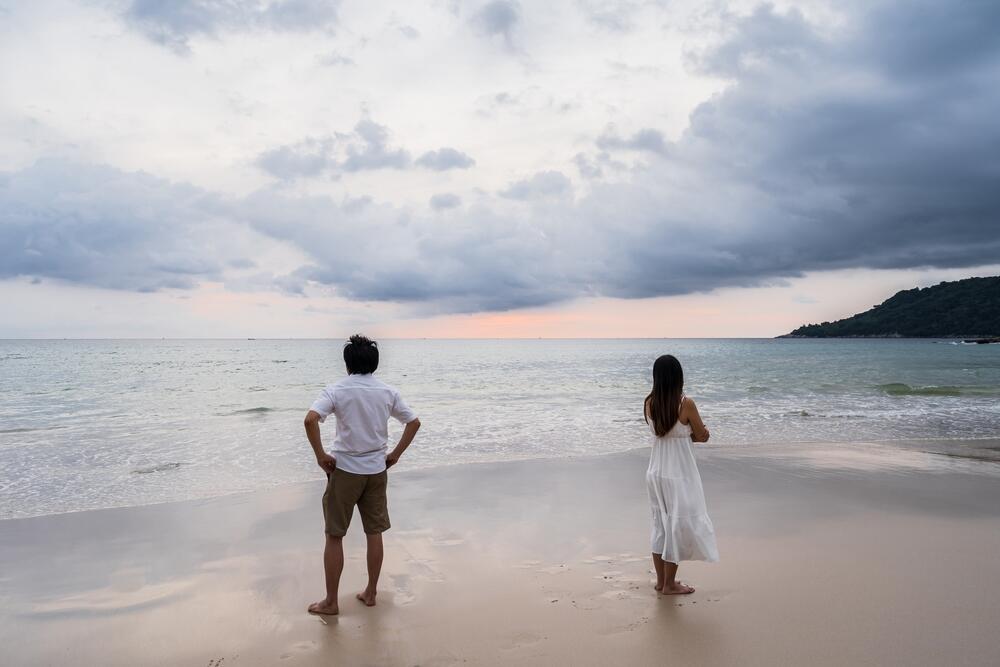
According to Booking.com's report, 47% of respondents would consider taking a vacation specifically to resolve disagreements or arguments with their partner.
The survey also found that 81% believe at least one vacation activity helps them have honest or difficult conversations, while 35% identified walking or hiking together as an activity that makes such discussions easier.
Instead of a candlelit dinner or couples' massage, the ideal romantic getaway might involve long walks and conversations about subjects the couple has struggled to address at home. For these travelers, a change of scenery and uninterrupted time together offer an opportunity to communicate differently.
All-inclusive? Not necessarily
For decades, all-inclusive resorts have sold vacations built around a single price covering meals, drinks and an extensive range of services. But Booking.com's forecast suggests that not everyone wants to keep paying for amenities they have no intention of using.
Some 66% of respondents said they would like a vacation package that allows them to remove services they do not expect to use. Another 58% said their dietary preferences could influence their choice of accommodation or destination.
The report links the trend partly to changing eating habits, reduced alcohol consumption among some travelers and a growing desire for greater control over food options.
The potential result is a shift away from standardized packages toward more flexible vacation offerings. A traveler who does not drink alcohol, for example, may see little reason to pay for unlimited alcoholic beverages. Similarly, guests who rarely use certain hotel facilities might prefer to leave those services out of their package.
A hotel at 35,000 feet
Does a vacation really begin only after the plane lands? According to Booking.com, many travelers want the flight itself to become part of the holiday experience rather than simply a means of reaching their destination.
Some 89% of respondents said they would be willing to take a long-haul flight if they could be assured of arriving refreshed and relaxed. Among the services travelers would like airlines to introduce are food and beverage menus designed to support better sleep, or guidance on caffeine consumption, cited by 33% of respondents. Another 20% expressed interest in lighting designed to reduce jet lag, while 19% wanted skincare kits.

Air travelers are no longer satisfied with just a good entertainment system
(Photo: shutterstock)
One preference could prove more controversial: 24% said they would choose to sit in a designated quiet section of an aircraft where children are not permitted.
For now, these figures mainly reflect passenger expectations and preferences, not commitments by airlines to provide such services. Still, they suggest that some travelers are no longer satisfied with a comfortable seat and a decent entertainment system.
Travel for your hobby, return with new friends
While some vacationers want to escape their everyday routines, others prefer to take their favorite pastimes along with them.
According to a survey conducted by research company OnePoll for Vrbo, Expedia Group's vacation rental platform, 68% of respondents said they would be likely to take a vacation centered on a particular hobby in 2027. Among Gen Z and millennials, the figure reached 79%. The survey included people who had previously stayed in vacation rental properties.
The report highlights gatherings built around board games, photography, stargazing, crafts and antique hunting. The idea is to rent a vacation home with friends or people who share similar interests, then dedicate the trip to the activity everyone enjoys.
Some 41% of respondents said they wanted to pursue their hobby in a new environment, while an equal share wanted to spend time with people who had similar interests.
A related trend is emerging in sports tourism. According to Booking.com, 66% of respondents who had previously traveled alone said participating in a shared physical activity or sporting challenge during a trip had led to a connection or friendship that continued afterward.
The report also points to interest in joining communities of sports enthusiasts while traveling. For these vacationers, running, cycling, participating in a race or joining another group activity is not simply a way to stay fit. It is also an opportunity to meet new people.

Running together: Finding someone to share the journey
(צילום: shutterstock)
The TV show hasn't premiered, but the vacation is already booked
Travel inspired by films and TV series is nothing new. For years, fans have rushed to visit locations featured in their favorite productions. But Expedia has identified an interesting development: Some travelers are no longer waiting for a show or movie to be released before planning their trips.
According to the report, nearly half of respondents had already researched destinations appearing in upcoming films or television series, or booked trips inspired by them. Among Gen Z and millennials, the figure reached 58%.
One example is Netflix's Emily in Paris. According to Expedia Group data, searches related to Monaco surged by more than 120% in the 30 days following the announcement that the show's sixth season would be filmed there, compared with the preceding 30 days. The figures cover searches for accommodation, flights and vacation packages across the group's platforms.
Emily in Paris, Season 2 – Trailer
(Courtesy of Netflix)


The report also identifies Cannes and Saint-Tropez on the French Riviera as destinations that could attract increased interest following the fourth season of The White Lotus, and Wellington, New Zealand, in connection with the planned film The Lord of the Rings: The Hunt for Gollum.
Apparently, you no longer even need to watch a movie or television series to start planning a vacation inspired by it.
How many of these trends will actually happen?
Despite the impressive percentages, the forecasts should be treated with some caution. Booking.com's survey was conducted in July and August 2026 among 28,230 respondents across 32 countries and territories who were planning to travel for business or leisure within the following 12 to 24 months.
The main survey underpinning Expedia's report was conducted by research firm OnePoll among 26,000 respondents in 16 countries. A separate Vrbo survey questioned 10,000 people across seven countries who had previously stayed in vacation rental properties.
Israel was not among the countries listed by Booking.com, meaning the findings should not be regarded as a representative picture of Israeli travel habits.
More broadly, these reports largely measure people's stated desires, preferences and future intentions, rather than vacations they have already booked. Expedia does, however, incorporate actual search data for some trends, providing additional evidence that certain behaviors may already be changing.
Nevertheless, if there is one common thread running through both travel giants' predictions, it is that vacations are increasingly about more than the destination, the number of stars a hotel has or the length of a stay.
Travelers want experiences tailored to their individual needs, whether that means escaping adult responsibilities, reconnecting with a partner, pursuing an old hobby or simply doing something they would never dream of doing at home.