

For decades, hotel rooms followed a familiar formula: a bedroom, a bathroom and a solid door in between. In recent months, however, a growing number of travelers have reported an unwelcome surprise at check-in.
Instead of a wall and a proper door, guests say they are finding frosted glass partitions and sliding doors with wide gaps, offering little separation between the bathroom and the sleeping area. The design trend, dubbed the “bathroom door scandal” by Britain’s Guardian newspaper, has sparked widespread complaints online over lack of privacy and mounting embarrassment, especially among travelers sharing rooms with colleagues or extended family members.
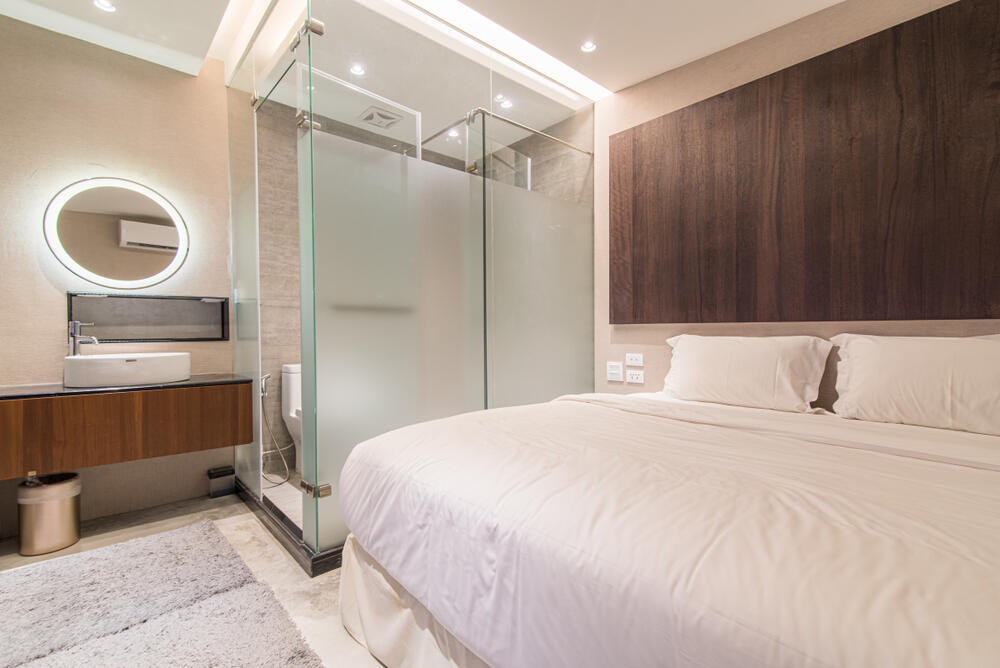
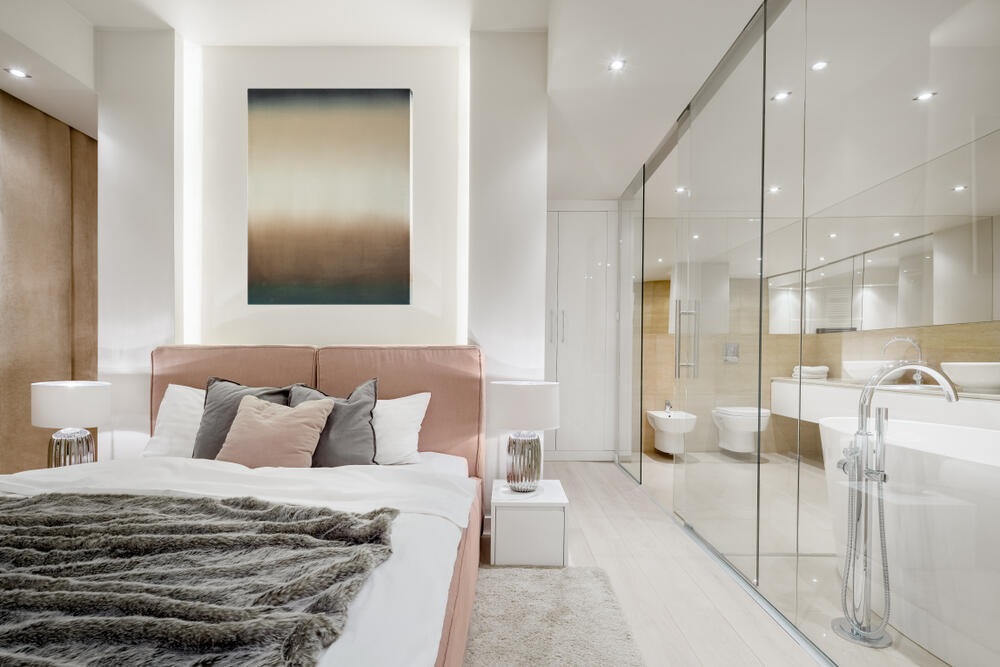
Hotel designers promote the glass-walled bathrooms as modern and airy, arguing that they make rooms feel larger and allow more light to circulate. In practice, however, frosted glass often leaves little to the imagination. While fine details are obscured, silhouettes remain clearly visible, making it easy to tell whether someone is dressed or undressed and what they are doing inside.
For some couples or immediate family members, the setup may be tolerable. For many others, guests say, it is deeply uncomfortable.
“I love my husband, but there’s a limit,” said Denise Milano Sprung, a New York resident who described her experience in an interview with The Wall Street Journal. Sprung said she encountered a frosted glass bathroom door while staying at a Marriott hotel at Calgary’s airport in Canada.
“You couldn’t see the small details, but you could definitely see everything else,” she said. Summing up the experience in a quote that went viral, she added: “I’ve been married for 25 years and I love my husband, but I really don’t want to see him using the toilet.”
Beyond visual exposure, guests have complained that noise and odors travel freely through glass doors and gaps, while bathroom lights can flood the sleeping area in the middle of the night.
The trend has also taken hold in Israel. Reviews on hotel booking sites show repeated complaints about glass bathroom walls and doors in hotels across the country.
One reviewer of a well-known Tel Aviv hotel wrote that the bathroom had glass walls and doors, adding, “This is something I wouldn’t enjoy if I weren’t alone in the room.” Another guest at a hotel in central Israel described a “modern but slightly strange design,” noting that the toilet was enclosed by transparent glass and offered “no privacy at all, if that matters to you.”
In Jerusalem, a guest wrote that the bathroom was “part of the bedroom,” separated only by a glass wall and a curtain that covered two-thirds of its height, making privacy difficult when sharing a room. Another review of a Tel Aviv hotel said the glass bathroom door had no curtain at all, prompting guests to tape newspaper pages to it for privacy. A separate review summed it up bluntly: “The bathroom is not very private … inside the bedroom with glass walls.”
(Photo: Dariusz Jarzabek / shutterstock)
While hotels market the design as “open,” “flowing” or a way to bring natural light into bathrooms, The Wall Street Journal recently pointed to a different motivation: cost savings.
Forgoing standard bathroom doors can significantly reduce construction and maintenance expenses, from eliminating heavy doors and door frames to avoiding costly accessibility requirements. Hotels can also save on electricity by relying on light from the bedroom.
Bjorn Hanson, a researcher at New York University’s Jonathan M. Tisch Center of Hospitality, told the Journal that doors are expensive to install and maintain. In other words, what is presented as a luxury design choice may, in part, be a cost-cutting measure at the expense of guest privacy.
The frustration has fueled a consumer backlash online. It gained momentum when Sadie Lovelace, a digital marketer, went on a family vacation and discovered that her hotel room had two beds but no bathroom door.
“It wasn’t just uncomfortable,” she wrote. “I was actually angry.”

(Photo: bringbackdoors.com)
Lovelace channeled that frustration into a website called Bring Back Doors, which has become a popular resource for privacy-conscious travelers. Rather than simply stating whether a bathroom has a door, the site rates hotels by “privacy percentage,” ranging from 0% for bathrooms with no door or solid partition, to 50% for frosted glass doors that reveal silhouettes, to 80% for sliding doors or shutters that block sight but not sound or smell. The highest rating is reserved for rooms with a fully enclosed, solid door.
Hotel operators, for their part, show little sign of reversing course.
Ian Schrager, the influential hotelier credited with pioneering the boutique hotel concept and founder of New York’s PUBLIC Hotel, defended the approach in an interview with Metropolis magazine. He said the goal was to expand the bathroom rather than confine it to a small, enclosed space, turning sinks and mirrors into design elements within the bedroom instead of features to be hidden away.
Virgin Hotels has similarly rebranded the hotel room as a “chamber,” where the corridor, closet and bathroom form one open preparation space.
As for odors, Stephan Meriwether, creative director of The Line hotel brand, offered a particularly unconventional explanation in an interview with The Wall Street Journal. Removing doors, he argued, allows bathroom smells to dissipate more effectively in an open space.
Critics note that, in practice, those smells often dissipate directly into the bed.