

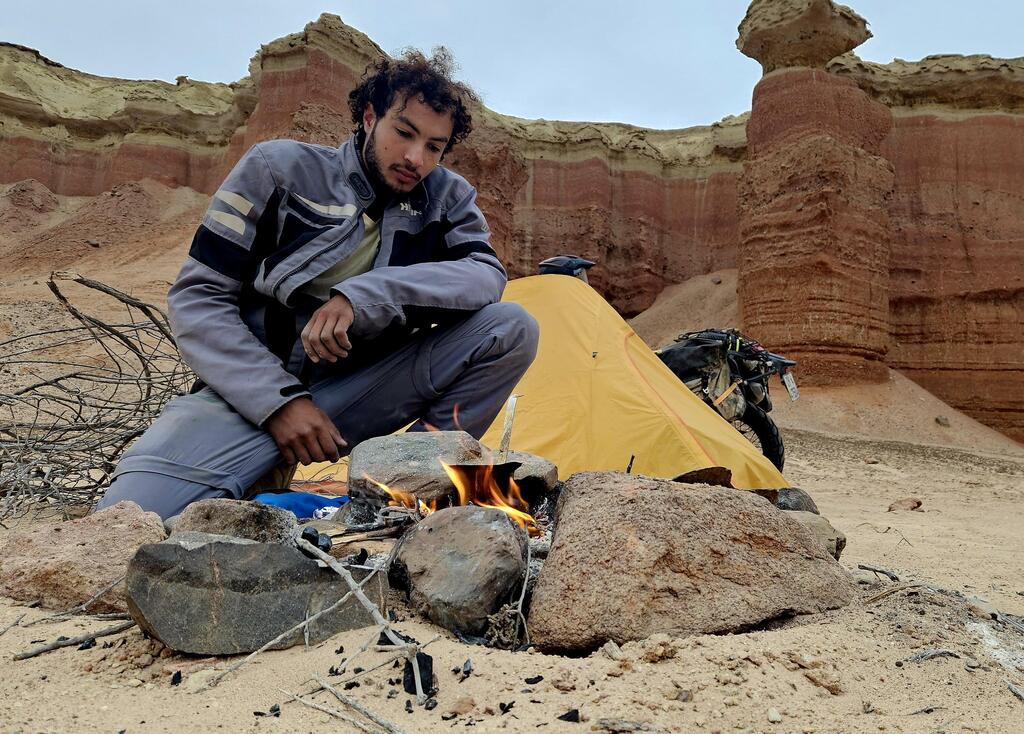
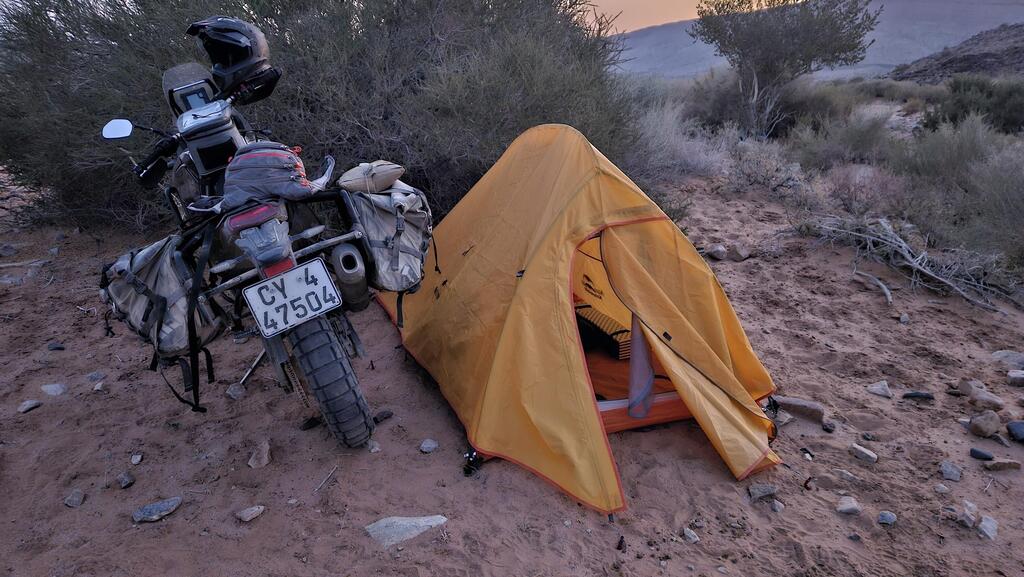
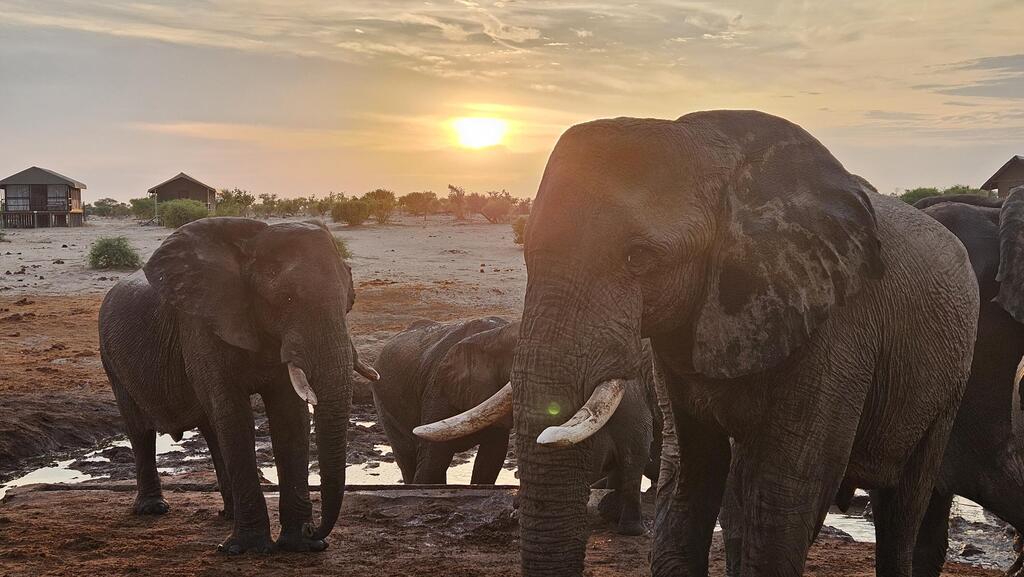
Late at night in Namibia, deep in the African desert, Or Ozeri, 24, lies alert inside a small tent in the middle of nowhere. It is his first night alone and the first real test of his journey. Outside, heavy footsteps slowly draw closer. His thoughts race between nightmares of armed robbers and local warnings about predators.
Ozeri decides not to wait for fate. He bursts out into the African night wearing only boxer shorts, a knife in one hand and pepper spray in the other, ready for what he believes could be the fight of his life.“Because of the danger, I was even more curious,” he says. But 50 meters away, the supposed threat stands calmly and stares back. Two zebras are playing in the sand.
The motorcycle journey in Africa
(Video: Or Ozeri)


With peak adrenaline mixed with relieved laughter, Ozeri’s first night ends, marking the start of an extraordinary journey. Nearly nine months, 15 countries, 30,000 kilometers, and one Israeli rider crossing Africa alone.
Ozeri, a Jerusalem native and a graduate of the elite Egoz unit, set out on the journey immediately after his military discharge. It was a journey of solitude, fear, freedom, tribes, gold mines, and vast deserts, just him and his helmet.
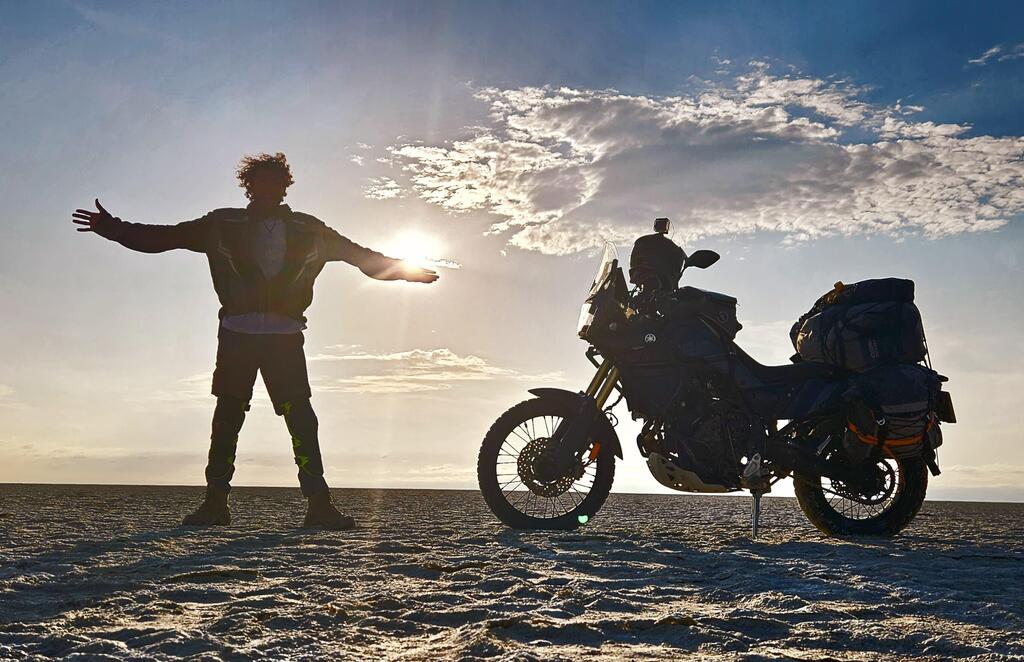
“This was my dream,” he tells ynet. “Two years before my release, I already had a map of Africa on my wall. Every time the army got tough, I looked at it and imagined the trip. Africa always fascinated me. It is the continent that was left behind compared to the rest of the world, with landscapes, tribes, and wildlife you cannot find anywhere else.”
Choosing a motorcycle was deliberate. “On a bike, you are exposed. You feel the sun, the rain, the wind. Riding is solitary, and that fit everything I was looking for. This was my post-service journey. It gave me the strength to be alone, to feel nature, and to be truly free.”
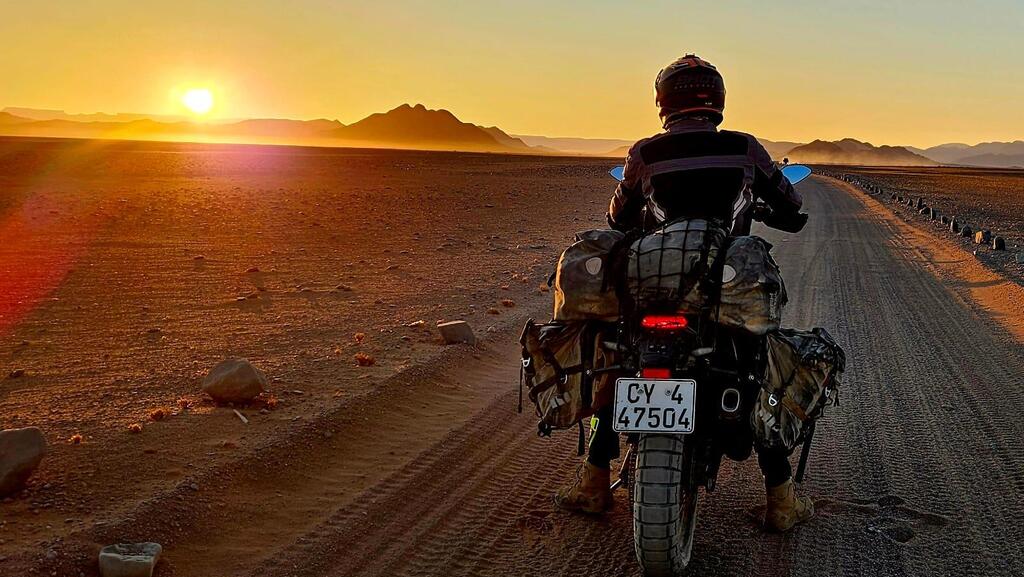
Namibia sunset
(Photo: Or Ozeri)
The grueling journey began after three weeks of preparation in Cape Town, South Africa, including buying a motorcycle and equipment. From there, Ozeri headed north.
“Only when I crossed into Namibia and found myself truly alone in the desert did it really sink in,” he says. “I was living my dream. Just me and the bike inside this vast emptiness. No jeeps, no people. Endless horizons. On one hand, absolute freedom. On the other, absolute responsibility. You are responsible for everything.”
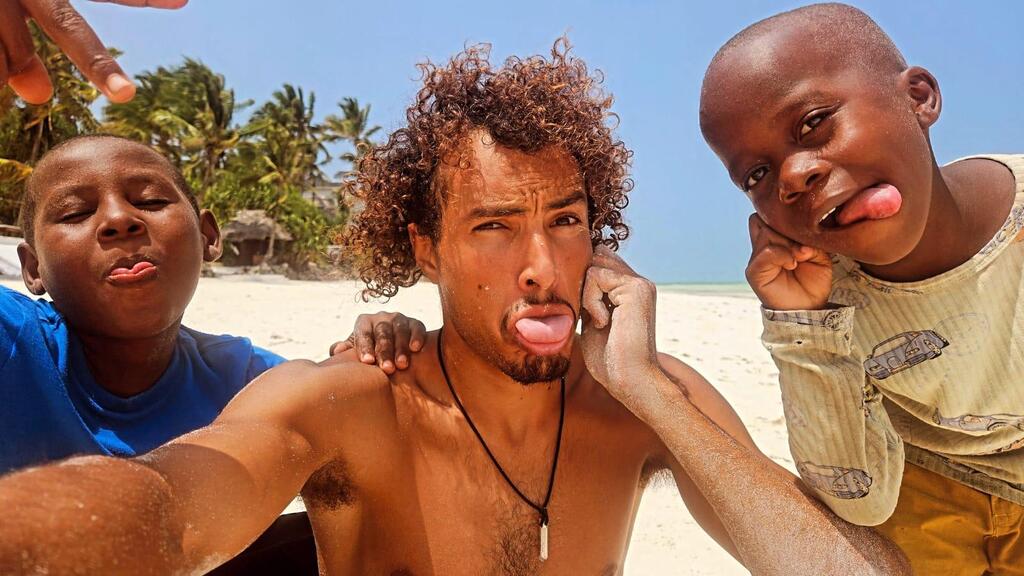
With friends he met in Zanzibar
(Photo: Or Ozeri)
The Angola surprise
The journey was filled with challenges, but one country stood out above all others.
“The country that surprised me the most was Angola,” Ozeri says. “At first, I did not plan to enter. It is wild. There was a 30-year civil war, Portuguese is spoken, there are almost no Israelis, and hardly any tourists. I only decided to cross the border after consulting a friend, and it exceeded every expectation.”
(Photo: Or Ozeri)
(Photo: Or Ozeri)
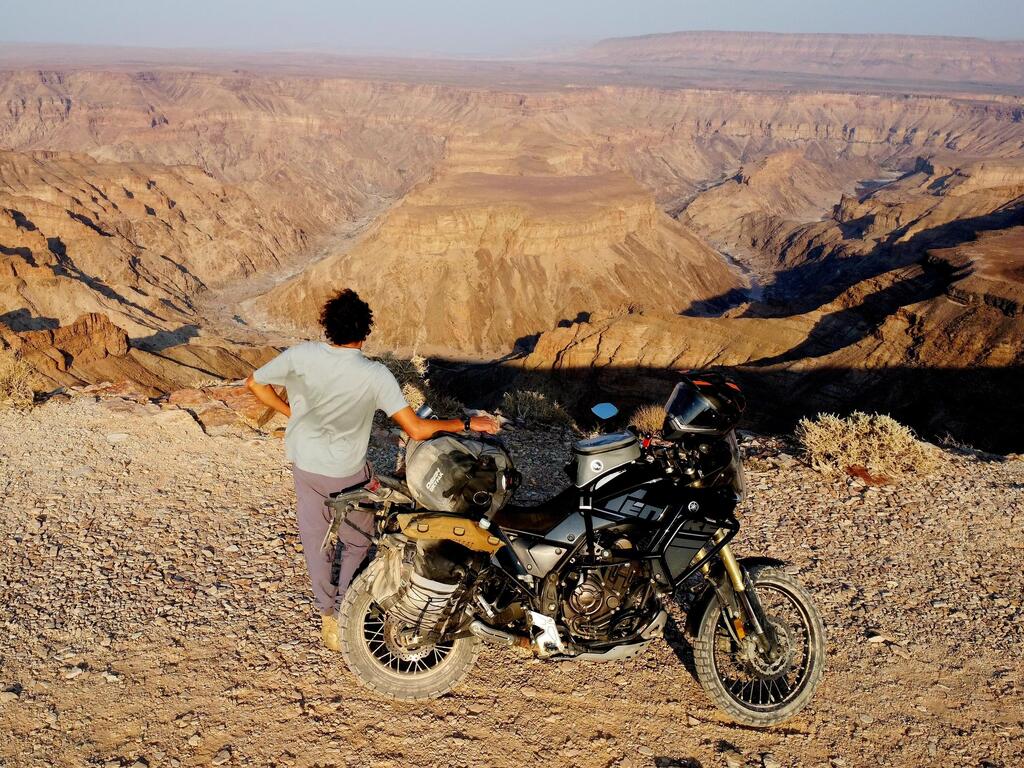
Entering Angola from Namibia and exiting the same way, Ozeri encountered some of the most untouched nature he had ever seen.
“I saw the most pristine landscapes of my life,” he says. “So many experiences, so many people. It is a place without human interference. Everything feels empty.”
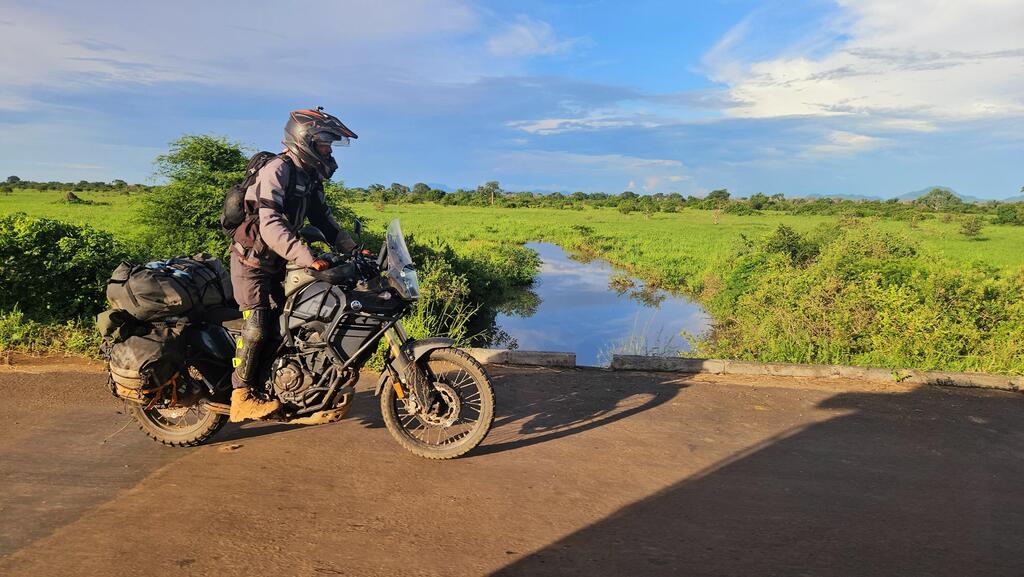
A visa delay at the border led to an unexpected encounter. “I met gold miners who hosted me and invited me to their mines. I joined them for a week and became part of their daily work.”
(Photo: Or Ozeri)
(Photo: Or Ozeri)
Gold mining there, he explains, is surprisingly simple. “They use a massive machine the size of a house. They take mud and sand from the river, filter it, and gold comes out. Just like that.”
Near the border, Ozeri also met a former Angolan soldier who fought in the civil war. “He hosted me and told me brutal stories about jungle warfare, training, and Russian military involvement. They fought in conditions harsher than Gaza, crawling through flooded trenches while tanks passed overhead.”
(Photo: Or Ozeri)
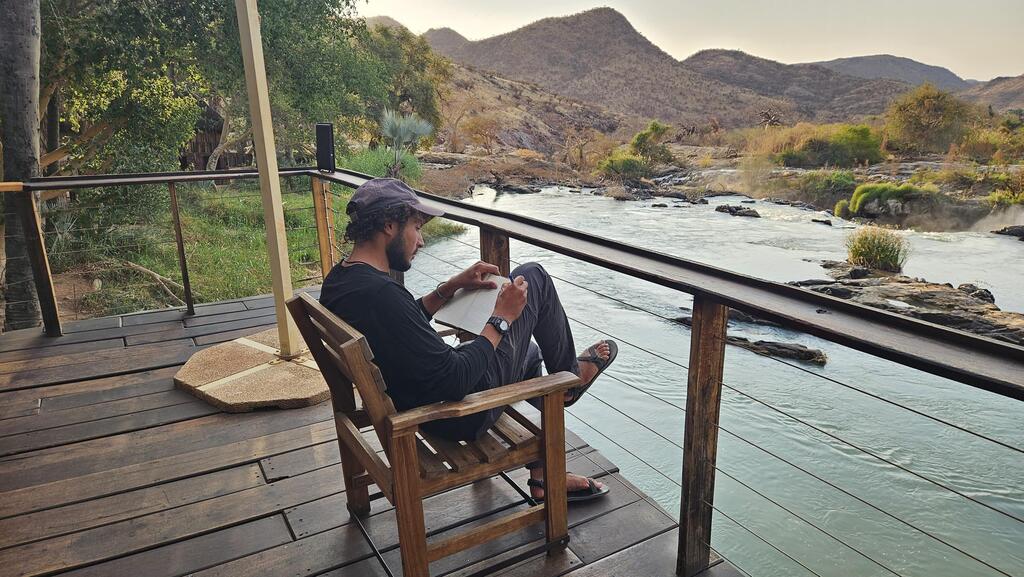
(Photo: Or Ozeri)
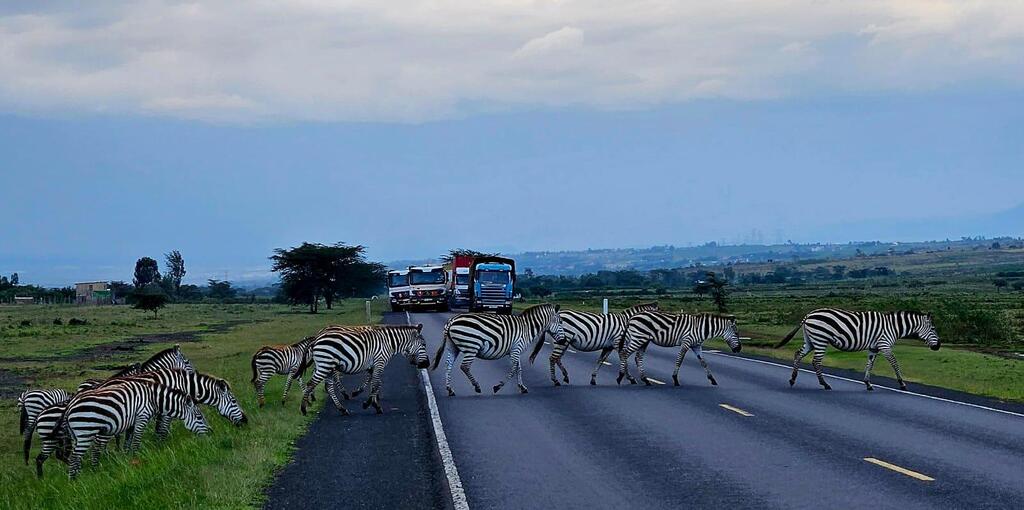
Despite Africa’s wildlife, Ozeri insists the real danger is traffic.
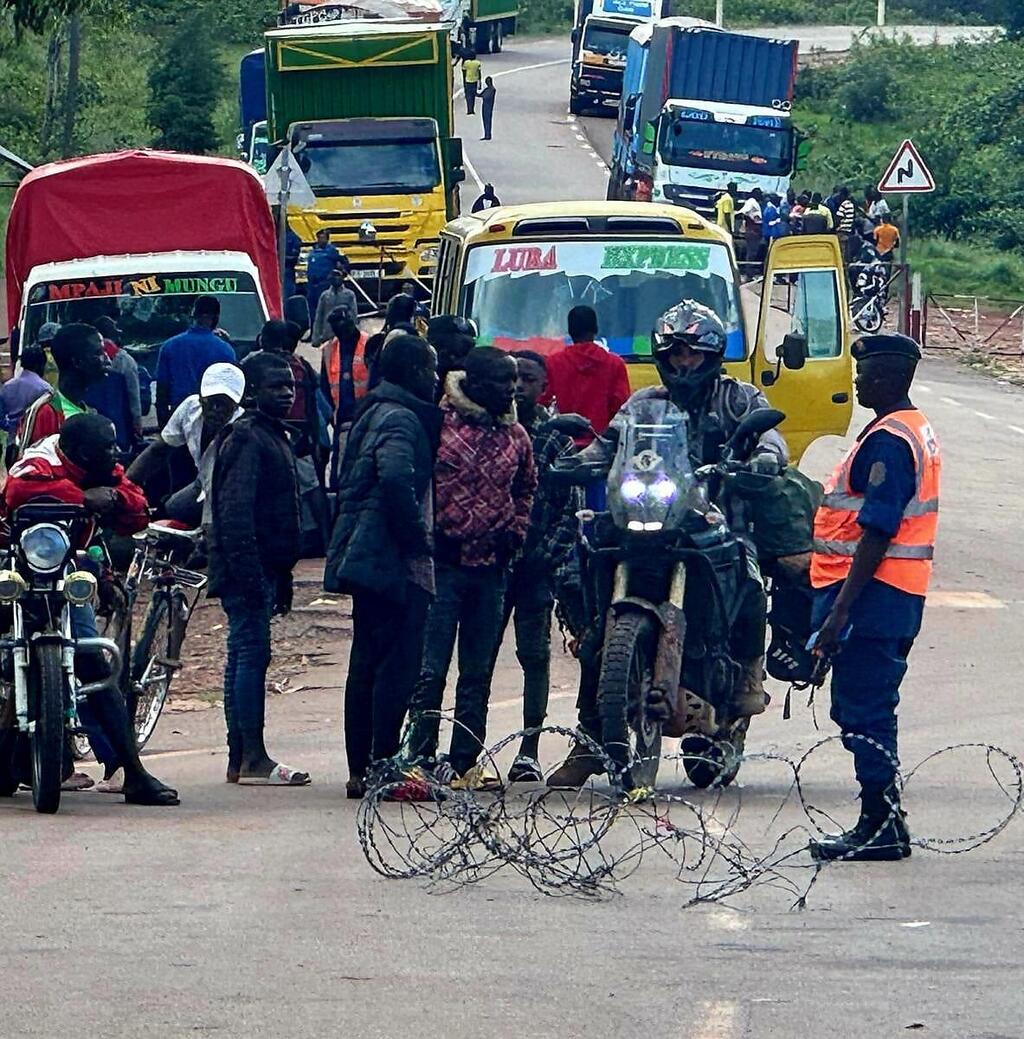
“The roads are full of potholes, and drunk truck drivers drive like maniacs,” he says. “Animals cross suddenly, and you see overturned trucks along the road. One bad pothole and you are done.”
Yom Kippur on the road
Even deep in Africa, Ozeri did not abandon tradition. On the eve of Yom Kippur in Luanda, Angola’s capital, he rode with a local BMW motorcycle club.
“I wanted to reach Luanda by noon to observe the holiday, but they kept stopping to drink. I realized I would not make it with them.”
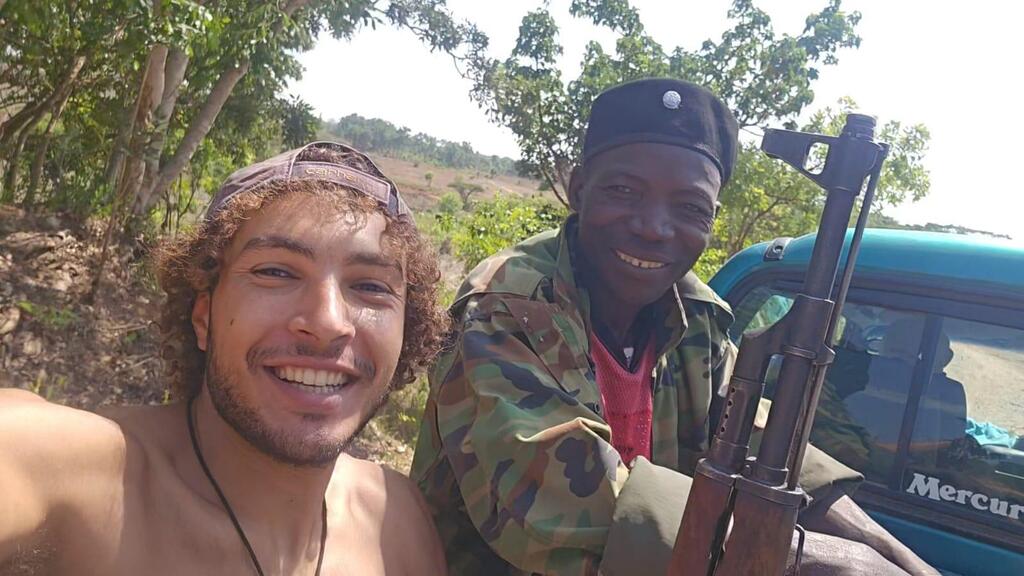
With a gold miner in Angola
(Photo: Or Ozeri)
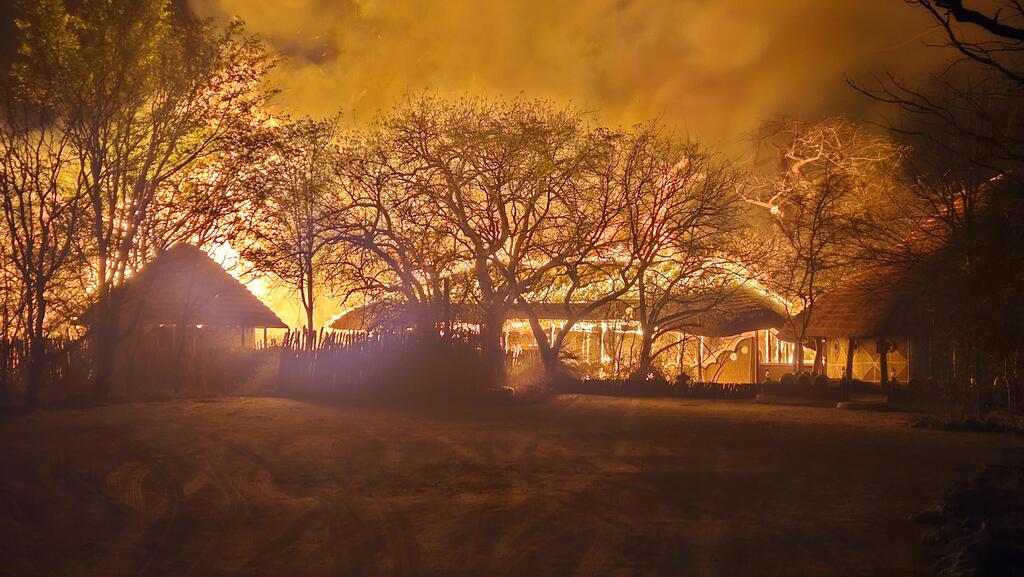
Waking up to a fire
(Photo: Or Ozeri)
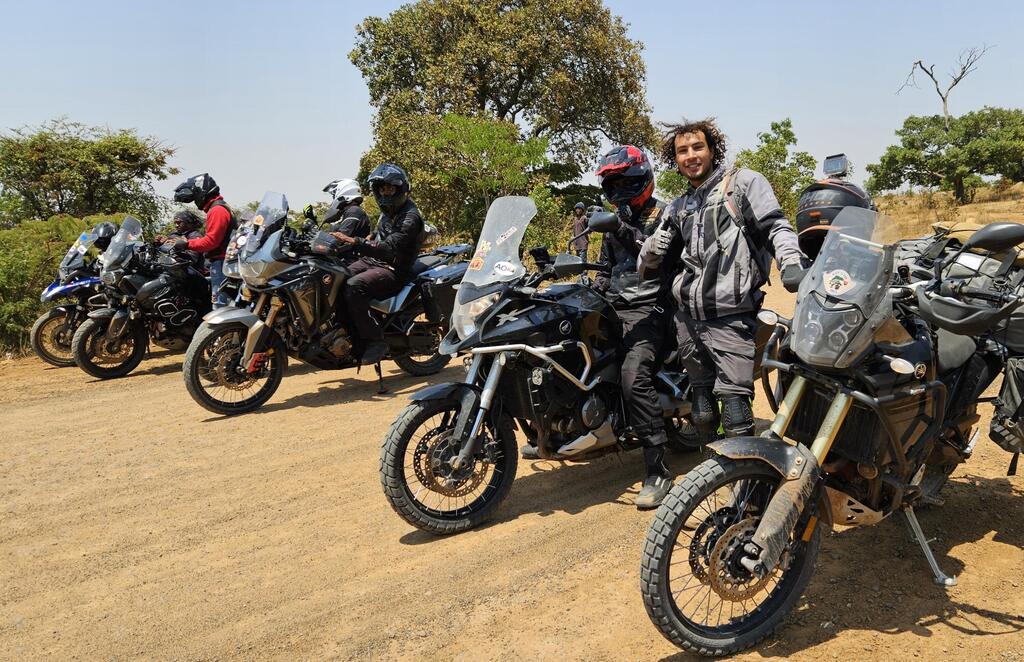
With some bikers he met
(Photo: Or Ozeri)
Ozeri broke away and rode for two hours at high speed between potholes, trucks, and checkpoints. “All I had in my head was getting to the Chabad house before the fast began. If I had a flat tire, it was over. It was divine mercy.”
The small Jewish community was stunned. “They are not used to tourists. They said the last Israeli visitor was three years ago, also on a motorcycle. Once the holiday began, after two months alone, suddenly being with Israelis calmed me completely. There was a bed. It is a moment you never forget.”
(Photo: Or Ozeri)
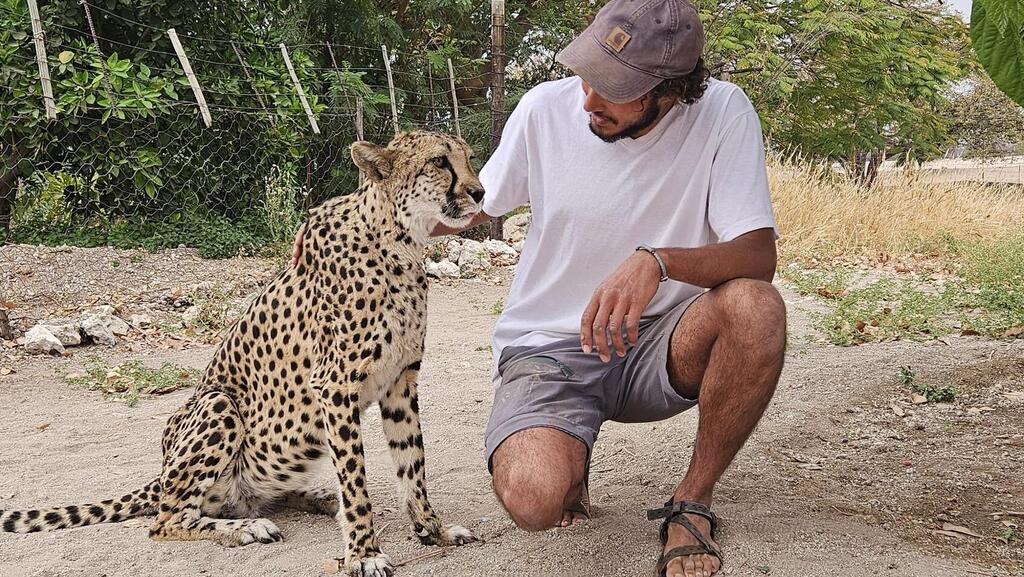
(Photo: Or Ozeri)
‘In Africa, you do not ride at night’
After Angola, Ozeri continued to Botswana, where he faced one of the most difficult decisions of the trip.
“I wanted to sleep in the middle of a salt desert, total emptiness. But the road was sandier than expected. Sunset came, and I had to choose. Stop, turn back, or ride in the dark. In Africa, you do not ride at night. That is the rule.”
He chose to continue.
“I rode for five hours in the dark. Alone. In sinking sand. The bike weighs 270 kilograms, and every fall is a nightmare. You lift it, curse, sweat. Reaching my destination was a peak moment.”
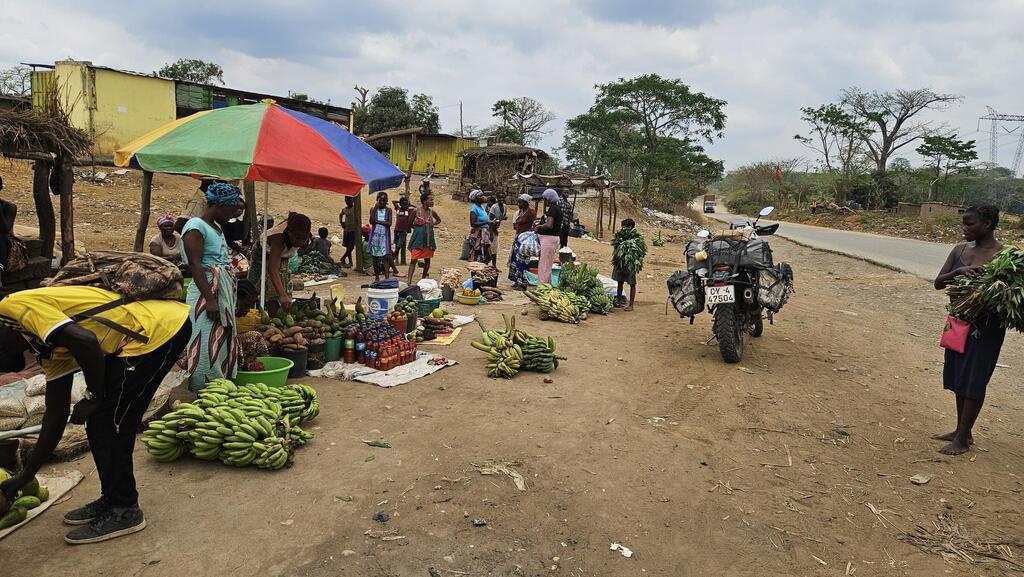
Botswana
(Photo: Or Ozeri)
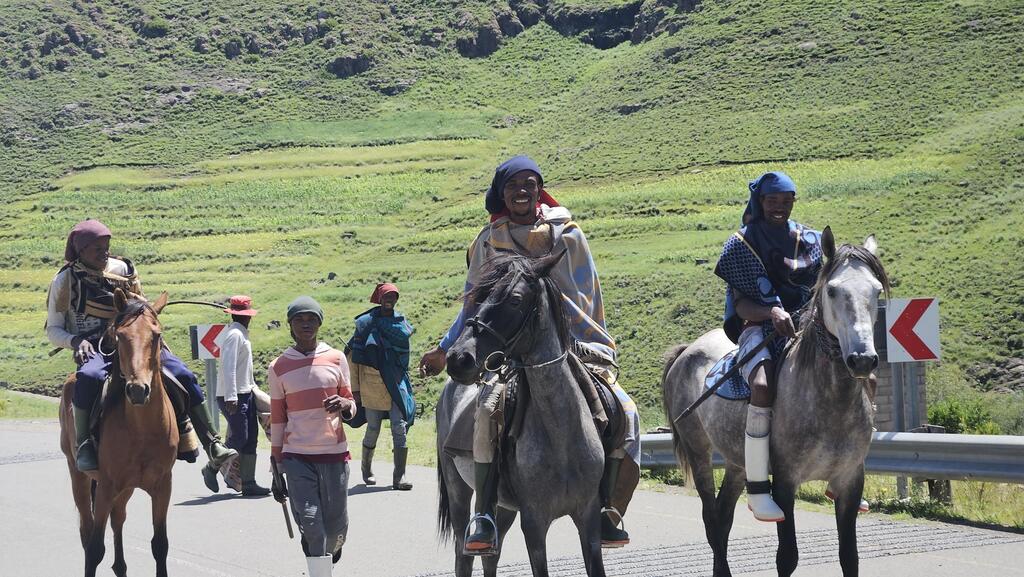
Lesotho
(Photo: Or Ozeri)
Being alone, he says, is both challenging and transformative.
“You are never completely alone. You meet people along the way. But there are days when it is just you. You learn responsibility. If you forget food, you do not eat. If you forget fuel, you are stranded. That is exactly why I wanted to do it alone.”
One rule above all
Ozeri’s relationship with his motorcycle was total.
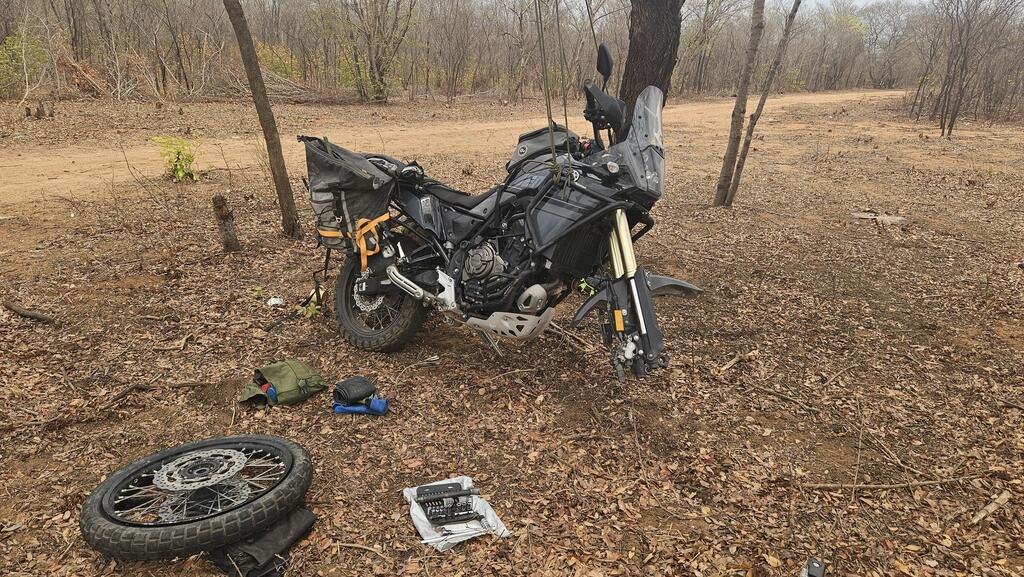
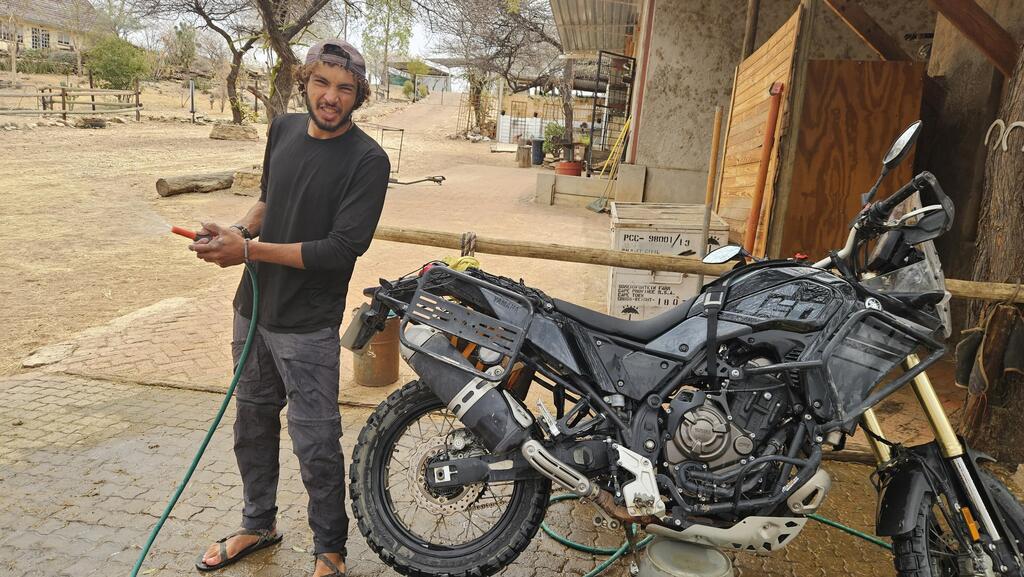
“The bike was everything. Constant maintenance. Chain oil, weekly washes. Flat tires happen all the time from rocks and potholes. You stop, inspect, take apart, replace.”
(Photo: Or Ozeri)
(Photo: Or Ozeri)
(Photo: Or Ozeri)
The only major breakdown occurred in Mozambique. “The rear sprocket wore out. I was stuck in Tofo, ironically the most touristy place. I waited 10 days for a replacement part from South Africa, surfed, explored, and then continued.”
The entire journey cost about 70,000 shekels, he says. “Eight months, including everything. Gear, repairs, food, fuel, books. The motorcycle becomes part of you. At night, I sleep next to it. Every time I wake up, I check that everything is still there.”
(Photo: Or Ozeri)
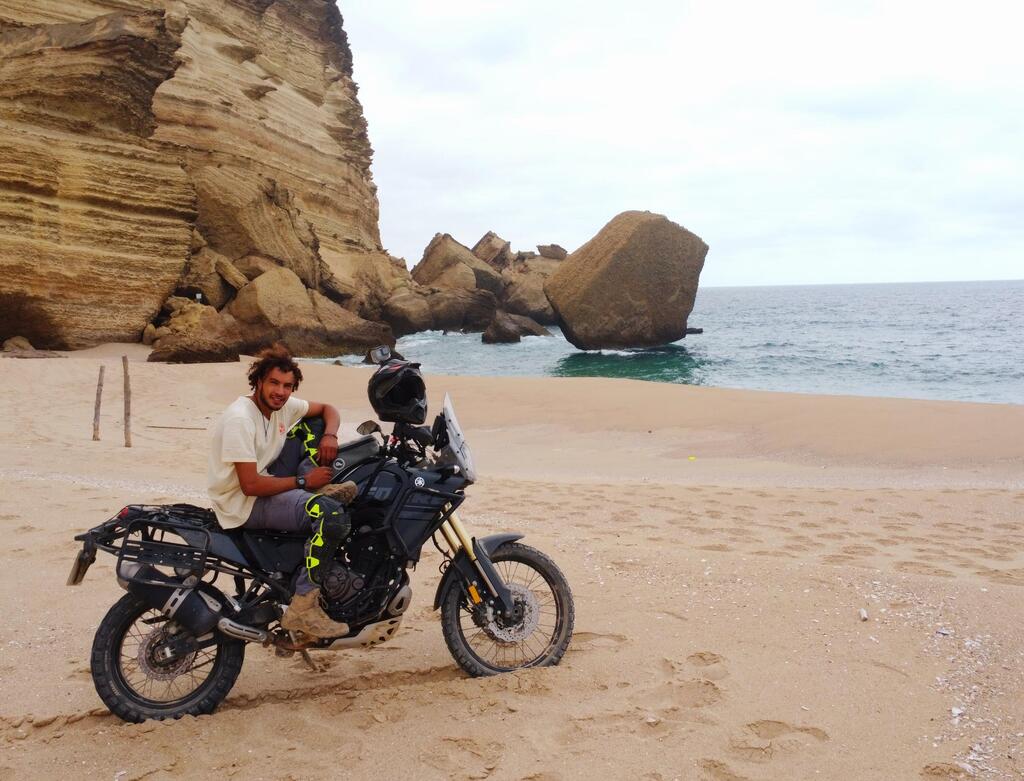
(Photo: Or Ozeri)
Advice to others?
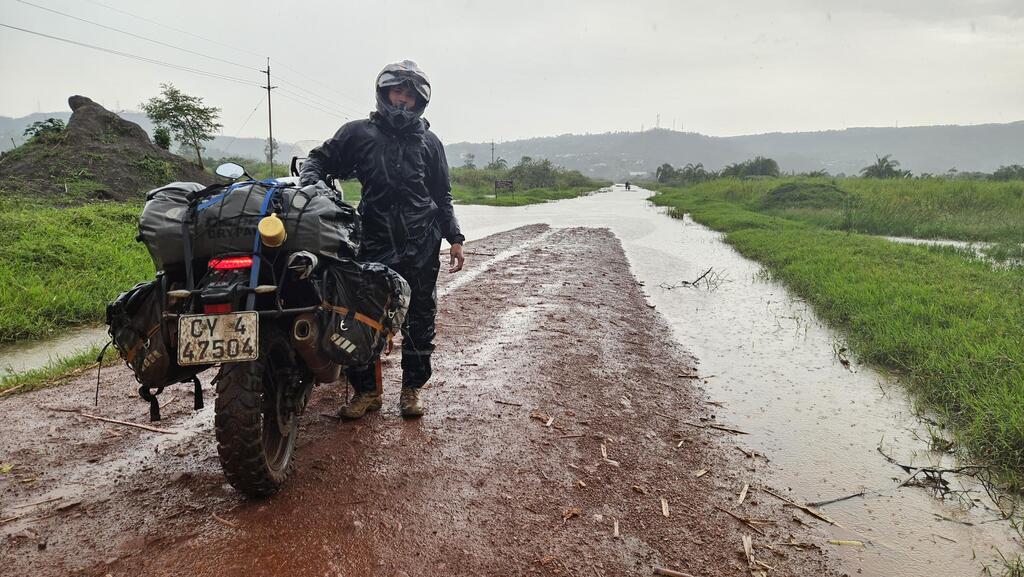
“First rule, never ride at night. Always listen to the road and ask people. Stay positively naive. Gather real-time information. Gear gets wet, let it get wet. Rain catches you, stop, pitch a tent, sleep. In Africa, there is no real weather forecast. You can experience four seasons in one day. Most important, stay calm.”
And the next dream?
“For now, I am on reserve duty,” he says with a laugh. “After that, maybe skiing in Europe, maybe South America with friends. There is still a lot to do.”