


In a rare historical moment, one of the world’s largest countries, home to about 282 million people, is seeking to replace its capital city, where roughly 10 million live within the city limits and about 40 million across the wider metropolitan area. This is not a mass relocation of residents, but an attempt to shift the entire center of political power to a new, modern city built from scratch, complete with dozens of government buildings, national symbols and key centers of authority.
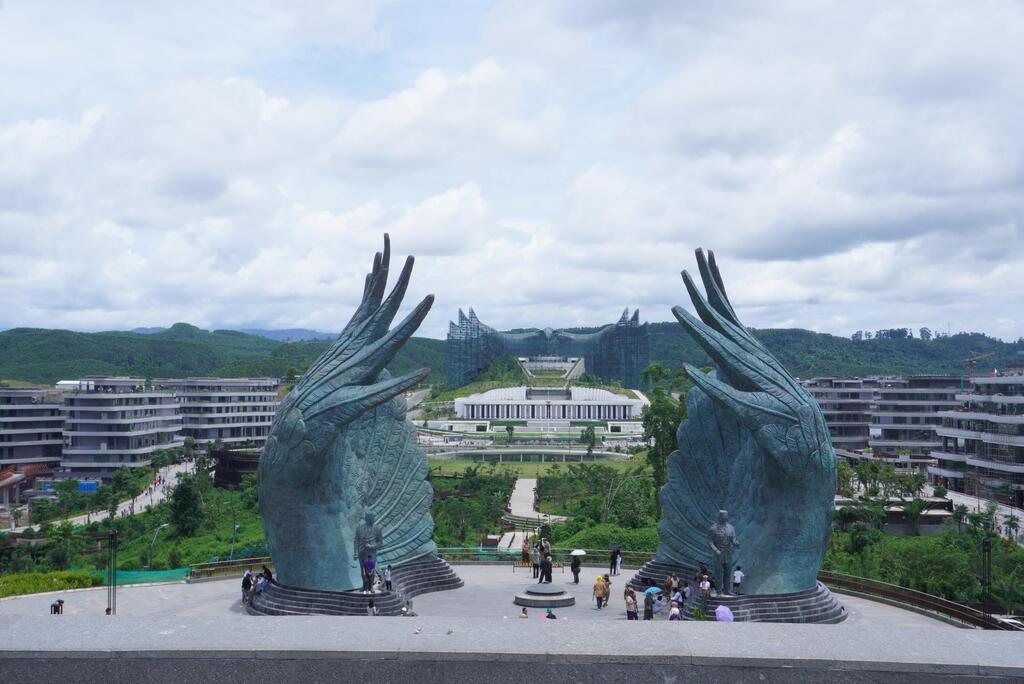
The plan is meant to abandon the current overcrowded megacity and be reborn as a carefully planned capital, guided by a vision of order and sustainability set within an exceptional natural landscape. Yet even at this early stage, a wide gap is emerging between promise and reality. The central question is no longer only what the new capital will look like, but whether it can become a living, functioning city or remain a grand but empty showpiece.
The new capital is now being built in Indonesia, the world’s most populous Muslim country. It is intended to serve as the country’s official political capital, concentrating the institutions of power including government ministries, national public bodies and a new presidential palace. The city, named Nusantara, is meant to embody a vision of renewed governance and a fresh national beginning.
That vision comes with a dramatic geographic break. Nusantara is located far from the current capital, Jakarta, on the opposite side of the Indonesian archipelago, on the island of Borneo, about 1,200 kilometers away. The distance is comparable to moving Israel’s government from Jerusalem to a newly built city in the Negev, but on a far greater scale.
The new city of Nusantara
(The Impossible Build)


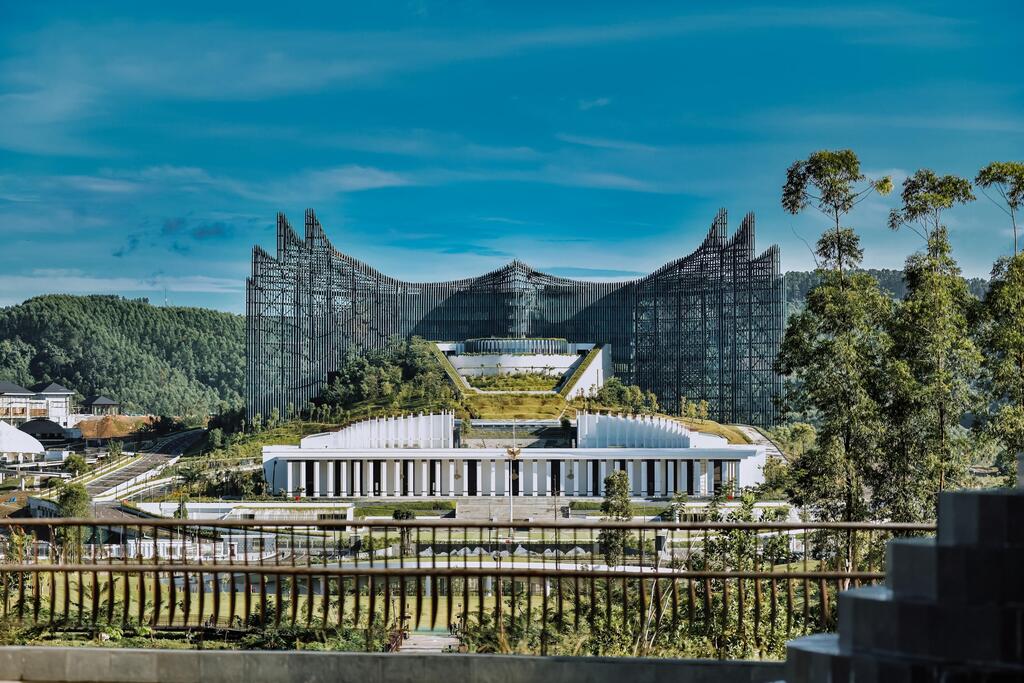
The city’s most striking structure, now under construction: the presidential palace
(Photo: hendra yuwana, shutterstock)
Climate pressures behind the move
One of the main, though less openly discussed, reasons for the decision is climate change. In recent decades, Jakarta has experienced dozens of severe floods, some of which have paralyzed entire neighborhoods and caused significant damage to infrastructure and the urban economy. Much of the city lies at or below sea level and is also sinking due to extensive groundwater extraction.
According to estimates, rising sea levels could soon render large parts of Jakarta uninhabitable, forcing the evacuation of entire neighborhoods. In this sense, Nusantara is not only a project of governance and national identity, but also a strategic attempt to prepare for an increasingly threatening climatic future.
Construction of the new city began in 2023 and has advanced at a relatively fast pace. Several government buildings have already been completed, alongside hotels, banks and housing for civil servants and security forces. Plans are also underway for additional ministries, residential neighborhoods, embassy districts, public transport infrastructure, a botanical garden and institutions for sports, culture, education and health.
Still, the gap between vision and reality remains stark. At present, only about 2,000 civil servants live in the city, alongside roughly 8,000 construction workers. Official plans project a population of about 1.2 million by 2030, an especially ambitious target that raises questions about whether Nusantara can attract residents quickly enough to form a vibrant urban fabric rather than a collection of well-designed buildings.
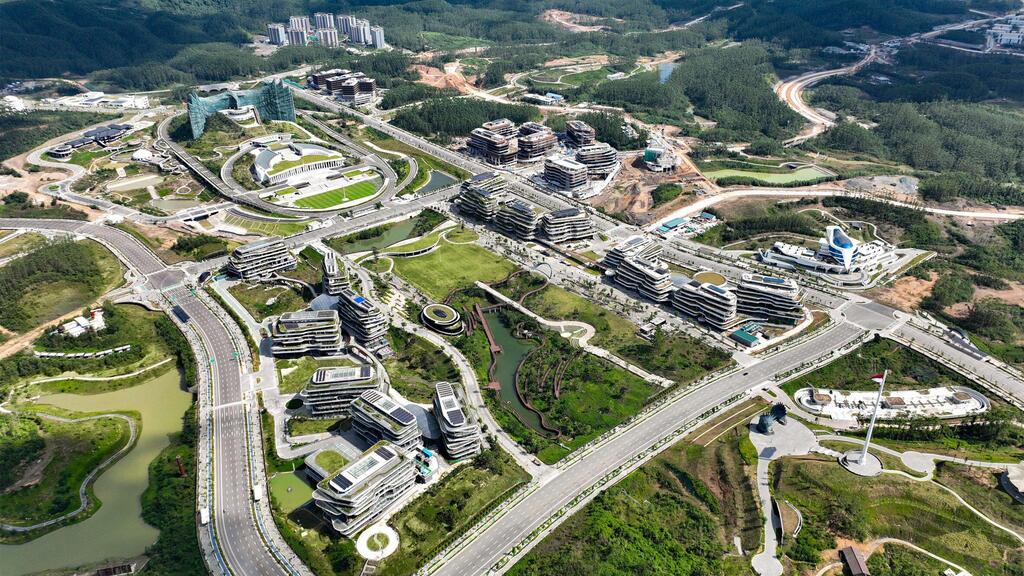
The gap between vision and reality remains stark
(Photo: Courtesy of Urban+)
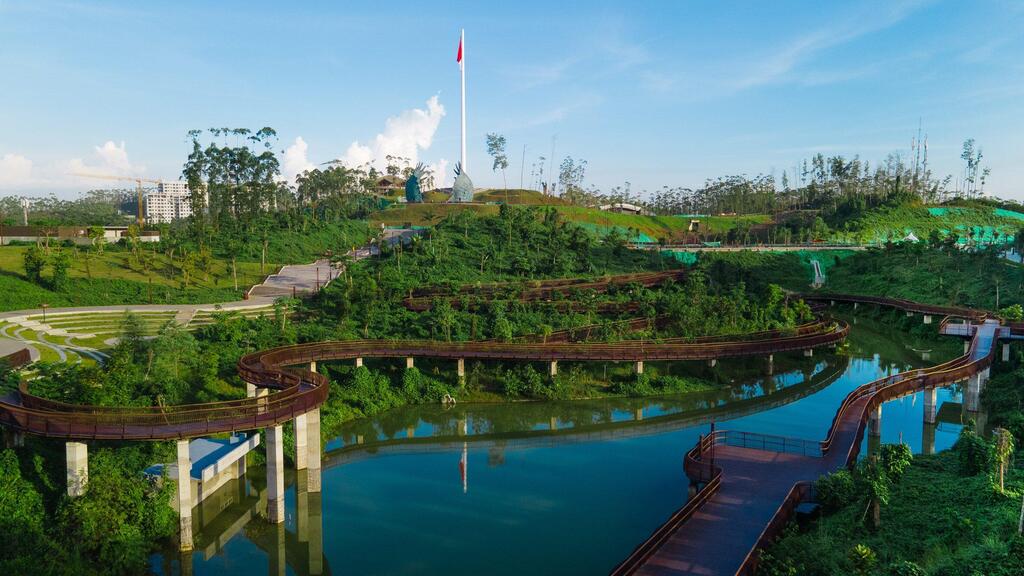
One of the world’s most sustainable cities
(Photo: Courtesy of Urban+)
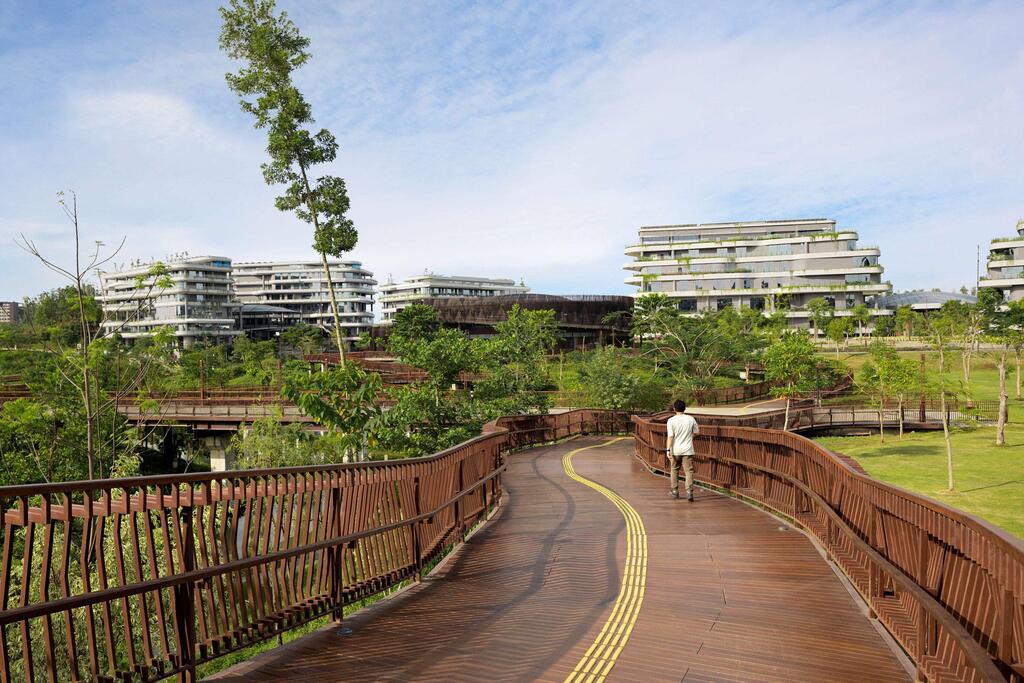
Connecting national identity, environmental sustainability and technology
(Photo: Courtesy of Urban+)
A palace inspired by myth
The city’s most striking structure, now in advanced stages of construction, is the new presidential palace, known as Garuda Palace. One of seven presidential palaces in Indonesia, it sits atop a hill overlooking the emerging city. Its design draws inspiration from the Garuda, a figure from Hindu and Buddhist mythology, revered as the king of birds and a central national symbol.
The image was developed by Indonesian sculptor Nyoman Nuarta, with the massive bird form shaping both the physical and symbolic identity of the building.
Seen on its own, the palace represents the essence of the grand vision behind the new capital. Yet when viewed within the broader urban context, it becomes clear that Nusantara’s story is far more complex and deeply political.
The initiative for the new city was launched in 2019 by former President Joko Widodo, who sought to replace the ‘polluted, congested and sinking Jakarta with a planned administrative center. Since then, the political landscape has shifted. Indonesia’s new president, Prabowo Subianto, who took office last October, has sharply reduced the project’s budget.
Funding fell from about $2 billion in 2024 to $700 million in 2025, with only about $300 million allocated for the following year, roughly one-third of what planners say is actually required. Private investment has also dropped by more than $1 billion from original targets.
Beyond financial difficulties, the new president has yet to visit the city and has downgraded its status from Indonesia’s official capital to a ‘political capital’ only, a symbolic change that reflects the uncertainty hanging over the project’s future.
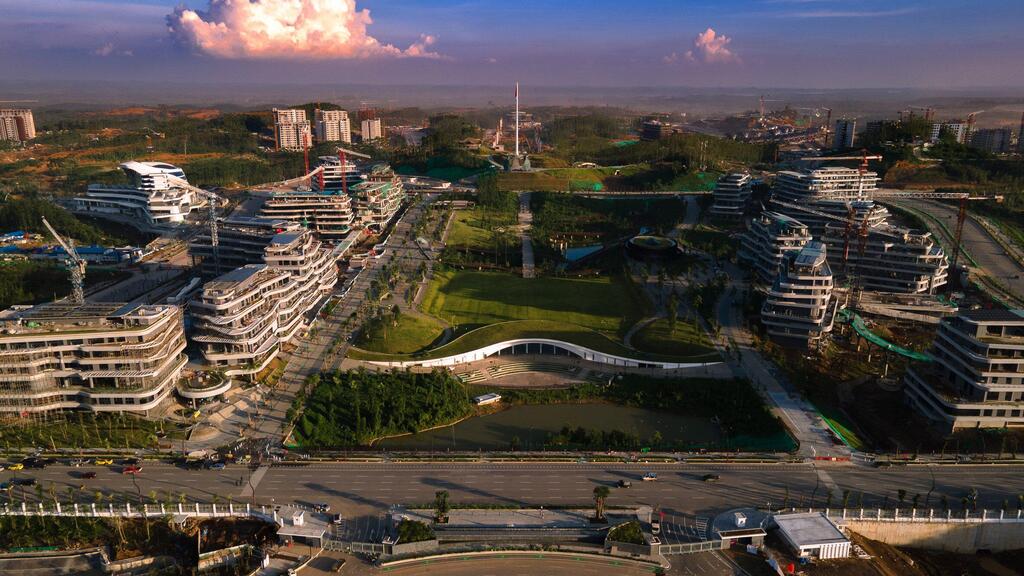
The new capital Nusantara
(Photo: Courtesy of Urban+)
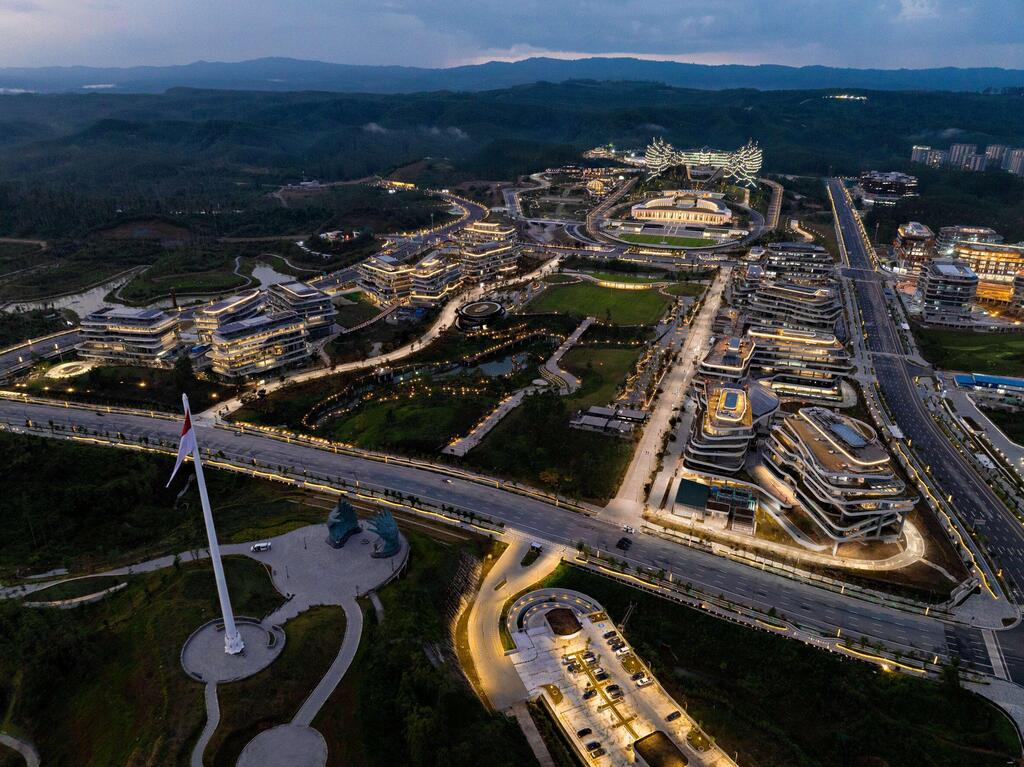
The new capital is President Subianto’s top priority
(Photo: Courtesy Urban+)
Rethinking Indonesian urbanism
Nusantara also carries international implications that may resonate with the Israeli audience. Although Indonesia and Israel do not maintain formal diplomatic relations, in recent years, discreet improvements in relations, particularly in trade, economic activity and technology, have fueled speculation about closer engagement.
Discussions that involve expanding the Abraham Accords mention Indonesia as a distant but possible candidate. Any such shift could open not only diplomatic channels but also the possibility for Israelis to visit the country and invest in the new capital.
On the ground, Nusantara’s fate will depend on whether its ideological and national vision can be translated into a functioning city. The master plan was led by Indonesian firm Urban+, which viewed the project as an opportunity to define a new model of Indonesian urbanism.
One of the firm’s architects said the goal was to build a city grounded not only in symbols of power, but in a functioning daily fabric that connects national identity, environmental sustainability and advanced urban technology.
Urban planners and experts have warned that building a city from scratch is a long and complex process that cannot be completed in just a few years, especially under current conditions. Critics point to planning uncertainty, funding gaps and a lack of clear political commitment.
A constitutional law scholar in Indonesia has already described Nusantara as a ‘ghost city,’ arguing that its designation as a political capital has little meaning under Indonesian law. He said the city is not a top priority for President Subianto, adding that politically, it's not willing to die, not truly willing to live.
Environmental concerns add another layer of complexity. While planners promote Nusantara as one of the world’s most sustainable cities, designed as a ‘forest city’ with extensive green spaces, environmental groups argue the project has caused serious ecological damage. They estimate that more than 2,000 dunams of rainforest with unique ecosystems have been destroyed over the past two years due to development, including the construction of a highway and a new airport.
Local environmental activists say nearby communities are losing both their livelihoods and their environment. The government denies any negative environmental impact and says some Indigenous groups have received compensation for their land.
Egypt is also building a new Cairo
Indonesia is not alone in relocating its center of power. Egypt has pursued a similar and more advanced project. East of Cairo, Egypt has already established the ‘New Administrative Capital,’ commonly known as New Cairo, a vast project that continues to expand in stages. The city is not intended to fully replace Cairo, but to operate alongside it as a separate center of government.
The new city now hosts the Egyptian parliament, the presidential palace and about 14 government ministries, alongside residential areas, business districts and transport infrastructure.
As in Indonesia’s Nusantara, the official justification is to ease overcrowding, congestion and urban chaos in the aging metropolis. In practice, however, many critics see the move as part of a broader regional trend toward concentrating political power in planned, sterile spaces that are relatively detached from the city and its residents, offering control, representation and symbolism, but not necessarily organic urban life or deep solutions to the old capital’s social and economic problems.
Ultimately, Nusantara stands as a sweeping national experiment, attempting to confront urban overload, climate threats, identity ambitions and shifting political realities at once. Its future will be decided not only by policy documents and master plans, but by its ability to evolve from a government project into a real city with residents, daily life and long-term commitment.
Hovering above all this is another unresolved question: What will become of Jakarta? Will moving the seat of power be paired with serious rehabilitation of the old capital, or is it an escape from problems left unresolved? The answer may shape not only Nusantara’s fate, but how Indonesia faces its challenges in the decades ahead.
First published: 20:04, 01.23.26