

Archaeologists analyzing bronze fragments unearthed near Brno, the Czech Republic’s second-largest city, have uncovered a remarkable piece of history.
According to Live Science, the fragments, dating back 3,200 years, are remnants of a warrior’s chest armor from the Trojan War era. This marks only the second discovery of ancient protective gear in Czechia.
Gallery
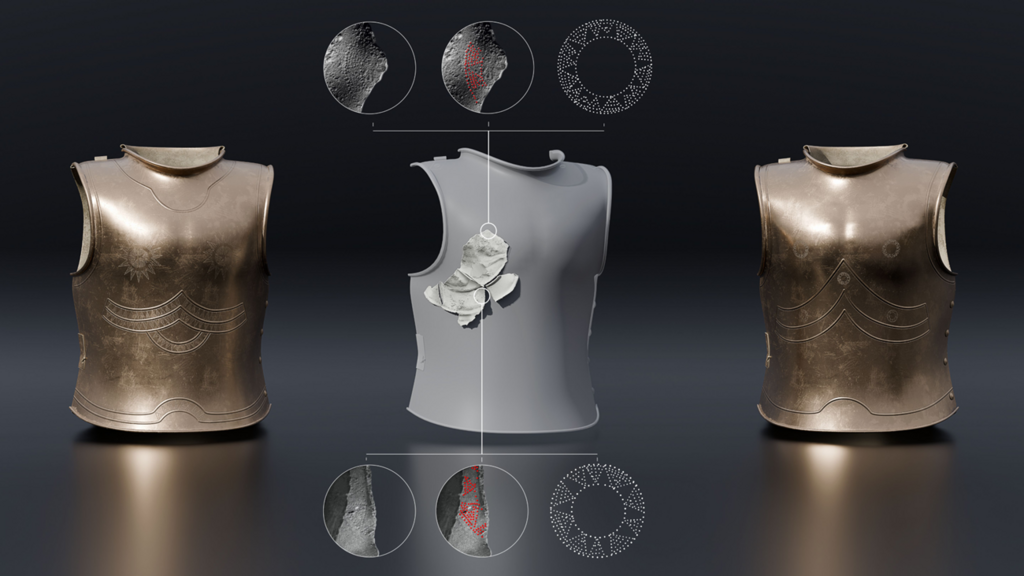
3D reconstruction (right) of the armor fragment (center), based on a sample from France (left)
(Photo: Martin Kosťál)
In 2023, civilian metal detectorists reported finding a cache of objects, including a spearhead, sickle, needle and several copper fragments. These items, intentionally damaged and buried together, likely as part of a ritual, were examined by researchers at the Brno City Museum. After two years of detailed analysis, including advanced 3D scanning, the team confirmed the copper fragments were part of armor worn by a warrior in battle.
The armor dates to the Late Bronze Age (1600 to 1200 BCE), a period tied to the Trojan War and societal upheaval in the Mediterranean. During this era, elite warriors wore bronze armor, while common soldiers likely used perishable organic materials for protection, which have not survived.
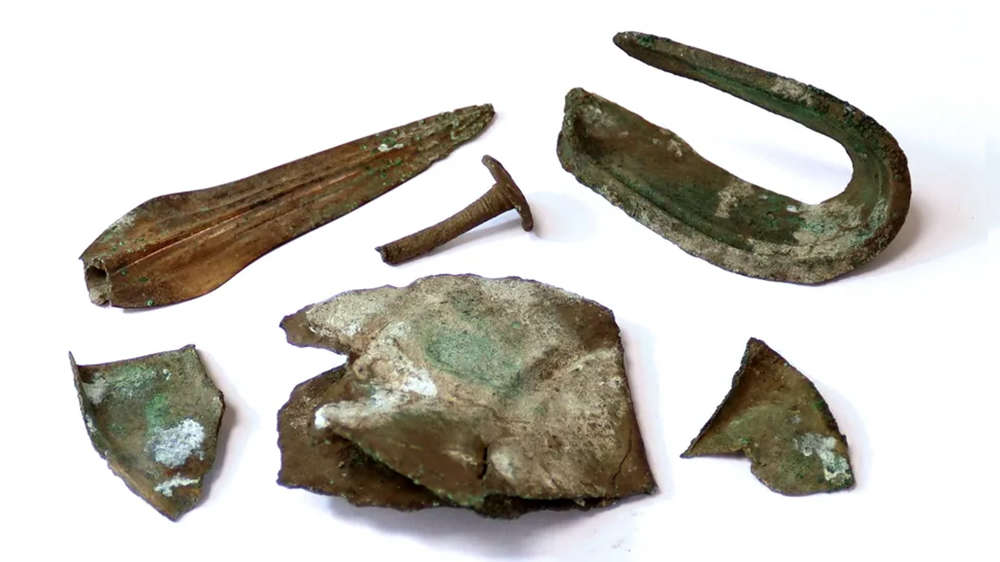
Some of the fragments found in the Czech Republic
(Photo: Brno City Museum)
This rare and valuable find stunned researchers. Zbynek Solc, director of the Brno City Museum, emphasized its significance, saying that the discovery “confirms the importance of long-term cooperation between experts and the public, which is crucial for our museum”. Such partnerships enable the museum to uncover and preserve artifacts that shed new light on ancient history.
Get the Ynetnews app on your smartphone: Google Play: https://bit.ly/4eJ37pE | Apple App Store: https://bit.ly/3ZL7iNv
The Brno City Museum is preparing an exhibition to showcase the armor, offering the public a glimpse into the military history of Bronze Age Central Europe. The era was marked by extensive trade networks and cultural exchanges across Europe, with elite warrior societies sharing technologies and customs from the Mediterranean to Central Europe. The find creates intriguing connections between Central European archaeology and the legendary narratives of ancient Greece.
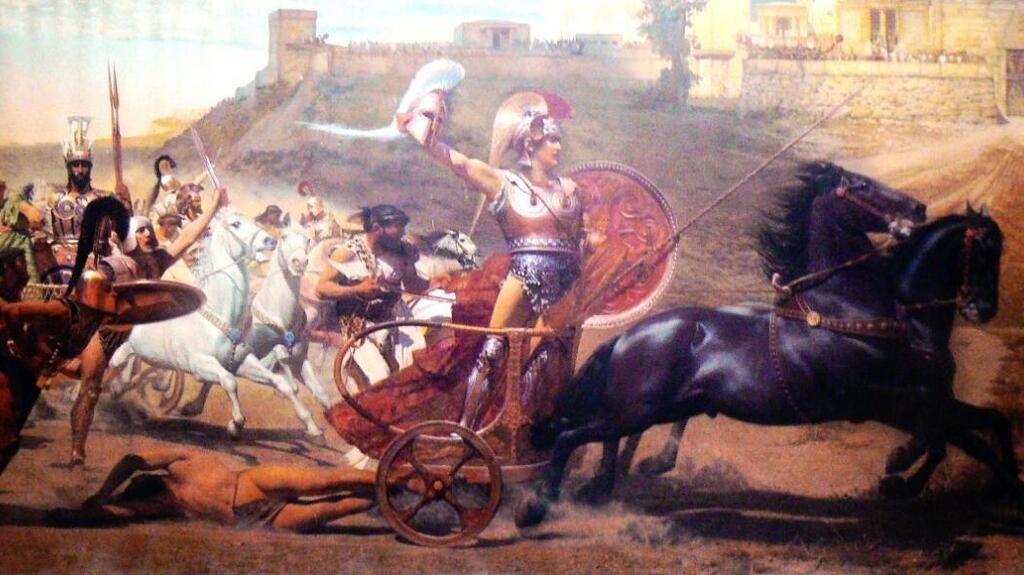
19th century painting depicting Achilles' victory over Hector in the Tojan War
(Illustration: Franz Matsch/Wikipedia)
The Trojan War, estimated to have occurred between 1193 and 1184 BCE, saw Greek (Achaean) forces unite against the fortified city of Troy. The war, ending in the Greeks’ victory and Troy’s destruction, was sparked by the abduction of Helen, wife of Spartan king Menelaus, by Paris, son of Troy’s king—though some accounts suggest Helen willingly left with him. The act was seen as a grave insult, demanding retribution.
Agamemnon, Menelaus’s brother and king of Mycenae, long sought a reason to wage war and control the Aegean, dominated by Troy. He rallied Greek kings to form a massive army for the campaign.
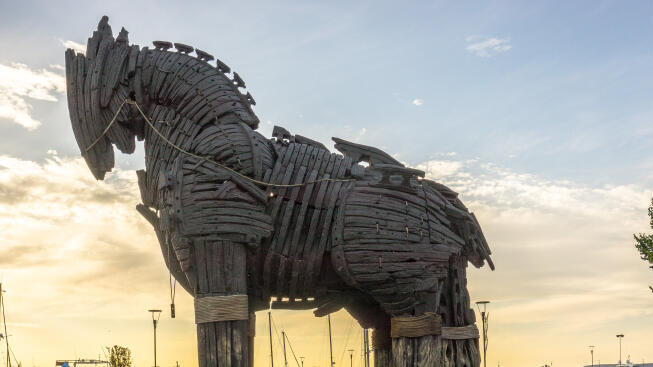
Model of the Trojan Horse
(Photo: alperguzeler/Shutterstock)
Fierce battles raged outside Troy’s walls, including the famed duel between Achilles and Hector, which ended in Hector’s death. Ultimately, the Greeks triumphed through the Trojan Horse ruse.
Pretending to retreat, they left a giant wooden horse outside the city as an apparent offering to the gods. The Trojans, celebrating the end of the siege, brought it inside. Hidden Greek warriors emerged at night, opened the city gates and Troy was sacked and destroyed. The event remains a cornerstone of Western culture, blending mythology, heroism, intrigue and deception.