

When was the last time you did something for the first time?
For me, experiencing something completely new is always a major thrill. My curiosity overflows, leaving me like a five-year-old eager to take on the world. It was with this sense of anticipation that I boarded a flight to Thailand for a week-long sailing trip among some of the world's most beautiful islands.
The promotional material described a voyage through the Koh Chang region, navigating among lesser-known, highly authentic islands. Organized by the international department of Via Maris (Derech HaYam), a sea travel and adventure agency based in Herzliya, Israel, the trip promised a unique experience. At a pre-trip briefing in Israel a month prior, Dudi Simon, co-owner of the company, assured us:
"We will barely see any tourists. Most of the time, when we step ashore on these islands, we’ll be surrounded strictly by locals. We will be almost completely on our own, even though this is considered one of Thailand's most striking regions."
To be honest, I was skeptical. Having lived in Thailand for nearly three years, before, during, and after the pandemic, and traveled extensively throughout the country, I consider myself a veteran traveler there. If there is one defining characteristic of Thailand's top destinations, it's that they are bustling with tourists.
In fact, during all my years in Thailand, I had rarely been anywhere without hearing my native language spoken nearby. So, when Dudi promised we wouldn't encounter other tourists or hear familiar voices, I assumed he was exaggerating, tapping into that universal desire to feel like a true discoverer when traveling.
We took delivery of our yachts on a Sunday afternoon. Our group consisted of roughly 30 people, distributed across five catamarans of varying sizes. Each vessel featured four cabins with double mattresses and modest storage. On four of the boats, solo travelers and couples were paired up, meeting for the first time as they boarded. The fifth boat hosted three generations of a single family: grandparents, their two children with partners, and two infants, one aged two, the other just three months old. While some catamarans carried eight people, mine accommodated just four, granting each of us a private cabin.
There are no local Thai skippers on these trips. Instead, at least one participant per boat must hold an international skipper’s license, while the rest of the crew can be complete novices. Accompanying the fleet were two lead instructors from Via Maris (Derech HaYam): Dudi Simon himself, who leads this voyage annually, and Yiftach Ben-David, one of the agency’s veteran guides. Each day, they rotated onto a different yacht, ensuring everyone benefited from professional guidance.
Before boarding, the crews met at "Makro," the main supermarket on the island, to stock up on food, water, and provisions for the week. Outfitting four people with different preferences quickly filled our cart. The total came to 6,000 THB (around $170 USD), a modest sum per person that covered an abundance of beer, canned tuna, paper products, single-use tableware, watermelons, fresh coconuts, and more. Life is certainly sweeter when it’s affordable.
Koh Chang
(Photo: Via Maris - Derech HaYam)
Our meeting point was nestled in the southeast of Koh Chang, about an hour's drive from the supermarket. Koh Chang is Thailand's second-largest island after Phuket, yet it remains significantly less developed. Located roughly 300 kilometers east of Bangkok near the Cambodian border, it offers a distinctly laid-back feel.
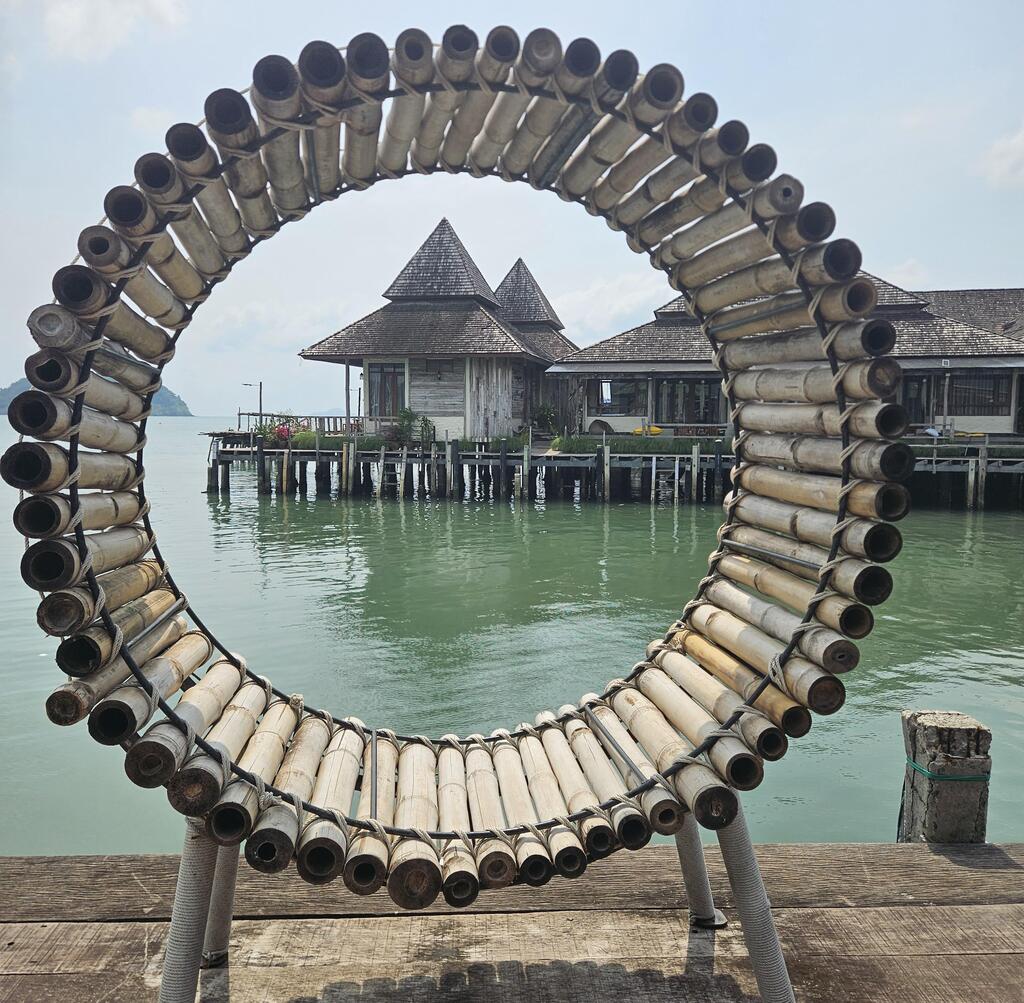
The taxi dropped us off at a spot that looked like a scene generated by AI, almost too picturesque to be real. A Thai restaurant hovered over the water, with fishing nets submerged beneath it creating a mosaic on the surface. Our fleet was moored at a weathered dock that looked as though it might barely withstand a storm.
Turquoise water blended into shades of deep blue, with silhouettes of postcard-worthy islands dotted along the horizon. The glass-like sea seemed to whisper: "Well... what are you waiting for?"
Taking command of the yacht was an exhilarating moment. There was something surreal about the fact that someone in Thailand had trusted me with a multi-ton, high-end vessel. Armed with a skipper's license but relatively little real-world experience, I was about to navigate Thai waters independently for the first time. It was a mix of pure thrill and significant responsibility.
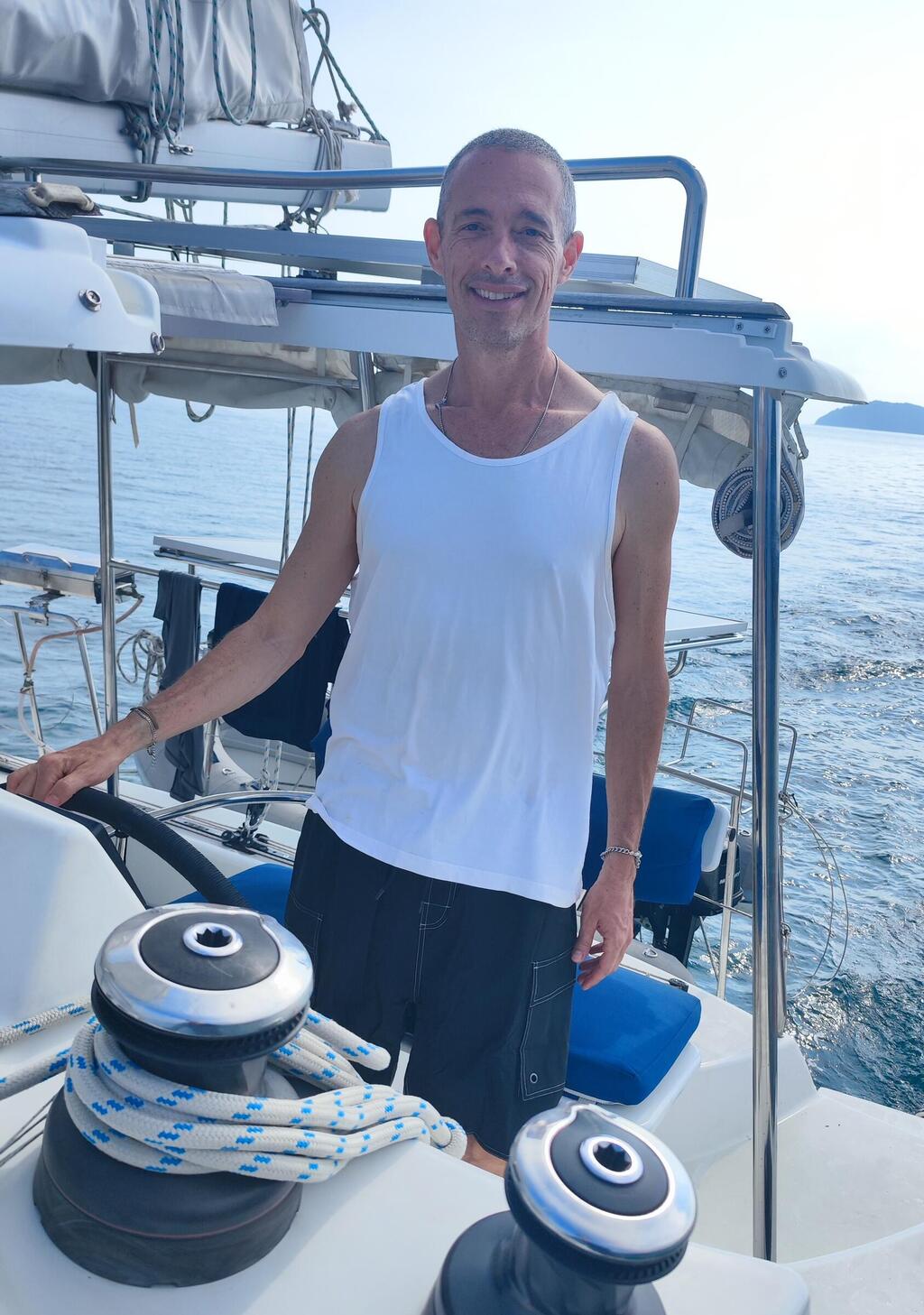
Arik Rozental on the yacht
Stepping inside felt like uncovering a hidden sanctuary. This wasn't a multi-deck cruise liner with swimming pools and fine dining; it was a sleek sailboat, the kind people dream of owning in retirement to sail around the globe.
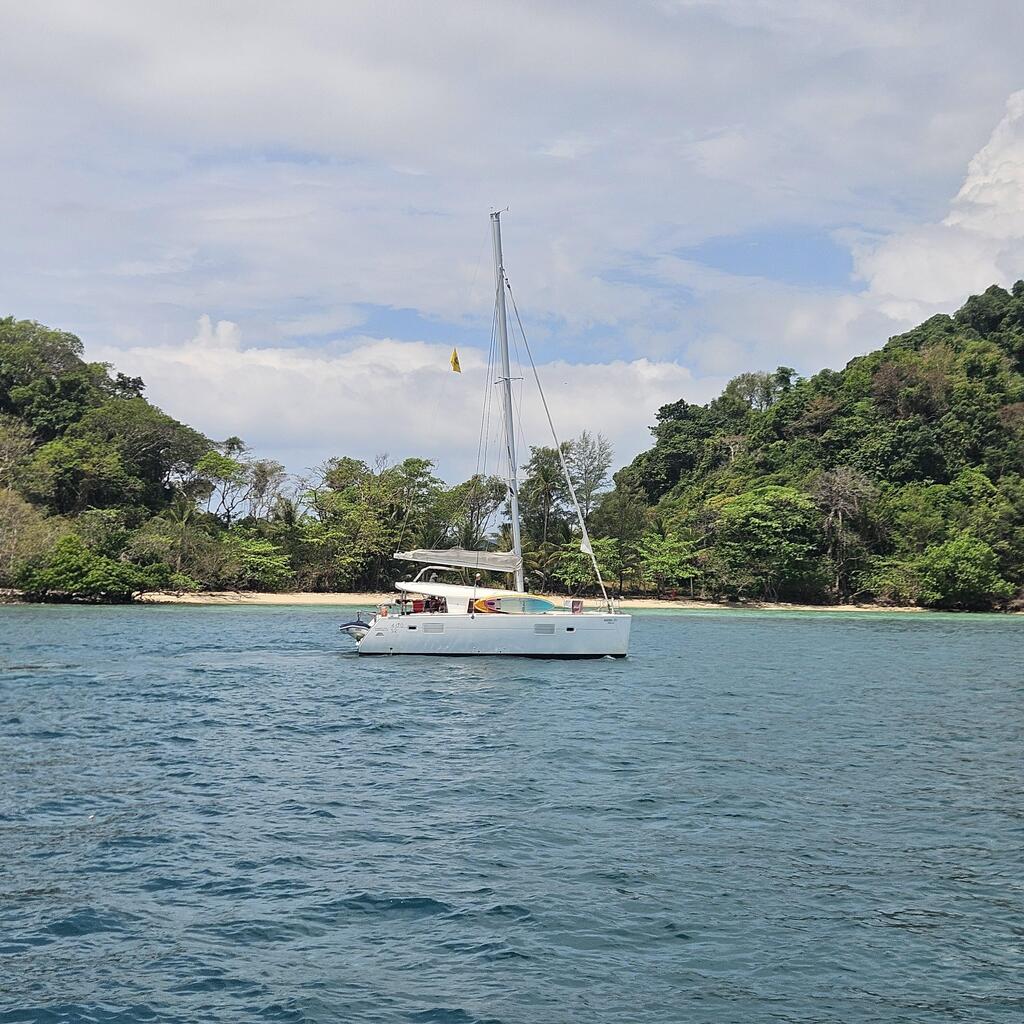
Gleaming white, it had the ceremonial look of a bride waiting for the ceremony to begin. The turquoise backdrop set the stage, and under the open sky, the engines hummed to life.
I stepped aboard, taking care to lead with my right foot, a traditional nod to good fortune. Inside, the space was efficiently designed: a kitchenette with a sink, stove, oven, and ample cookware, alongside a dining table, compact seating, and steps leading down to the cabins. The vessel included two small bathrooms. Outside, the stern offered a shaded dining area, while the bow featured a trampoline net stretched over the open water.
That net quickly became my favorite spot. Lying on my back in absolute darkness at night, surrounded by open sea, I looked up at millions of twinkling stars, a moment of pure clarity that made the journey entirely worth it.
(Photo: Via Maris - Derech HaYam)
After settling into our cabins and unpacking, we felt the gentle sway of the water. Through the cabin window, there was only endless blue. Moments later, we untied the lines, raised the sails, and let the wind chart our course.
That evening, we gathered for our final briefing before setting off. Dudi reviewed nautical charts, brought up navigation apps, and outlined the route for the following morning. He highlighted potential hazard areas, explained how to navigate around them, and shared wind speeds, directions, and wave heights before sending the first anchorage coordinates via WhatsApp.
"Each boat sails at its own pace," Dudi explained. "If you encounter any issues, call me over the radio, and I’ll be there shortly in my dinghy."
The dinghy, a small, motorized boat attached to each yacht, proved invaluable throughout the week. Beyond shuttling us to shore, it offered a fun way to explore narrow inlets and hop between beaches in search of local spots with picture-perfect views.
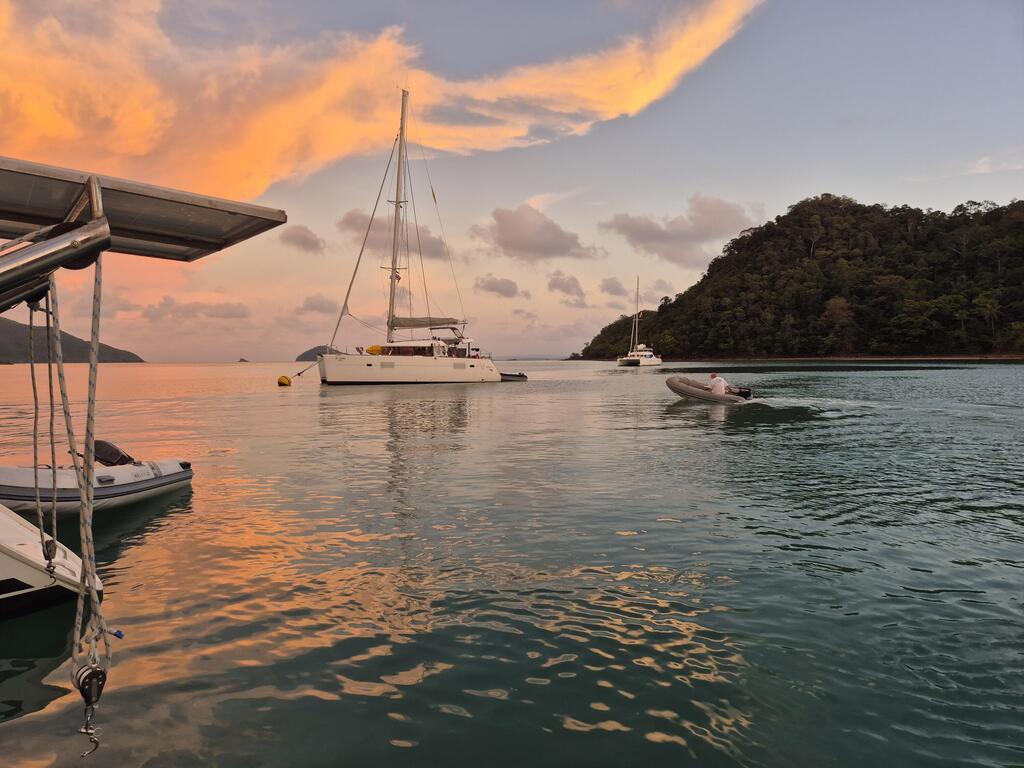
Koh Rang
(Photo: Rina Kolik)
At 8:00 AM the next day, a WhatsApp notification confirmed our first destination. We weighed anchor, literally hoisting the heavy metal anchor from the sea floor. Standing at the bow with the electric winch remote, the breeze catching my shirt, I couldn't help but feel a cinematic sense of freedom.
Two hours of silent sailing followed, no engines, just the wind filling the sails and carrying us across crystal-clear waters. Tacking into the wind felt counterintuitive at first, but watching the physics work seamlessly was a source of constant fascination.
First Stop: Koh Ngam
Our initial destination was a national park in the middle of nowhere: two emerald hills joined by a narrow, two-sided strip of sand. Stand in the middle, and you're just ten steps away from the northern shoreline on one side and the southern on the other. Entry was 200 THB per person, plus a small fee to tie up the dinghy. The island featured a short hiking trail and a small kiosk selling cold drinks and snacks - the perfect opportunity to enjoy my first fresh coconut of the trip. So far, Dudi’s promise held true: there was hardly another soul in sight.
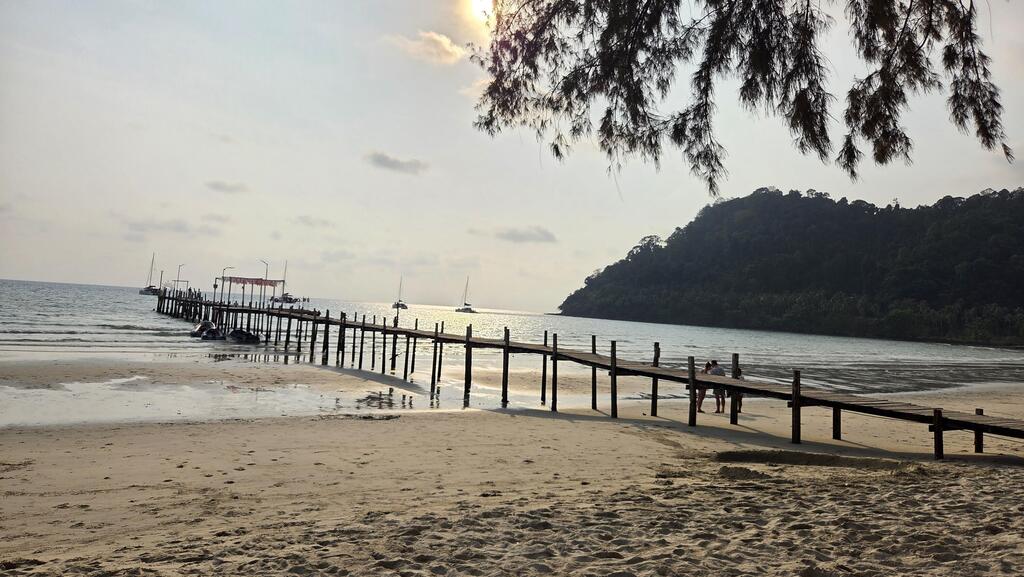
Koh Kood
(Photo: Natalie Somech)
Returning to the yachts, we raised anchor once more, fired up the engines briefly, and then set the sails as soon as we caught the breeze. Hoisting the sails required quick teamwork, but within minutes, both sails were drawing power. How well you trim the sails dictates your speed, and for the rest of the week, all I wished for was a steady, moderate wind, strong enough to move us effortlessly, but gentle enough to keep the ride smooth.
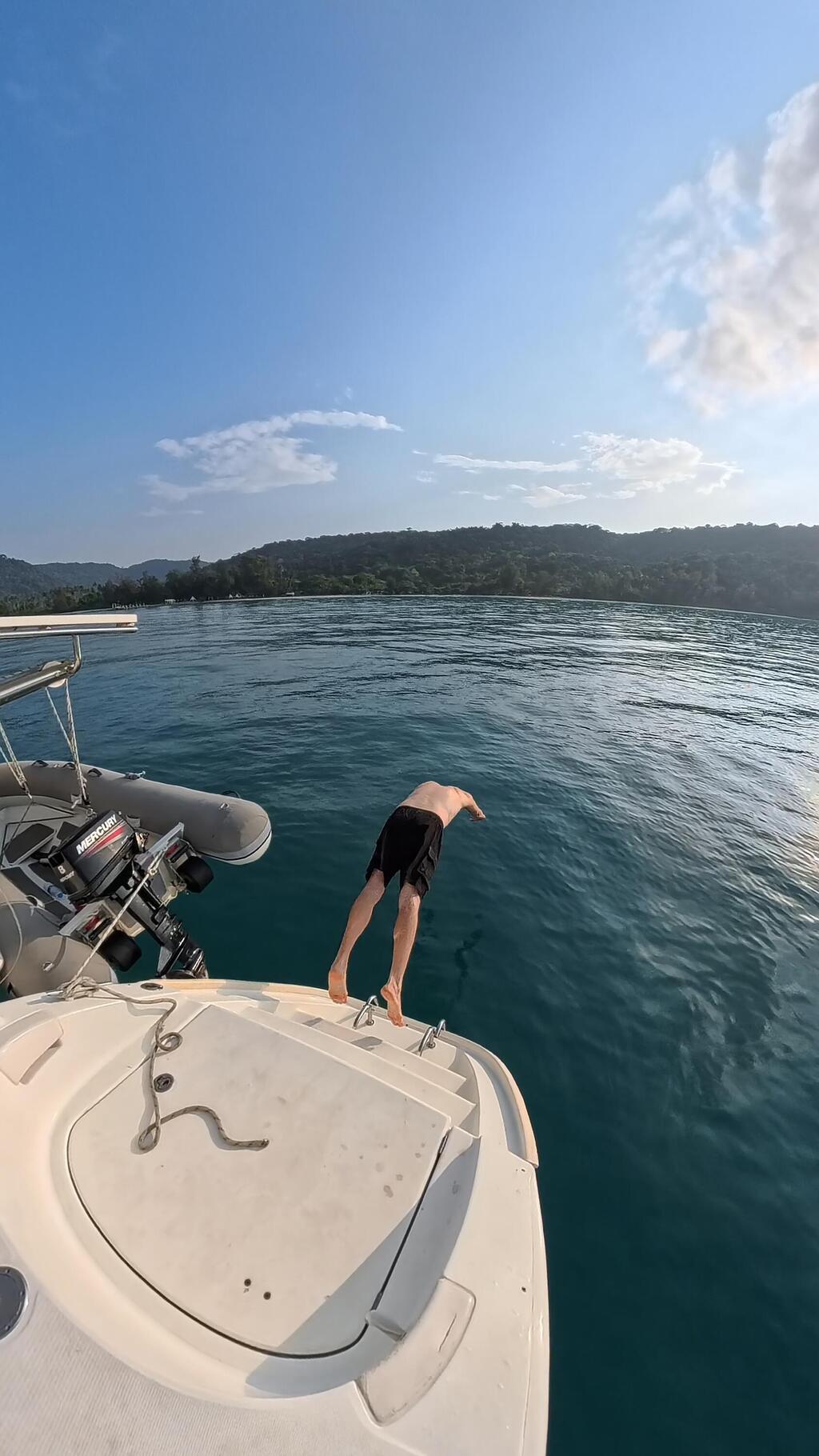
(Photo: Via Maris - Derech HaYam)
We took turns at the helm. You don't need to be a seasoned skipper to hold the course, provided a licensed skipper is supervising. When the crew was busy scanning for dolphins, reading, or simply staring at the horizon, we engaged the autopilot, letting satellite navigation guide us toward the next stop.
After two hours of tacking through the open water, we reached Koh Mak, our anchorage for the night. Each catamaran arrived at its own pace, dropping anchor in the bay off a seemingly deserted beach. We anchored just far enough out to avoid shallow reefs while keeping the dinghy ride to shore as short as possible.
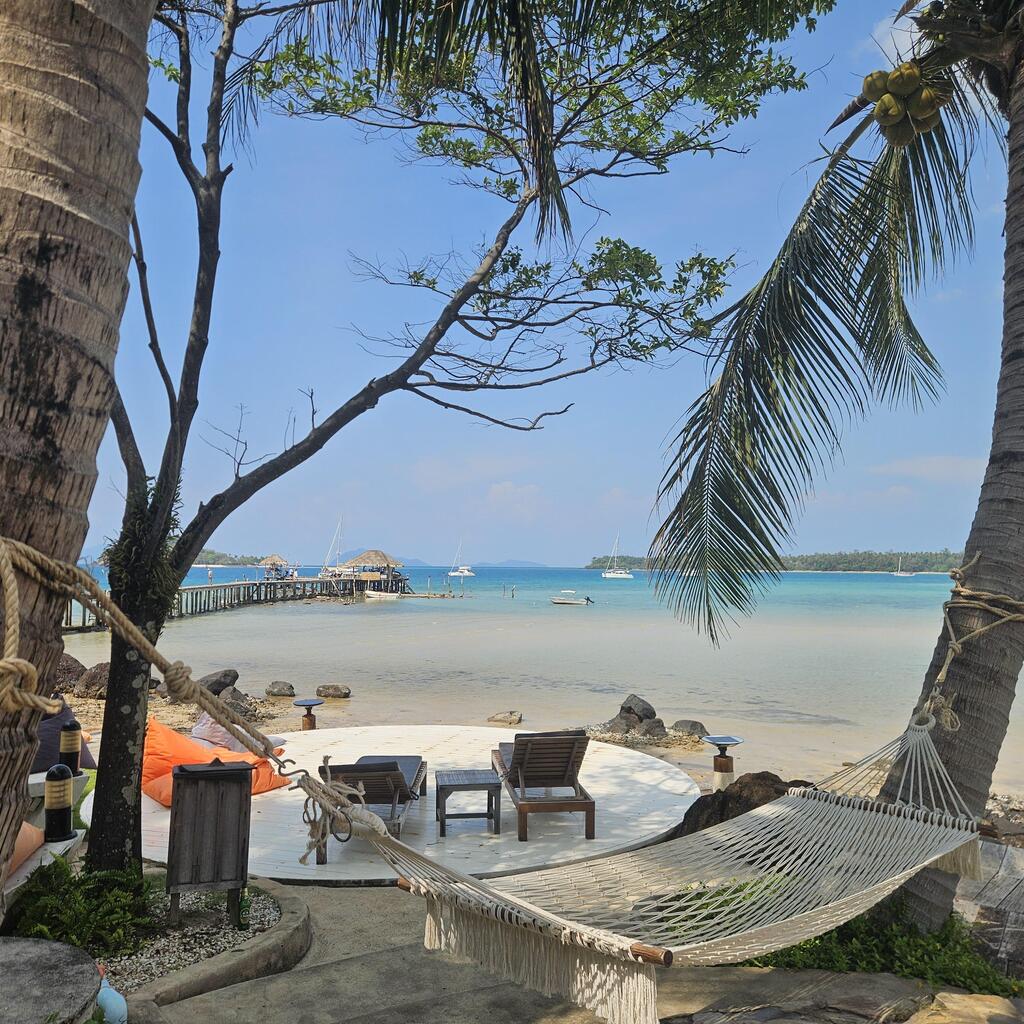
Koh Mak
(Photo: Via Maris - Derech HaYam)
Eager to explore, we headed ashore for dinner. Though our galleys were well-stocked, we unanimously preferred dining at small beachside establishments, a habit that continued throughout the week. Within minutes of landing, we found a tranquil stretch of sand. Even during peak season, the island felt remarkably quiet, occupied only by a few independent travelers and locals.
At 9:00 PM, we gathered on one of the yachts, nicknamed Mystical, for our daily evening briefing, a routine that rotated among the fleet each night.
On average, we spent between three to six hours sailing each day. The shared time on the water fostered easy camaraderie, creating space for long conversations, shared meals prepared by different crew members each day, and quiet moments alone to read, nap, or simply disconnect.
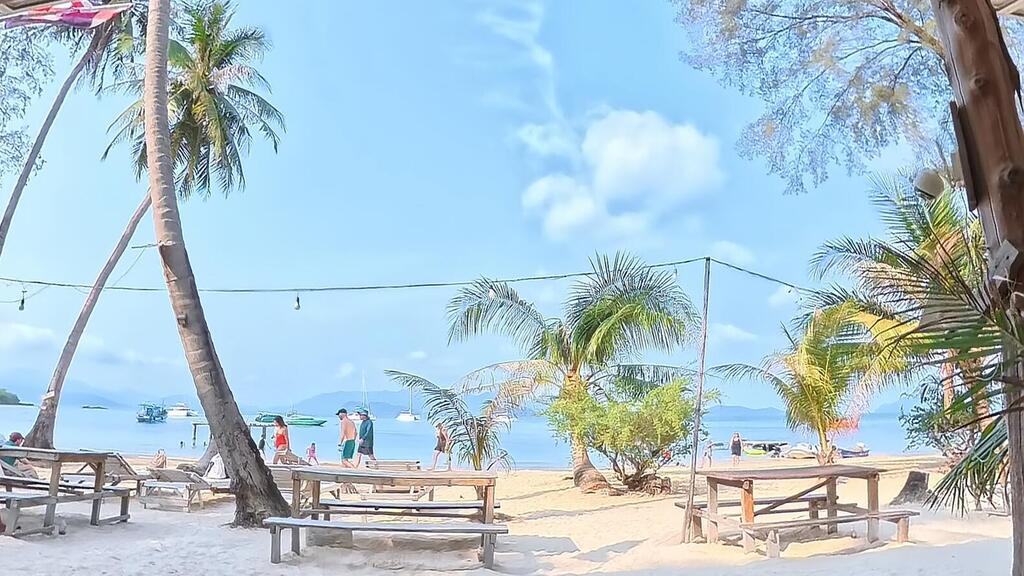
Koh Wai
(Photo: Via Maris - Derech HaYam)
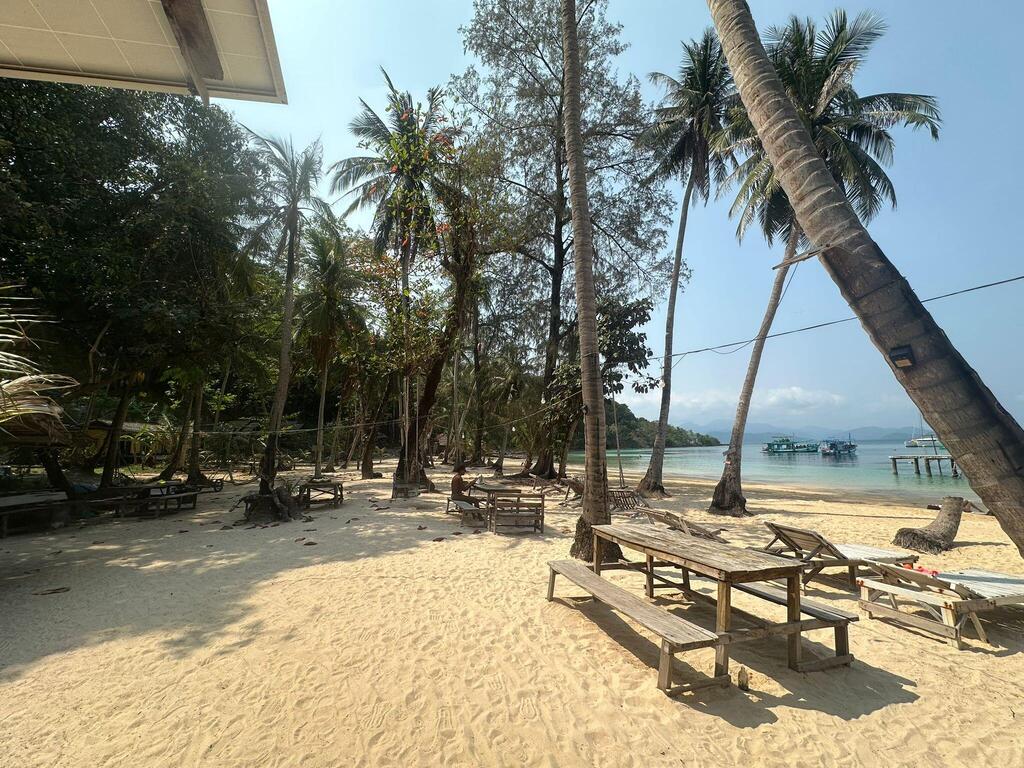
(Photo: Via Maris - Derech HaYam)
It quickly became evident that Dudi’s initial claims were accurate. We were visiting pristine, untouched destinations that remain off the mainstream radar. While conventional tourist hubs often face crowded roads and packed beaches, islands like Koh Kood and Koh Wai retain an authentic, relaxed charm.
During a meal on one of the islands, a local restaurant owner shared his perspective: "We deliberately avoid the rapid commercialization seen elsewhere. We value our way of life and are content with the current level of tourism. It works well for us."
A welcome side effect of this lower density is the cost: dining, local transport, and shore accommodations are noticeably more affordable than in Thailand's high-profile resort towns.
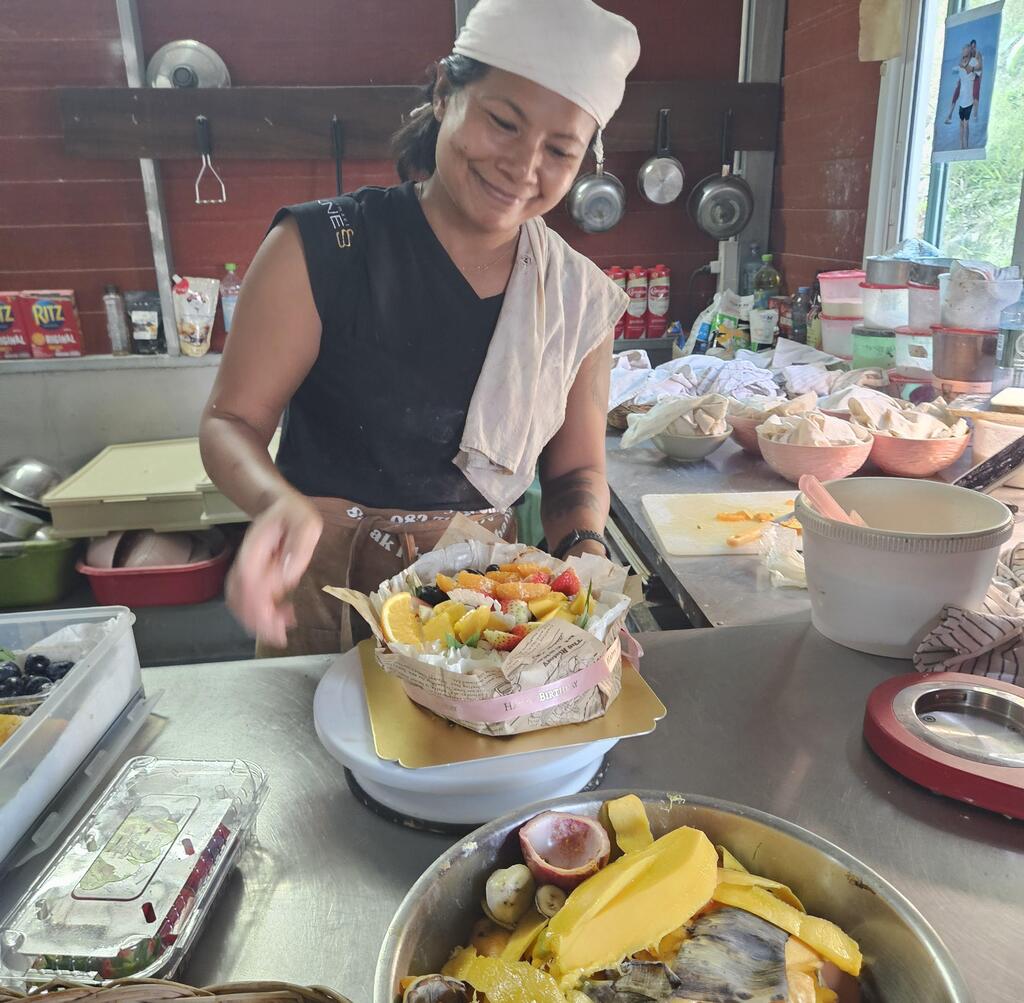
A cooking workshop at Koh Mak
(Photo: Via Maris - Derech HaYam)
We hiked to waterfalls and swam in a lake, attended a cooking workshop, toured an abandoned resort in the most beautiful place I had ever visited in Thailand, snorkeled at several sites and paddled in kayaks and on stand-up paddleboards. On islands with roads, we rented scooters and explored, meeting local residents and eating in the simplest and most delicious restaurants Thai cuisine has to offer.
The standout moment of the trip occurred on the fifth day. Dudi sent coordinates for a location that appeared on the map as little more than an unmarked speck in the water. As we approached, we spotted a few weathered wooden structures and a fishing boat tied to a floating wooden pier.
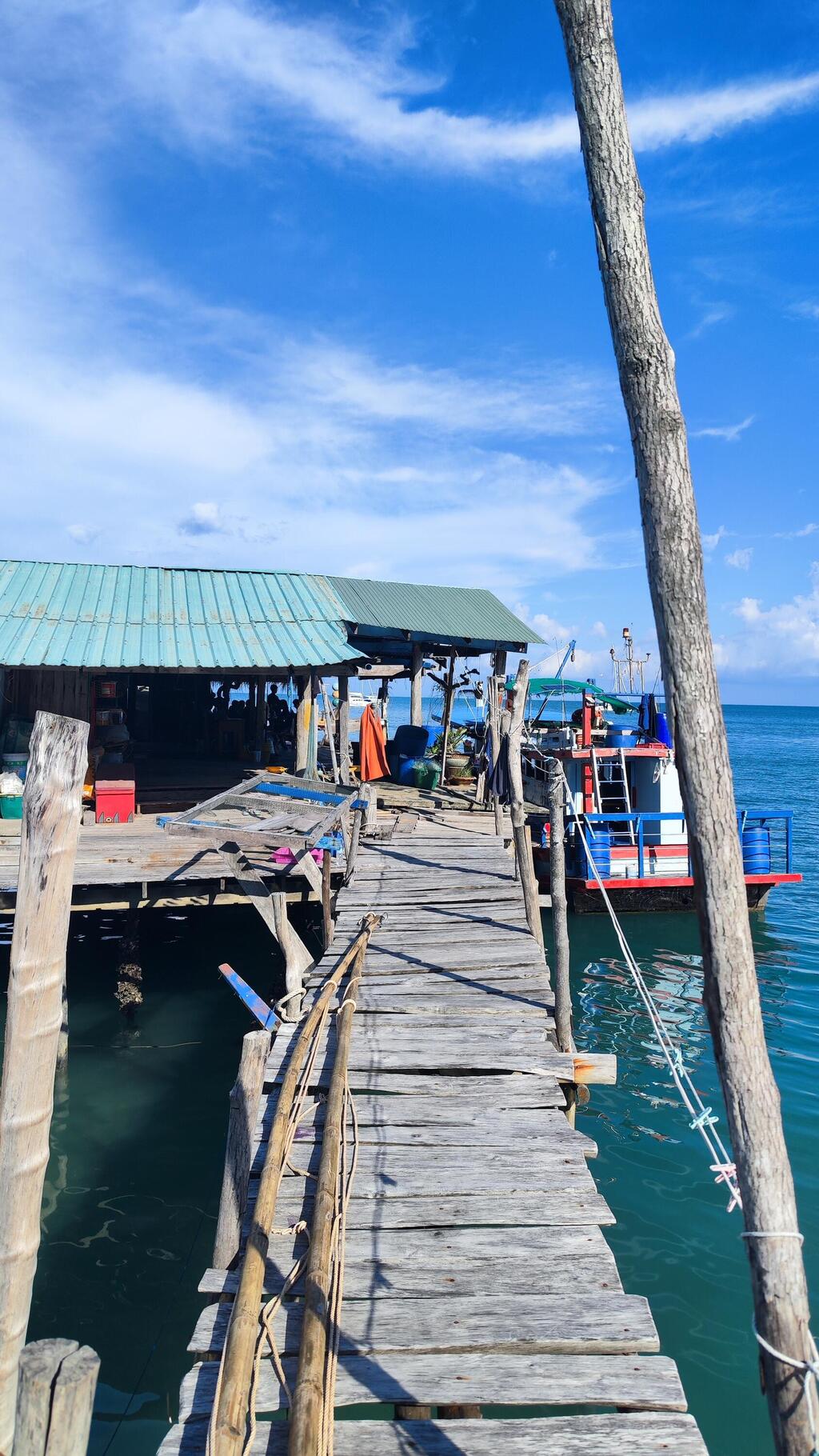
A fishing village in the middle of the sea
(Photo: Via Maris - Derech HaYam)
We anchored the catamarans, lowered the dinghies, and tied up alongside the fishing boat before climbing a wooden ladder onto the platform.
To our surprise, the platform was home to a local fishing family operating a tiny, impromptu seafood kitchen overlooking breathtaking waters. Completely removed from standard tourist routes, it offered an unforgettable culinary experience. Dudi selected several fresh fish, asked the family to fillet them, and distributed the catch among the boats. Back in our galley, we prepared a meal that was devoured long before the evening briefing.
I began the trip with a degree of hesitation; spending a full week in close quarters on a boat with people I had just met is not my typical choice. Yet, as the final day arrived, there was a shared sense of reluctance to leave. The week had flown by.
We navigated to extraordinary, serene places far removed from the typical tourist trail. Pushing past my initial skepticism proved rewarding, resulting in one of the most memorable and unique travel experiences I've had abroad.
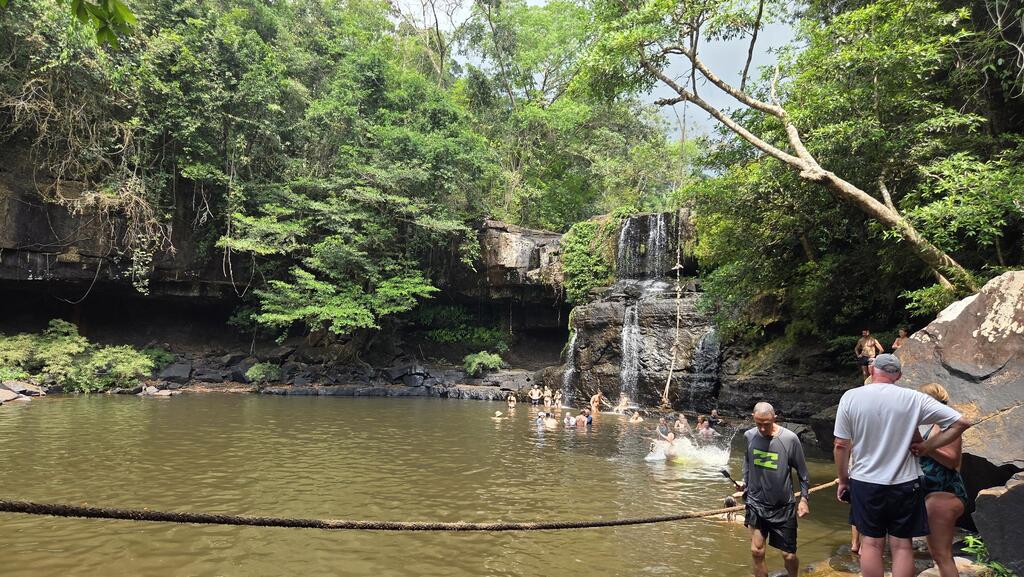
Chao Waterfall
(Photo: Natalie Somech)
How much does it cost for a couple?
- Round-trip flights between Israel and Bangkok: about $2,000
- Yacht rental with a private cabin: about 3,000 euros
- Yacht insurance: A security deposit is paid to cover the deductible in case of damage or an accident. If no damage occurs, the deposit is refunded in full
- Weekly supermarket supplies: about 500 shekels
- One or two restaurant meals per day for a week: about 700 shekels
- Scooter rental: about 60 shekels per day for two scooters
- Two massages for a couple: about 160 shekels
- Transportation between Bangkok and Koh Chang: about 400 shekels
- One night in a three-star hotel before departure: about 250 shekels
- Yacht fuel: about 350 shekels