

"If you grow up in the desert, there's a bug that always calls you back," Miron Ginzburg’s husband used to tell her. But like many living in the Southern Arava, Miron isn't a local. She, along with many others, swapped the crowded cities of central Israel or life abroad for the quiet and endless horizons of the desert.
For decades, travelers treated the Southern Arava as just a string of highway gas stations on the way to Eilat. Today, it’s a destination in its own right, defined by a homegrown culinary scene, a slower pace of life, and the tight-knit community that serves as the region's heartbeat.
"I’ve always loved creating things. Back in central Israel, I ran a boutique wedding production business, where I loved transforming blank green lawns into something magical. But weddings in the Arava are much more laid-back, and I found myself looking for a new creative outlet. I found it with the Elad Theater, the only regional theater company in the Eilat-Eilot area, which was just getting off the ground at the time. I helped build their marketing, fundraising and logistics from scratch, but after 11 years, I knew I was ready for a change.
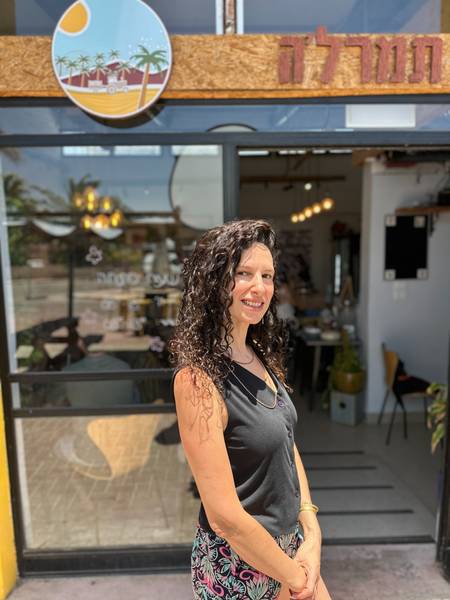
"When the war broke out, my family decided to take a step back. My husband and I took our three daughters on a 14-month backpacking trip through Southeast Asia. We lived in Thailand and India, and traveled through Myanmar and Vietnam. When you sit in the stillness of the Himalayas, it gives you a completely new perspective. I realized I’d been rolling along for years without ever stopping to breathe, and I needed to let something out.
"Seeing communities living a simple life in Goa made me realize how disconnected we’ve become from our food. I came home with a whole new passion. I started churning my own butter and baking sourdough, realizing that working with my hands was my true calling. Today, as the manager of Tamara’le Cafe at Kibbutz Eilot, I’m transforming the old communal laundry building into a food and culture hub. Travelers today are looking for exactly these kinds of hidden, authentic local stories."
"Sustainability has always been inside me. I didn’t grow up in a strict eco-household, but I always had that green passion. As a kid, my favorite hobby was spending hours at the sewing machine upcycling old jeans into dresses for myself and my friends.
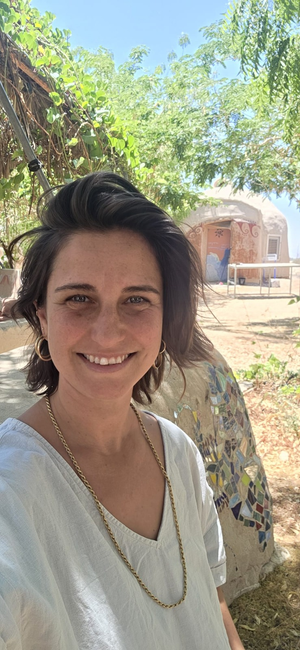
Neta Bruner Bortenstein manages the Center for Creative Ecology at Kibbutz Lotan
(Photo: Joanna Shebachman)
"Years later, when I was raising my kids in Tel Aviv, living sustainably was just our natural choice, we used cloth diapers, practiced extended breastfeeding, did infant elimination communication, and walked everywhere instead of driving. In a city like Tel Aviv, it's actually pretty easy to live that way.
"One of my first businesses combined sustainability with a bit of enjoyment, back when green living was still seen as a sacrifice. I wanted to prove that choosing eco-friendly options doesn't mean depriving yourself, and that enjoying life isn't a bad thing. True sustainability is about alignment, making choices that feel right, enjoying life to the fullest, and staying true to your values.
"That alignment is why Kibbutz Lotan felt like home. My partner and I discovered this eco-community while looking to escape the hustle of Tel Aviv. We wanted somewhere remote and quiet, and we showed up without any grand plans. Within a year, I took over management of the Center for Creative Ecology. Today, I oversee our Eco-Campus, where guests stay in desert mud-brick igloos, and the Eco-Fun park, a beautiful interactive playground that hosts tours and workshops. Every single day, we show people that a sustainable lifestyle can go hand-in-hand with joy and fun."
"I like to call myself a 'grafter,' but at my core, I’m a performer. I moved to Israel from Maryland 40 years ago, and since then, I’ve done everything from working in sheep pens and dairy barns to stints in tech startups. My current obsession actually started with home-baking bread and experimenting with wild grains. I learned the ins and outs of fermentation from YouTube tutorials and podcasts, and 15 years ago, I opened Beertzinut, a boutique craft brewery at Kibbutz Ketura.
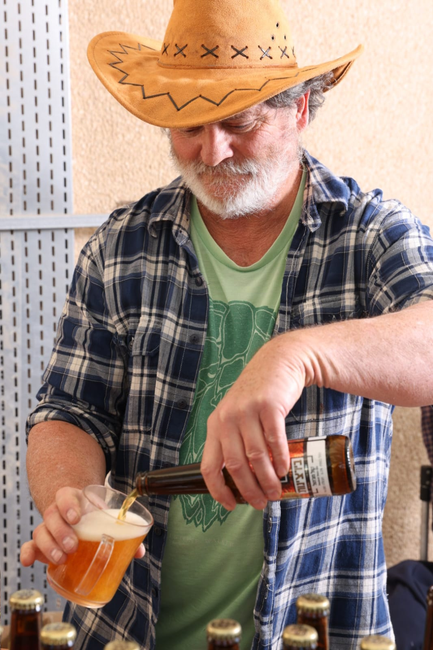
Neil Churgin moved to Israel from Maryland 40 years ago and 15 years ago he opened Beertzinut, a boutique craft brewery at Kibbutz Ketura
(Photo: Idan Gur)
"Now, at 63, I brew six signature beers with a distinct desert identity, using local ingredients like dates and apricots. Our taps feature everything from a rich, Belgian-style date ale to tropical IPAs brewed with Australian hops.
"But what really keeps me going is the human connection. This brewery is a sanctuary, a place designed to give people a little peace. I’ll never forget the couple who fled the border communities near Gaza on October 7th and ended up at my bar. It was only when they sat down with a cold beer that I saw them finally take a deep breath and just let go of the tension."
Meeting the locals
Miron, Neta and Neil are just a few of the artisans, farmers and business owners who have built a life in the Southern Arava. For anyone visiting, these personal stories are the true identity of the region. This summer, the region is launching a digital "Summer Card" pass, bundling dozens of local experiences, workshops and family tours. It gives travelers a direct window into the desert's unique human mosaic.
Ultimately, the biggest draw of the Southern Arava is the quiet authenticity of the people who live here every day. The relationship goes both ways: these creators are shaping the region's character, but the desert is quietly shaping them, too.