


A 5,500-year-old workshop for crafting flint blades was uncovered near Kiryat Gat, revealing sophisticated technology from the dawn of the Early Bronze Age. According to the Israel Antiquities Authority, the discovery includes long blades and, unusually, the large flint cores used to produce them.
The findings emerged during a large-scale rescue excavation at Nahal Komem, funded by the Israel Land Authority, ahead of the construction of the Karmi Gat neighborhood. The rare find will be accessible to the public later in the summer.
Ancient Canaanite flint blade workshop in Kiryat Gat
(Video: Emil Eljam, Israel Antiquities Authority)


Dr. Martin-David Pasternak, Shira Lifshitz and Natan Ben-Ari, the excavation directors from the Antiquities Authority, described the find as unprecedented. “This is the first time such a workshop has been uncovered in the south of the country. While evidence of Canaanite blade production exists in central and northern Israel, systematic workshops are almost unknown,” they said in a statement.
“The discovery of this sophisticated workshop points to a society with a complex social and economic structure at the start of the Early Bronze Age, deepening researchers’ understanding of early urbanization and professional specialization in Israel,” they added. These developments led to the establishment of larger settlements and the emergence of new social frameworks.
Prehistorians Dr. Kobi Vardi and Dudu Biton from the Antiquities Authority emphasized the advanced nature of the industry. “The site reveals a highly specialized industry requiring exceptional expertise.
Gallery
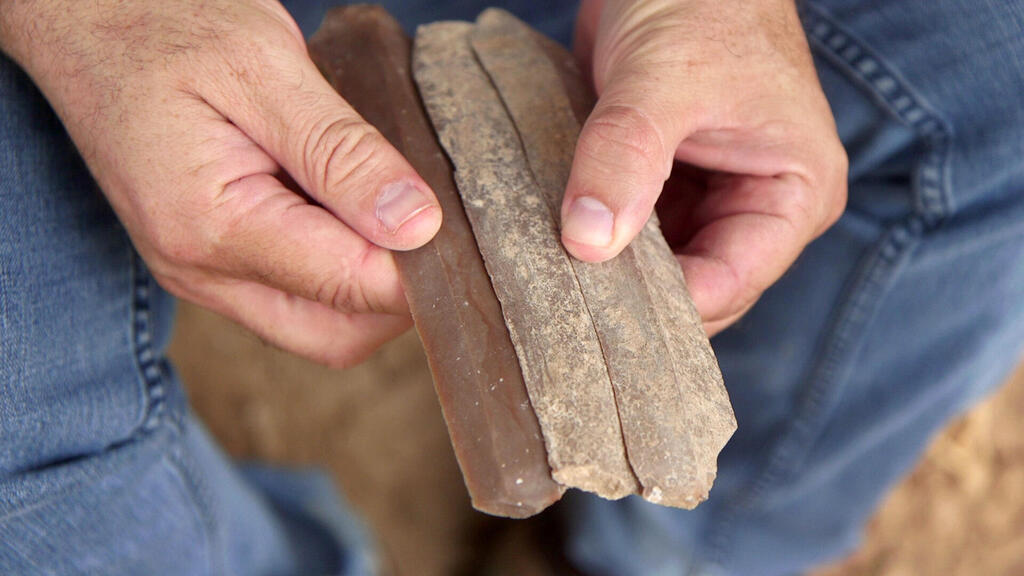
Flit blades created in the ancient workshop
(Photo: Emil Eljam, Israel Antiquities Authority)
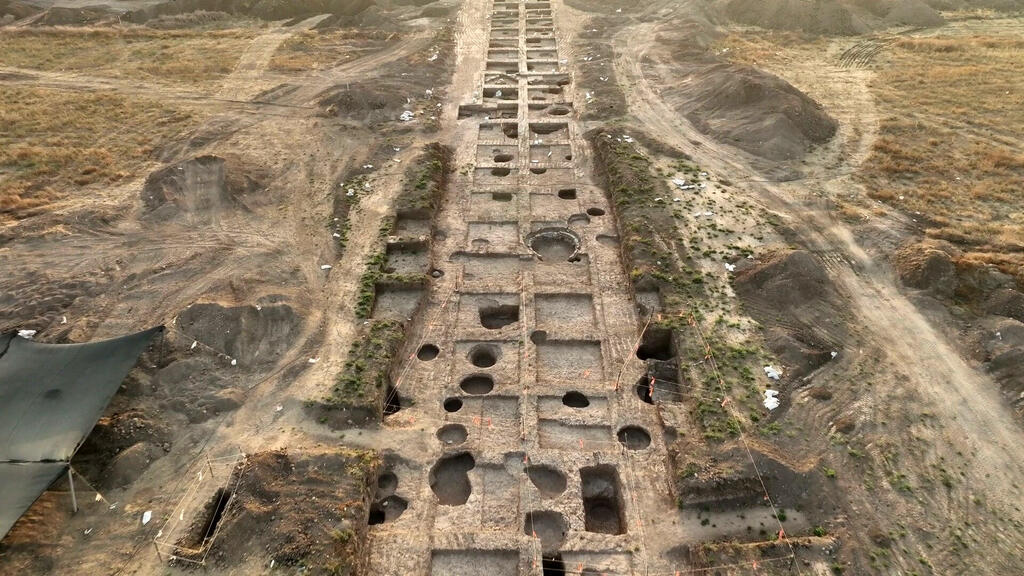
Aerial view of the workshop
(Photo: Emil Eljam, Israel Antiquities Authority)

Flint blades and cores found in the workshop
(Photo: Emil Eljam, Israel Antiquities Authority)
“Only a select few knew how to craft these Canaanite blades,” they said in a statement. This is clear evidence that the local society was organized and complex, with distinct professional skills, even at the beginning of the Bronze Age.
Get the Ynetnews app on your smartphone: Google Play: https://bit.ly/4eJ37pE | Apple App Store: https://bit.ly/3ZL7iNv
The excavation indicates that the site served as an active settlement for centuries, from the Chalcolithic period through the Early Bronze Age. The settlement spanned a much larger area than previously estimated—over half a kilometer (0.3 miles)—and included hundreds of underground pits, some lined with mud bricks, used for storage, living spaces, crafts and rituals, according to the excavation directors.
The most striking finds are large flint cores, from which exceptionally sharp, uniformly shaped blades were crafted. These blades served as knives for cutting and slaughtering, as well as harvesting tools. The production technology was highly advanced, involving a lever-like mechanism to apply precise pressure to the flint.
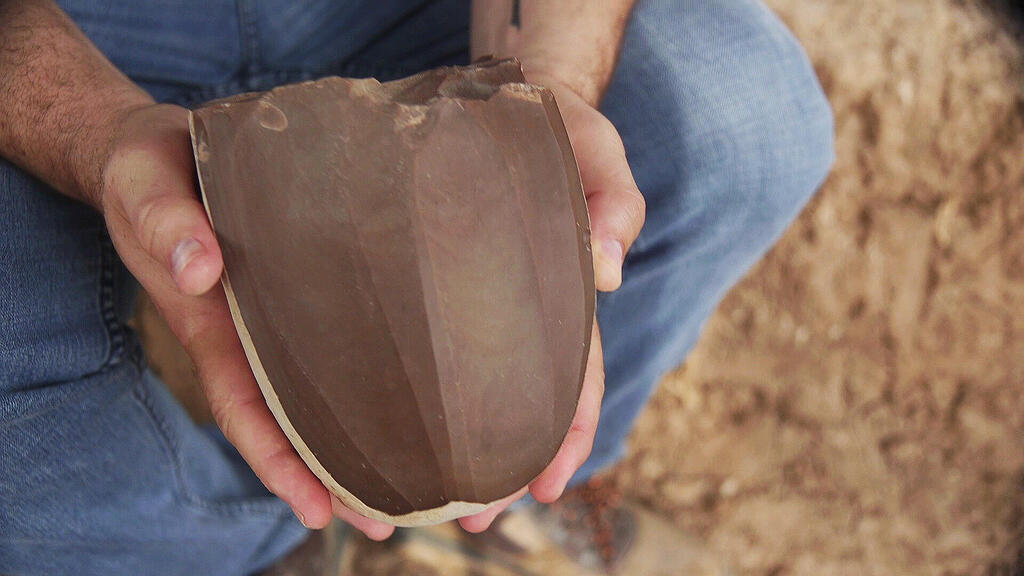
Flint core
(Photo: Emil Eljam, Israel Antiquities Authority)
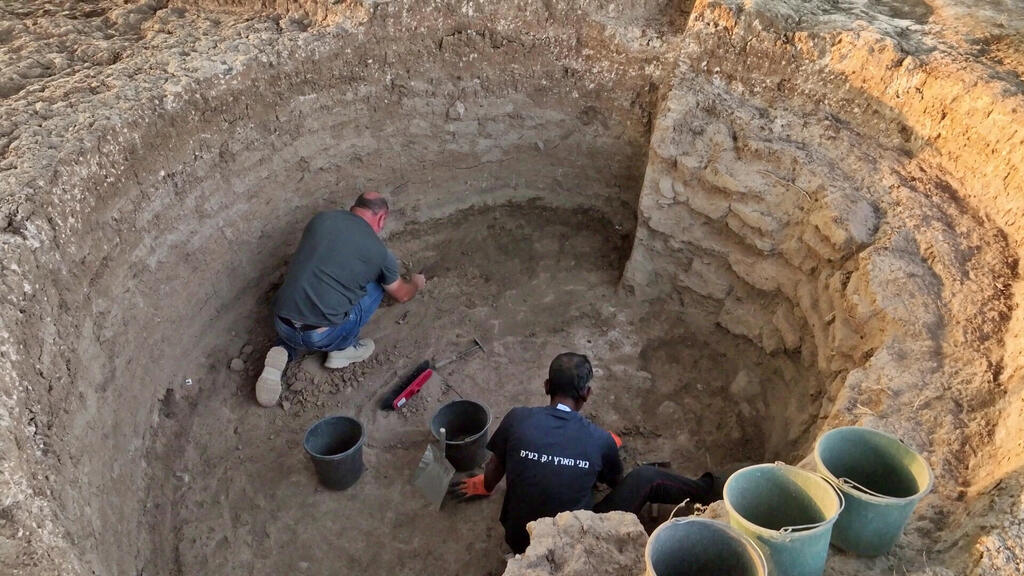
Archaeologists working at the site
(Photo: Emil Eljam, Israel Antiquities Authority)
Vardi noted the sophistication extended beyond the tools themselves. “The absence of production waste scattered outside the site suggests the knowledge was closely guarded within a select group of experts,” he said.
The Antiquities Authority explained that during the Early Bronze Age, people relied on tools made from natural materials like flint, bone, stone and pottery, with Canaanite blades being the primary cutting tools of the era. The workshop’s discovery reveals it as a hub from which these blades were distributed across the Levant, underscoring its regional significance.