

The peak August travel season continues to take its toll at Ben Gurion Airport. An analysis of TLVFLIGHT data covering 3,598 flights operated between Aug. 5 and Aug. 11 found that just 30.1% departed on time, while the average delay stood at 74.3 minutes. During the week, 136 flights were canceled and another 950 departed at least an hour late.
The disruptions come as daily passenger traffic at Ben Gurion Airport has already surpassed 100,000, compared with about 85,000 passengers a day in July. The figures indicate that conditions have not improved since our review about two weeks ago — and by some measures have worsened. The earlier analysis found that 31% of flights departed on time and the average delay was 40 minutes.
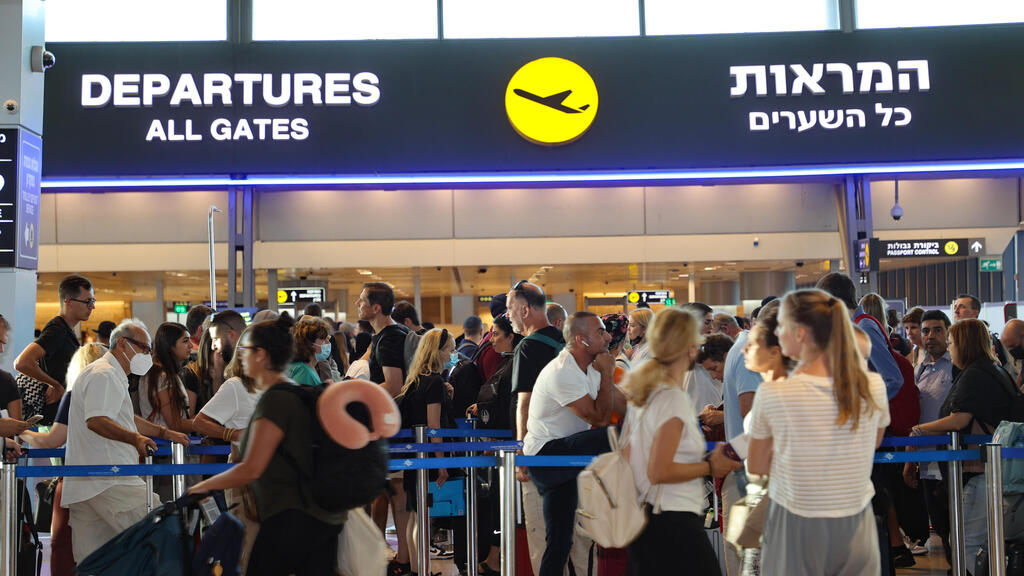
The numbers illustrate the scale of the disruption: 592 flights departed one to two hours late, while 358 took off at least two hours behind schedule. In addition, 136 of the 3,598 flights examined were canceled altogether.
A comparison with data reviewed in late July shows that the share of flights departing on time has remained almost unchanged. Between July 20 and July 27, 3,499 flights were analyzed, with 31% departing at their originally scheduled time. In the latest review, that figure slipped slightly to 30.1%. The more significant change was in the length of delays: The previous review found an average delay of 40 minutes, compared with 74.3 minutes now — an increase of about 86%.
The number of cancellations also rose sharply. In the previous review, 83 of 3,499 flights were canceled, compared with 136 of 3,598 in the latest period — an increase of about 64% in the number of canceled flights.
Broken down by airline, Wizz Air recorded an average departure delay of 118 minutes during the period examined — nearly two hours. It was followed by Blue Bird Airways, with an average delay of 107 minutes, and TUS Airways, with 101 minutes. By contrast, Flydubai was the most punctual carrier during the period, with 64.7% of its flights departing on schedule.
Destination also had a significant impact on the likelihood of an on-time departure. Barcelona stood out for particularly poor performance, with just 9.1% of flights to the city leaving as scheduled.
The picture was no better for flights arriving at Ben Gurion Airport. According to the data, average arrival delays among the airlines examined reached 163 minutes for TUS Airways, 138 minutes for Blue Bird and 114 minutes for Arkia.
The Greek bottleneck
Airspace congestion is continuing. The Israel Airports Authority said Wednesday evening that because of heavy air traffic over Greece, Greek aviation authorities were limiting the number of flights allowed to pass through the country’s airspace en route to Europe. As a result, delays were expected in the coming hours on some flights departing Ben Gurion Airport. The IAA advised passengers to check with their airlines for updated departure times before heading to the airport.
Alongside the summer congestion, aircraft from the U.S. aerial refueling fleet that arrived in Israel during the recent security escalation are still stationed at Ben Gurion Airport and have not yet fully departed.
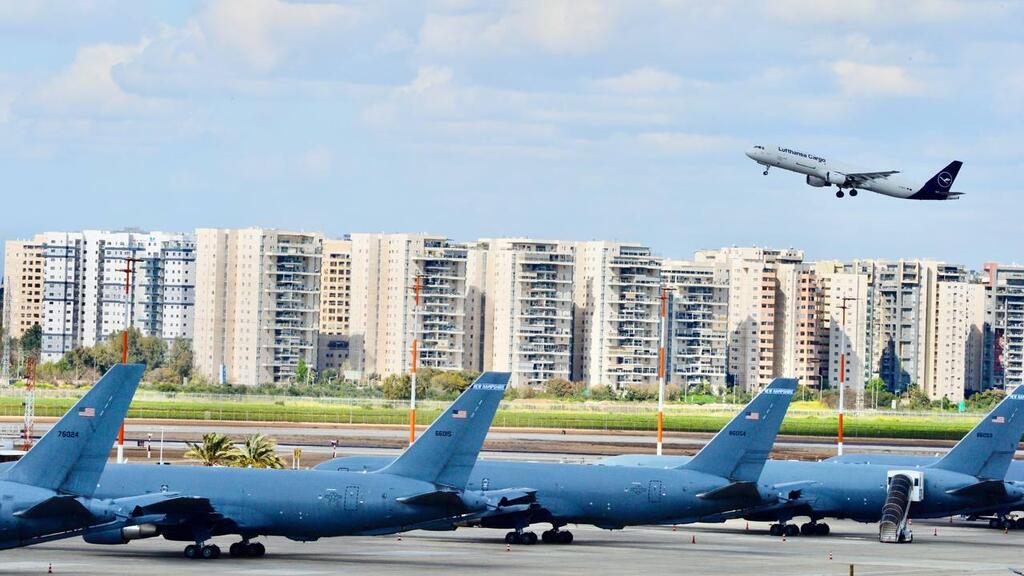
US refueling aircraft at Ben Gurion Airport
(Photo: Kobi Koankes)
The Israel Airports Authority said in response: "The summer months are the busiest period in international aviation, and this year particularly heavy congestion is being recorded both at Ben Gurion Airport and at airports and in airspace across Europe. A significant share of departure delays stems from factors beyond Ben Gurion Airport's control, including air traffic congestion and restrictions imposed by European aviation authorities. For example, congestion in Greek airspace is currently affecting flights from Israel to various destinations in Europe. Any delay to one flight can affect subsequent rotations and accumulate throughout the day.
"Ben Gurion Airport is currently operating at exceptionally high levels of activity, with about 100,000 passengers and some 600 aircraft movements every day. All employees are mobilized and working to minimize the impact of the congestion on passengers.
"We again emphasize that there has been no change in the guidelines for arriving at Ben Gurion Airport. The recommendation to arrive three hours before departure has been standard practice in Israel for nearly three years, since October 7, 2023, as is also customary at many airports around the world. Each year, particularly ahead of peak travel periods, we reiterate the existing guidance. We did so in November 2025 and again ahead of the current summer season. There is no unusual staffing shortage and there is no need to arrive at Ben Gurion Airport earlier than the existing recommendation. We advise passengers to follow the guidelines and arrive three hours before their flight."
Ilan Shalev, marketing director of the Kavei Hufsha Group, which owns Greek carrier Blue Bird Airways and Cyprus-based TUS Airways, said: "The main reason for the delays is the exceptional congestion currently affecting Greek airspace, particularly the busy flight corridors to and from the Greek islands. Blue Bird and TUS are among the airlines operating the largest number of flights to and from Ben Gurion Airport through Greek and Cypriot airspace, so naturally they are more exposed to the effects of congestion and airspace restrictions.
"It is important to stress that despite the congestion and operational challenges, both Blue Bird and TUS manage to operate their full scheduled flight programs by the end of each day — about 38 flights daily. That level of activity places the airlines fourth in terms of operating volume at Ben Gurion Airport, both since the beginning of the year and in July. We are doing everything possible to minimize the impact of the congestion on passengers, while adjusting operations in real time and coordinating with all relevant aviation authorities in Israel and Greece."