

Less than a year after a court handed a suspended prison sentence to a climber who abandoned his girlfriend to her death on Austria’s highest mountain, a strikingly similar case occurred. This time nobody died, but the incident has reignited debate over the dynamics between men and women who decide to conquer the world’s highest mountains together.
Just eight months ago, we reported the extraordinary story of Thomas Plamberger, 39, who set out in January 2025 to climb Grossglockner, Austria’s highest mountain, with his girlfriend, Kerstin Gurtner, 33. The two began their ascent too late, were inadequately equipped and supplied, and ran into trouble during the climb as extreme weather set in.

They rejected attempts by rescue teams to help them and continued climbing. At around 2 a.m., Gurtner could no longer continue. Plamberger, who was a far more experienced climber, left her in a severe snowstorm and freezing conditions while she was suffering from serious hypothermia, exhaustion and complete disorientation, about 50 meters, or 165 feet, below the summit. He climbed to the summit and began descending to seek help.
When rescuers arrived, they found that Gurtner had frozen to death in temperatures of minus 20 degrees Celsius, or minus 4 Fahrenheit, while Plamberger had managed to find shelter in a hut farther down the mountain.
The Innsbruck court convicted Plamberger of causing death through gross negligence. Despite testimony from a former girlfriend describing similar behavior during a previous climb, when Plamberger punished her for being unable to continue, the court sentenced him to only five months in prison, suspended, and fined him 9,600 euros. Both the prosecution and defense appealed the ruling.
The case caused an uproar both within the mountaineering community and among the wider public because of the disturbing details surrounding Gurtner’s abandonment and death. One might have expected such a case to serve as a warning to anyone tempted to repeat the pair’s mistakes, both in the negligence with which they began the climb and, above all, in leaving someone behind to die on a mountain.
Less than nine months after the verdict, an almost identical incident occurred, this time on Germany’s highest mountain. At least on this occasion, the outcome was less tragic.
History repeats itself
This time, the mountain was Zugspitze, part of the Bavarian Alps on the border with Austria and Germany’s highest peak, at 2,962 meters, or 9,718 feet. It has challenged climbers since the 18th century.
At 7 p.m. on Oct. 31, rescuers received distress calls from four climbers who had also begun their ascent too late, were defeated by the steep, frozen terrain and called for help. The rescue team brought them to safety and returned to its hut, believing its work for the night was over.
At midnight, Regina Poberschnigg, a member of the rescue team, said goodnight to colleagues who were celebrating a traditional Tyrolean festival and walked toward her car. Temperatures were below freezing and heavy snow was falling.
Before getting into her car, Poberschnigg looked up at the mountain, rubbed her eyes and looked again to make sure she was not seeing a mirage. She could clearly see several people, identifiable by their helmet lights, climbing toward the summit.
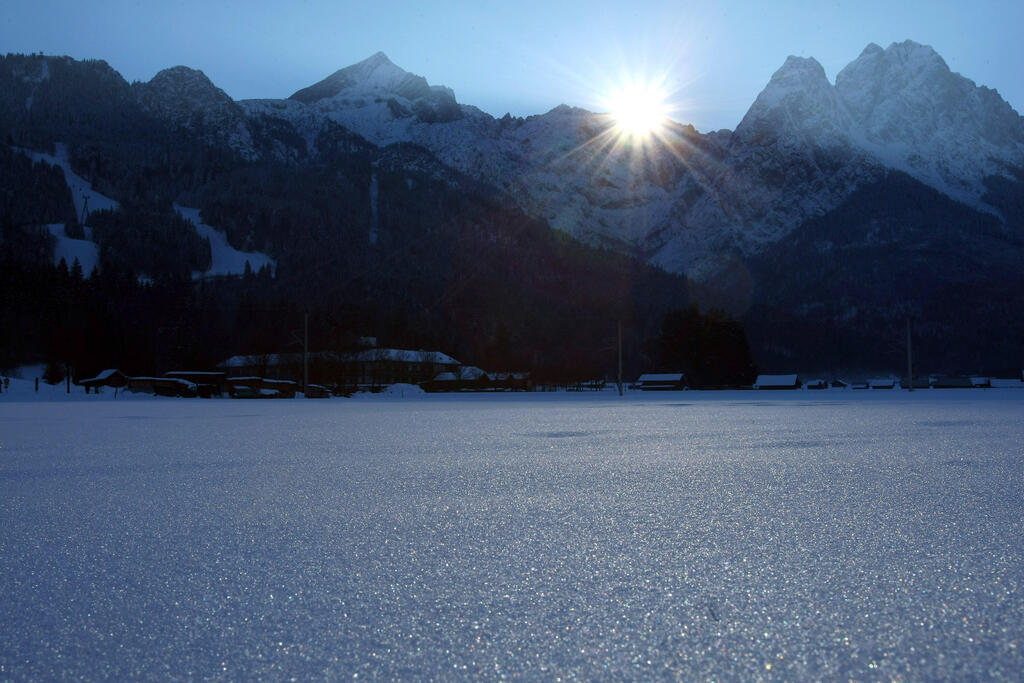
Zugspitze summit
(Photo: Alexander Hassenstein/Getty Images)
Among the climbers were two young people with very little climbing experience: a 21-year-old man and a 17-year-old woman. Both had deliberately begun their climb late because they wanted to reach the summit in time for sunrise.
For mountaineers, watching the sunrise from a summit can be one of the highlights of a climb: the spectacular view after the physical effort, standing on top of the world.
When they reached an altitude of 2,500 meters, or about 8,200 feet, they were sinking into snow up to their knees and could no longer continue. The man decided to descend to seek help, leaving his climbing partner alone on the frozen mountainside.
The temperature was minus 12 degrees Celsius, or about 10 Fahrenheit. She managed to make an emergency call to rescuers, who set out toward her and eventually evacuated her by helicopter. Suffering from severe hypothermia, she was taken to safety and for medical treatment. The rescue was completed before her climbing partner had managed to descend from the mountain.
The rule of thumb in situations like these is that climbers should remain together until help arrives. That allows them to support one another and even help keep each other warm.
There is little doubt that Gurtner’s death would have been familiar to them. It is possible that the young man panicked. It is difficult to judge people in such extreme situations.
An investigation is now underway into the circumstances of the incident and why the man left the woman alone high on the mountain. Did they agree to separate? Did they argue or fight?
According to the investigation, the man is suspected of endangering physical safety under the criminal code, and a report on the incident will be submitted in Innsbruck to determine whether he should face prosecution.
Alpine divorce
The story raises two other issues worth discussing. Since the COVID pandemic, mountaineering has become an increasingly popular recreational activity among people looking for ways to get outdoors. The trend continued.
The problem is that many climbers approach peaks such as Zugspitze as though they were little more than the hill behind their house. Only once they are halfway up, completely exhausted, do they realize how serious a situation they have entered. In recent years, Alpine rescue services have reported record numbers of calls for help and rescue operations.
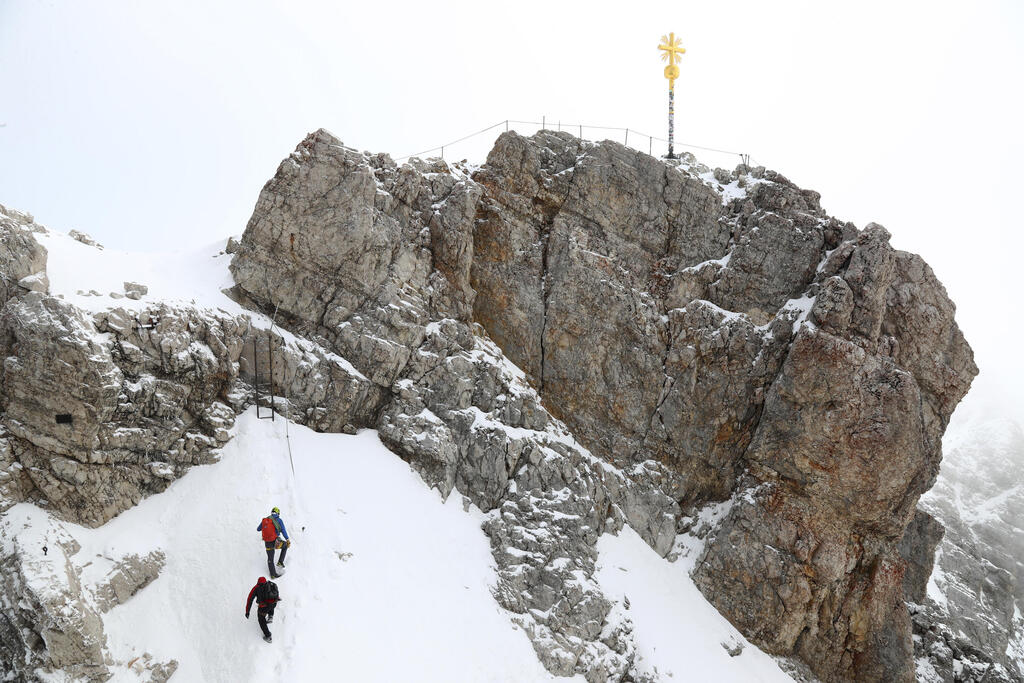
For some climbers, it is only halfway through an ascent, when they are completely exhausted, that they realize how much trouble they are in
(Photo: AP Photo/Matthias Schrader)
The second issue is far more contentious, and it concerns gender. There are dozens of videos on social media posted by women, some of them pregnant, who filmed themselves climbing mountains with their partners and then being left behind, sometimes without food, water, equipment or any idea how they were supposed to get back.
Many women have posted on TikTok or Instagram saying that they went on the climb only to please their partner, that they did not call for help because they were afraid of his reaction, that they continued climbing despite exhaustion because they did not want to disappoint him, or that they put themselves in danger because of the pressure they felt.
It is a dynamic of dependence and exploitation. Once the women began falling behind, saying they could not continue or delaying the climb, their partners simply left them behind. The phenomenon even has a name: “alpine divorce.”
Rescue services say that in such extreme situations, couples can revert to traditional roles: the man becomes the stronger partner and the decision-maker, unable to relate to the woman’s difficulties. He wants to reach and conquer the summit as quickly as possible. She wants the climb to be something they experience together, a form of quality time.
These extreme situations, involving high risk and sometimes even mortal danger, test couples’ physical and psychological limits and can also lead to fierce arguments and fights.
Mountaineering is still considered a male-dominated field. It requires physical strength, courage, the ability and willingness to take risks and a significant degree of self-centeredness, traits commonly associated with men. In many cases, the woman becomes the victim of the situation.
Other women reject that characterization. They argue that women need to be more assertive on the mountain. One Austrian mountaineer wrote on Instagram that gender equality also means taking responsibility, especially for yourself, and setting clear boundaries with a male partner.