

A joint team of Israeli and U.S. researchers have discovered for the first time a complete sentence in the ancient Canaanite language.
The ivory comb found at the Tel Lachish archaeological site in southern Israel bears the inscription "May this [ivory] tusk root out the lice of the hair and the beard."
Gallery
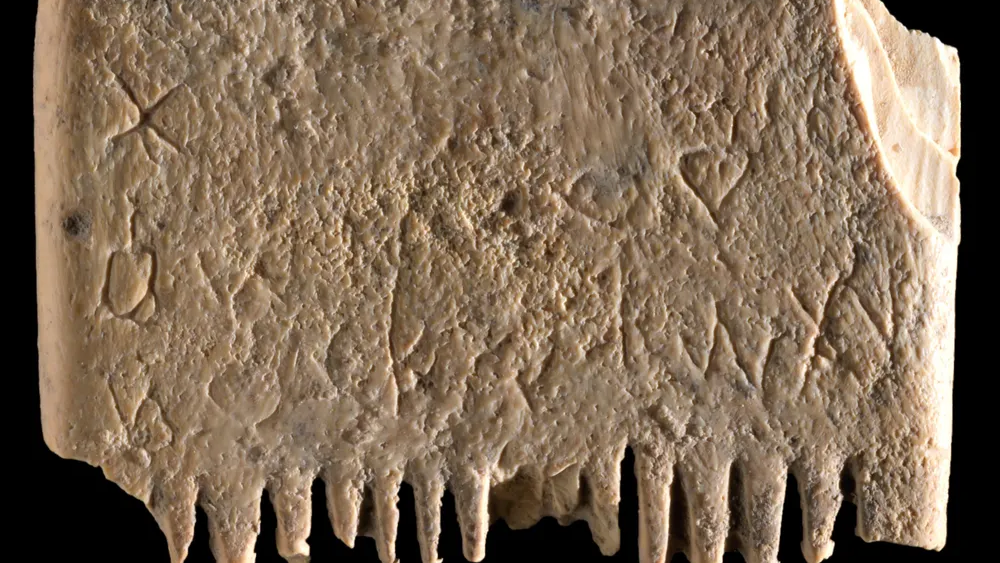
The ivory comb bearing the sentence in the Canaanite language
(Photo: Dafna Gazit, Israel Antiquities Authority)
Lachish was an ancient Canaanite and Israelite city.
The ivory comb with the engraving of a spell against lice dates back to around 1700 BCE.
A team from the Hebrew University of Jerusalem and Southern Adventist University in the United States made the discovery, under the direction of Professors Yosef Garfinkel, Michael Hasel and Martin Klingbeil.
Their findings were published in the Jerusalem Journal of Archaeology.
“This is the first sentence ever found in the Canaanite language in Israel. There are Canaanites in Ugarit in Syria, but they write in a different script, not the alphabet that is used to this day. The Canaanite cities are mentioned in Egyptian documents, the Amarna letters that were written in Akkadian, and in the Hebrew Bible. The comb inscription is direct evidence of the use of the alphabet in daily activities some 3,700 years ago. This is a landmark in the history of the human ability to write," said Garfinkel.
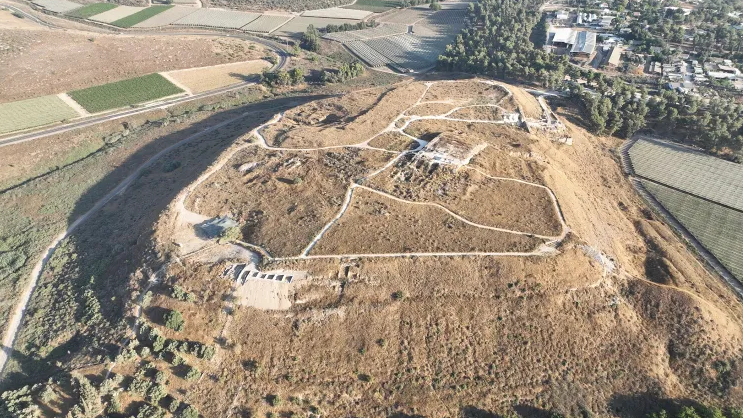
Aerial view of Tel Lachish
(Photo: Emil Aladjem)
The elephant ivory for the ancient comb with the 17 Canaanite letters was likely imported from neighboring Egypt, a sign that even the elites of the time suffered from lice.
The Canaanite languages were a group of northwest Semitic languages spoken in ancient times. The only living descendant of Canaanite is the modern Hebrew language, which was revived as a spoken language in the 19th and 20th centuries and is the official language of Israel.