

One of Crete’s most famous and photographed beaches has gone viral in recent days, but not because of its turquoise water or spectacular scenery.
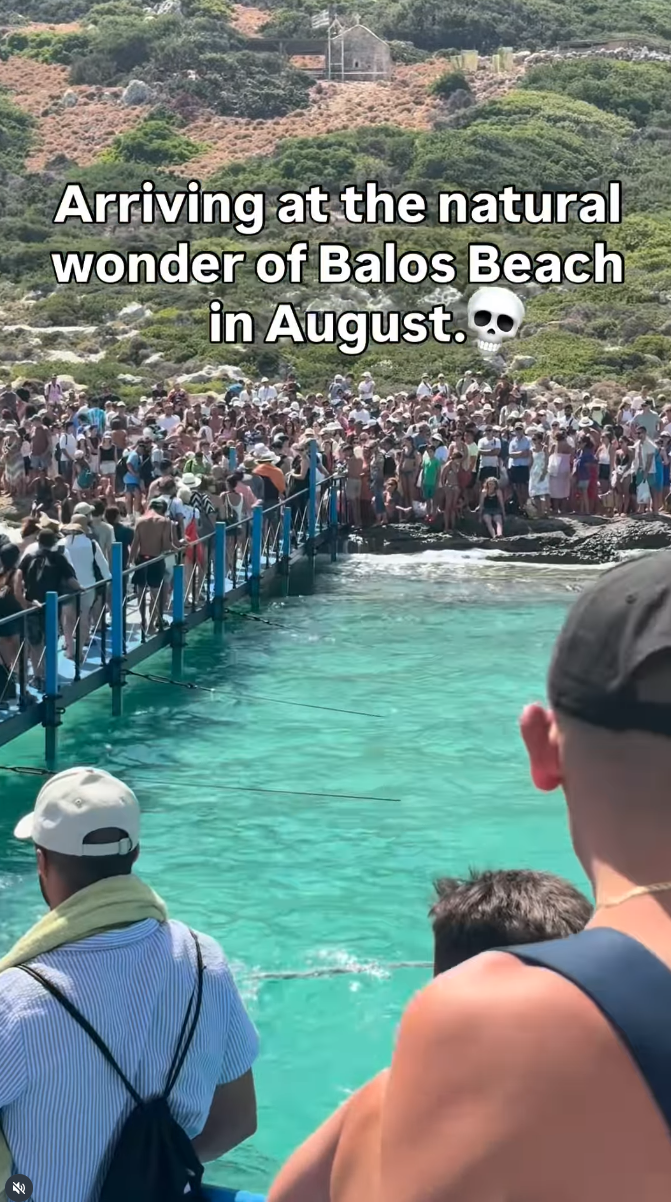
A video filmed at Balos Beach in the Chania region shows crowds of tourists packed into a long line on a narrow pier and gathering along the shoreline at the height of the summer season.
The footage, which has drawn more than 940,000 views on Instagram, offers a very different picture from the postcard images normally associated with one of western Crete’s best-known natural attractions.
The video has also been widely covered by Greek media in recent days. It shows large numbers of visitors arriving at Balos by boat and waiting closely together on and around the narrow metal pier. More tourists can be seen spread along the beach, with the lagoon’s distinctive turquoise water in the background.
The Instagram user who posted the video captioned it sarcastically: “Arriving at the natural wonder of Balos Beach in August.” The scene bears little resemblance to the familiar image of a quiet, almost empty beach. Instead, it shows one of Crete’s most sought-after tourist destinations at its busiest point of the summer.
“This is hell,” one commenter wrote. Others blamed overtourism and the influence of social media on once-idyllic destinations. “Instagram and TikTok really ruined many places around the world,” wrote one commenter in a response that received more than 2,000 likes. Another added: “Overtourism is a serious global problem, and nature suffers most of all.”
Some users recalled visiting Balos before it became so heavily trafficked. “I was there in April 2004. Alone. All day,” one wrote.
Not everyone agreed that the video accurately represented conditions across the entire beach. One commenter who identified himself as a local resident said the footage was filmed at a point where passengers leaving a boat meet visitors waiting to board, creating a bottleneck around the restricted boarding area. “This video is misleading,” he wrote. But even he acknowledged concerns about overtourism and the long-term damage being caused to Balos.
Other commenters similarly pointed out that the densest crowds shown in the video were concentrated around the docking point and did not necessarily reflect conditions across the full beach.
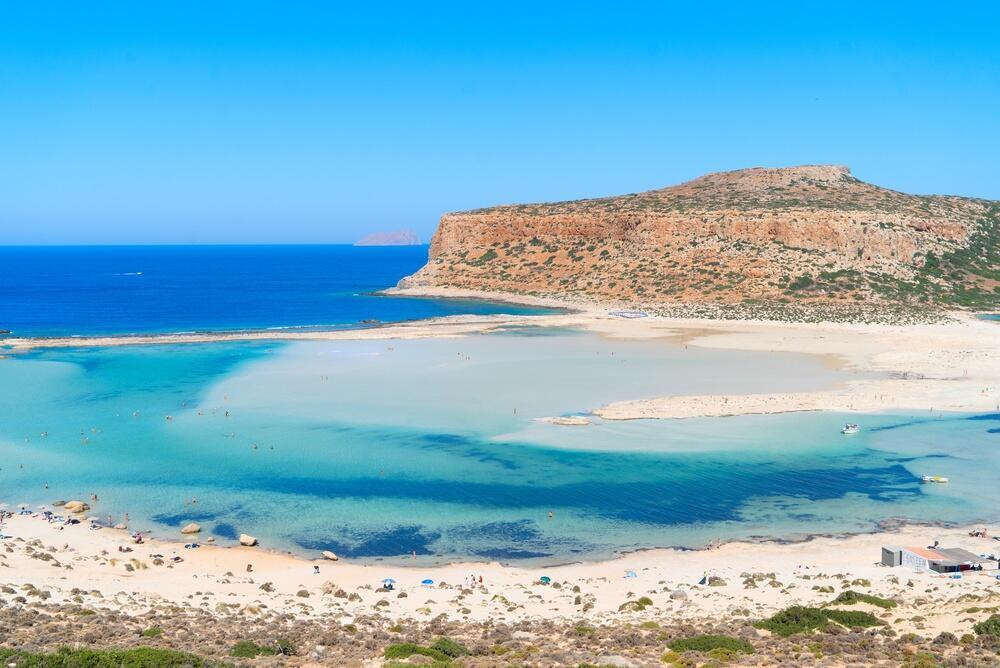
The postcard version
(Photo: Neirfy / shutterstock)
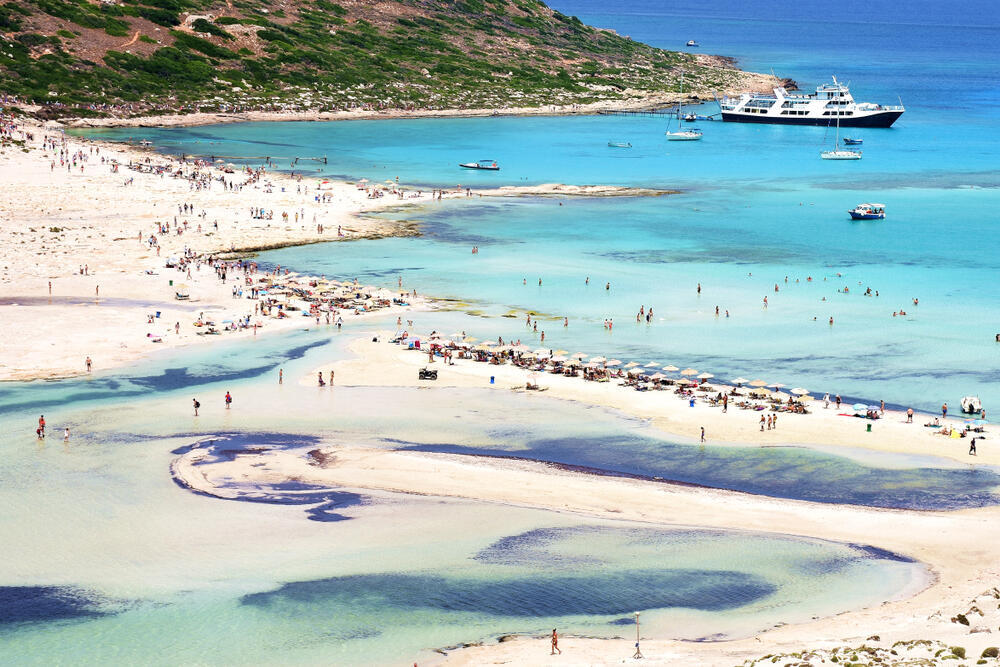
(Photo: tiboss77 / shutterstock)
Concerns over crowding at Balos are not new. On Aug. 8, Greek newspaper Kathimerini reported that the municipality of Kissamos, which includes Balos, was seeking tighter controls on visitor numbers at three of western Crete’s most popular destinations: Balos, Elafonisi and Falassarna. Among the measures being considered is an online reservation system requiring visitors to book a specific date and time in advance.
Giorgos Koukourakis, a special environmental adviser to the Kissamos municipality, told Kathimerini that authorities are dealing with between 4,000 and 5,000 visitors a day, making it extremely difficult to enforce environmental protection rules.
Balos, Elafonisi and Falassarna are all part of the European Union’s Natura 2000 network because of their ecological importance and biodiversity. Under the proposed system, each site would be assigned a “carrying capacity,” the number of visitors it can accommodate without placing excessive pressure on the environment and local infrastructure. Admissions could then be restricted according to that limit.
The plan is not yet in effect. According to Kathimerini, implementation would require cooperation among Greece’s Environment Ministry, the Region of Crete and the Kissamos municipality. Koukourakis said an action plan is expected to be ready during 2027.
Balos lies at the northwestern tip of Crete and is known for its shallow lagoon, pale sand and vivid turquoise water. Visitors can reach the area overland followed by a hike, but many arrive aboard boats departing from the Kissamos area.
At least during the height of summer, as the viral video demonstrates, getting to one of Crete’s most recognizable postcard locations can look considerably less idyllic than the view awaiting visitors at the end.