


Israel’s ambassador to Thailand has acknowledged a serious problem with the behavior of some Israeli tourists, saying there is a growing perception that “Israelis think they can do whatever they want,” as public anger in the country intensifies.
“There is no doubt there is a serious problem here. We have to admit it,” Ambassador Dr. Alona Fisher-Kamm told Ynet. “Insulting people, shouting, arguments, music and noise in the middle of the night. There is a feeling that Israelis think everything is allowed.”
Gallery
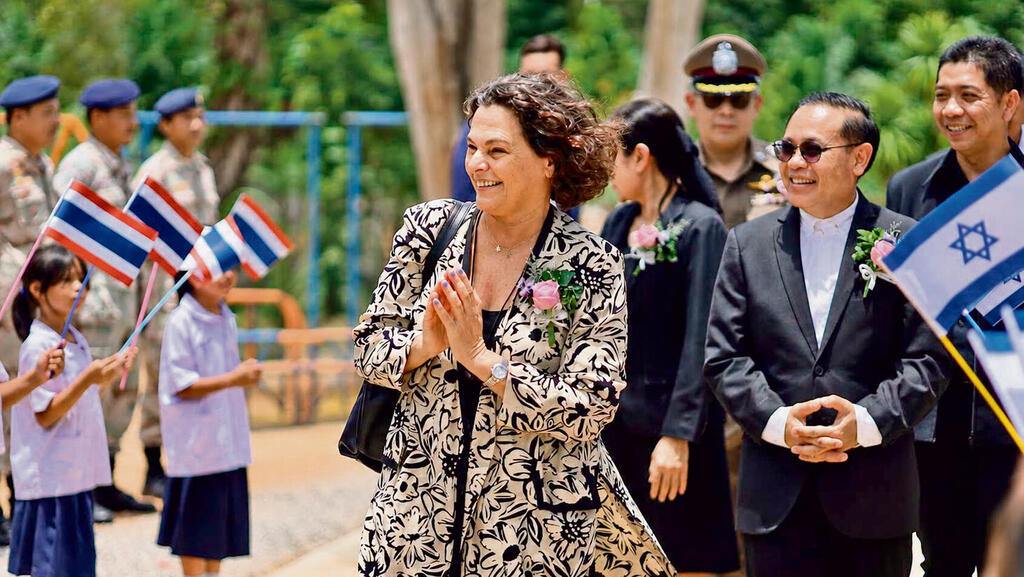
Israeli ambassador in Thailand Alona Fisher-Kamm: ‘Some Israelis think they can do whatever they want’
(Photo: Israeli embassy in Thailand)
At the same time, she said the controversy must be viewed in the context of a dramatic rise in Israeli tourism.
“Between 2024 and 2025, the number of Israelis visiting Thailand rose by 40%, while tourism overall declined,” she said. “Statistically, the more Israelis there are, and the more concentrated they are in certain places, the more visible incidents become.”
Fisher-Kamm has been giving a series of interviews to Thai media in recent days following a large protest outside the Israeli Embassy in Bangkok last Thursday and a new poll showing that 77% of Thai respondents support tougher enforcement against Israelis.
“Our message goes in two directions,” she said.
“One is addressing Israeli behavior and trying to improve it, because this is something the authorities are very concerned about. At the embassy and at Foreign Ministry headquarters, we are working to impress upon Israelis the importance of respecting local law and culture and behaving appropriately.”
She stressed, however, that Israelis are not necessarily more disrespectful than tourists from other countries.
“The second direction is the pile-on against Israelis on social media,” she said. “It can involve highlighting Israeli cases over others, recycling old stories, fake news or incidents being attributed to Israelis even when they have nothing to do with them.”
The embassy has raised the issue with Thai authorities, she added.
“Every case must be dealt with, and the goal should be zero incidents. This is not an excuse. But there is a focus on Israel, and we assume there are actors behind some of it.”
Fisher-Kamm said the protest outside the embassy also demonstrated that the issue had begun to extend beyond tourism.
“If the demonstration had only been about improving Israeli behavior or opposing the presence of Israelis in Thailand, then chants of ‘Free Palestine’ and insults against Jews should not have been there,” she said.

(Photo: AP/ Sakchai Lalit)
She said Thai journalists initially focused their questions on Israeli tourist behavior, alleged violations involving land purchases and the operation of illegal businesses. Since the protest, however, the conversation has changed.
“It was a relatively calm demonstration, with about 500 people, but the images were difficult and the signs held by protesters stood out,” she said.
“From that point, the questions shifted to whether we think there is a connection between the conflict in the Middle East and opposition to Israelis here. In my recent interviews, I have also started being asked about antisemitism, which is something new and unfamiliar in Thailand, but it is beginning to attract attention.”
‘First of all, respect the local culture’
Fisher-Kamm said there is no point denying that some Israeli behavior in Thailand has been problematic.
“It is sometimes embarrassing and even shameful,” she said.
But she added that Thailand has also stepped up enforcement more broadly, not only against Israelis.
“There are areas where the numbers show significant Israeli involvement, such as illegal land purchases, and there are serious cases,” she said. “But the focus is on Israelis.”
She cited one recent case in which 20 people were arrested over real estate offenses, six of them Israelis.
“On social media, the headline became: ‘Six Israelis arrested,’” she said.
Her message to Israelis visiting Thailand is straightforward.
“First of all, respect the local culture,” she said. “Enjoy Thailand, but at the same time obey the law.”
“Thailand sometimes gives an impression of enormous openness and liberalism, but something that is acceptable on the beach may not be acceptable in the city, for example walking around in a swimsuit.”
She urged tourists to learn the rules if they are uncertain.
“We need to be responsible in our behavior, know the law and study it if we are not sure,” she said. “Thais are very sensitive about their culture.”
“They want to see more Israelis in Thailand, but they want to see them behaving according to the law.”
Despite calls on social media to expel Israeli tourists or prevent them from entering the country, Fisher-Kamm said that is not the position of Thai authorities.
“That is not the spirit we are hearing from the authorities,” she said. “They recognize the value of Israeli tourism, and it was important for them to make clear that they expect better behavior and respect for the law, with the intention of preserving Israeli tourism rather than driving Israelis away.”
She said the issue was also raised in a meeting with Thailand’s deputy prime minister and foreign minister, where Thai officials said they expect Israeli authorities to act when tourists behave improperly.
“The discussion with the authorities about tourist behavior in general, and Israeli tourists in particular, did not begin this week, and neither did the steps being taken,” she said.
“There is a shared understanding that there is a problem, and both sides want to ensure that Israeli tourists continue coming, while promoting responsible and respectful tourism.”