

After weeks of sirens and runs to safe rooms, the spring ceasefire is a perfect chance to head outdoors and breathe again. The beloved desert is still green, dotted with pools filled with fresh floodwater. Spring is at its peak — and just before it fades, here are some suggestions for the upcoming weekend.
“This is the end of the window when it’s worth hiking in the desert,” Asi Tichtel, 40, an energetic travel blogger known online as israelin360, told Ynet. The first route he recommends this season is a well-known one: Nahal Peres, between Dimona and the Arava Junction. But even those who have been before may discover it completely differently after the recent floods.
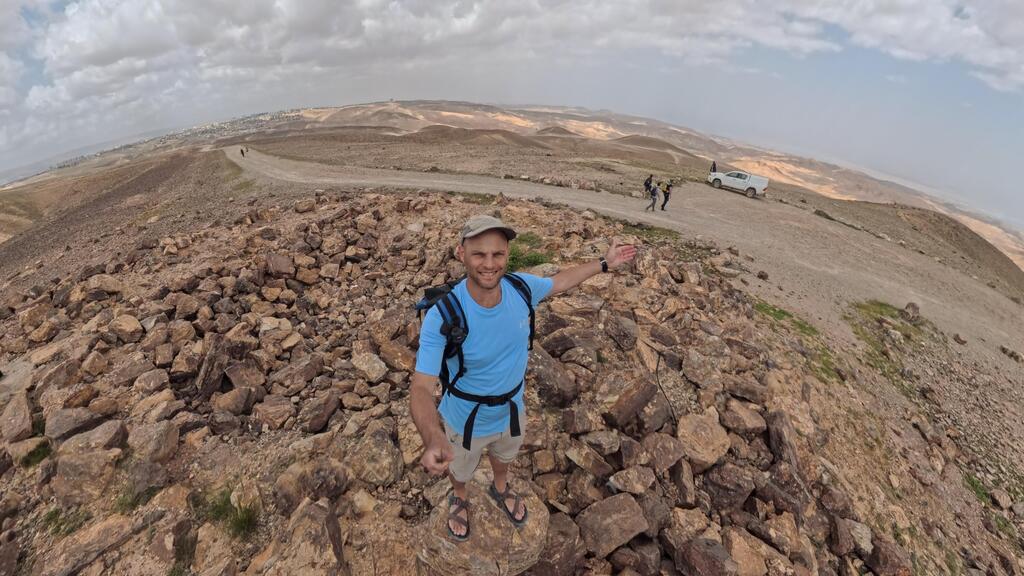
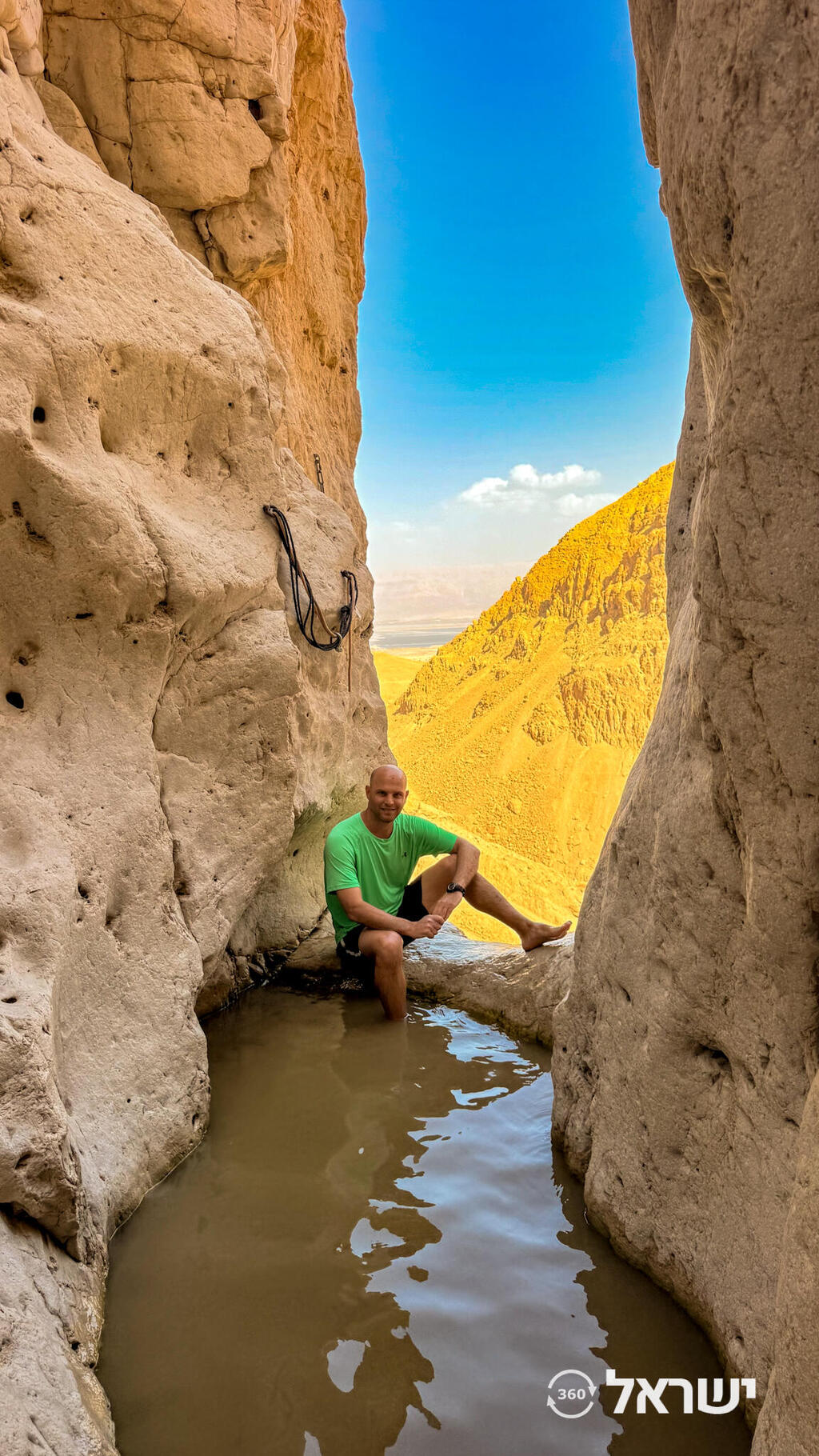
Gav Halon, Nahal Peres
(Photo: Asi Tichtel)
“From the Gav Peres parking area, it’s about a 40-minute walk to the pools that recently filled up,” he explains. “There are several spots where you can wade in.” But there’s an important caveat: “Some pools are easy to get down into — but climbing out requires help. You need to factor in someone assisting from above, or bring a short rope.”
From there, the trail continues into a narrow canyon, with two walking options. “There’s a slot canyon — a tight section with walls on both sides — where the hike is more technical, requiring you to descend small waterfalls or hop between pools.” But it’s not חובה: “Those who find it difficult can take the bypass trail,” he says. “You can also split up — younger hikers go in, while the rest of the family goes around.”
Toward the end of the route, those who stay within the stream reach another highlight. “If you continue a bit further, you’ll reach the top of the waterfall, where there’s a stunning ‘window pool,’” says Tichtel. Getting there requires some effort: “You’ll need to pass through several pools of freezing water, about waist-deep — but the view is worth it. You can even see the southern Dead Sea from there.”
How long does it take — and who is it for? The classic route is linear, starting at Gav Peres and ending at the Arava Junction, but it can also be done as an out-and-back hike. “It takes about four hours with breaks,” he says. “It’s suitable for families — you can choose whether to go for the challenge or keep it relaxed.”
How to get there: Drive on Route 25 descending from Dimona toward the Arava Junction, look for signage, or enter “Gav Peres parking” in Waze.
For those looking to explore a lesser-known desert pool during the ceasefire, Tichtel suggests Nahal Avuv near Arad, starting from Mitzpeh Zohar. “You can reach part of the way by regular car, then continue on foot,” he says. “There are quite a few pools now, some deep, and it’s an easy hike of less than 4 kilometers.”
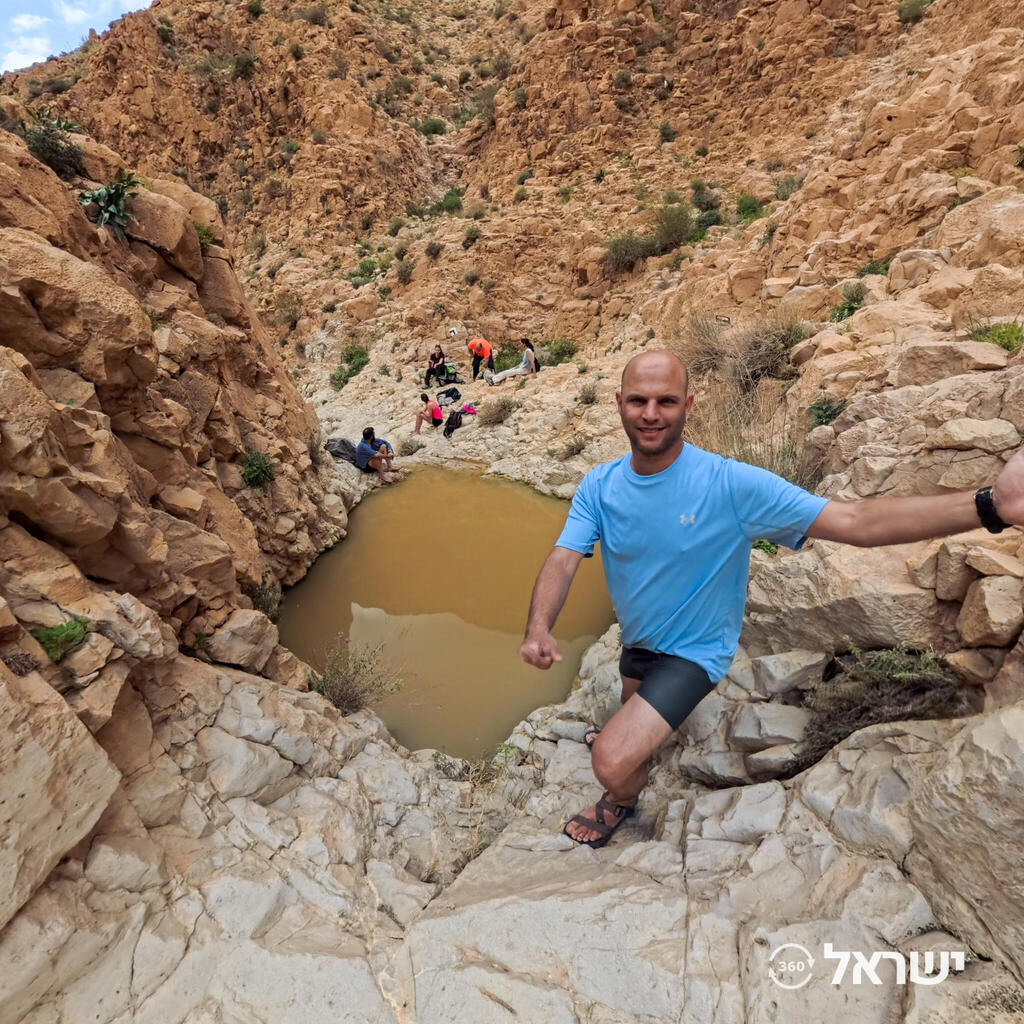
Nahal Avuv
(Photo: Asi Tichtel)
The desert trail that became a personal survival story
Nahal Rahaf, one of the most recommended desert routes for this time of year, lies hidden between Masada and the Dead Sea hotels. It features steep cliffs, icy water pools and breathtaking views — but for Gili Erez, a retired teacher and amateur photographer, it is something far more personal.
“Every time I return to Nahal Rahaf, I’m moved all over again,” she told Ynet.
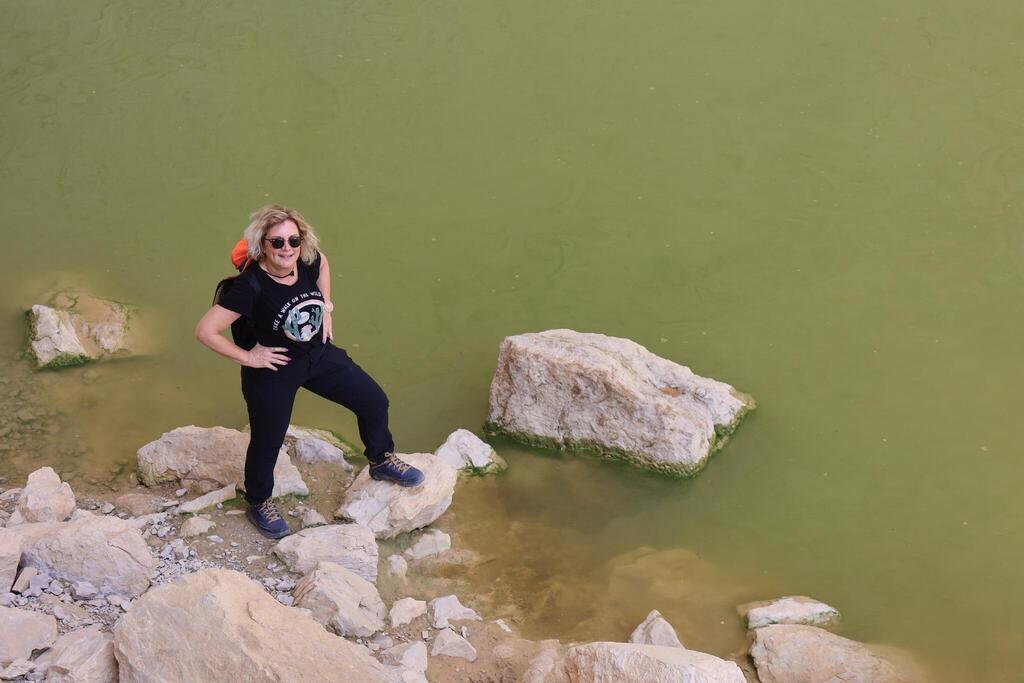
Gili in Rahaf River
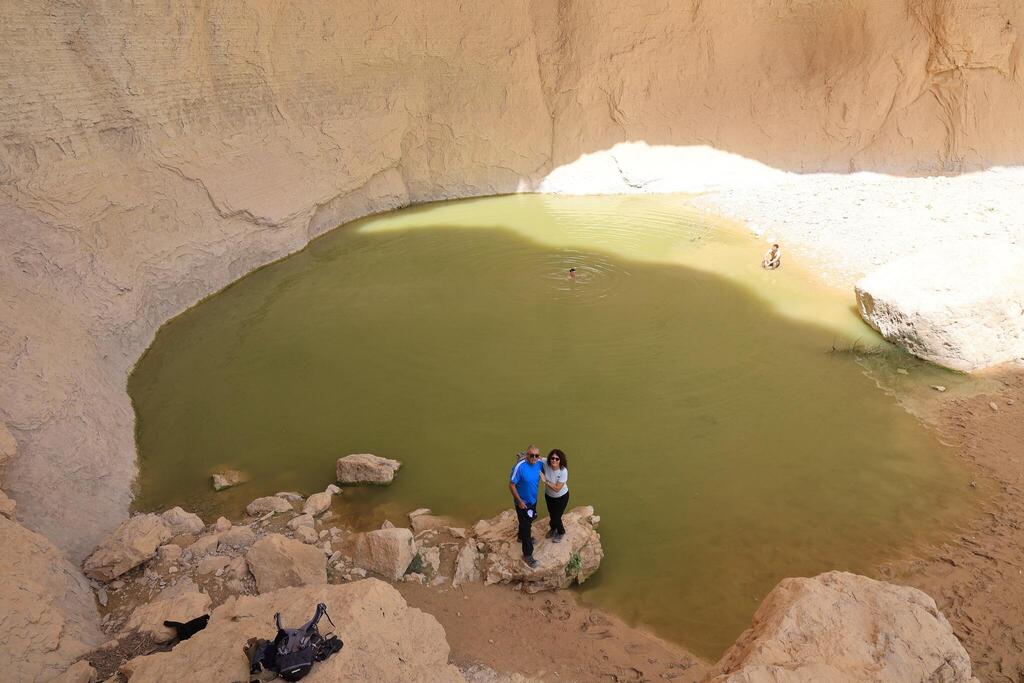
Clean water
(Photo: Gili Harez)
Trying to explain the almost mystical experience of hiking there, she keeps returning to one moment: the sudden transition from desert dryness to water. “You’re walking along a desert trail and suddenly reach a pool full of water, with the Dead Sea behind you and green vegetation after the rains — right in the middle of the desert,” she says with a laugh. This season, she notes, offers a unique advantage: “Right now you can enter the pools — they’re full of clean water from the recent floods.”
But behind the wild beauty lies real danger — something Erez experienced firsthand eight years ago. “I fell,” she says simply. “I don’t know exactly how — I must have strayed off the trail without noticing.” The fall resulted in severe injuries: “I found myself in Hadassah Ein Kerem Hospital with a fractured face, two broken legs and a broken arm.” Her rescue from the canyon was complex and carried out by the Arad rescue unit and an Israeli Air Force helicopter.
After such trauma, many would stay away — but for Erez, the opposite happened. “Thanks to good people and a lot of determination, I recovered. And I returned to hiking,” she says of her long rehabilitation journey.
Despite her experience, she stresses that the lower Nahal Rahaf route is accessible to families with some hiking experience — as long as safety rules are followed. “Stick to the marked trail and don’t stray,” she says, adding basic advice: “Proper hiking shoes are a must — not flip-flops. And of course, bring trash bags and leave no litter behind.”
From red to yellow: the desert in bloom
“For anyone who spent the past month in a shelter — here’s a quick update: during the war, the desert turned red. Now we’re left with yellow,” says Lior Abulafia of the family content site Kinderland, describing the changing seasons.
During the war, along Nahal Besor, the desert was covered in spectacular red poppy fields — but that moment has passed. Speaking to Ynet, a veteran nature photographer explains that the bloom of March 2026 was unusual. “This doesn’t happen every year,” he says. “Poppies follow cycles depending on the weather. Sometimes you arrive at a field full of them — and the next year there’s nothing.”
“This time, it was insane — endless carpets stretching hundreds of meters, like Tuscany,” he says. “But now the poppies are already fading. What we have now are daisies and crown daisies — yellow flowers. We missed the red, and now we’re at the peak of yellow.”
Even without the poppies, Nahal Besor still offers a unique experience. The route begins on a dirt road near Eshkol Park, follows the stream and leads to one of its highlights — the suspension bridge.
“It’s a bridge without pillars underneath,” Abulafia explains. “It’s built on cables, and it sways slightly as you walk. It’s only scary if you don’t like things that move — but it’s completely safe.” The real highlight comes after crossing: “You step off the bridge and suddenly it feels like two different countries.”
“On one side, it’s desert — almost no vegetation. On the other, everything is green and blooming. It’s a real contrast,” he says. The explanation is geographic: “One side gets more water and wind exposure than the other, so at this time of year there’s a noticeable difference. In a month, it will all look the same.”
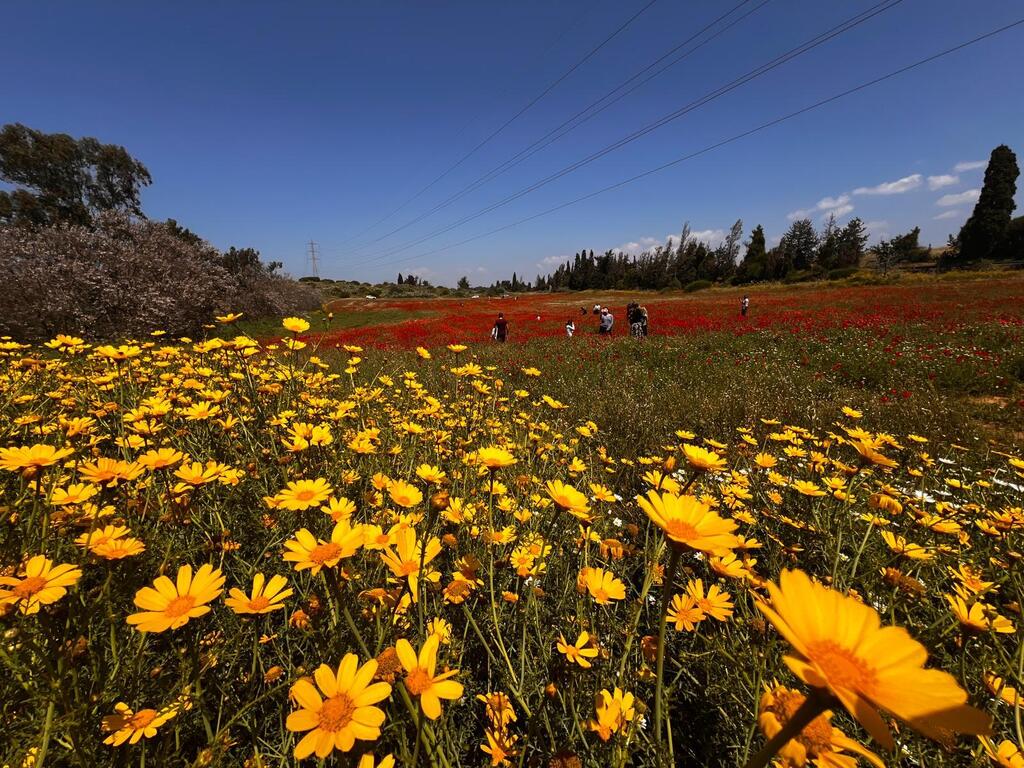
Poppies and chrysanthemums
(Photo: Lior Abulafia)
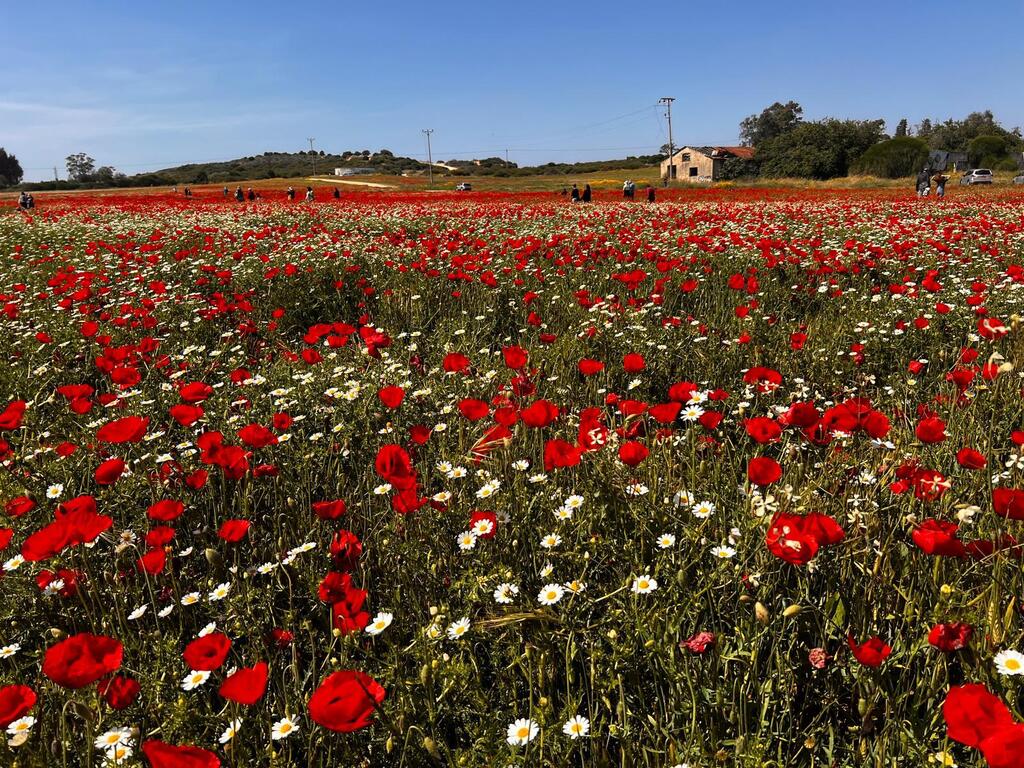
Bloom in Rehovot
(Photo: Lior Abulafia)
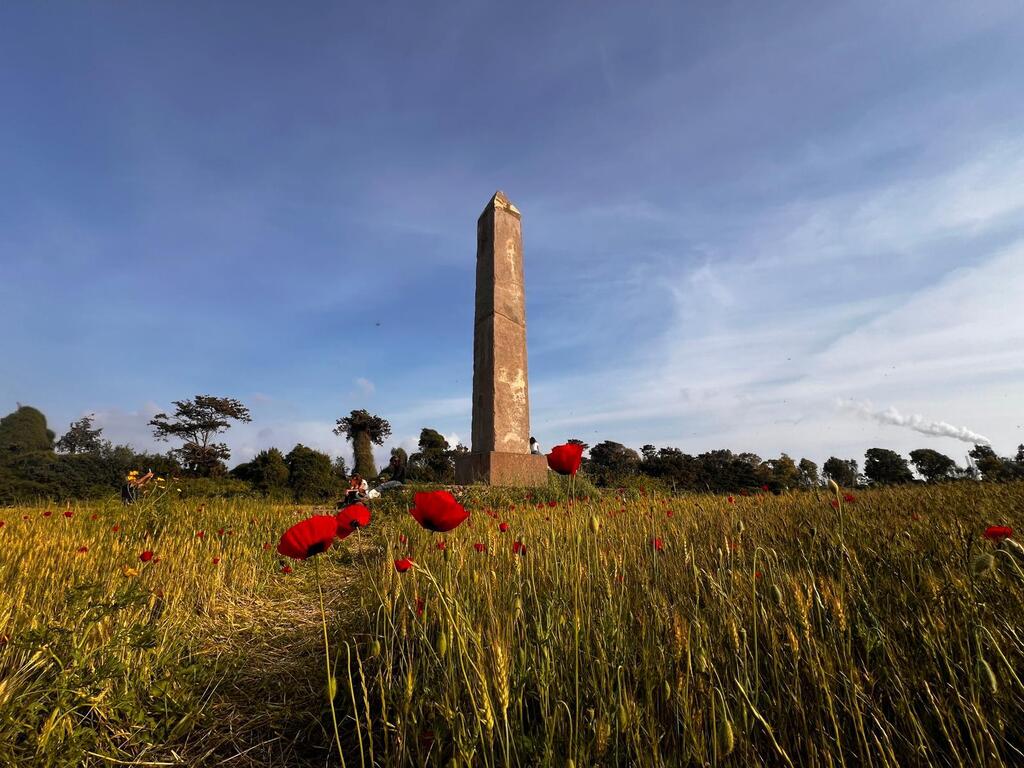
Poppies bloom in Caesarea
(Photo: Lior Abulafia)
Further along the trail, the experience continues. “There’s an antelia well system — just a short detour of a few hundred meters, with shade, a great spot for a picnic,” he says. Another stop is “Horashat Habanim,” featuring a lone acacia tree in the desert. “It started to dry out, so they stabilized it with poles that were turned into swings for kids. It’s a beautiful place to sit.”
For those chasing the perfect photo, there are plenty of spots. “People love taking pictures on the bridge and near a circular sculpture further along,” he says. “But not everyone makes it that far — and that’s a shame.”
For those still hoping to catch poppies, Abulafia points to a few remaining spots in central Israel. “One is in Caesarea, outside the national park, near a hidden obelisk — a five-minute walk from the car,” he says. Another is Givat Humra, near Palmachim Beach and Rehovot. “Behind the Mika gas station — just type it into Waze — there’s an amazing poppy field. Lots of people come to photograph it.”
With the growing popularity of flower hikes comes a reminder: “Don’t step on or pick them,” he stresses. “Even if poppies aren’t officially protected, we must preserve Israel’s wildflowers. You can photograph and draw them — but don’t harm them.”
And if there’s one question left open, it’s a matter of taste. “It’s hard to say what’s more beautiful — a field of poppies or anemones,” he says. “But for me, poppies speak louder.”
First published: 14:17, 04.10.26