

More than 2,100 meters above sea level, facing the peaks of the Swiss Alps, a new attraction has opened for visitors who are not afraid of heights. The 12-meter-high giant swing lifts three riders to a 90-degree angle before releasing them into a sweeping arc above the valley. The screams come first. Then the view.
The BalancAIR attraction, which opened this month at the summit of Grand Chamossaire in western Switzerland, promises a dizzying combination of adrenaline and Alpine scenery. But behind the thrill ride lies a more serious concern: the effort by ski resorts to reinvent themselves for summer and prepare for a future in which snow becomes less reliable because of climate change.
Gallery
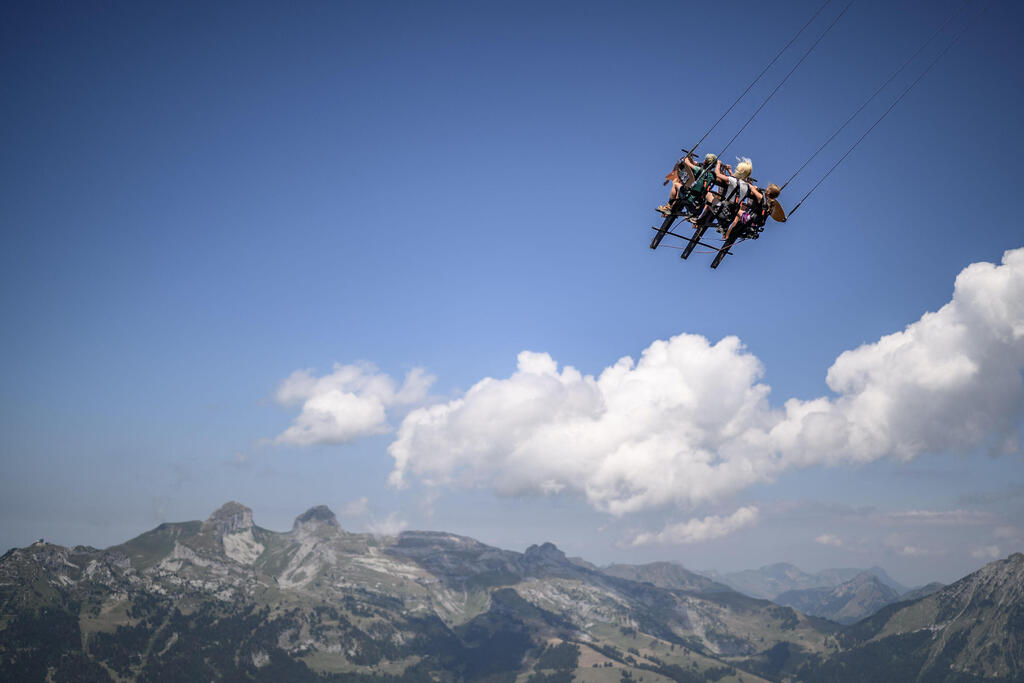
Tourists enjoy BalancAIR, the new giant swing at the summit of Grand Chamossaire above Villars-sur-Ollon in western Switzerland
(Photo: Fabrice COFFRINI / AFP)
“There are a few butterflies in your stomach, you can’t deny it, but once you’re on it, it’s simply incredible. You feel like a bird,” 37-year-old Alexandra Anschutz told AFP after trying the ride with her husband and their 10-year-old daughter.
The swing stands at an altitude of 2,110 meters and is supported by a large V-shaped metal structure. It is open to anyone holding a cable-car ticket and can carry three people at a time.
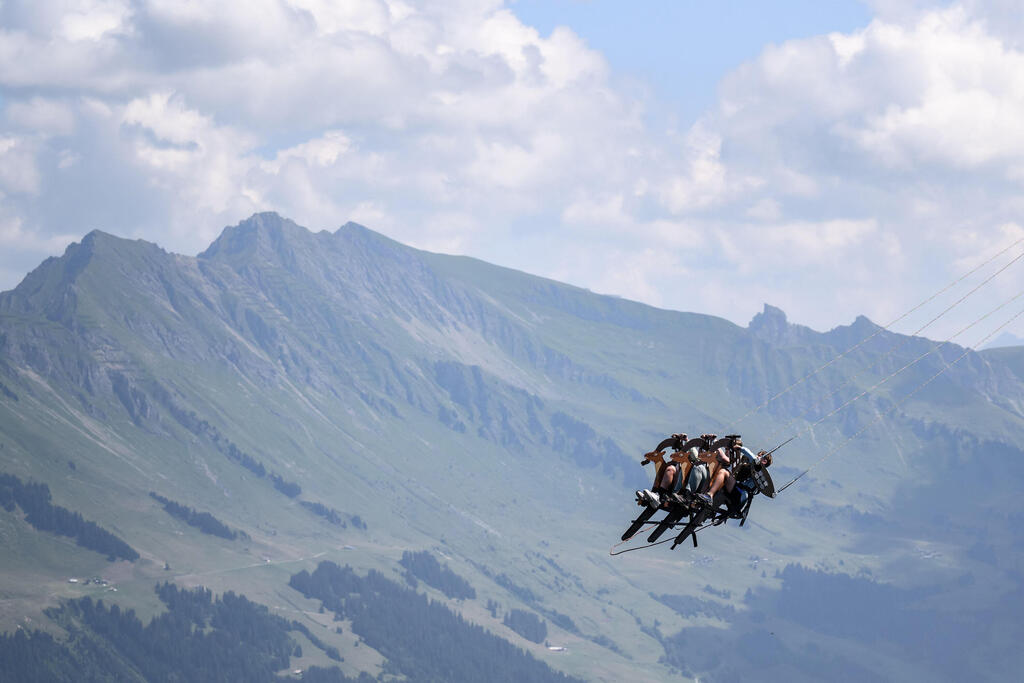
Riders sit astride seats attached to a structure inspired by an Alpine ibex. They are strapped in tightly and grip handlebars as a system of cables and pulleys gradually raises them to a 90-degree angle, leaving them suspended face down.
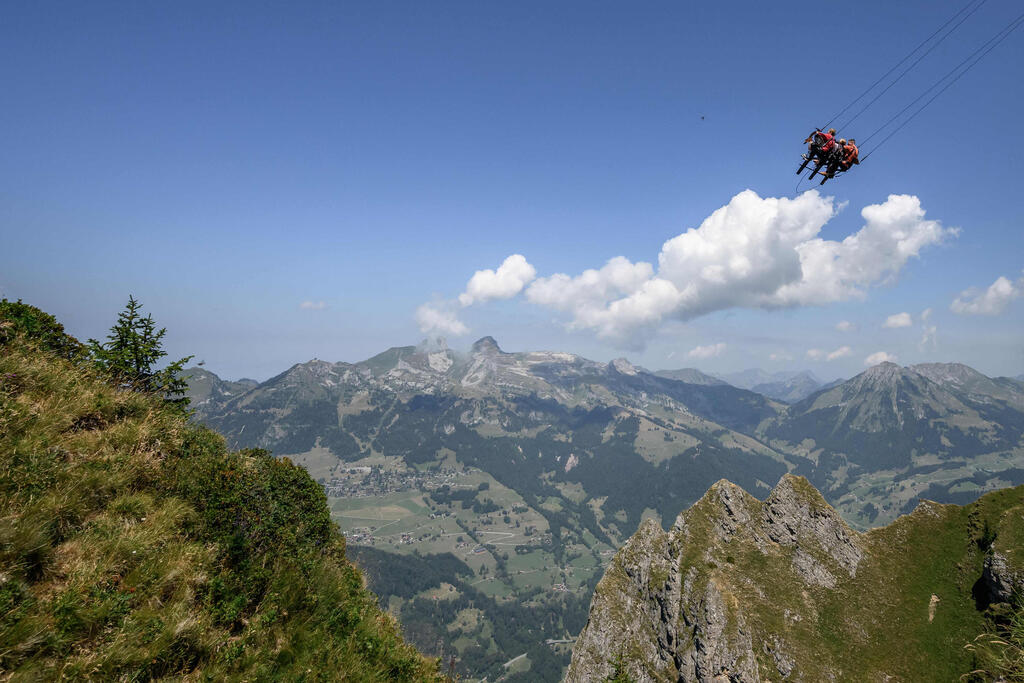
Then comes the moment they climbed the mountain for. The safety cable is released, and the swing drops forward. Screams, and sometimes a few curses, accompany the fall. Moments later, the valley opens beneath them, surrounded by green slopes, Alpine ridges and rocky peaks still carrying patches of snow.
Marc Troper, 70, approached the ride feeling almost equally frightened and excited. “It was scary, exactly as I expected, and then I was simply speechless. I didn’t even scream,” he told AFP. “The drop is breathtaking, and afterward the view is just magnificent.”
As the snow disappears, resorts seek new reasons to climb
The attraction is also driven by economic considerations. Ski resorts across the Alps have spent recent years looking for ways to draw tourists into the mountains outside the winter season while making greater use of cable cars and other infrastructure that traditionally operates mainly for skiing.
Climate change, and the prospect of winters with reduced or unpredictable snowfall, has made that need more urgent.
“We are really trying to diversify what we offer,” said Martin Devouassoux, director of the Villars-Gryon-Diablerets ski area. The swing, which rises 12 meters and resembles attractions already installed in the French resorts of Megeve and La Clusaz, “allows us to offer an attraction that can operate regardless of snow conditions,” he said.
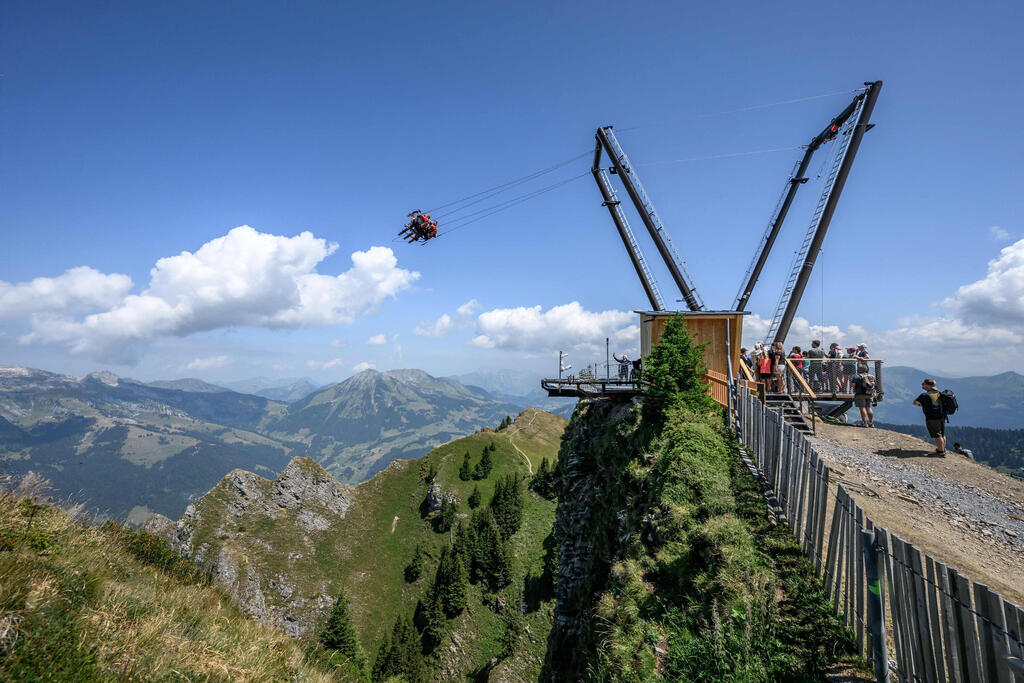
'The drop is breathtaking, and afterward the view is just magnificent'
(Photo: Fabrice COFFRINI / AFP)
(Photo: Fabrice COFFRINI / AFP)
(Photo: Fabrice COFFRINI / AFP)
In the short term, changing weather patterns have ironically benefited the resort. It recorded a record number of visitors during each of the past two winter seasons, partly because skiers who previously visited lower-altitude resorts moved higher in search of better snow.
But the resort is not counting on that trend to continue. “We are clearly dealing with climate change,” Devouassoux said. “We also conducted a study examining what our snow potential is expected to be in 2050, and we are simply preparing for a situation in which there will be less snow, or snowfall will be less predictable.”
The goal: Triple summer tourism
The gap between the seasons remains substantial. More than 700,000 people visit the resort during the winter, compared with only around 100,000 in summer. Officials now hope to triple the number of summer visitors over the coming years.
Reaching that target, Devouassoux said, will require adding more activities and attractions alongside the new swing. Visitors already have several reasons to come during the warmer months. Hikers walk along the green mountain trails, while mountain bikers wearing helmets and protective gear race down steep dirt tracks.
Nearby is a temporary land-art installation by French artist Guillaume Legros, known internationally as Saype, who painted a huge image of a child drawing on the mountainside.
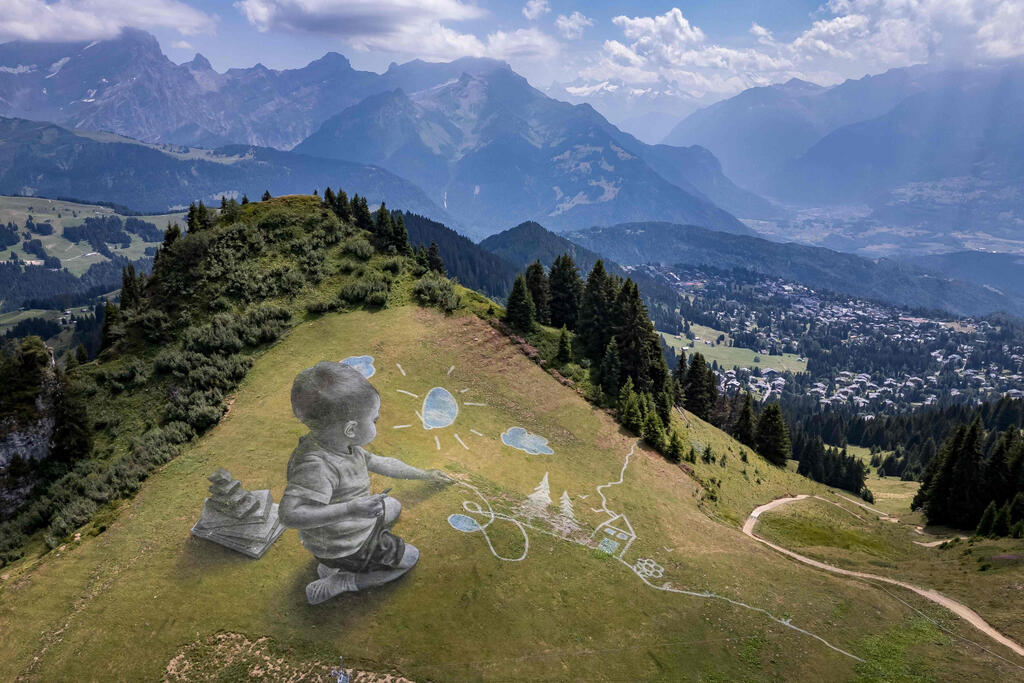
The land-art installation
(Photo: Fabrice Coffrini / AFP)
The swing’s location was also chosen deliberately. Rather than scattering new attractions and infrastructure across the mountain, the resort placed it in an area that already receives large numbers of visitors. The aim, Devouassoux said, is to preserve the wilder and quieter parts of the resort for people who come to the Alps primarily for nature.