

Israel has no shortage of fighter pilots, but it has very few female civilian pilots. In recent years, under the radar, a group of women has been taking shape, refusing to remain in the flight attendant position. They study aviation in Israel and abroad, invest hundreds of thousands of shekels on the path to a license, undergo biannual exams and, above all, remind one another not to give up midway.
“It makes no sense that there are so few female pilots in Israel and none of us know each other,” Naomi Schayek, 34, a commercial pilot and one of the founders of Israel’s Women Pilots Community, told Ynet. “Once we realized that, we knew we had to build a home.”
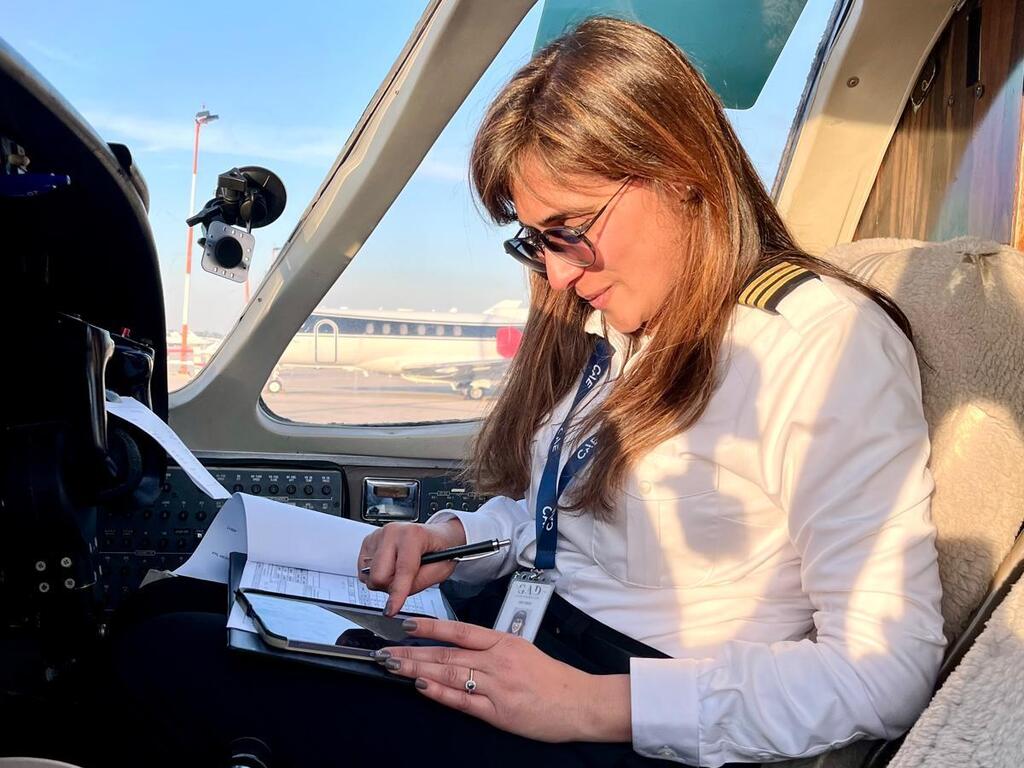
That is how the Women Pilots Community was born, a network that now connects more than 100 licensed pilots and cadets in Israel and around the world. It is a place to share failure on an exam, celebrate a first solo flight and consult about job interviews. “One woman wrote to us the day she got her license: Without the community, I would have quit.”
‘I came from an ultra-Orthodox home, with no funding and no physics’
Schayek did not grow up with an aviation background. On the contrary, she came from an ultra-Orthodox home, without physics studies and without financial backing. She discovered aviation while working for an airline and earning a flight operations officer license.
“I went to a coach and she asked me: If everything were possible, what would you do? There was silence. Then I said: I would become a pilot.”
She began a private pilot license in Israel, moved to the United States and remained there for five years as a flight instructor and examiner. Today she flies private jets and leads the community she founded. She says there is no pay discrimination between male and female pilots, but there are other challenges.
“If I board a plane and I’m the only woman on the crew, they immediately assume I’m the flight attendant. It hurts.”
And when the cockpit door closes?
“Flying is like meditation. When you’re in the clouds, there is only one task: to fly.”
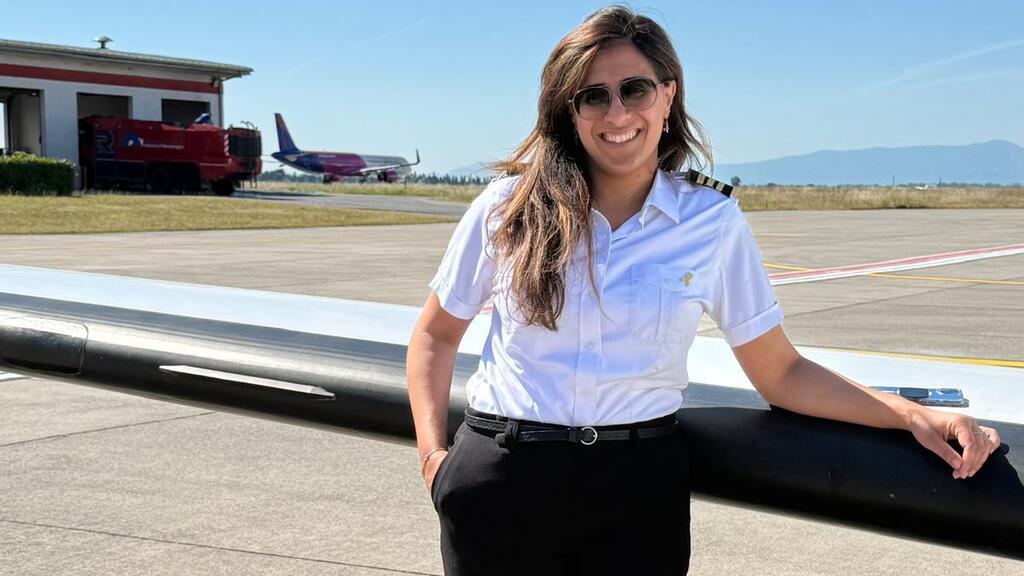
(Photo: Naomi Schayek)
The dream that was cut short and began again
Shoval Levy, 28, from Herzliya, the daughter of an Israeli Air Force reservist navigator, dreamed of flight school from age 12. She was accepted and later dismissed during training.
“I felt terrible. I was depressed. All those years I was aiming for that.”
Only later did she discover she could pursue aviation as a civilian. She began saving obsessively. A private pilot license costs around 100,000 shekels, and the full track can reach hundreds of thousands.
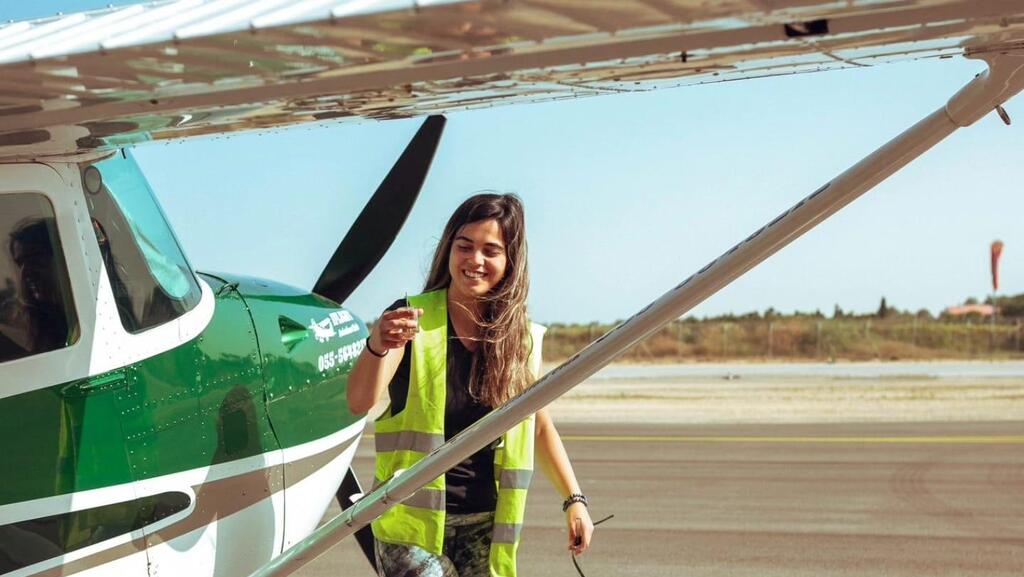
Shoval Levy
(Photo: Shoval Levy,)
She made her first solo flight just four months after beginning training.
“I sat alone in the cockpit. I looked to the side and realized no one was next to me. To take off and land a plane alone, that was the most amazing moment I’ve had.”
Even now, she encounters remarks. “Once someone asked why I didn’t come to a flight in a dress,” she said. “Sometimes it’s said as a joke, but it hits exactly at your insecurities, because there aren’t many women in the field. It took me time to understand I don’t need to apologize for my place.”
From the beverage cart to the front of the plane
Reut Pinhas, 31, originally from Rishon LeZion, was a flight attendant before deciding to move forward. During training, she entered the cockpit for takeoff and landing, and something shifted.
“A whole new world opened up. I didn’t know you could study this as a civilian.”
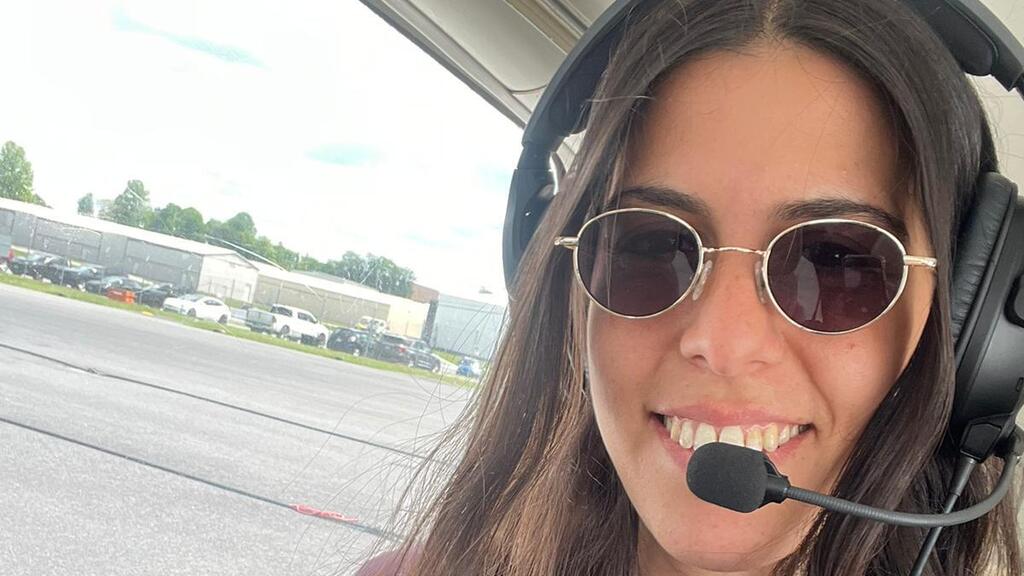
Reut Pinhas
(Photo: Reut Pinhas)
Within a year, she left the beverage cart and flew to the United States to train. “It starts at tens of thousands of dollars and can go much higher. I saved for years and my family supports me.”
Her defining moment was also her first solo flight. “It was a powerful feeling that I proved to myself I was capable.”
After landing came the traditional ceremony. “The instructor poured a bucket of water over me,” she said, laughing. “That moment was no less meaningful than the flight itself.”
‘We have to be better’
In Prague, just before her first civilian flight on a passenger aircraft, Shahar Avivi, 25, from Pardes Hanna, is completing a conversion course. After two and a half years of studies in Greece and spending more than 500,000 shekels, she already works for an international airline.
“My biggest fan was my grandfather,” she said. “He passed away three months ago, and a lot of this is thanks to him.”
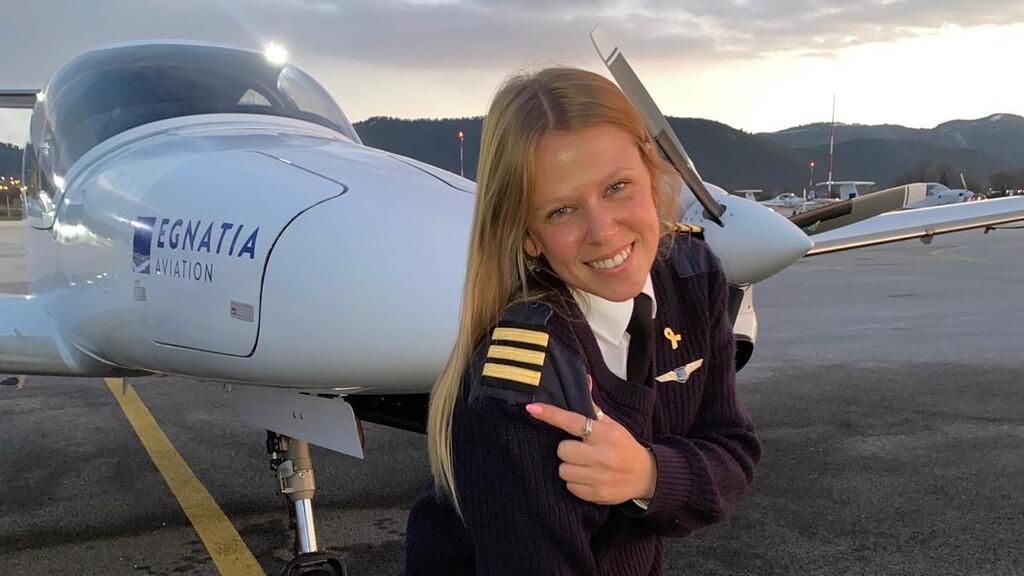
'We constantly have to prove we’re good enough'
(Photo: Shahar Avivi)
She, too, is accustomed to the recurring question. “They always ask if I’m a flight attendant,” she said. The challenge, she added, is also about perception.
“We constantly have to prove we’re good enough, that we’re not being given leniency. In practice, we have to be even better.”
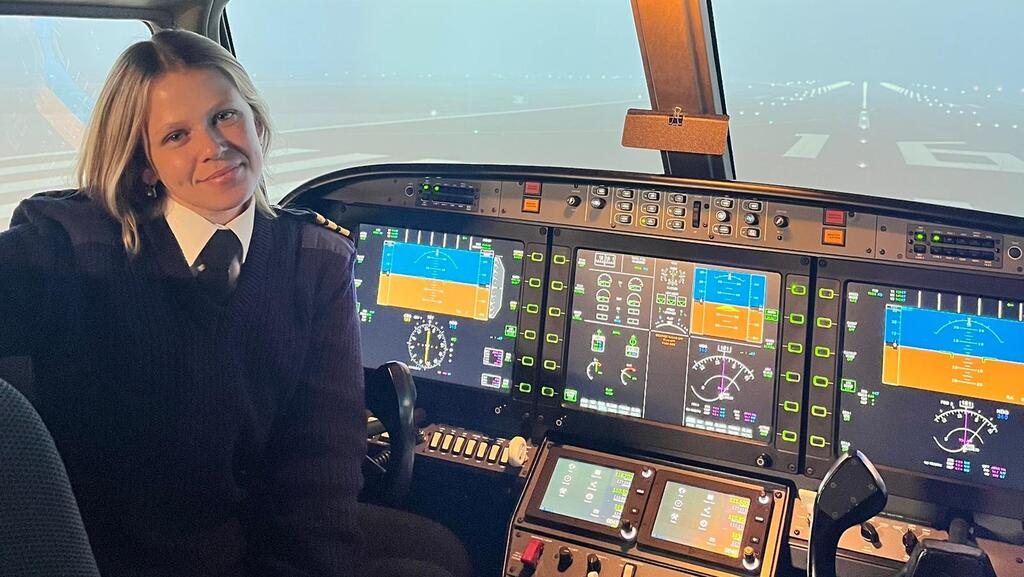
(Photo: Shahar Avivi)
Within the community, questions arise that are rarely discussed publicly. “Is it professional to cancel a flight because of your period? If a headache justifies canceling, why is this different?”
Still, all of them return to the same moment, when the aircraft lifts off the ground.
“The sky is the most equal place there is,” Sahak said. “There is no glass ceiling. There is only altitude.”