

Teams from Israel’s Nature and Parks Authority and the Israel Antiquities Authority have launched a race against time to save unique archaeological finds along Nahal Besor in the western Negev.
The site, threatened by the collapse and erosion of the riverbank, includes the remains of a 6th-century Byzantine church and an ancient mosaic floor.
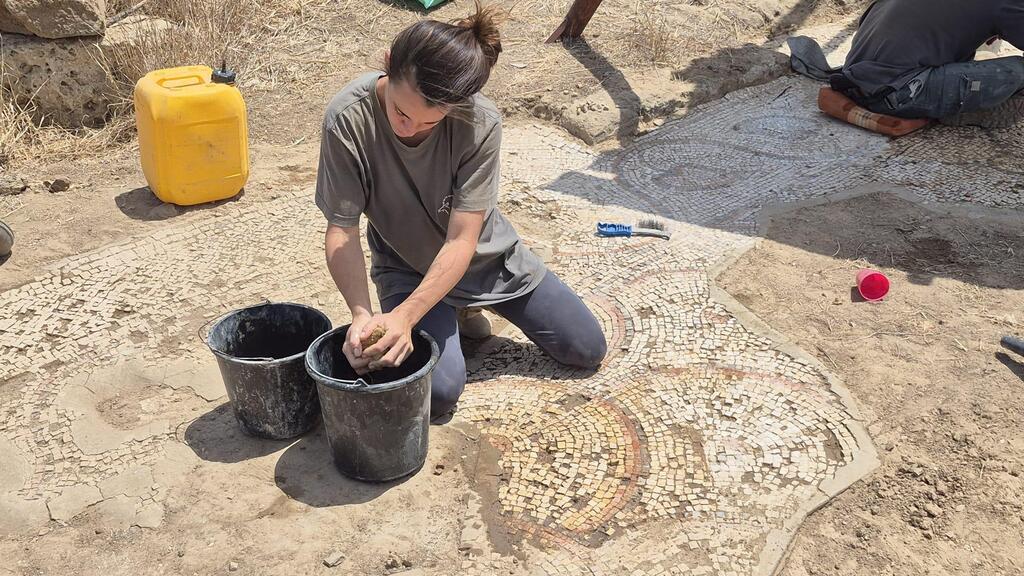
At Horvat Grarit, located about six kilometers west of Kibbutz Be’eri, the ruins are associated with the monastic complex of Silvanus, a key figure in the region’s late Byzantine monasticism. The site was first documented in 1917 and has faced ongoing threats from erosion, prompting several prior preservation efforts. Some mosaic fragments were previously removed to the Rockefeller Museum in Jerusalem and later displayed in Be’eri, but parts remain on site in fragile condition.
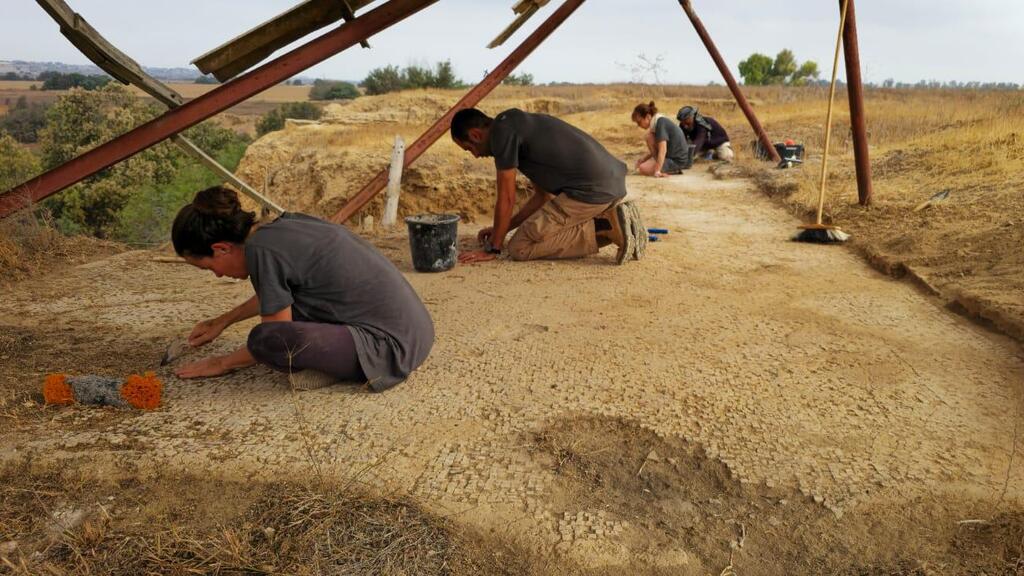
Work to preserve the mosaic in Nahal Besor
(Photo: Yiftach Magen)
“The riverbank continues to erode, exposing foundations and causing gradual deterioration of the remains,” said Orit Bortnik, head of Archaeology and Heritage at the Nature and Parks Authority. “We are working against the clock. If we do not act now, these ancient treasures could be lost forever. Our teams are carefully clearing and preparing the artifacts for relocation to save them.”
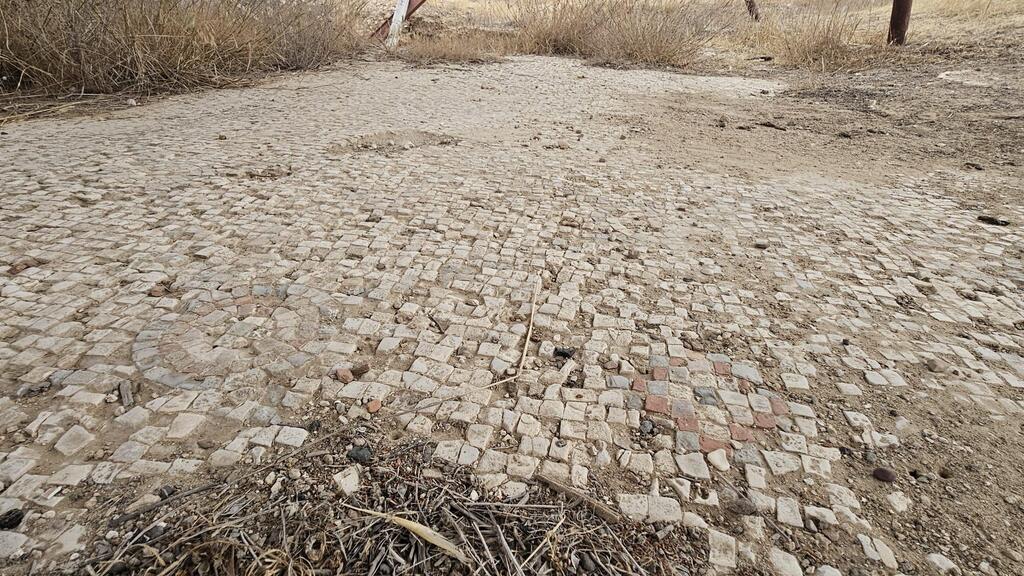
Uncovering the ancient mosaic
(Photo: Ella Tal Hayut)
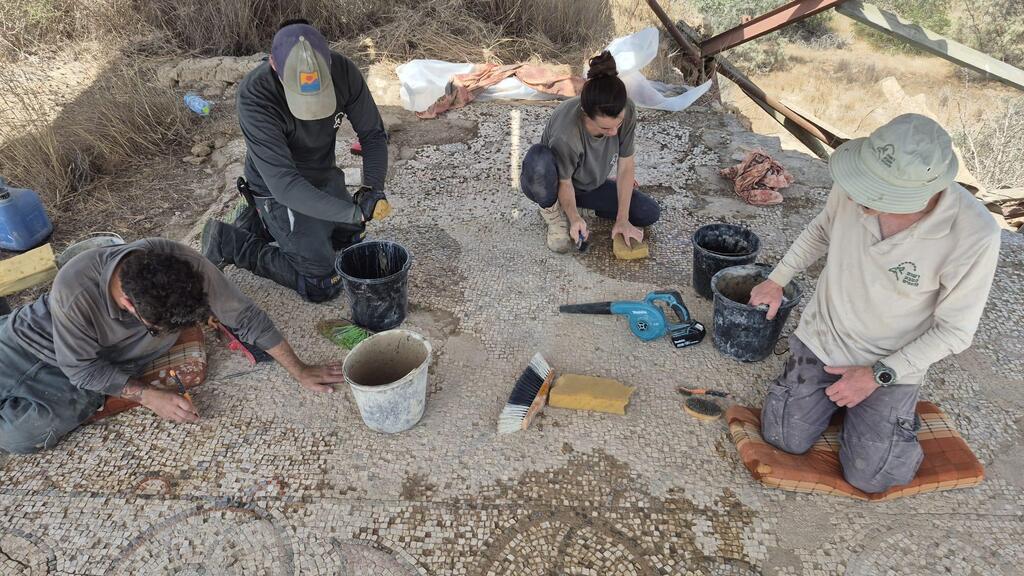
Saving the rare mosaic
(Photo: Lior Schwimmer)
“The site tells the story of an active community that was part of the region’s ancient past. Preserving these remains ensures that history is not erased," Ami Shahar, deputy director for preservation at the Antiquities Authority, added. "This is a delicate, urgent operation, combining the expertise of our conservation specialists to save what we can.”