

A bronze signet ring depicting the Lighthouse of Alexandria, one of the Seven Wonders of the Ancient World, has been discovered beneath the Mediterranean Sea off the coast of the Egyptian city.
A team from the European Institute for Underwater Archaeology (IEASM) and Egypt's Ministry of Tourism and Antiquities discovered the artifact among the ruins of a palace on the island of Antirhodos, which is now submerged. It is the first time a signet ring depicting the world's first lighthouse has been found.
Gallery
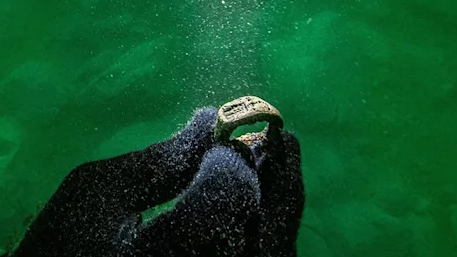
The moment the ring was discovered underwater, among the ruins of an ancient palace
(Photo: Christoph Gerigk©Franck Goddio/Hilti Foundation)
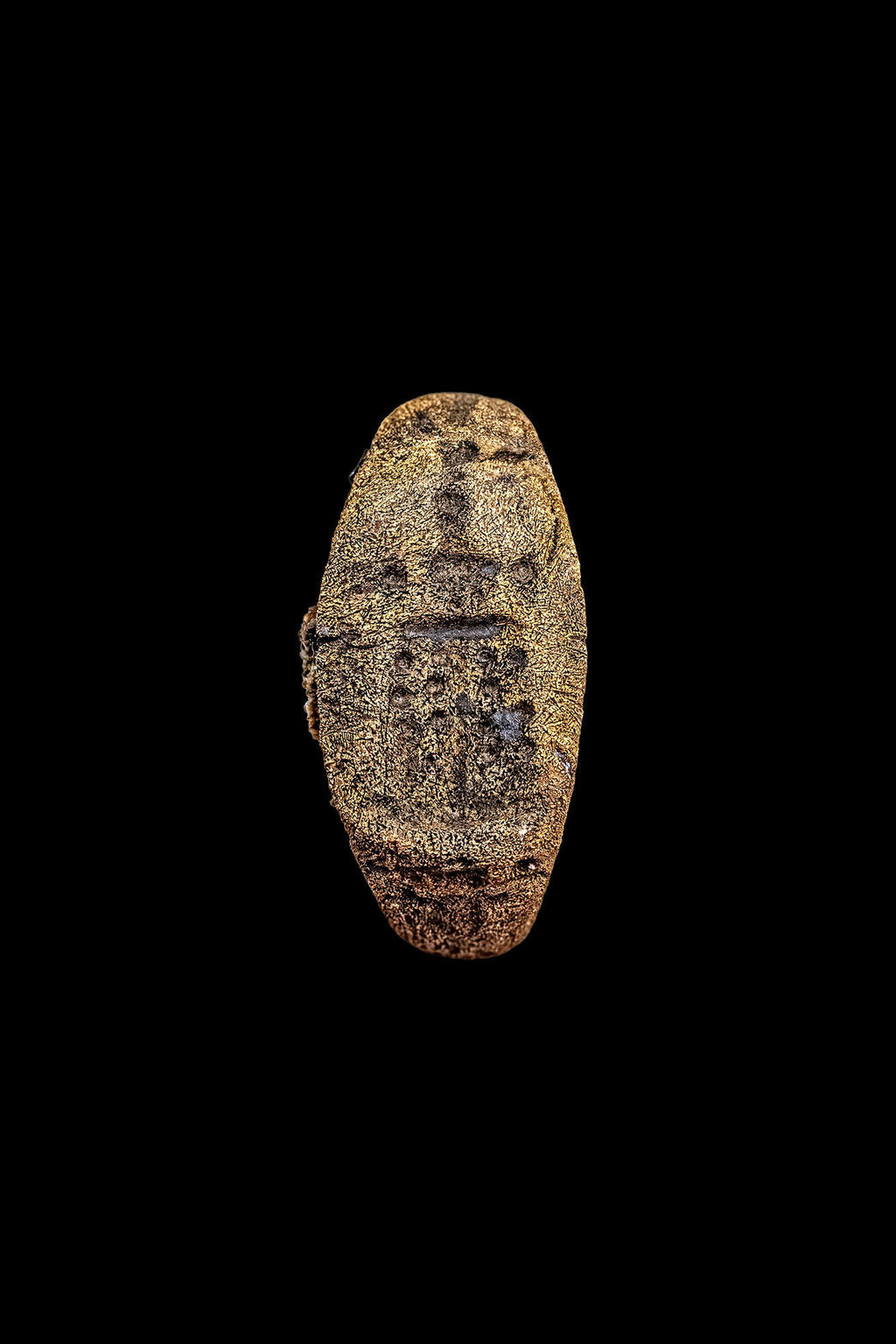
The recently discovered bronze signet ring depicting the Lighthouse of Alexandria
(Photo: Christoph Gerigk©Franck Goddio/Hilti Foundation)
The lighthouse depicted on the ring resembles images previously found on coins dating to the second century A.D.
"The discovery of the signet ring is even more important because it was unearthed during excavations at the legendary palace on Antirhodos Island, which was once a center of power," French maritime archaeologist Franck Goddio, founder and president of the European Institute for Underwater Archaeology, told Live Science.
The palace, whose ruins now lie underwater, was used by the pharaohs during the rule of Egypt's Ptolemaic dynasty (304-30 B.C.), a Hellenistic royal dynasty founded by Ptolemy I, a general and close confidant of Alexander the Great.
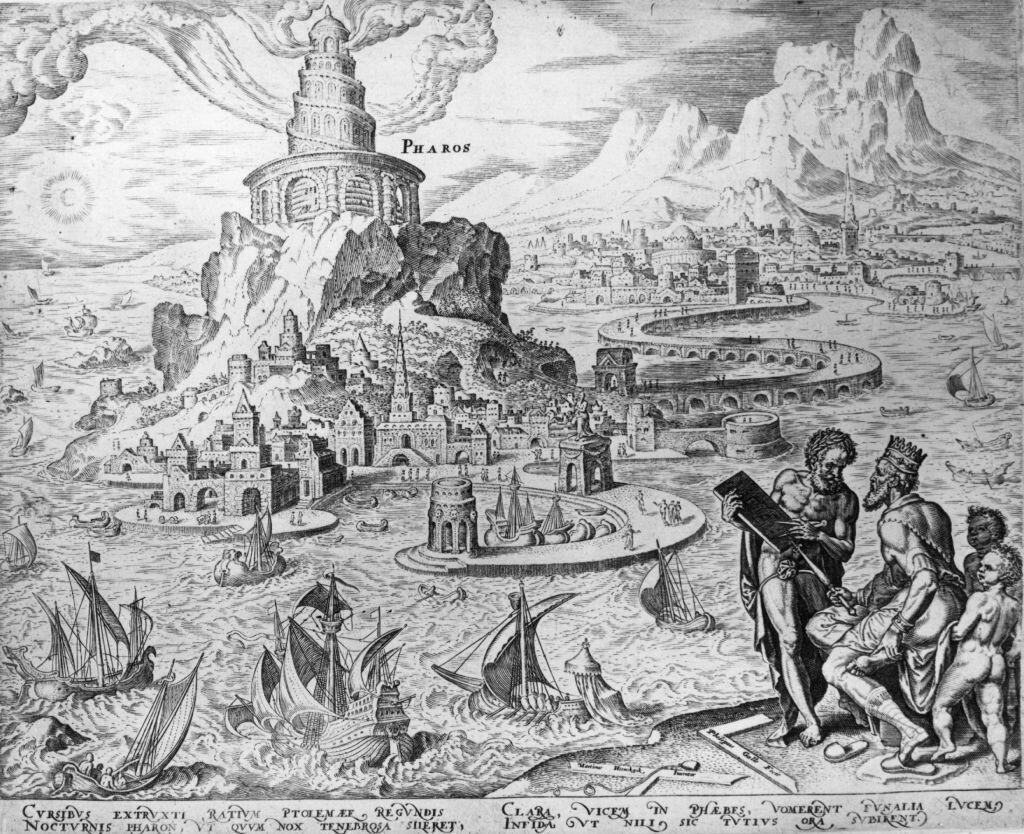
llustration of the Lighthouse of Alexandria
(Illustration: Hulton Archive/Getty Images)

Reconstruction of the Lighthouse of Alexandria
(Illustration: Mohamed Abd Elshafe/Shutterstock)
The lighthouse was built on the island of Pharos around 280 B.C. and stood more than 100 meters (328 feet) tall. Ancient writers, including Pliny the Elder, counted it among the wonders of the ancient world. It continued to serve the region's inhabitants into the Middle Ages, until earthquakes and coastal erosion led to its destruction and eventual disappearance beneath the sea.
Although the lighthouse underwent changes over the centuries, a statue stood at its summit, possibly depicting Zeus, holding an oil lamp that helped guide sailors.
Whoever wore the signet ring could have used it to press an impression into soft materials such as clay and wax, creating an official seal. The ring's discovery in the palace ruins on Antirhodos suggests that the palace may have served administrative functions connected to the lighthouse.
Although the engraving has become worn over time, the researchers who discovered the ring generally believe it depicts the famous lighthouse, according to Doris Behrens-Abouseif, professor emerita of art history and archaeology at the University of London, who has written about the lighthouse but was not involved in the research.
There are "thousands of coins from Alexandria showing a similar depiction of the lighthouse," Behrens-Abouseif told Live Science. Those coins date to the Ptolemaic or Roman (29 B.C. to A.D. 395) periods, she noted. Behrens-Abouseif added that she wasn't familiar enough with rings from Alexandria to comment on whether this is the only ring that contains this image.

Massive stones recovered from Alexandria's harbor as part of an effort to digitally reconstruct one of the Seven Wonders of the Ancient World
(Photo: GEDEON Programmes CEAlex)
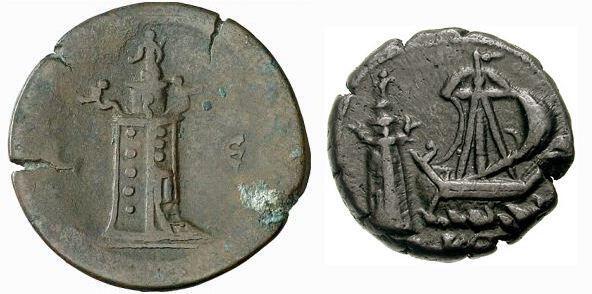
The Lighthouse of Alexandria depicted on a second-century coin
(Photo: Wikimedia Commons)
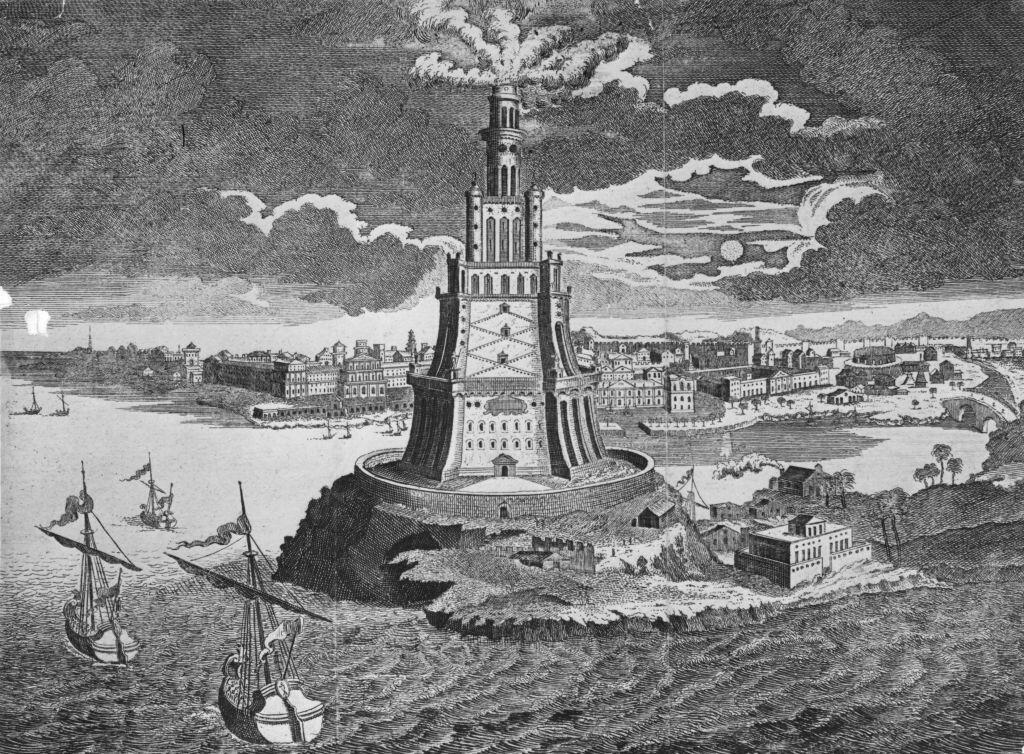
Illustration of the Lighthouse of Alexandria
(Illustration: Hulton Archive/Getty Images)
Other researchers also believe the ring depicts the lighthouse. Two of them noted that the engraving may even show smoke rising from a lamp at the top of the structure.
The "most interesting thing about the new signet ring engraved gem is an asymmetrical feature at its peak," which "may depict a plume of smoke from the oil lamp in the hand of the crowning statue," Andrew Chugg, an independent researcher and author of The Pharos Lighthouse in Alexandria: Second Sun and Seventh Wonder of Antiquity, told Live Science.
Margaret Miles, professor emerita of art history and classics at the University of California, Irvine, also noticed what appears to be rising smoke. She suggested that the ring may have been used as a signet by a merchant from Alexandria who used it to identify his location.
"The lighthouse was famous, so it became a symbol of the city," Miles said.
Research conducted in recent years off the coast of Alexandria, including the discovery of 22 enormous stone blocks in 2025, has shed further light on the lighthouse, including its precise appearance. The findings are helping researchers working to digitally reconstruct the important historical monument.
However, a report published in March 2025 found that the rate at which structures along the waterfront of ancient Alexandria have been collapsing had accelerated significantly over the preceding decade. As a result, every discovery in the area could prove invaluable to efforts to preserve one of the world's most important historic coastal cities.