

in Laos is probably not an attraction so much as a test of courage: a punishing jungle trek, extreme zip lines and a radical sensation that refuses to leave your head. There is a moment when you stand on a narrow wooden platform, harness pulled tight, a green abyss of endless jungle below you. Ahead is a thin metal cable that disappears into the horizon. There is no audience and no cell service, just a light breeze, adrenaline at full throttle and a guide from a local tribe who says, “Now you jump.”
In that instant, you understand that The Gibbon Experience is not “just another zip-line park.” It is a sensory jolt that pushes you far beyond your comfort zone, sending you soaring above wild rainforest at speeds and heights that feel closer to an adventure movie than a tourist attraction.


It all began when my close friend and well-known adventurer, Ofer Feivushevitz, left out several key details when he described the experience to me. According to his learned account, gibbons are a rare, endangered species of apes, and their mournful mating calls are a moving, almost healing musical concert. Because of deforestation, modernization and climate change, this is more or less the last chance to hear gibbons singing in the wild. Add to that the fact that the extreme zip lines are open only up to age 60 — a milestone rapidly approaching me — and the social pressure was strong enough to help a friend fulfill a dream: hearing gibbons sing in nature.
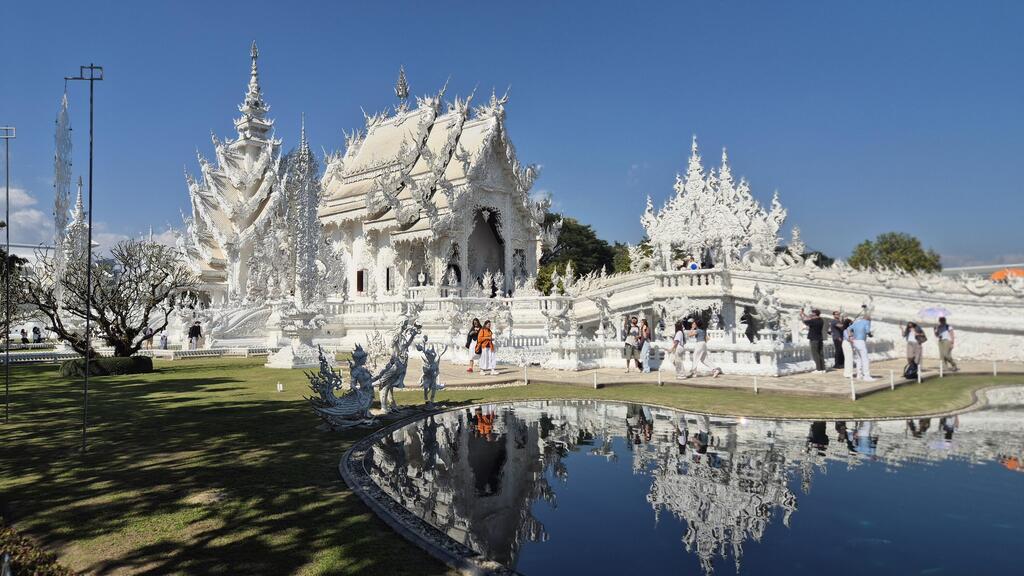
After a smooth landing in Bangkok, we took a domestic flight to the sleepy northern town of Chiang Rai, on the Mekong River, which serves as the international border with Laos. That is where the journey truly began. It is also where I ate a thick meat soup with strange berries in an exotic Chinese style that alone justified packing a backpack. After a fascinating visit to Chiang Rai’s iconic White Temple, we took a taxi to the Laos border crossing, which includes a land passage over a modern concrete bridge to the dusty town of Huay Xai in northwestern Laos. We exchanged dollars for local kip, though Thai baht worked just fine. Laos is very cheap. The problem is that there is not much to spend money on.
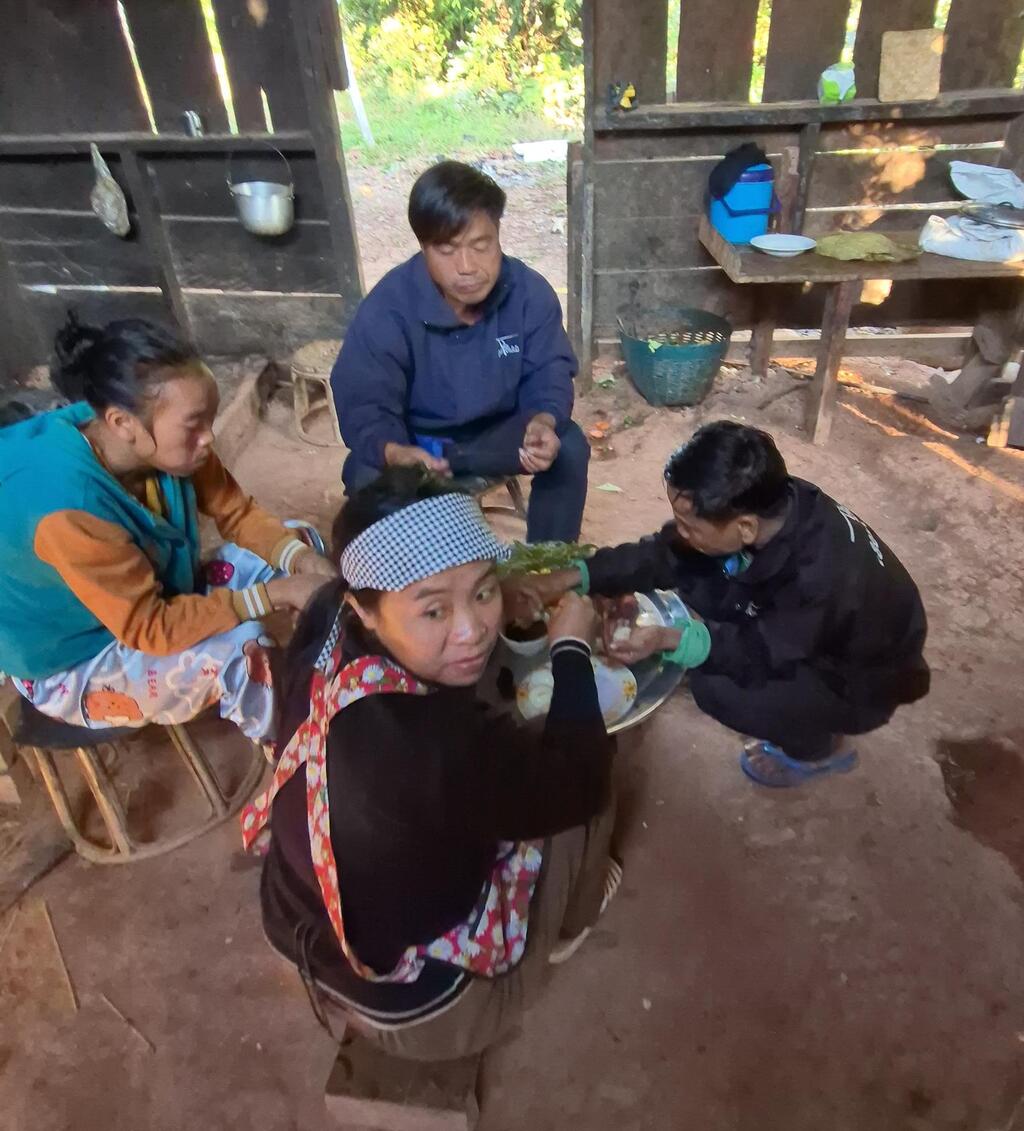
Meeting with a local tribe at the start of the trail
(Photo: Assaf Kamar)
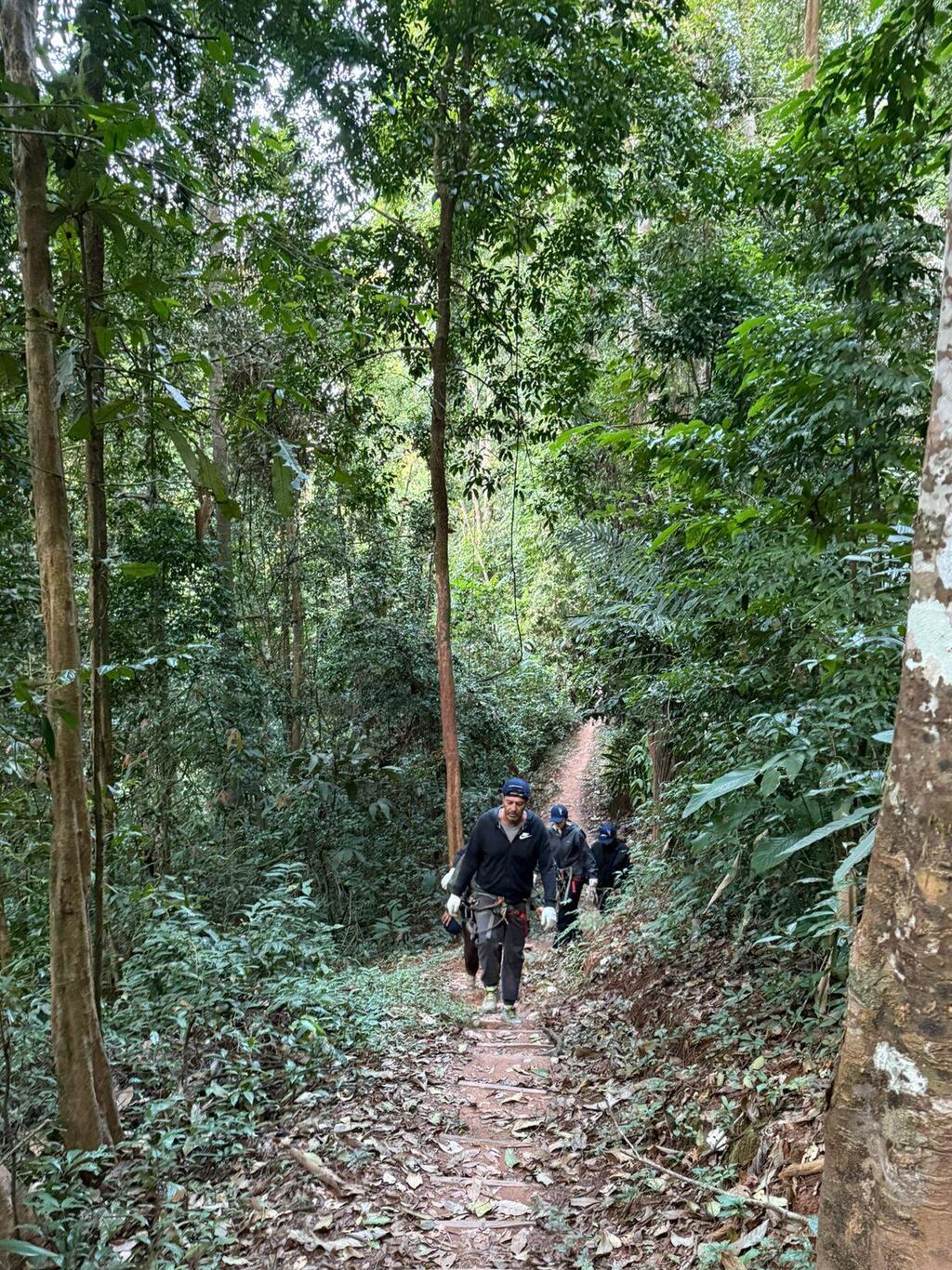
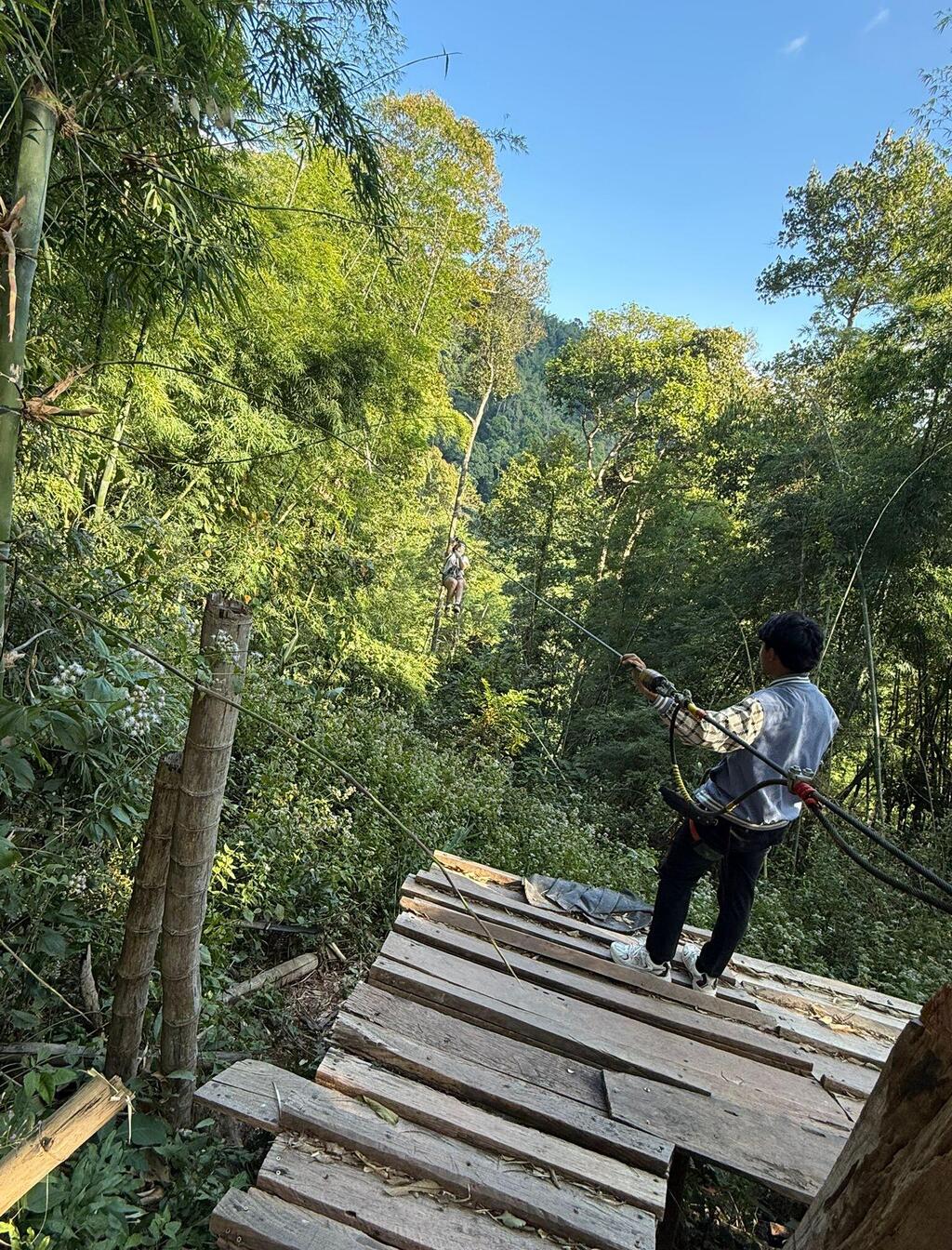
The next morning, we were picked up in an old pickup truck and, after two and a half hours of bone-rattling off-road travel through jungle tracks, arrived at the starting point of The Gibbon Experience: a tiny village of wooden huts scented with smoke and inhabited by short, striking locals. Our guide, a young man from the Khmu tribe — one of Laos’ Indigenous ethnic groups — handed out harnesses, gloves and helmets, gave a short briefing in good English, and sent us off on our first zip line across a spectacular mountain stream. That came only after a brutal two-hour uphill hike at a punishing angle to the mountaintop launch point.
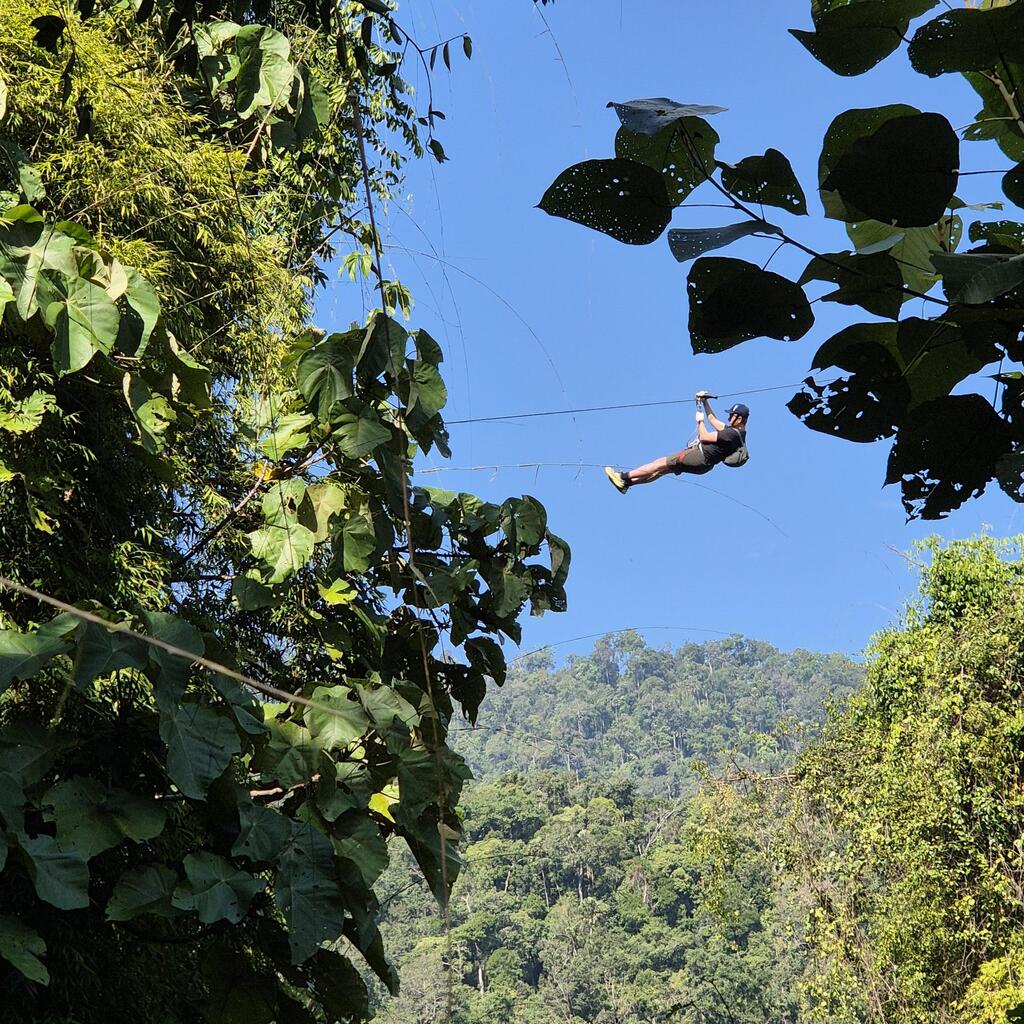
Anyone who has dreamed of seeing the jungles of Laos from above or of feeling free flight over an ancient forest has come to the right place. The zip lines in Laos are among the longest and highest in the world. Some cross entire valleys; others connect the crowns of ancient trees, at heights of dozens of meters above the ground. The fast glide feels like a natural motion within the landscape, and if you have the nerve, you should look down at the wild expanses stretching to the horizon.
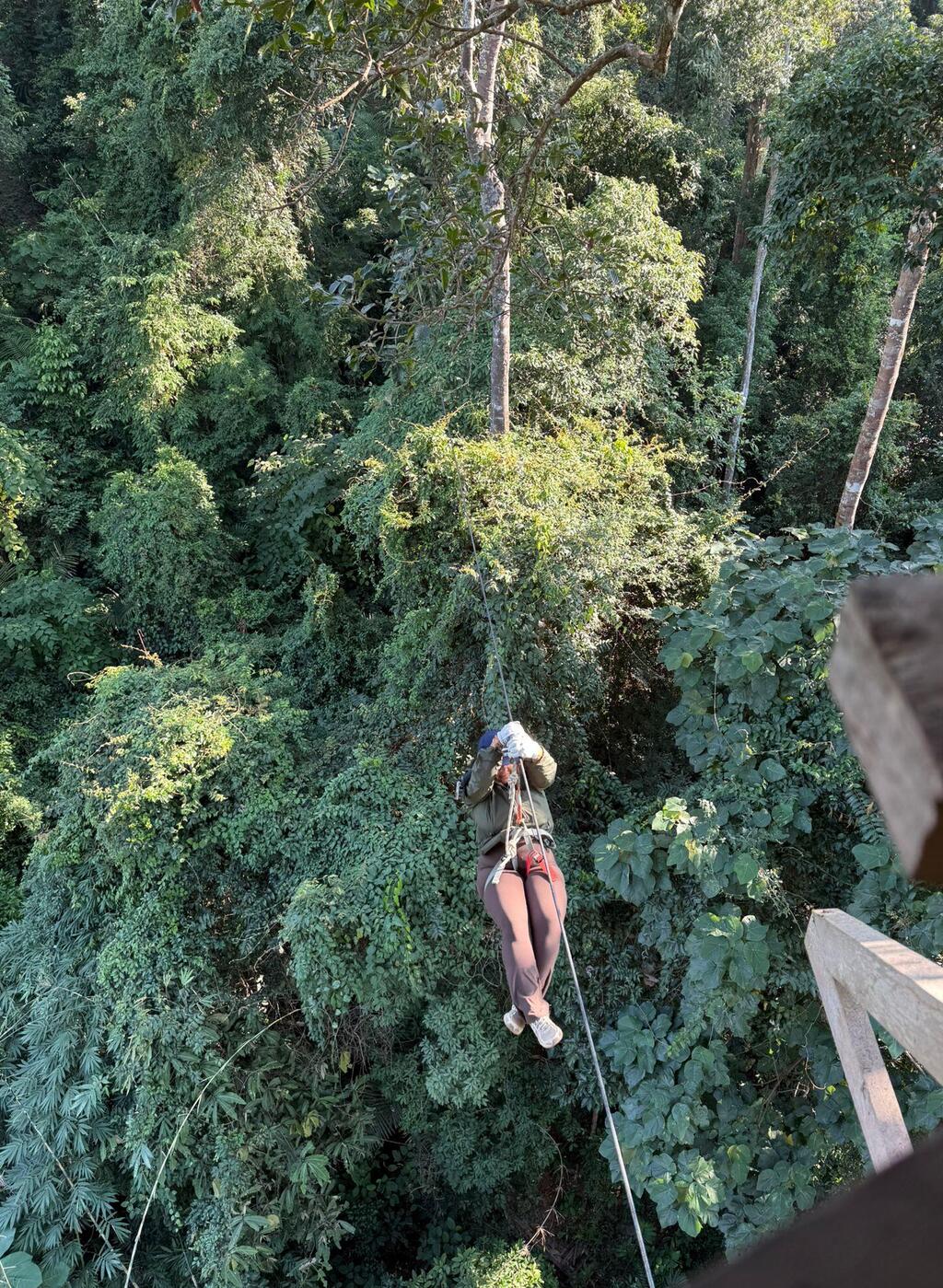
Contrary to expectations — and to my own surprise — I was terrified. The height made it hard to enjoy the view, and a light wind rocked me between sky and earth. I finished the line drenched in sweat, stuck on the cable dozens of meters before the end, forced to pull myself along hand over hand in an awkward, exhausting crawl.
(Photo: Assaf Kamar)
(Photo: Assaf Kamar)
(Photo: Assaf Kamar)
From there, things accelerated quickly: short hikes and climbs, then insane zip-line crossings between green mountains and ancient landscapes in every direction. To avoid getting stuck again and dragging myself for dozens of meters, the guide taught me to lift my legs and straighten my back to build speed. On the fourth zip line, I flew like a spaceship, forgot about braking, slammed into a cursed tree and earned a serious black eye.
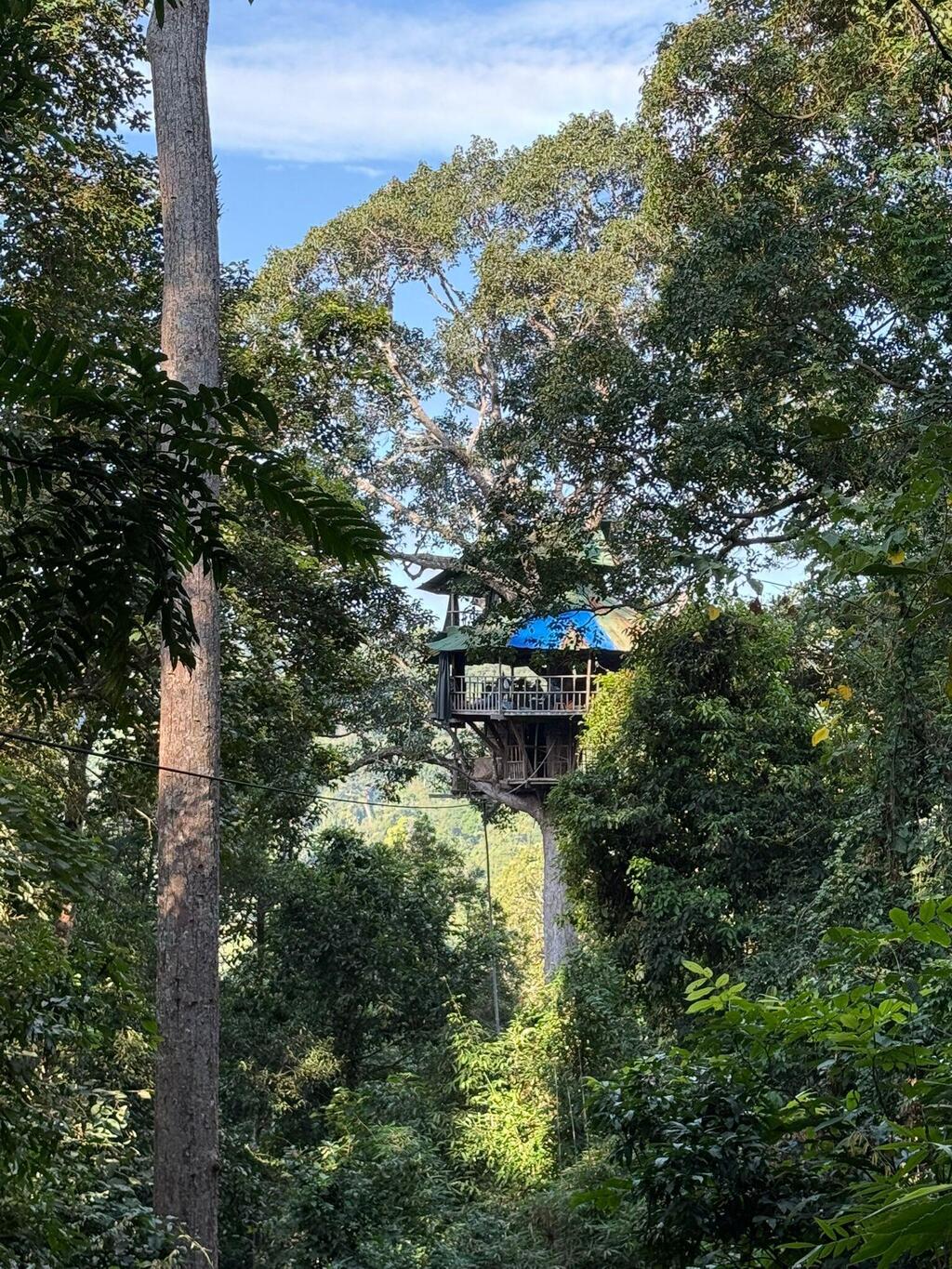
That exhausting day included 16 zip lines of varying lengths. Near sunset, we flew into a massive, surprisingly luxurious treehouse, built dozens of meters above the forest floor on one of the tallest trees in the jungle. Here we would eat a hot meal, sleep safely and perhaps be lucky enough to hear the mournful mating song of the elusive gibbons.
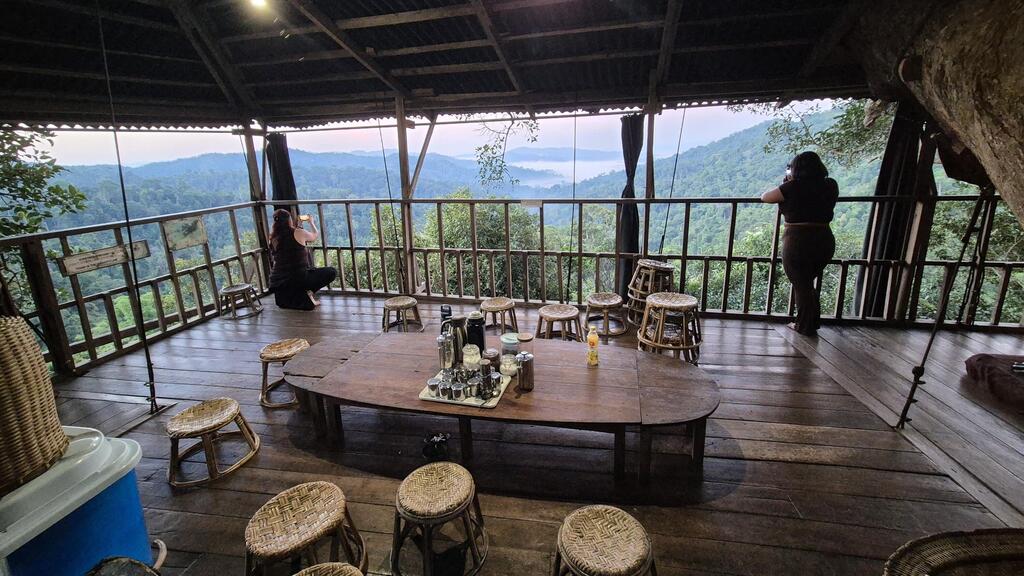
Beyond the apes’ calls, the highlight of the journey is sleeping in a treehouse deep in the jungle, at a height that completely disconnects you from the ground and from reality. There is no cell service and no walls. There are a million stars, loud jungle sounds and a sense of total detachment. Surprisingly, there was even an open-air shower with icy water from a nearby waterfall, and a celebratory toilet with what may be the best view imaginable.
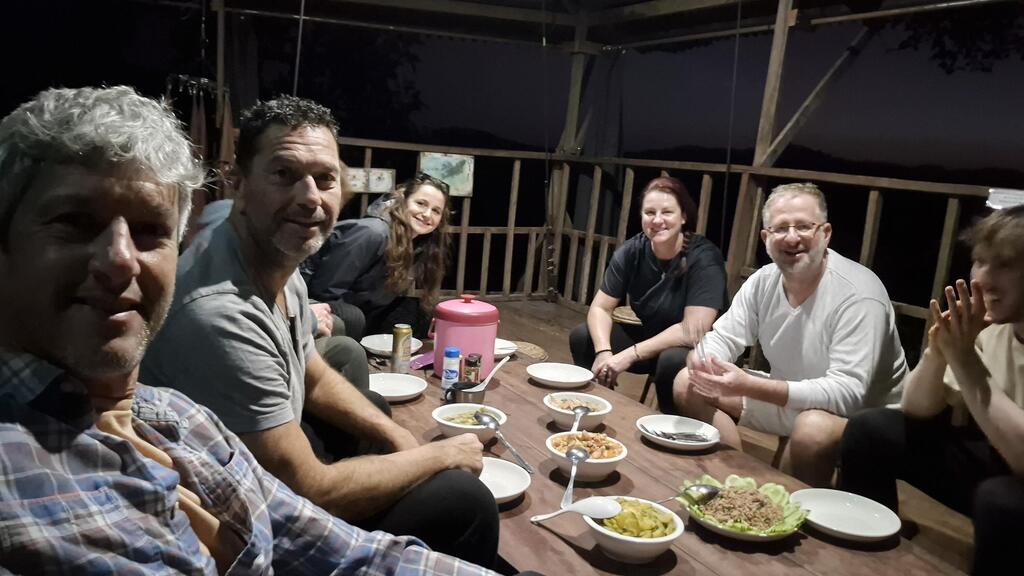
After a spectacular sunset over the endless jungle, the temperature dropped, and the sharp whine of a zip line out of the darkness announced that dinner had arrived. Two young women from the local tribe emerged carrying pots and baskets. They were not Buddhist, it turned out, but followers of ancient animist traditions centered on nature spirits and ancestors.
(Photo: Assaf Kamar)
(Photo: Assaf Kamar)
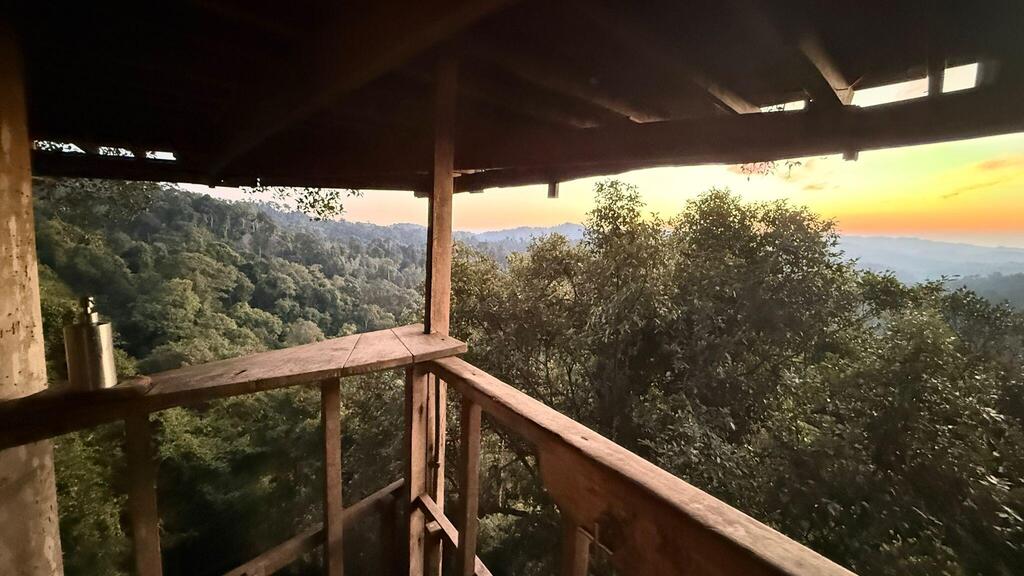
The view from the treehouse
(Photo: Assaf Kamar)
(Photo: Assaf Kamar)
After a solid dinner — impressive given the conditions of a treehouse dozens of meters above the ground — and strange card games and spoon puzzles the locals tried to teach us while celebrating with especially strong homemade rice wine, we collapsed onto mattresses. With great professionalism, the local women hung thick mosquito nets above us.
Then came a particularly unsettling safety briefing about dealing with jungle mice: the lower edge of the net must be tucked under the mattress; shoes must go inside and under no circumstances should food of any kind be left in your bag.
At night, the jungle wakes up. You hear distant calls, movement in the leaves and wind lightly shaking the structure. Seconds after we turned off the light and total darkness took over, dozens of brazen mice claimed the common space, climbing over the nets, while booming sounds of frogs and cicadas filled the air.
Good morning from the treehouse. Despite the annoying mice that crawled over me for half the night, I slept well and woke up in a state of happiness that reminded me why we set out on this journey in the first place. Breakfast, served dozens of meters above the ground, included an especially good soup — and then an important detail emerged.
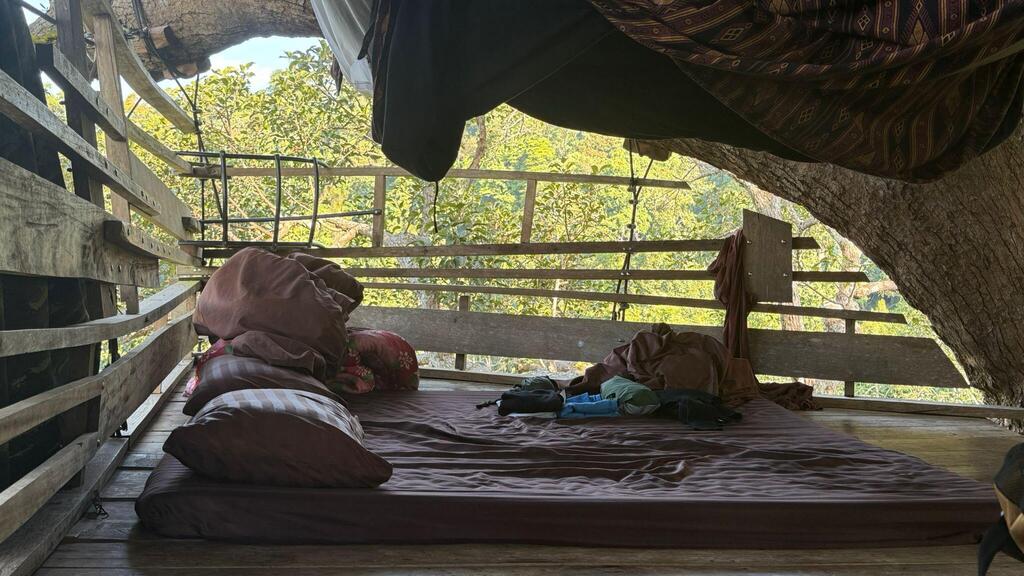
Mosquito net to keep out mice
(Photo: Assaf Kamar)
I asked the guide whether the strange sounds we heard at night might have been the gibbons’ mating song. He laughed. It turns out that because of waves of noisy tourists flooding the jungle, the shy apes have moved to a more remote area of the forest, without zip lines, reachable only by an intense, multi-day trek.
From there, things flowed with surprising ease. The previous night’s rice wine party had taken its toll on the guide, and we were cleared to move ahead on our own and as fast as possible: eight or 10 more zip lines of various kinds, down to a small stream where we could bathe. On the second day, I began to adjust, and fear played a smaller role. In the dry season, carefully chosen by the trip leader, there were no mosquitoes, leeches or mud — and unfortunately, no birds either. Just endless forest, the whine of a zip line and a helmet weighing on your head.
Beyond the adrenaline, The Gibbon Experience was created first and foremost as a conservation project. The goal is not only to send travelers flying above the treetops, but to protect northern Laos’ rainforest from logging, hunting and ongoing damage. The attraction operates within a designated nature reserve and provides livelihoods for local communities living deep in the jungle, turning the forest itself into a resource worth preserving rather than exploiting.
(Photo: Assaf Kamar)
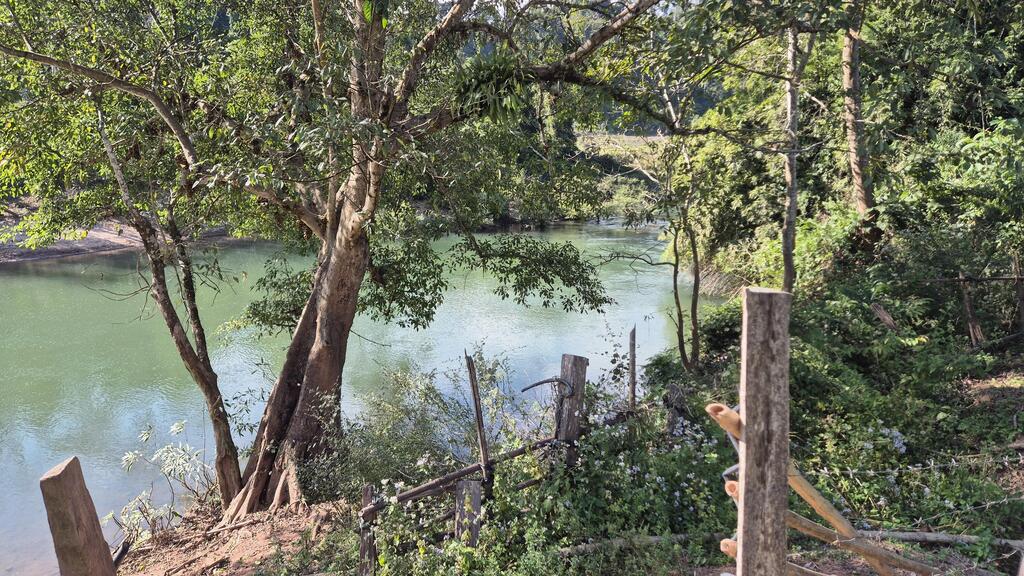
The stream at the end of the journey
(Photo: Assaf Kamar)
The eco-attraction is offered in several formats: a two-day package (220 euros) and a three-day package (340 euros). The price is not cheap by Laos standards, but it includes everything: lodging, food, guides, safety equipment and transportation. This is not for everyone. Those afraid of heights, uncomfortable hiking in the jungle or in need of Western-style comfort will struggle. But for travelers seeking real thrills, a deep connection to nature and a memory that lasts long after the phone regains signal, this is one of the highlights of backpacking in Laos.
In the end, we did not see gibbons or hear their mournful song. But we thoroughly enjoyed an unusually indulgent jungle experience, and sleeping high in the treetops was a rare pleasure. Fueled by adrenaline, we flew like birds between sky and earth, encountered a fascinating Indigenous culture, shared our sleeping space with mice — and it was amazing. In a world where attractions increasingly resemble one another, The Gibbon Experience in Laos managed something rare: surprise. With breathtaking nature, excessive heights, shaking knees and an authentic, liberating sense of freedom, it offers a moment when the heart beats faster. Some people collect souvenirs. Others collect moments like that — and this is one of them.