

Abandoned, bullet-riddled buildings that look as if the war ended only yesterday. Military checkpoints. The echo of distant explosions. An air of secrecy — and land mines still scattered beneath the soil.
That was the landscape that greeted 19-year-old Avi Rosenfeld when he joined an official tour organized by the Azerbaijani government to Nagorno-Karabakh. After years of bloody conflict, the region remains almost completely closed to outsiders. Rosenfeld is among the few who have been permitted to see up close what is considered one of the most dangerous places in the world.
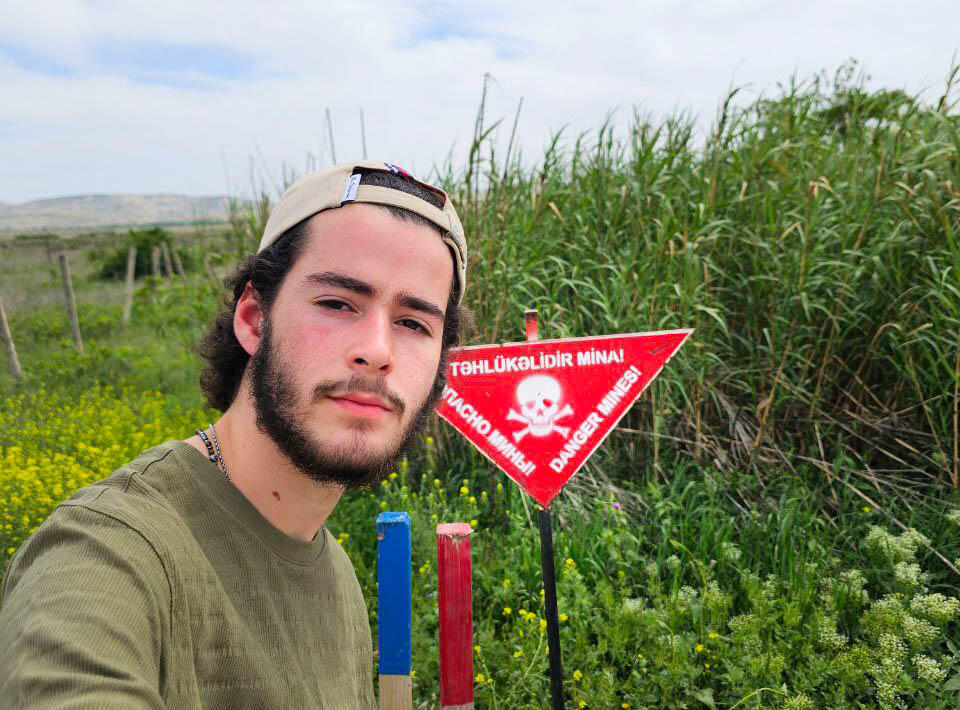
Rosenfeld is no ordinary traveler. At 16, he left his ultra-Orthodox upbringing and the yeshiva where he studied and set off on a personal quest: to visit all 193 countries in the world. Holding both British and Swiss passports, he documents his journeys on Instagram, crossing borders and collecting stories at a rapid pace — over 50 countries so far, from escaping a hostile mob in Saudi Arabia to being caught in Sri Lanka during a major travel advisory. But his latest journey to Nagorno-Karabakh, he says, was unlike anything he had ever experienced.
“We drove jeeps along narrow dirt tracks on the cliffs, knowing that if we veered even slightly off course, we could hit a land mine and explode,” Rosenfeld said.
Nagorno-Karabakh is a mountainous region in the South Caucasus, internationally recognized as part of Azerbaijan. The dispute over it dates back to the Soviet era: although the local population was mostly Armenian, the Soviet authorities placed the territory under Azerbaijani administration.
When the Soviet Union collapsed in the late 1980s and early 1990s, war broke out. Armenian forces seized control of Nagorno-Karabakh and surrounding territories, establishing a breakaway entity known as the Republic of Artsakh — recognized by no other country.
For nearly three decades, the conflict remained frozen until October 2020, when Azerbaijan launched a large-scale offensive that restored most of the surrounding lands to its control. In September 2023, Azerbaijan launched another short military campaign that brought Nagorno-Karabakh itself back under full Azerbaijani authority. The operation dismantled Armenian institutions in the region and triggered a mass exodus of its Armenian population.
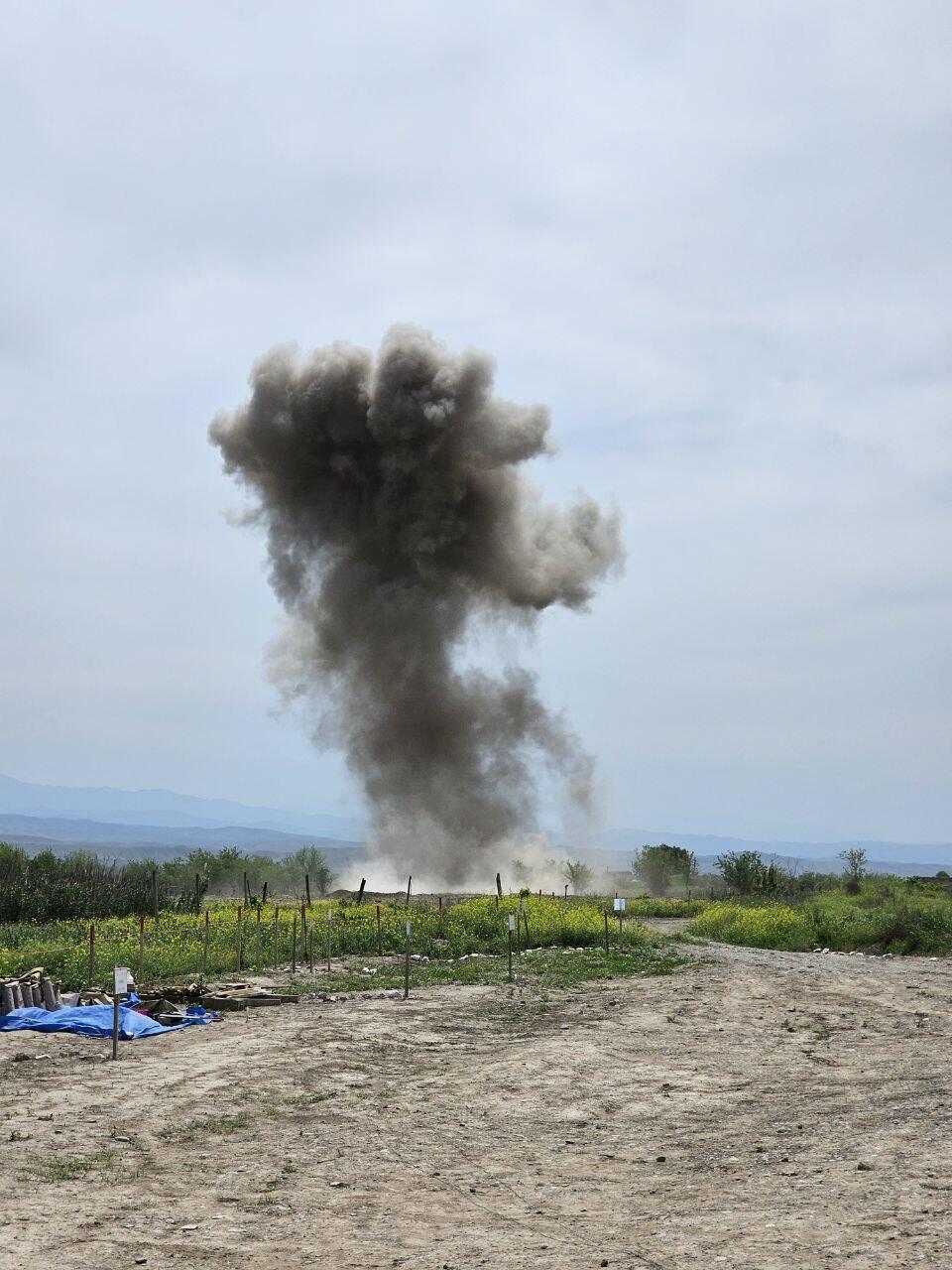
Controlled explosion of a mine
(Photo: Avi Rosenfeld)
Since then, the area has been designated a restricted zone under Azerbaijani control, with only a handful of foreign visitors permitted entry. Beyond the visible destruction from years of fighting, land mines and unexploded ordnance pose an ongoing threat. International experts estimate it will take decades to clear the region completely.
“At one point, we drove right past the Iranian border,” Rosenfeld said. “I could see Iranian outposts and flags. It hit me how close I was to a country that openly wants our destruction — Israel’s biggest enemy. But even more surreal was when they detonated mines just a few meters from where we were standing.”
Recently, in a rare move, Azerbaijani authorities allowed a small group of foreign travelers to tour Nagorno-Karabakh. Rosenfeld was among them.
“I admit, I was really scared at first,” he said. “I read a lot about the area and knew it was one of the most heavily mined places in the world. But once I learned we’d be traveling in a convoy with military and police escorts, I felt much better. I live for adventure, and things like this give me adrenaline. I decided it was worth the risk for the experience.”

A close-up look at the ammunition
(Photo: Avi Rosenfeld)
His fears were not unfounded. Western governments continue to warn citizens against traveling to the area. The U.S. State Department designates Nagorno-Karabakh — and particularly the border with Armenia — as a “Do Not Travel” zone due to the high risk of land mines and ongoing tensions. The British Foreign Office also advises against all travel to the region and to adjacent districts in southwestern Azerbaijan, where military convoys and minefields remain common.
These warnings highlight just how unusual Rosenfeld’s journey was. He is one of the very few foreigners to have entered a territory the international community still regards as among the most perilous on Earth.
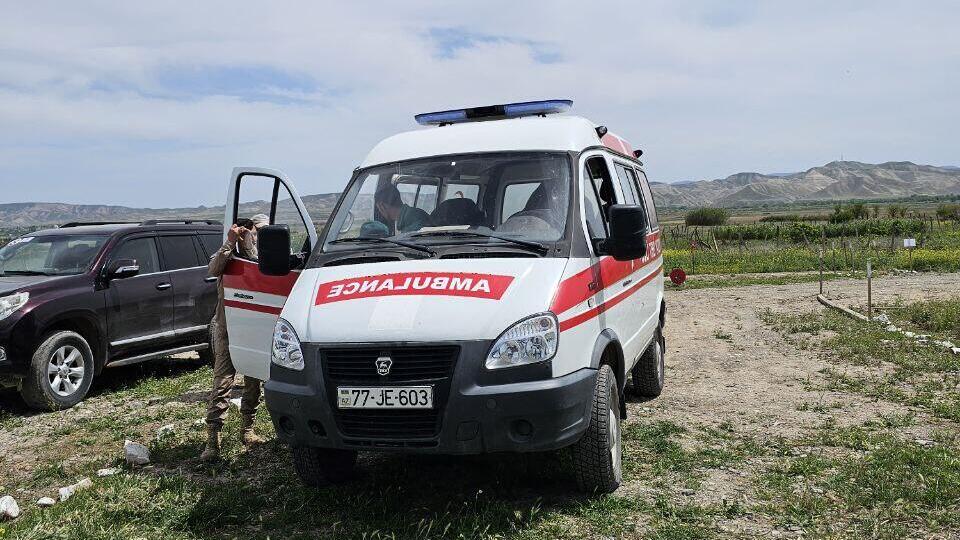
An ambulance is nearby at all times
(Photo: Avi Rosenfeld)
“I told my close friends and family. At first, they were really worried — it’s a conflict zone that’s seen wars since the 1990s. But once I convinced them we’d have full military and police escort, they relaxed and gave me the green light,” said Rosenfeld.
Nagorno-Karabakh, still a closed military zone under Azerbaijani control, is not a place anyone can simply visit. Rosenfeld joined the rare trip through NomadMania, a global network of veteran travelers and content creators who share information, connections and rare opportunities to reach otherwise inaccessible destinations. Thanks to that network, Rosenfeld secured a spot on the tightly controlled expedition.
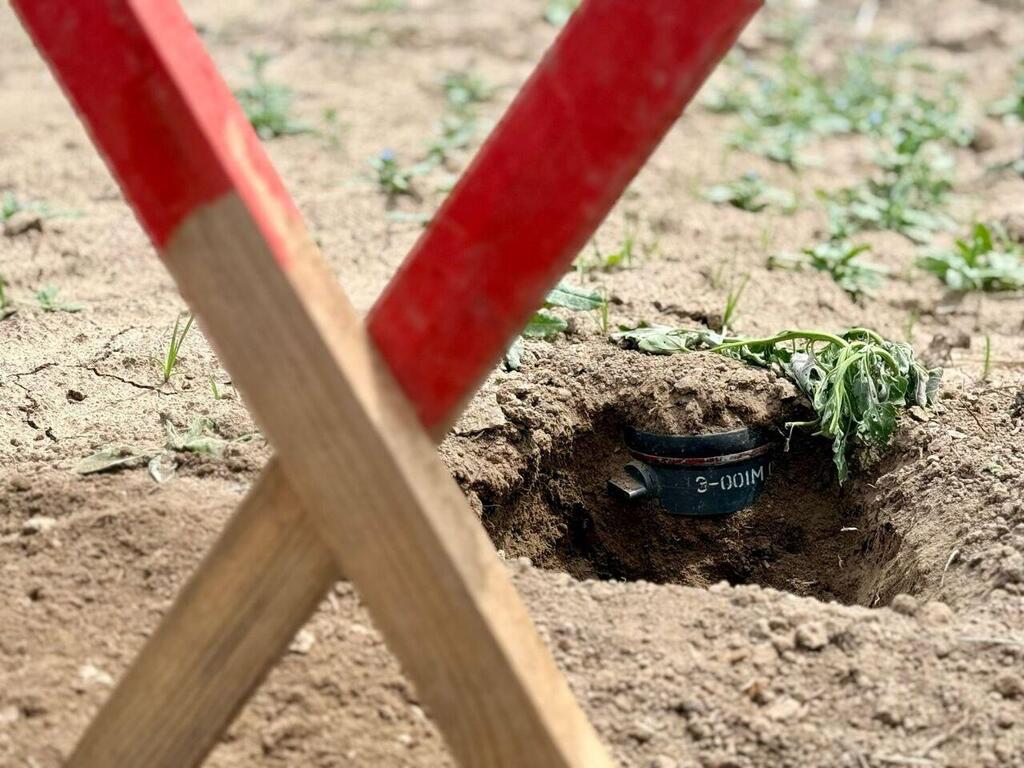
A mine discovered underground
(Photo: Avi Rosenfeld)
“It’s not a city tour or a nature hike — it’s an active military zone,” he said. “The adrenaline is what drew me. Just getting the invitation to join this group made me feel like I had to go. We were about 30 experienced travelers used to visiting remote and difficult places, and I knew I wanted to be part of it.”
“You can’t just enter. It’s a restricted area, and you need special government clearance. But through NomadMania, I connected with people who handled all the bureaucracy. They took my personal details and passport scans to issue the permits.”
Those permits, he added, aren’t handed out easily. Azerbaijan is trying to rebrand Nagorno-Karabakh as an emerging tourist destination. State media has described visits by foreign groups as part of an effort to “promote the liberated territories” and reinforce Azerbaijani presence there. The government has begun investing in hotels, hostels and other tourism infrastructure to attract visitors and reshape the region’s image — though Western travel advisories remain severe.

Iranian flag on the horizon
(Photo: Avi Rosenfeld)
“There were around 30 of us—the largest group ever allowed in with official permission. Most were global travelers and influencers with tens of thousands of followers. About eight of them had already visited every country in the world. I was the only Israeli.”
“At first, it seemed quiet and simple, but soon I noticed the paved roads were almost empty. Instead, we saw endless convoys of military trucks, tanks and armored vehicles. The dirt roads were completely deserted, except for the occasional military base. We met government officials, soldiers and police officers. The officials were some of the nicest people I’ve ever met — they spoke fluent English and patiently answered every question. The soldiers and police barely spoke English, but they always smiled and were very friendly.”

Iranian position on the border
(Photo: Avi Rosenfeld)
“The wildest part was when we drove right next to the Iranian border. I saw Iranian military posts and their flag flying, and suddenly it hit me how close I was to a country that wants to destroy us — Israel’s greatest enemy. But even more surreal was when they detonated land mines just a few meters from where we were standing.”
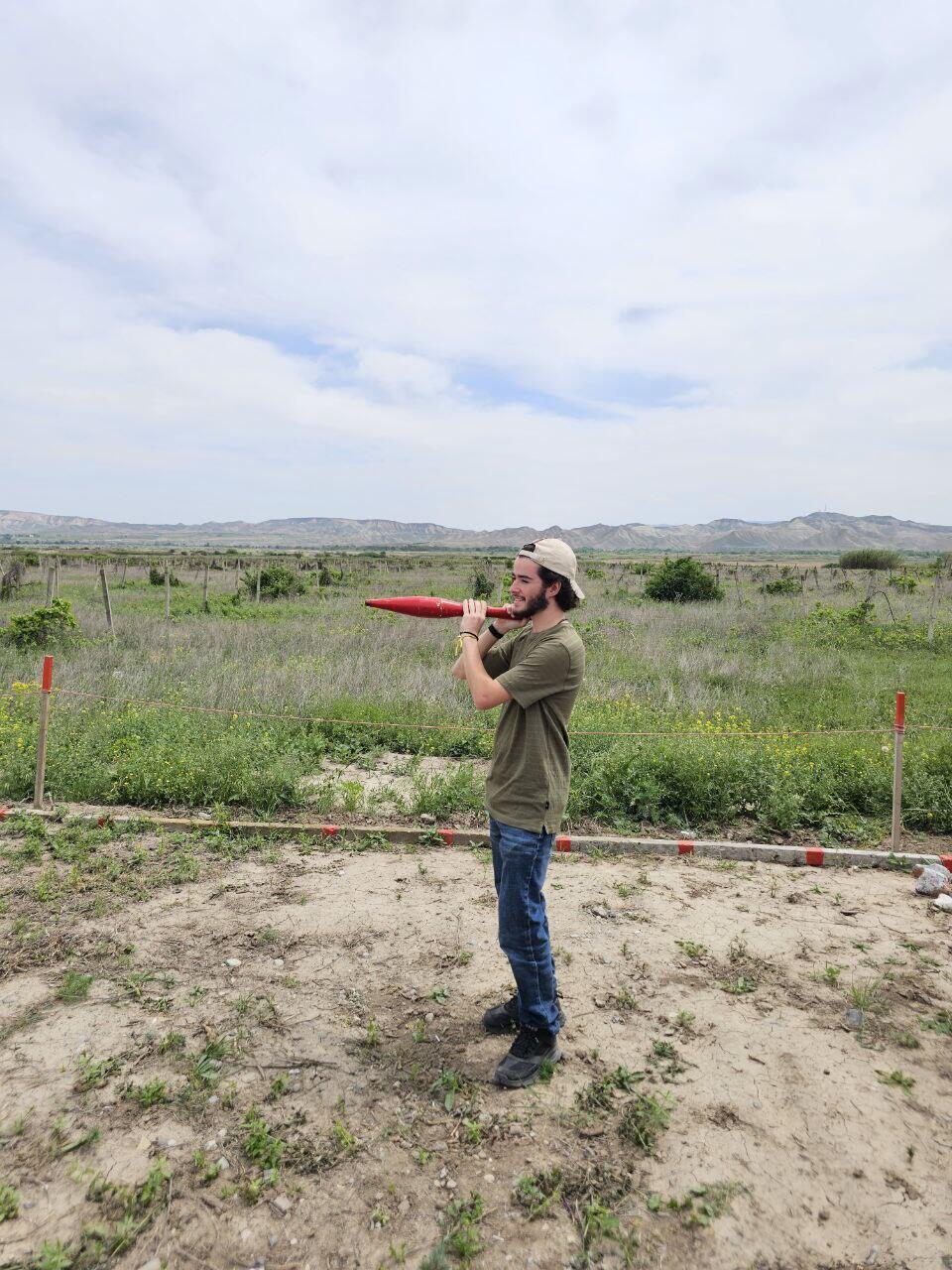
With a shoulder-fired missile
(Photo: Avi Rosenfeld)
“When we reached the mountain dirt trails, we drove in jeeps knowing that if we veered off the marked path even slightly, we could hit a land mine and explode. We were told to step only on clearly marked routes because of the huge number of mines still buried in the ground.”
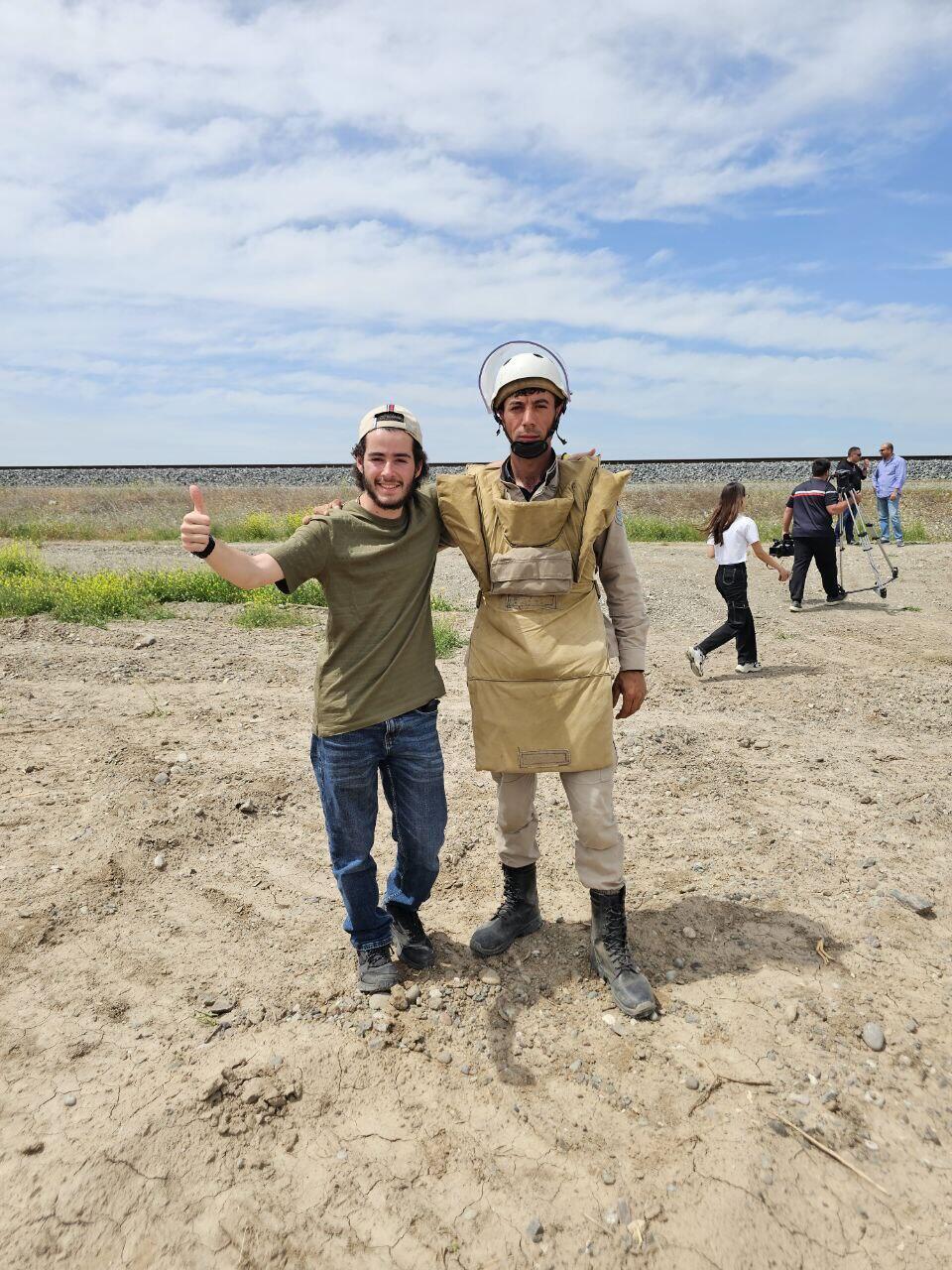
Rosenfeld with a soldier specializing in mine detection
(Photo: Avi Rosenfeld)
“Unfortunately, right now it’s impossible for others visit,” Rosenfeld said. “The area is still a closed military zone with no civilian access. I hope one day it opens up, because the nature there is absolutely breathtaking.”
“I’ve reached 62 countries,” he said. “Recently, I visited Bahrain — the only Gulf state with a centuries-old Jewish community, complete with an active synagogue and cemetery. I haven’t decided on my next trip yet, but I’d really like to finish the six European countries I still have left.”
First published: 18:14, 10.06.25