

Bonita, the upgraded German motorhome, was stranded on the side of a deserted road in the middle of Patagonia in southern Chile. The fuel line had once again come loose from the fuel pump. Attorney Amir Eshel, 60, and his wife stood beside the vehicle that had become their home for the previous two months, with no idea how they would reach the nearest city.
“It had already become an ongoing problem. It kept happening over and over, and we couldn’t get it fixed,” Eshel told ynet. “We were frustrated and didn’t know how we were going to solve it.”
Israeli couple takes South America road trip one breakdown at a time
(Video: Amir Eshel)


Then came a knock on the window.
“Suddenly, a man showed up and asked us, ‘What happened?’” Eshel recalled. “I realized he had gotten out of a semitrailer parked on the other side of the road and had come over to see if we needed help. Two hours later, a friend of his who was a mechanic managed to reconnect the hose with zip ties and got us back on the road.”
Just before parting ways with their rescuers, Eshel asked the man why he had stopped in the first place.
“I said to him, ‘Juan, what made you stop here?’ He said, ‘I drive my truck carrying materials from one side of the road to the other. I saw you once, came back empty and saw you again. Then I came back loaded and saw you were still standing there and hadn’t moved, so I came to see how I could help,’” Eshel said, laughing.
“I’m still in touch with them today, and I send them pictures from the road. These are very moving encounters — people who just show up in the middle of nowhere and help you.”
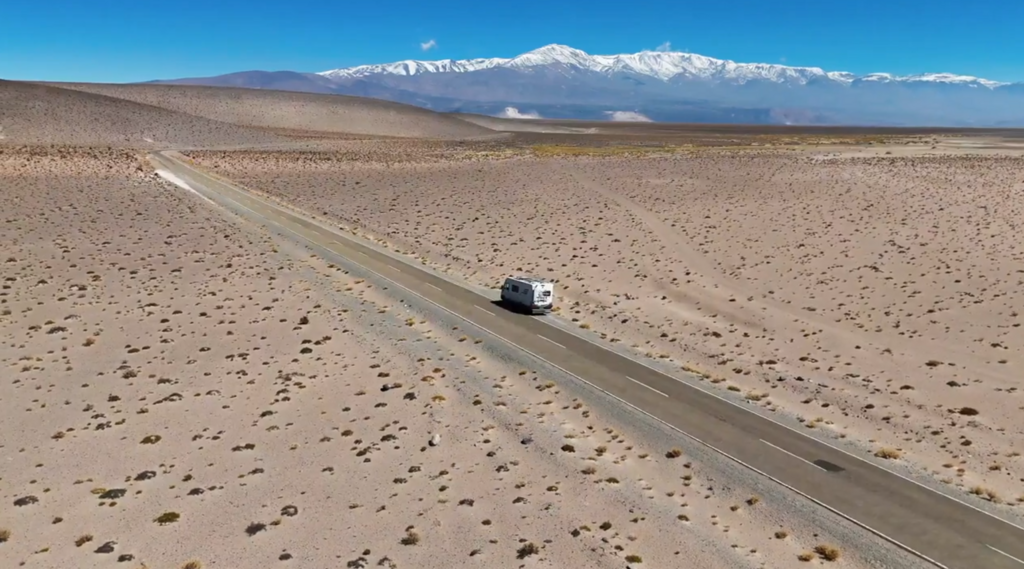
Bonita is a Hymer motorhome built on a 2003 Mercedes Sprinter chassis. For the past two years, it has served as Eshel and his wife’s home during their travels through South America.
Unlike most travelers who embark on one long, continuous journey, however, the couple have found a system that fits their lives. Each time, they fly to South America, travel for several weeks, leave the motorhome at a secure garage and return to their jobs and family in Israel. A few months later, they board another flight, reunite with their comfortable home on wheels and resume the journey exactly where they left off.
“The vehicle is in Paraguay now, at a garage,” Eshel said. “I found a Jewish guy there who fell in love with my story, and he has a friend with a garage. They fix the vehicle, take care of it, start it up and send me pictures. With a vehicle like this, you’re constantly fixing something,” he said with a laugh.
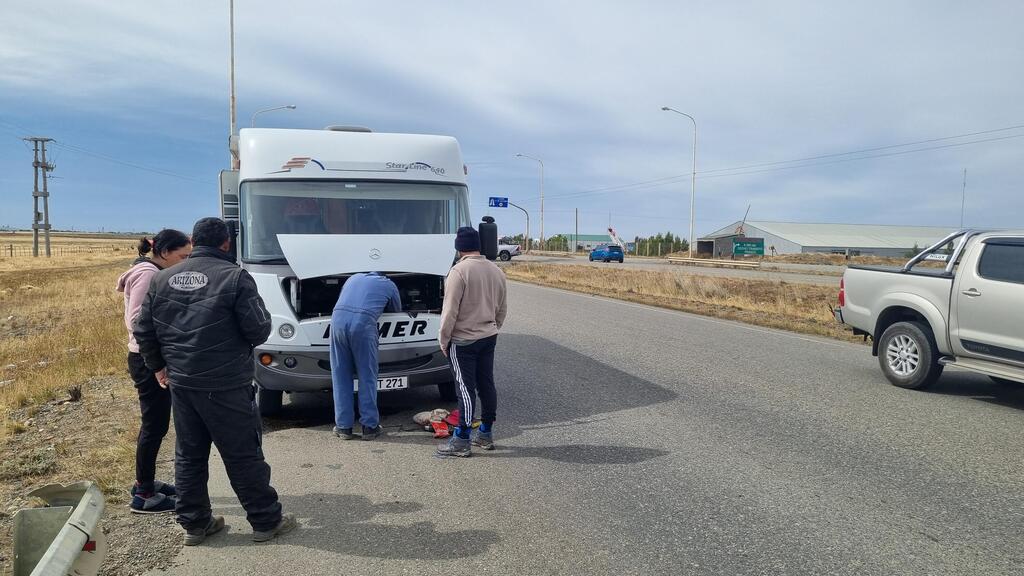
Breakdowns also happen
(Photo: Amir Eshel)
“My wife always gets upset about the breakdowns, and I tell her: Breakdowns — that’s where the stories are. In the end, what do you remember? How high the waterfall was? You have a picture. In the end, it’s the people — those are the interesting and special stories that happen.”
Eshel is clearly in love with Bonita.
“When you have a motorhome, you have a home,” he said. “You travel with your home — you sleep in it, eat in it, shower in it, and it has a toilet and heating. At a hotel, you have to pack every day, move to another hotel and get used to a different bed each time. In a motorhome, you can cook, too. There’s simply no comparison.”
“I can park next to a river and stay there for two weeks,” Eshel said. “As long as I have sun, I have electricity. I pump water into a tank and purify it. You can sleep wherever you want, stop whenever you want and go to sleep. All our clothes and equipment are there, and I don’t have to bring them back to Israel every time.”
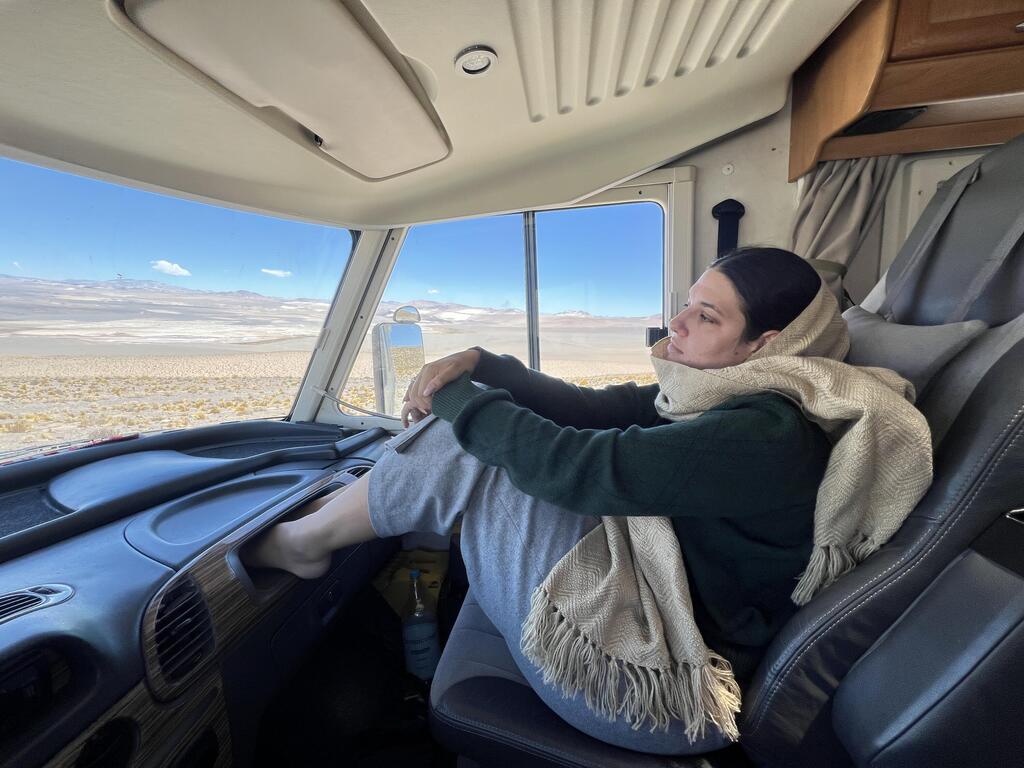
On the road again
(Photo: Amir Eshel)
Life inside Bonita continues even on long driving days.
“My wife has to take a nap in the afternoon, so there’s a bed,” he joked. “She can make coffee and sandwiches, read or watch television. I have Starlink, so I’m connected to the internet even in the middle of nowhere — you just need to make sure there aren’t trees blocking it. I’m also not afraid of getting stranded because I always have communications.”
Eshel bought Bonita in Paraguay for $60,000.
“The previous owner was a German engineer, and he outfitted the vehicle in an extraordinary way and left $30,000 worth of spare parts,” Eshel said. “He’s not just German,” he joked. “He’s also a German engineer. He named the vehicle Bonita and was in love with her.”
Planning where to leave a home on wheels
A vehicle with foreign license plates cannot remain indefinitely in every country, however.
“Usually, they give you a temporary import permit for three months,” Eshel explained. “Before you even set out, you need to know where you’re going to leave the vehicle for the next trip, somewhere you can leave it for eight months or a year. It requires meticulous planning. You can’t simply decide at the end of the trip where to park it and fly back to Israel.”
The motorhome allows Eshel to venture beyond the popular Israeli backpacker trail, known in Hebrew as the “Hummus Trail,” and reach places that are difficult to access without a vehicle.
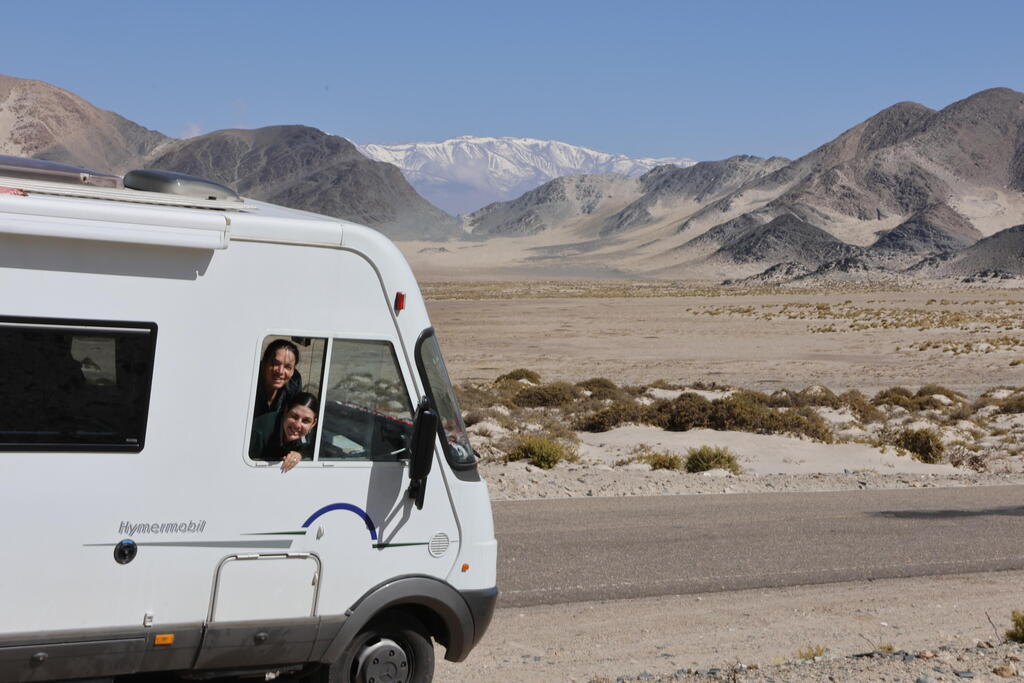
Bonita doesn't follow the classic 'Hummus Trail'
(Photo: Amir Eshel)
“The most incredible place we traveled through was northern Argentina,” he said. “The entire drive from Salta, or Jujuy, to Mendoza. There are places there that Israelis simply haven’t heard of, and without a vehicle, you can’t get to them.”
It is precisely that distance from the familiar Israeli travel circuit in South America that creates the encounters Eshel loves so much.
At a campground in Mendoza, for example, he met a local man named Lelo, and the two hit it off.
“I told him, ‘I’m dying to see a soccer game.’ He said, ‘Don’t worry, I have friends in Buenos Aires. I’ll get you tickets to a Boca game.’”
A month and a half later, the couple arrived in the Argentine capital and contacted Lelo’s friend.
“Diego took us with him to a Boca Juniors game,” Eshel said enthusiastically, referring to the popular Buenos Aires soccer club. “It’s a stadium with 60,000 crazy fans, and you can’t get tickets. You walk into the stadium and see things you’ve never seen in your life.
“Boca won 4-1. It’s an experience you can never forget. And the whole thing started with a random encounter with someone at a campground.”
Across Patagonia, one leg at a time
Amir, his wife and their daughter set out together for the first leg of the journey. After picking up the motorhome in Asunción, Paraguay’s capital, they hit the road.
“We went down through northern Argentina, from Salta to Bariloche, along the Andes, including the lakes in Chile.”
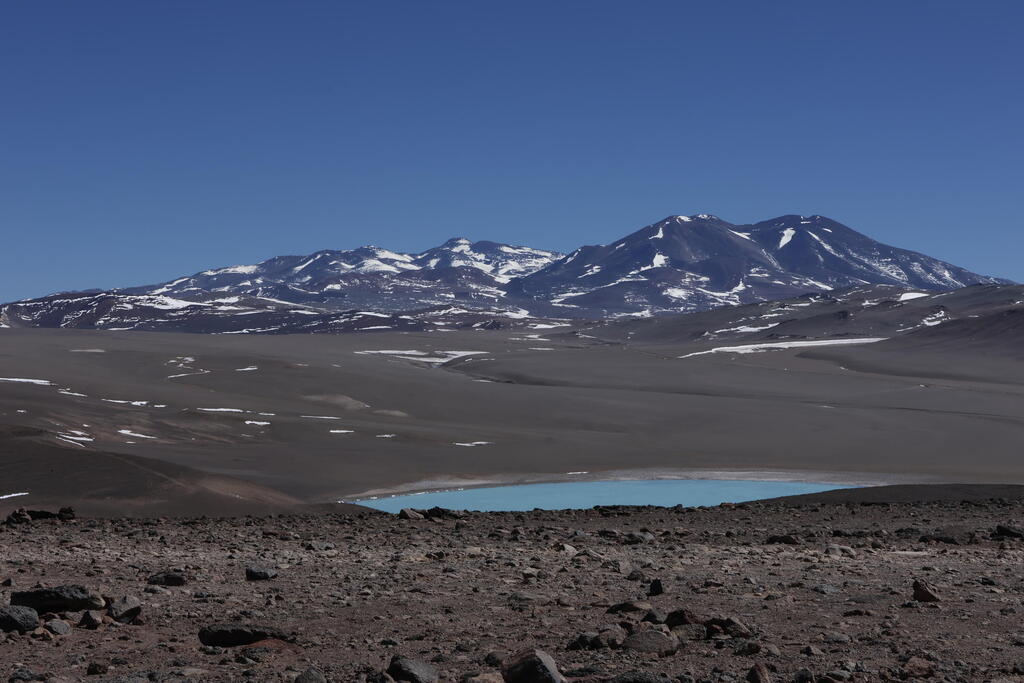
The Andes, Argentina
(Photo: Amir Eshel)
At the end of that first leg, the couple left Bonita at a campground in the Bariloche area. Several months later, they returned.
“This time, our son joined us,” Eshel said. “We slowly made our way down to Punta Arenas, around the Strait of Magellan and Torres del Paine. It was insanely cold, and we wanted to make it all the way to Ushuaia, but the vehicle broke down.”
The improvised repair with zip ties allowed the family to continue, but Eshel knew it was only a temporary solution and that Bonita needed serious work at a garage.
“We reached the largest Chilean city in the area and realized that if we ordered the parts there, we would have to wait two weeks,” he said. “On the other hand, we had a deadline. We had to get to Uruguay and fly back to Israel. We decided to put Bonita on a Chilean ferry heading north, from Puerto Natales to Puerto Montt, and find a serious Mercedes garage there.”
The voyage lasted four days.
“Bonita was tied down inside the ferry,” Eshel said. “You sail through this unbelievable archipelago, between snow-covered mountains and fjords, and you see whales and dolphins.”
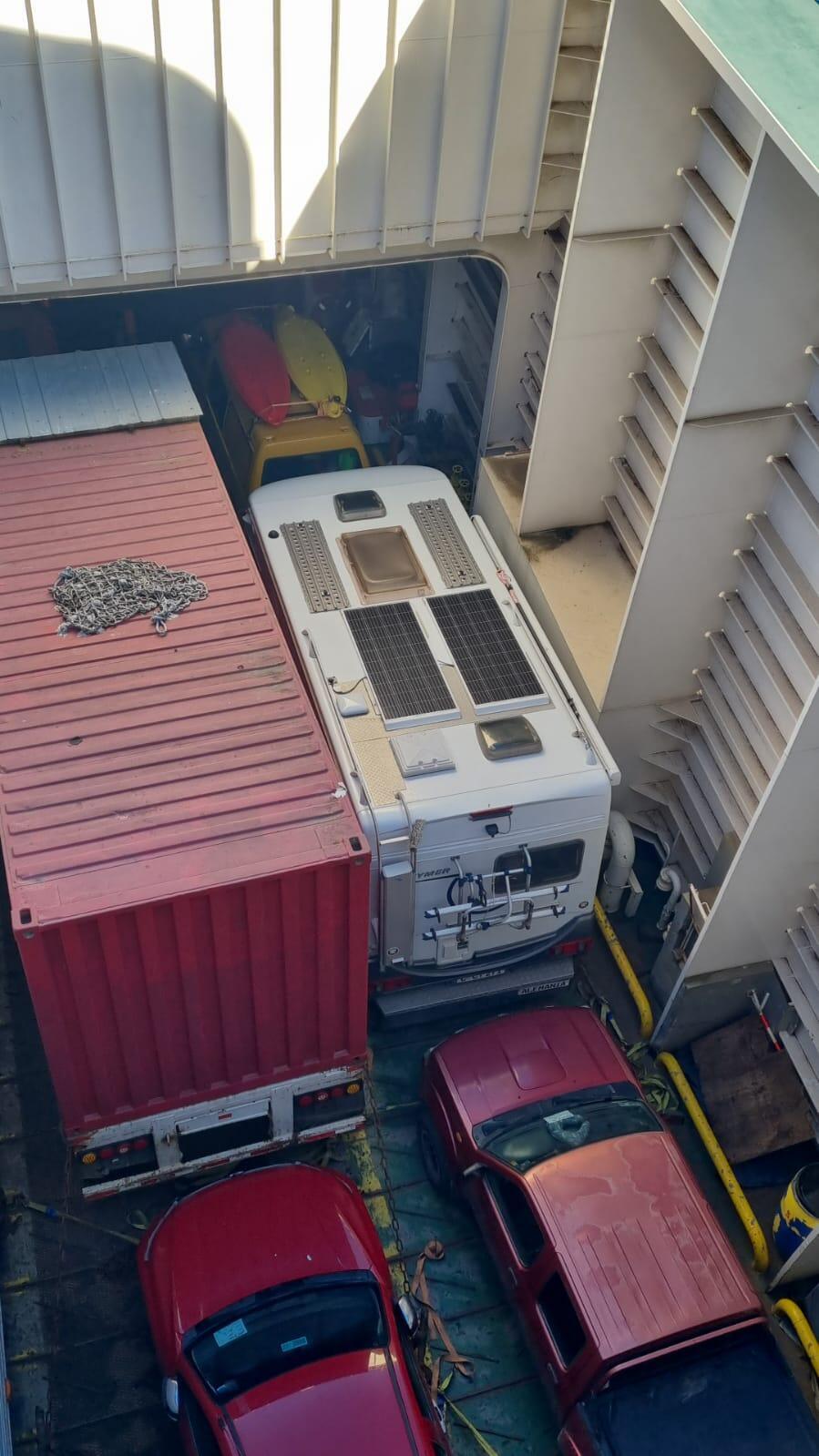
'Bonita was tied down inside the ferry'
(Photo: Amir Eshel)
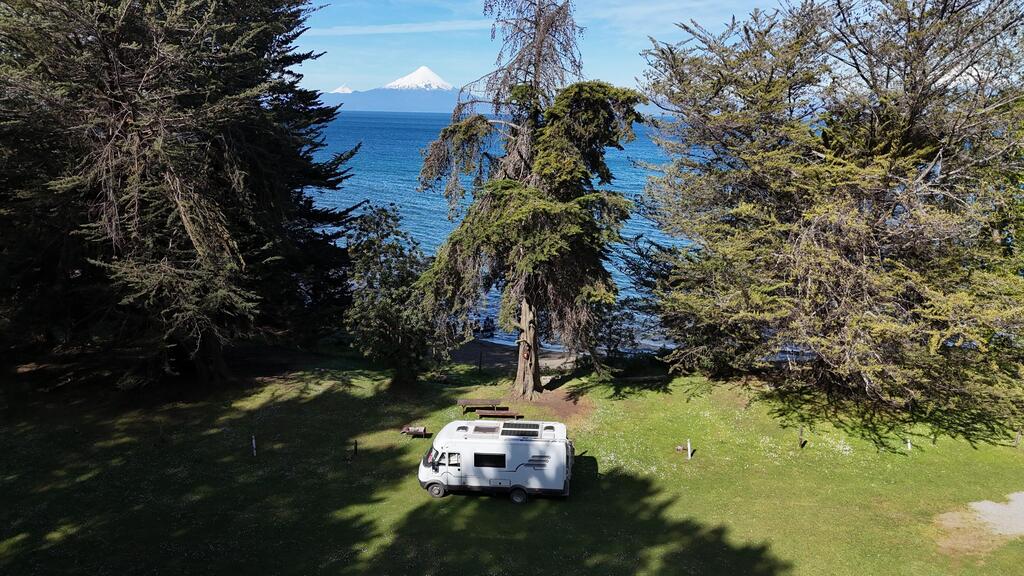
A stop with a breathtaking view in Chile
(Photo: Amir Eshel)
Earlier, while traveling down from Torres del Paine, Eshel had met a Jewish family from Santiago.
“They said to us, ‘We heard Hebrew. We’re Chilean and Zionist.’ They were warm, wonderful Jewish people, and we talked and exchanged phone numbers.”
When Bonita was loaded onto the ferry, Eshel remembered the encounter.
“I called the Jewish guy we had met and explained the problem. I asked if maybe he had connections at Mercedes in Chile. He got back to me and said, ‘I have a friend who’s the Mercedes service manager. Here’s his number, talk to him,’” Eshel said, laughing.
Four days later, Bonita rolled off the ferry.
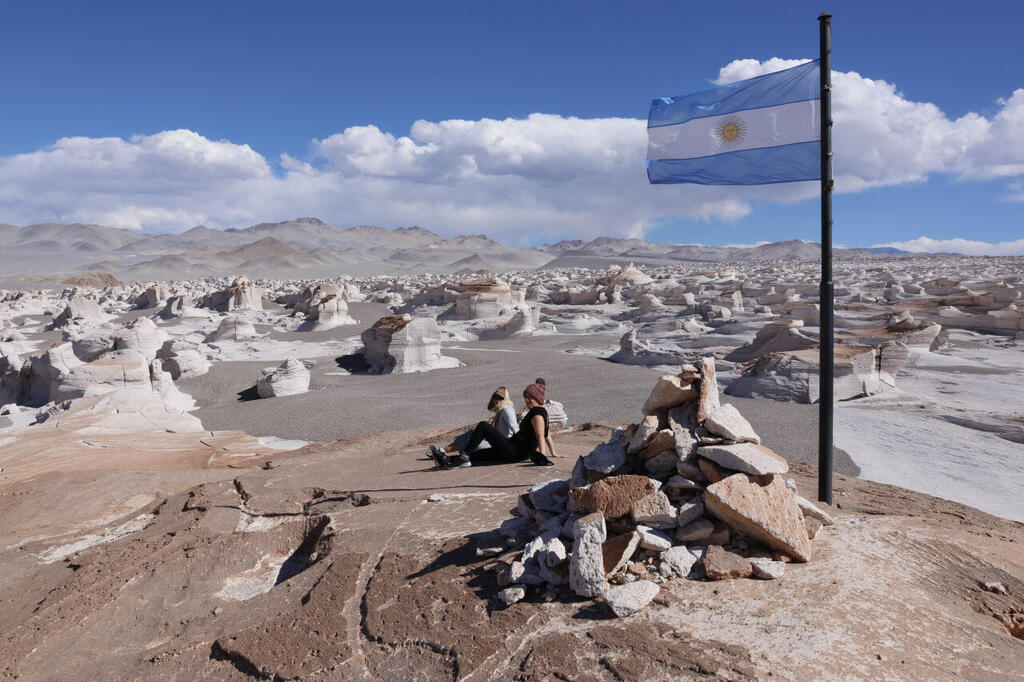
El Peñón, Argentina
(Photo: Amir Eshel)
“We arrive in a city that’s roughly like Afula,” Eshel said, referring to the northern Israeli city. “But there’s a Mercedes garage there where you could eat off the floor. Everything is clean and organized. I walk into the office, the service manager comes up to me and says, ‘Hola, Señor Amir.’ You understand? They were waiting for me. These are the kinds of encounters that happen to us all the time.”
On another occasion, the couple stopped near a store to repair a problem with the ignition system for their cooking gas. The store was still closed, so they waited inside the vehicle.
“We’re sitting in the motorhome and suddenly there’s a knock on the window,” Eshel said. “That happens to us a lot because people are curious — and Bonita is beautiful. It’s not an ordinary vehicle you see on the road, and everyone turns to look at her.”
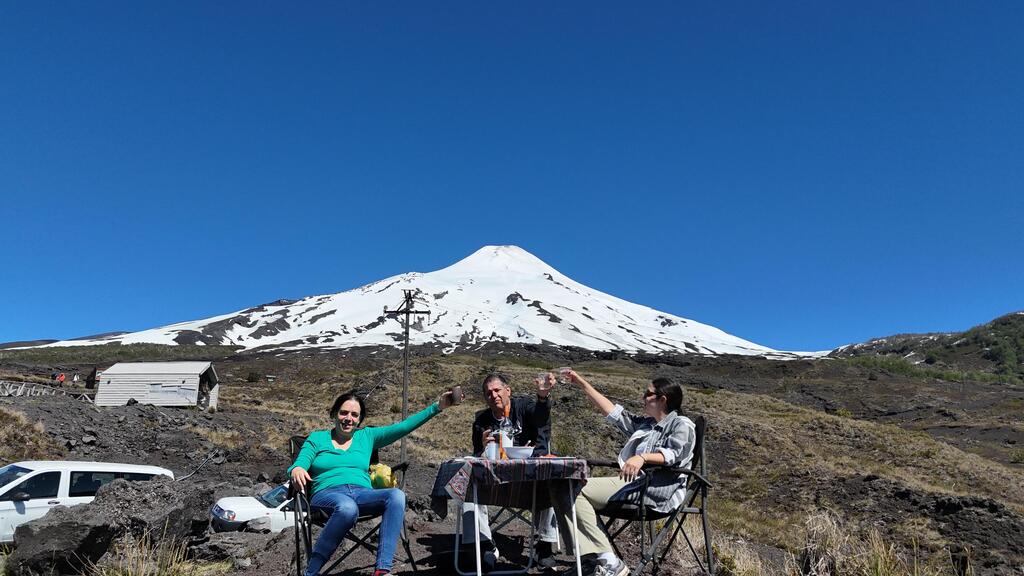
Picnic with a killer view
(Photo: Amir Eshel)
Eshel opened the window and found a couple about their age standing outside. They began speaking to him and his wife in German.
“We told them we don’t speak German, so they explained that they had seen the license plate and were from the city where it was registered,” he said.
“They told us, ‘Our dream is to take a trip like this. You’re inspiring us.’ Sometime later, we got a message from them: ‘Here’s our vehicle in Germany. Next week we’re shipping it to Canada and starting the Pan-American Highway.’ And I’m sure we’ll meet them again somewhere along the way.”
‘I’m living the dream now’
Near Iguazu Falls, the couple needed to find somewhere they could safely leave the motorhome. The solution was across the border in Paraguay.
“In Brazil, I can’t store the motorhome for more than three months,” Eshel explained. “Around Iguazu, you have this tri-border area between Brazil, Paraguay and Argentina, and I found a Jewish guy in Paraguay who fell in love with the story and has a friend with a garage. The vehicle is there now. They’re fixing it, starting it up and sending me pictures.”
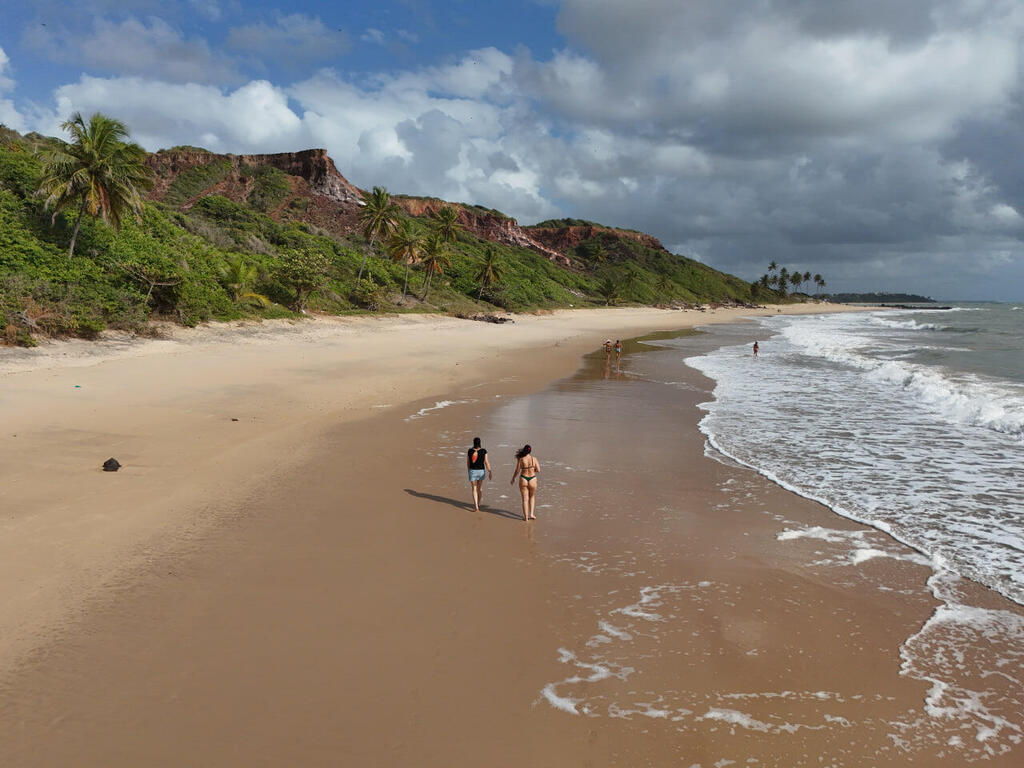
Brazil
(Photo: Amir Eshel)
The couple have now completed three legs of their journey along the Pan-American Highway. Bonita has traveled through Paraguay, Argentina, Chile, Uruguay and Brazil. Now she is once again waiting for them at a garage in Paraguay until they return and continue north.
Asked why, after visiting some of the most beautiful places in the world, he speaks with greater enthusiasm about meeting a truck driver, soccer fans and Jewish strangers, Eshel’s answer is simple.
“Because those really are the important things,” he said. “How can you explain to people how beautiful that glacier is? In the end, the people are the trip itself. If you travel from hotel to hotel and nothing ever breaks down, you don’t encounter these things. It’s precisely when something goes wrong that the interesting stories happen.”
“Making a dream come true is, first of all, a lot of fun, but there’s a system to it,” he said. “You have to talk about it and tell people about it — and then prepare and plan. And it’s hard, because when I told people I was going to take this trip, they laughed at me.
“I don’t think I’ve already fulfilled the dream,” Eshel said. “I’m living the dream now.”