

Less than three months after undergoing knee replacement surgery, Meir Waxman, 76, an amateur photographer, karate practitioner and grandfather of seven, set out on a challenging journey through one of the world’s most remote regions. Between canoe trips, nights sleeping on wooden floors in the jungle and encounters with tribespeople whose bodies are marked with scars resembling crocodile skin, his body nearly gave out.
“I have three trigger words,” he told ynet with a laugh. “‘Dangerous,’ ‘forbidden’ and ‘impossible’ — and this trip met the criteria.”
Scenes from visit to the remote tribes of Papua New Guinea
(Video: Meir Waxman)


On the third day of the journey along the Sepik River, the longest river in Papua New Guinea, on the way to the village of Korogo, Waxman’s body could no longer keep up with the strain
“I just turned white and green, from what they told me,” he recalled. “We had a doctor with us, one of the guys on the trip, and by the time I woke up he was already in discussions with the locals. They wanted to evacuate me because they have a lot of experience — and as far as they were concerned, it was malaria. The moment I woke up I told them: ‘Malaria, my ass. I’m not going to any hospital.’ You have to understand, a hospital there can be like some kind of carpentry shop in a neighborhood.”
The offer to join a trip to Papua New Guinea came at less than ideal timing for the veteran adventurer.
“Right after my knee replacement surgery, I got an offer to join an organized trip,” he recalled. “But I calculated that the trip would be in two and a half months and by then I’d be fine. Turns out the calculation wasn’t exactly accurate.”
The journey to the Pacific nation was an expedition in itself. “It’s two days of flights,” Waxman said.
His first encounter with the capital, Port Moresby, left him confused and with mixed feelings.
“Along the seafront there’s an amazing promenade with beautiful graffiti. You land, get to the hotel and immediately they jump on you: Don’t you dare go outside, it’s not safe — constantly ‘Not safe.’ Later I realized it was complete nonsense. Apparently the whole country is in some kind of security hysteria and I’ve never seen anything like it anywhere in the world," he said.
“Almost every store is closed off with bars. You stand outside, point through the bars at what you want and they bring it to you.”
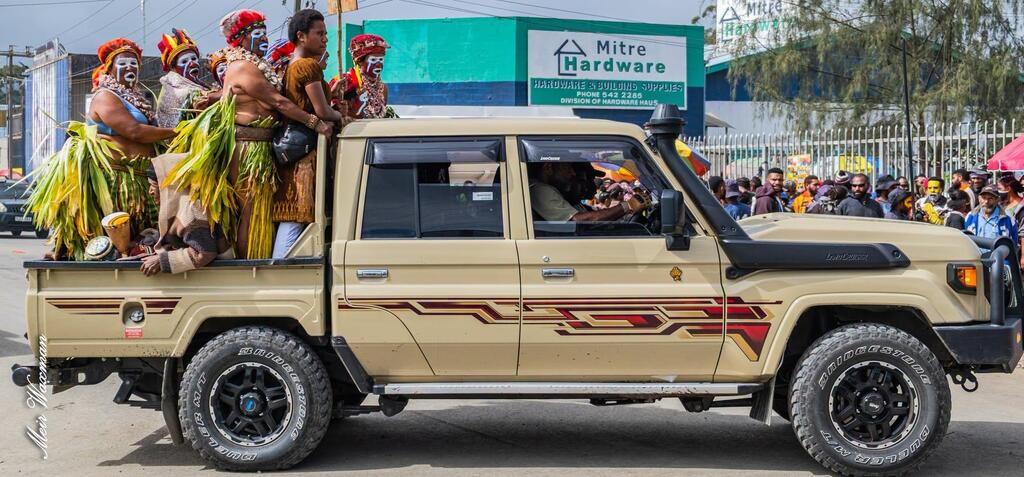
A typical sight on the roads of Papua New Guinea
(Photo: Meir Waxman)
The armored vehicles only deepened that sense of confusion.
“Most of the cars there are Toyota Land Cruisers and they’re heavily fitted out on the outside, with off-road tires, steel bumpers, upgraded shocks and springs. But when you get inside, you discover everything has been stripped down: You roll the windows down by hand, if you want to adjust the mirror you have to get out of the vehicle and walk around it, and there are two benches running lengthwise, like in a truck. The roads are full of potholes, and the vehicles have stone guards, like Border Police vehicles in the territories,” Waxman said.
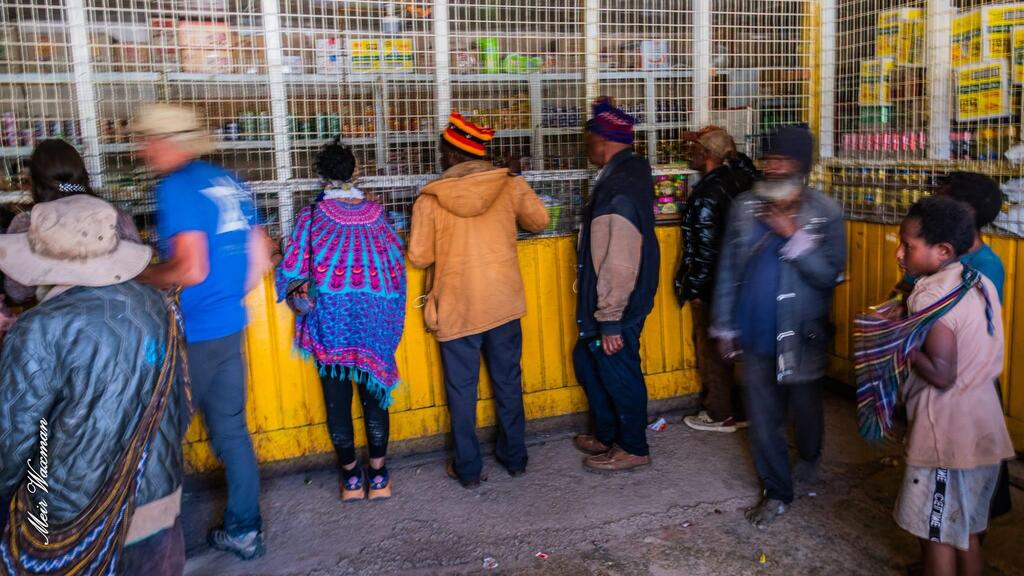
A store with goods that are protected
(Photo: Meir Waxman)
Despite the security warnings and protective measures, his encounters with local residents left a completely different impression.
“I have no explanation for it, because the people there are unbelievably friendly, on a level I’ve never seen anywhere else in the world. They smile at you constantly and reach out their hands to greet you. The moment they see a camera, they immediately pose, and there is also an extremely positive attitude toward Israel everywhere,” he explained.
“I fell in love with these people. They are kindhearted, smiling and friendly, and they don’t look at you like a wallet. Everyone there looks poor, but I didn’t see homeless people, I didn’t see drunks lying on the side of the road, and no one came up to me saying, ‘Money, money.’”
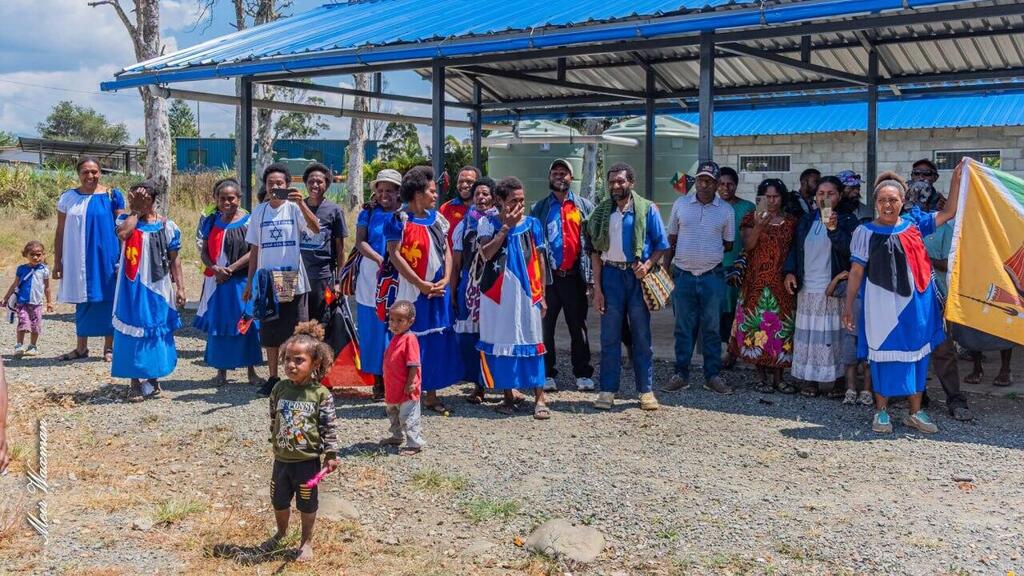
Waiting to greet the Israeli travelers
(Photo: Meir Waxman)
“It’s true that because of my karate background, I had the courage to walk around there alone,” he said with a smile. “I walked through the central bus station, in a place where you couldn’t fit a pin between the people and the pigs, and I know how to recognize a bad look or someone planning to attack — and I didn’t pick up on anything.”
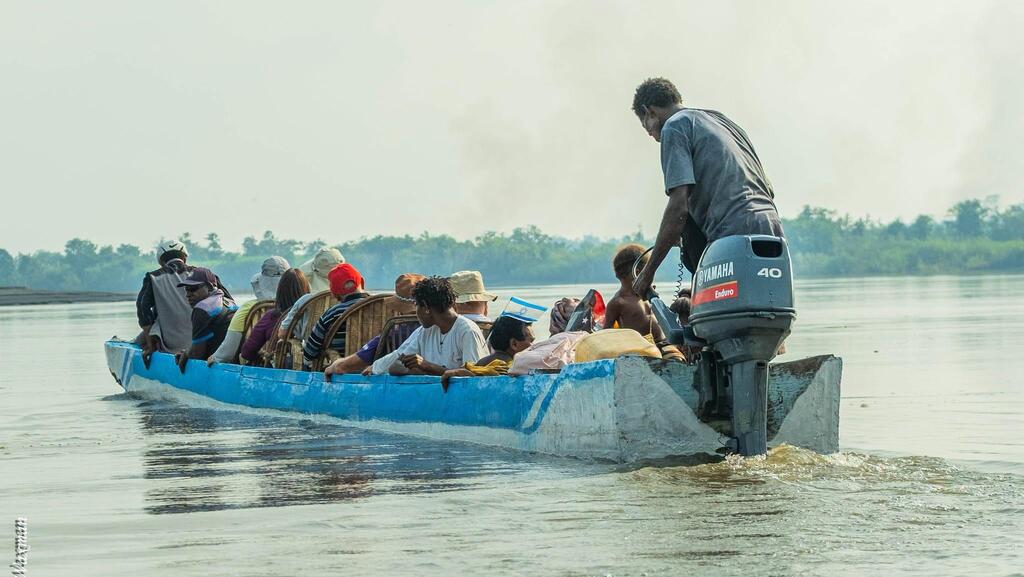
After getting acquainted with the capital, the group headed into the jungle in long canoes.
“The first three days we were on the Sepik River,” Waxman said. “It flows for more than 1,000 kilometers. There are no roads around it, nothing.”
He said the area had suffered from severe drought and the river level had dropped, making it especially difficult to get in and out of the boats.
“Every time I wanted to get out of the canoe or climb into it, I had to scale a pathetic muddy riverbank three meters high,” he said. “And that happens several times a day. At that point I was only a little over two months out from knee replacement surgery, and the locals would give me a hand and pull me up. In the end I ruined the healthy leg too,” he laughed.
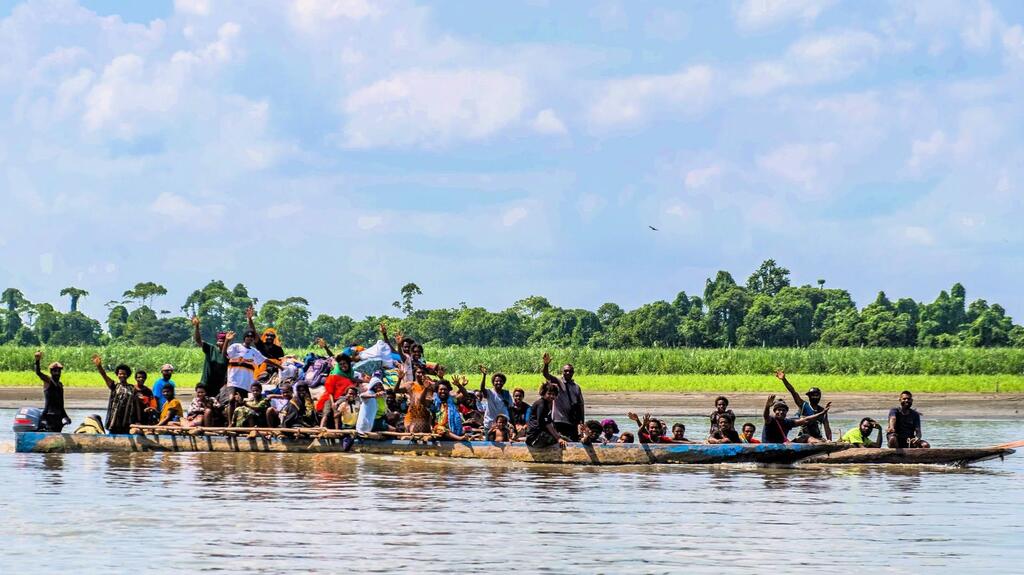
A full canoe in the river
(Photo: Meir Waxman)
(Photo: Meir Waxman)
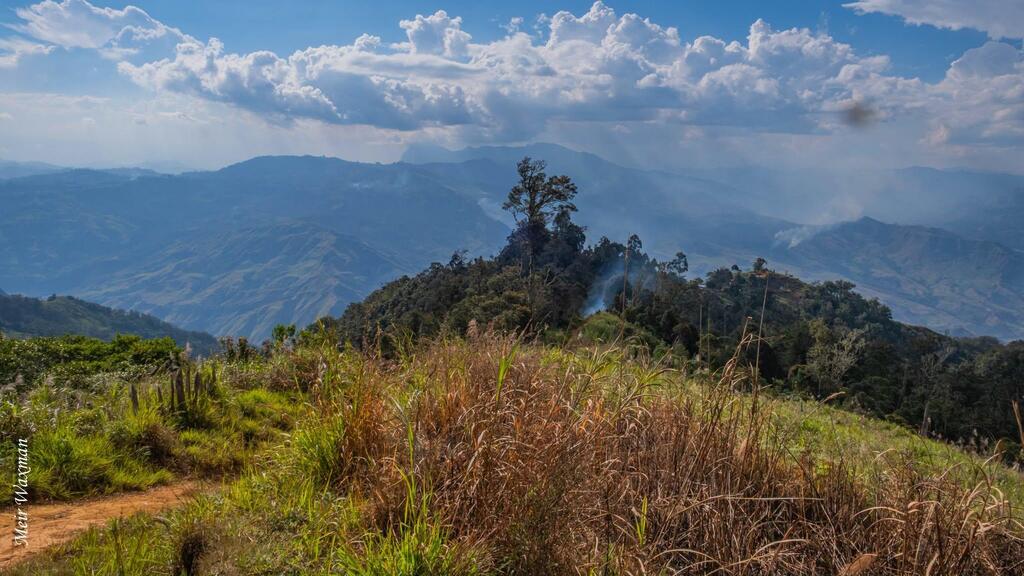
Seen along the way
(Photo: Meir Waxman)
Along the river, the group stayed in local homes.
“They call it a guest house, but in practice the family clears out the house for you,” Waxman said. “You sleep on a wooden floor on a mattress two centimeters thick. You wash in the river or with a bucket, and the toilet is a squat toilet outside. Now think about how someone who has just had a knee replacement is supposed to sit down in a toilet like that. Those three days on the river were tough.”
Alongside the difficult conditions, Waxman spoke warmly about his local hosts.
“They are nice, kindhearted people. They serve you, help you and prepare food for you, and there is a huge amount of tropical fruit — pineapple, papaya and avocado in abundance. In the evening and morning they’re a side dish, and at lunch the fruit is often the main course.
“There are no restaurants along the way, so the guides buy things at a grocery store or market before setting out and then make you sandwiches with tuna and avocado. When we finish eating, the whole village rushes for the leftovers. Literally.”
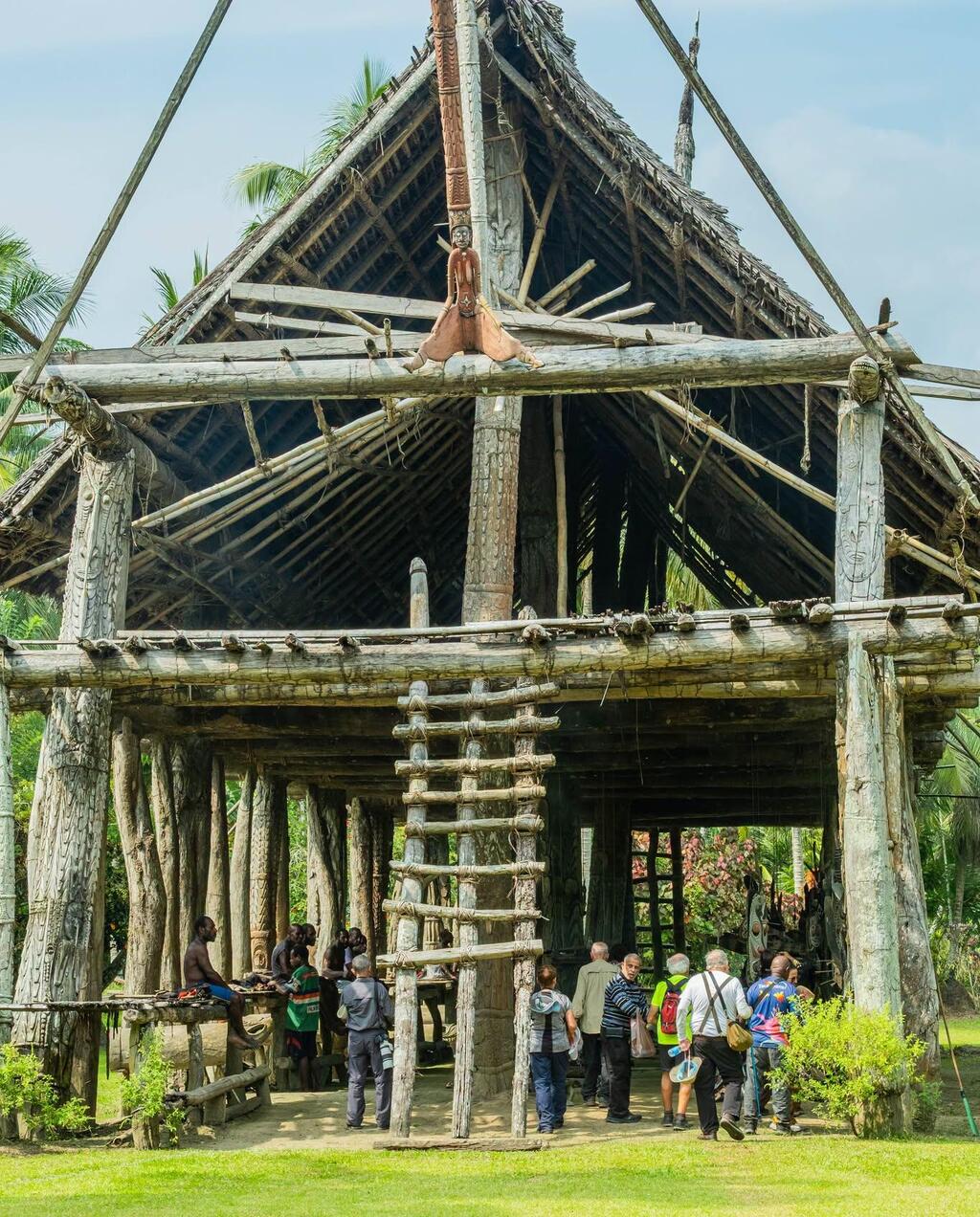
The remote tribe's Spirit House
(Photo: Meir Waxman)
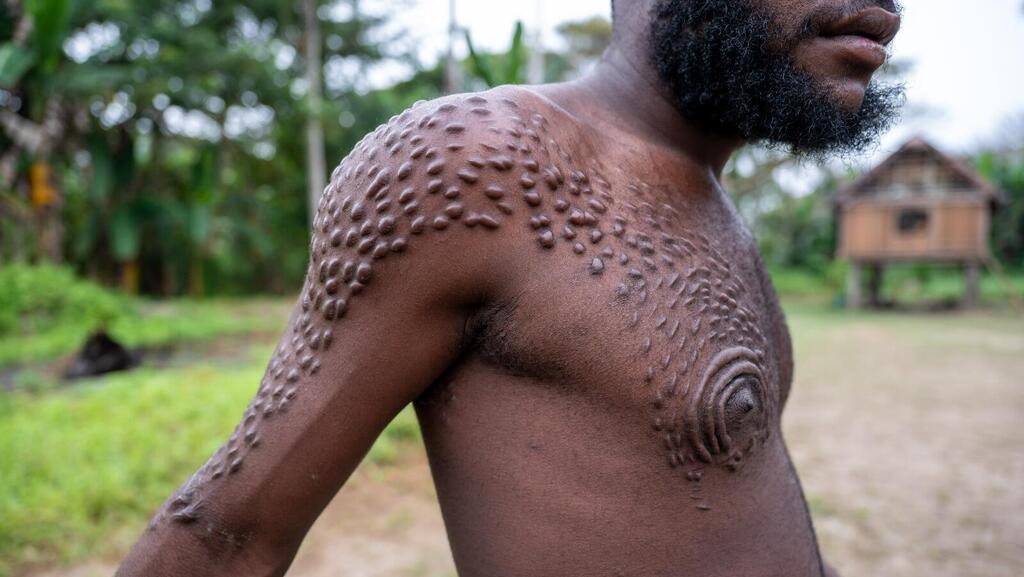
Marks from the skin carvings of the coming-of-age ceremony
(Photo: Hadar Epstein)
Waxman traveled to Papua New Guinea after hearing stories about remote tribes.
“These are tribes that until 20 years ago were still fighting tribal wars and eating the losers,” he said with a smile.
In the village of Ambunti, the group visited a “spirit house,” an impressive two-story wooden building used for a traditional coming-of-age ceremony.
“The ceremony includes carving the back,” he said. “It’s not exactly a tattoo, but a kind of scarring in the shape of crocodile skin. Then they leave them there for a month to heal in the spirit house. They’re not allowed to speak — a kind of vow of silence — and they’re looked after there. After a month they come down from the house as adults.”
The crocodile, Waxman discovered, occupies a central place in the culture of the tribes living along the river.
“The Crocodile Festival was the first festival we attended,” he said enthusiastically. “The format is that every tribe arrives and presents its clothing, culture and dances. It all takes place on a large field, where I noticed there were also rugby goalposts.
“You walk around among the tribes and photograph them, and there’s a VIP stage where we were seated as well. The village chief arrived and walked along the red carpet, then the regional education minister arrived, and then the speeches began. After that the dancing started and they brought in a live crocodile. They taped its mouth shut and some young guy sat on it.”
Slideshow of photos from Paupa New Guinea by Meir Waxman
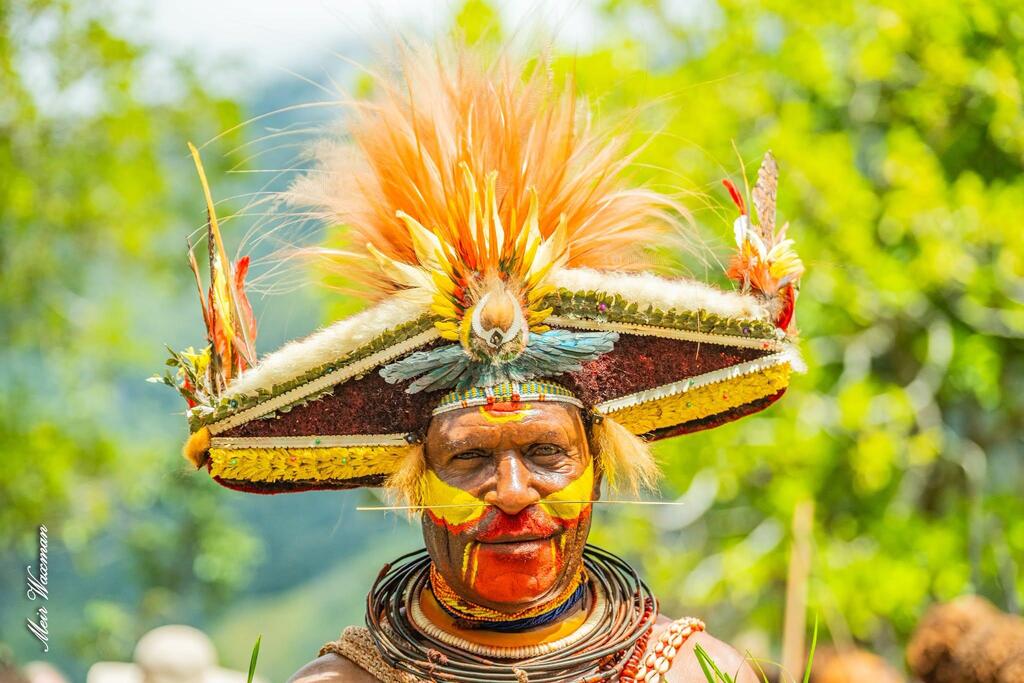
Cultural photographers from around the world travel specifically to the city of Mount Hagen to document the traditional festivals known as sing-sings.
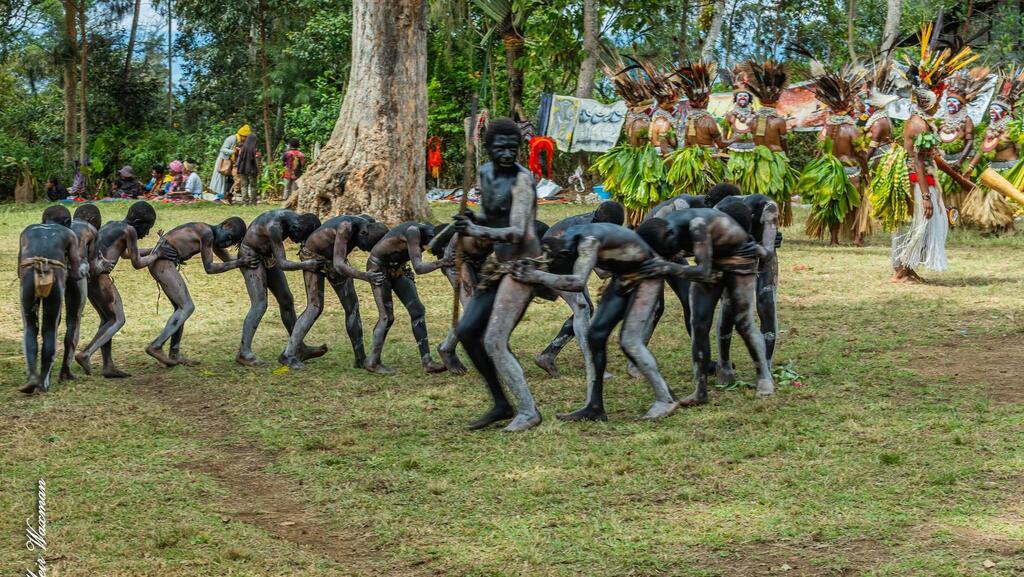
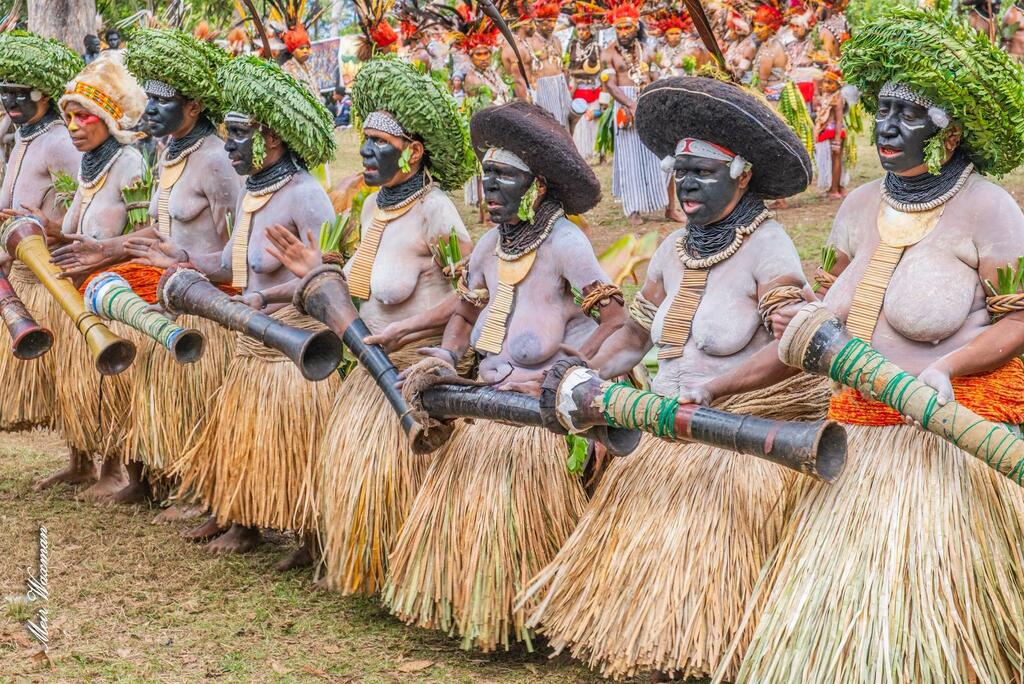
“The festivals were the stars of the entire trip,” Waxman emphasized. “Groups come in wearing different costumes, each with different dances and rhythms. There are feathers, grasses, leaves and a little fabric, and some are almost naked. Men and women alike, and they dance for hours.
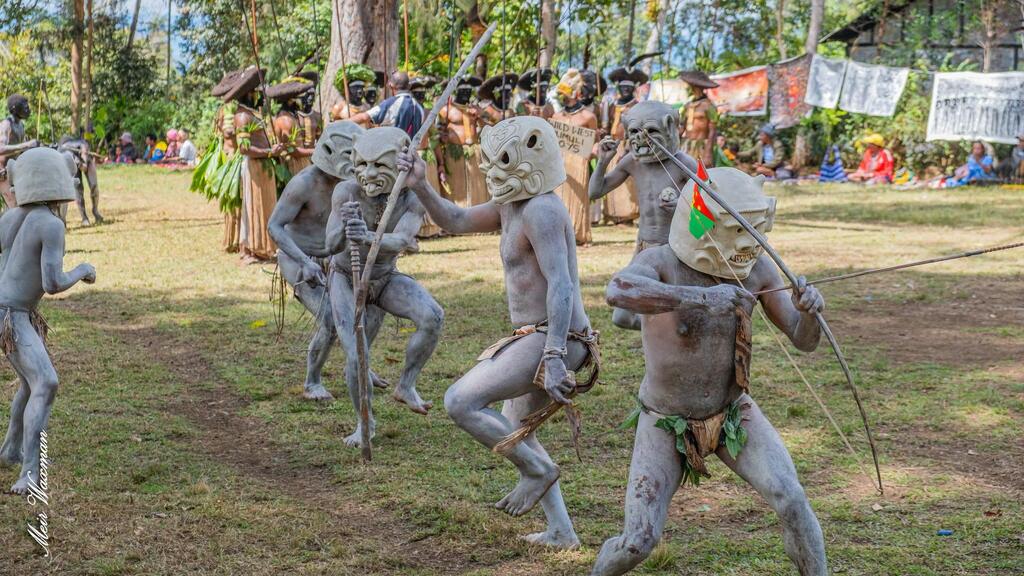
From festival to festival
(Photo: Meir Waxman)
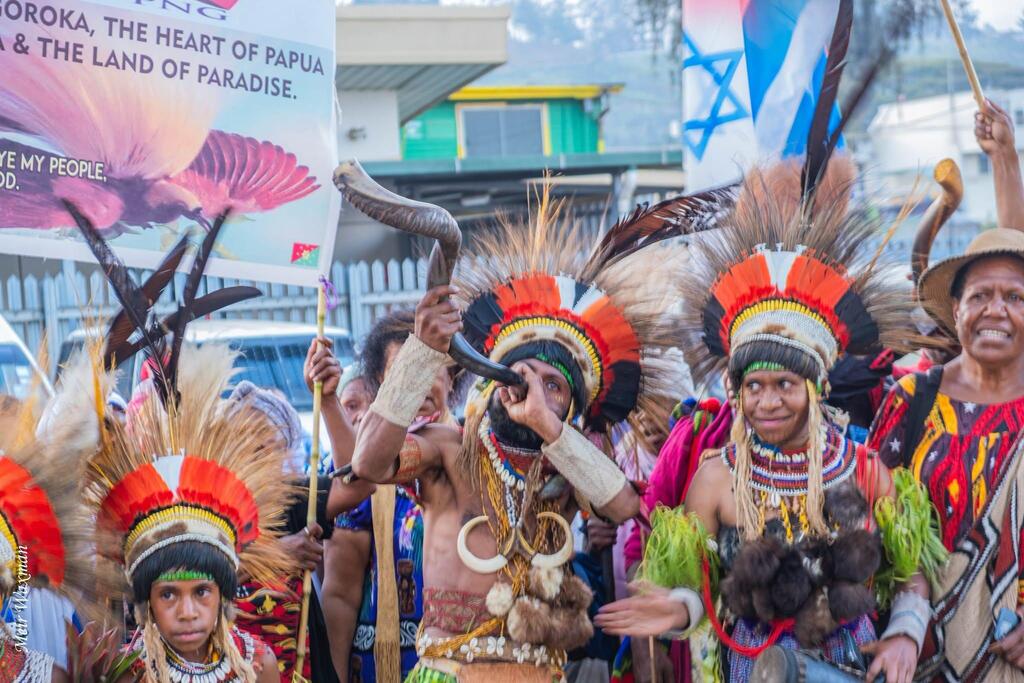
Welcome ceremony with Israeli flag in the background
(Photo: Meir Waxman)
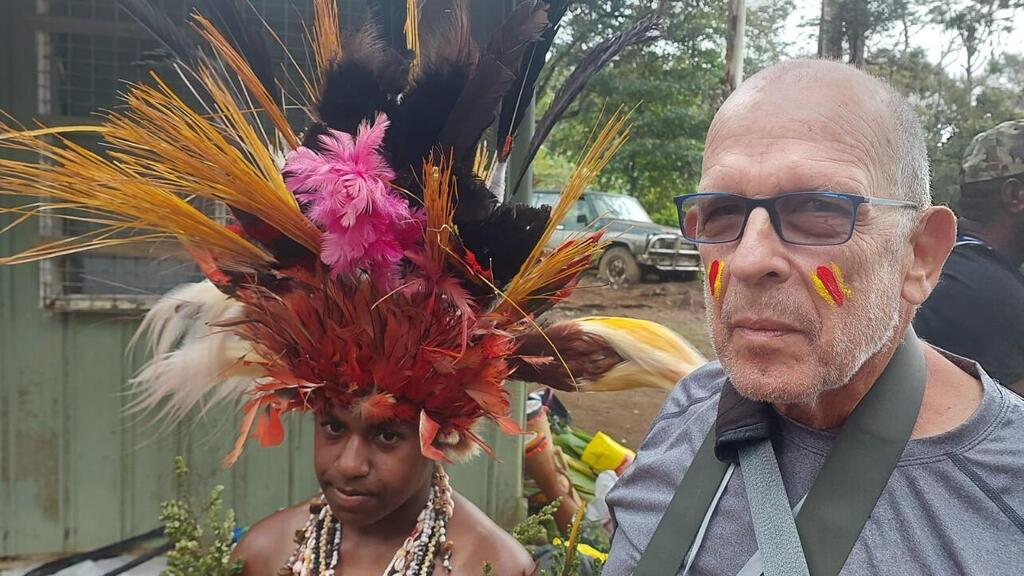
Meir Waxman arrives at the festival
(Photo: Hadar Epstein)
“What was going through my mind? Happiness. Anthropology is life for me,” he said.
“There were also many topless women at the festivals, and there was no problem photographing them,” he said. “They didn’t ask for money, didn’t ask why you were taking pictures and didn’t even ask to see the photo. They just smiled and thanked me for photographing them. I’ve never seen anything like it anywhere in the world. For three weeks, there wasn’t a single person who didn’t want to be photographed. To me, that was part of their friendliness.”
Alongside the colorful festivals and encounters with remote tribes, Waxman came across something he had not expected.
“There were Israeli flags everywhere,” he said. “There’s an organization called Aliyah Raising Israel — Papua New Guinea, and in hindsight that was the big screw-up of our trip. The local operator for the tour was that organization, and in almost every village we passed through there were Israeli flags and this hysterical love for Israel, even though they don’t really know what Israel is.”
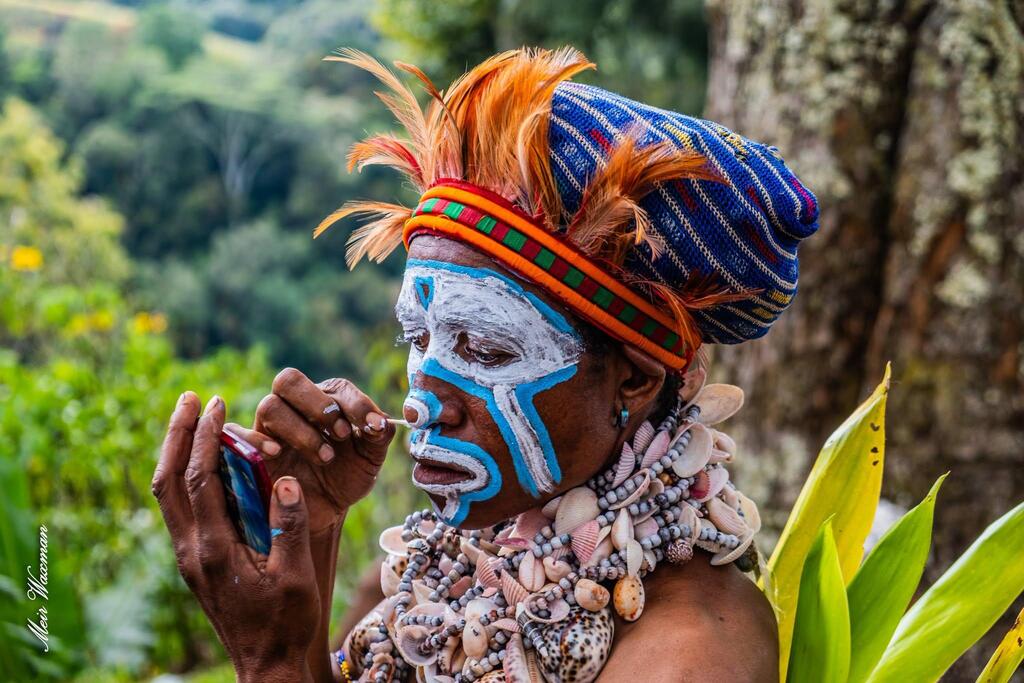
Preparing for the festival
(Photo: Meir Waxman)
(Photo: Meir Waxman)
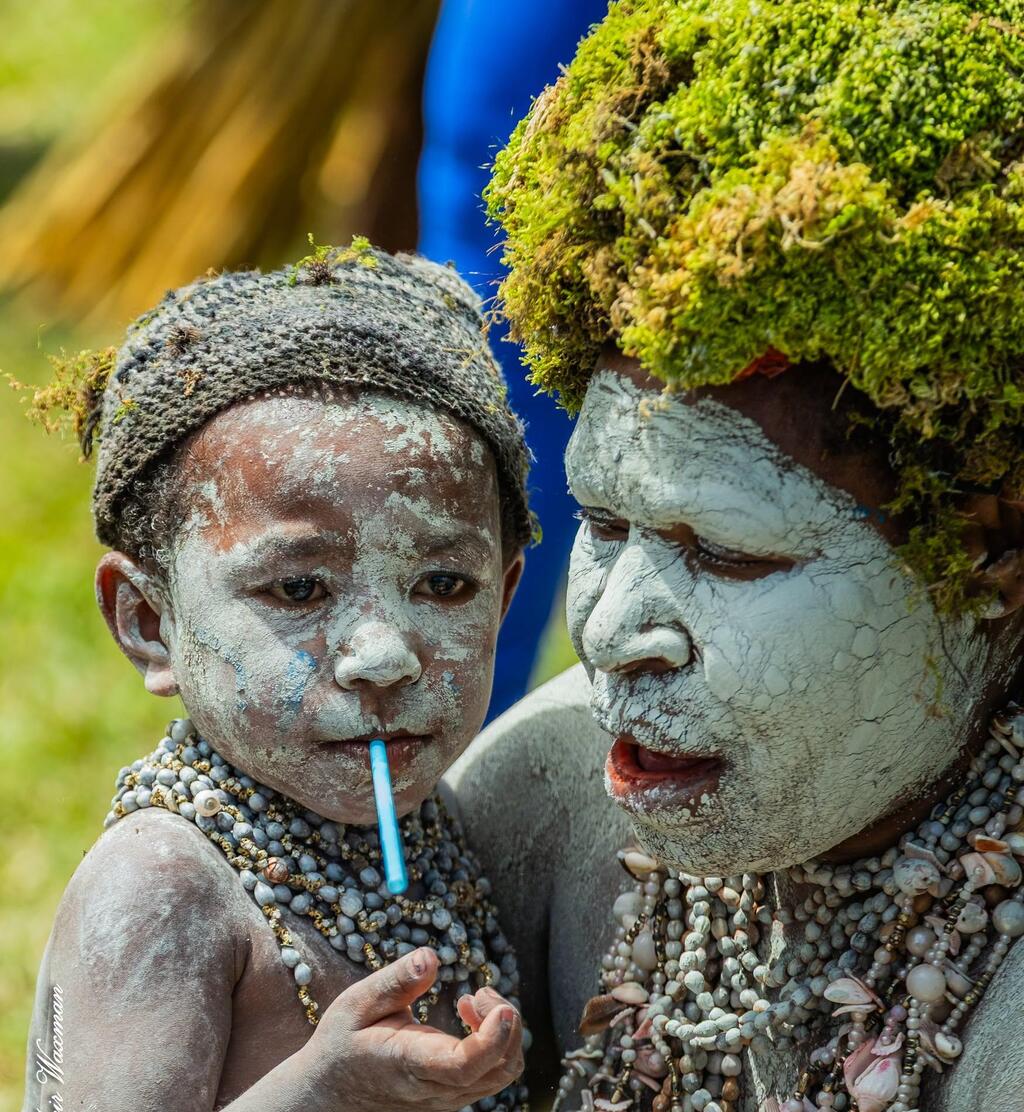
A mother and her son at a local festival
(Photo: Meir Waxman)
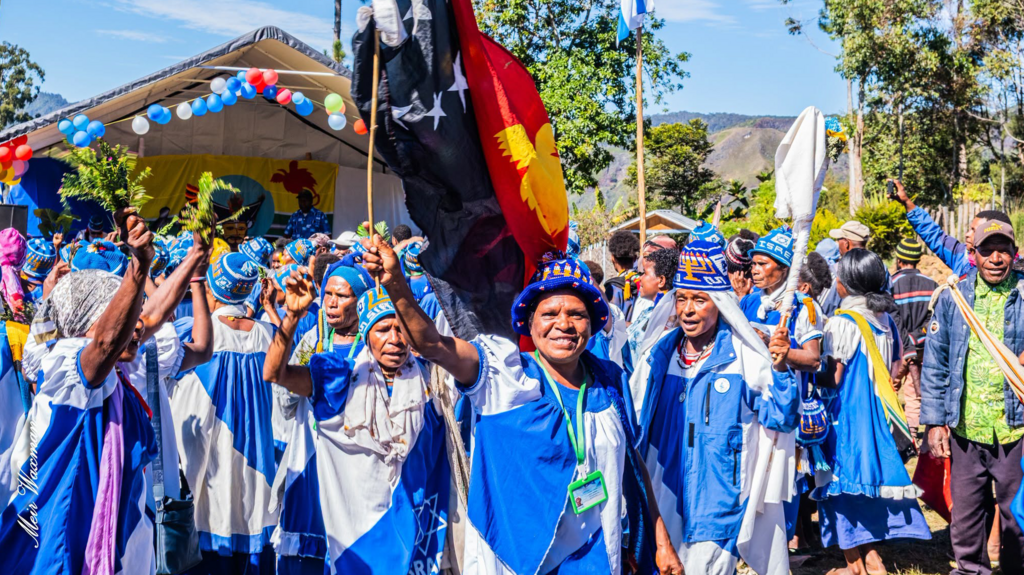
The mass welcomes began at the airport.
"At every landing, including domestic flights, a delegation was waiting for us in blue-and-white dresses, with shofars, Israeli flags and gifts,” he said. “They hung bags around our necks and welcomed us in a ceremony.
“Then, when we traveled between villages, they prepared welcomes for us that sometimes began a kilometer before the village. Lines of people stood along the road throwing flowers in front of the bus. They even planted potted plants specially along a kilometer on both sides of the road to beautify the route.”
At the end of the route, a red carpet, performances and a large crowd awaited the group.
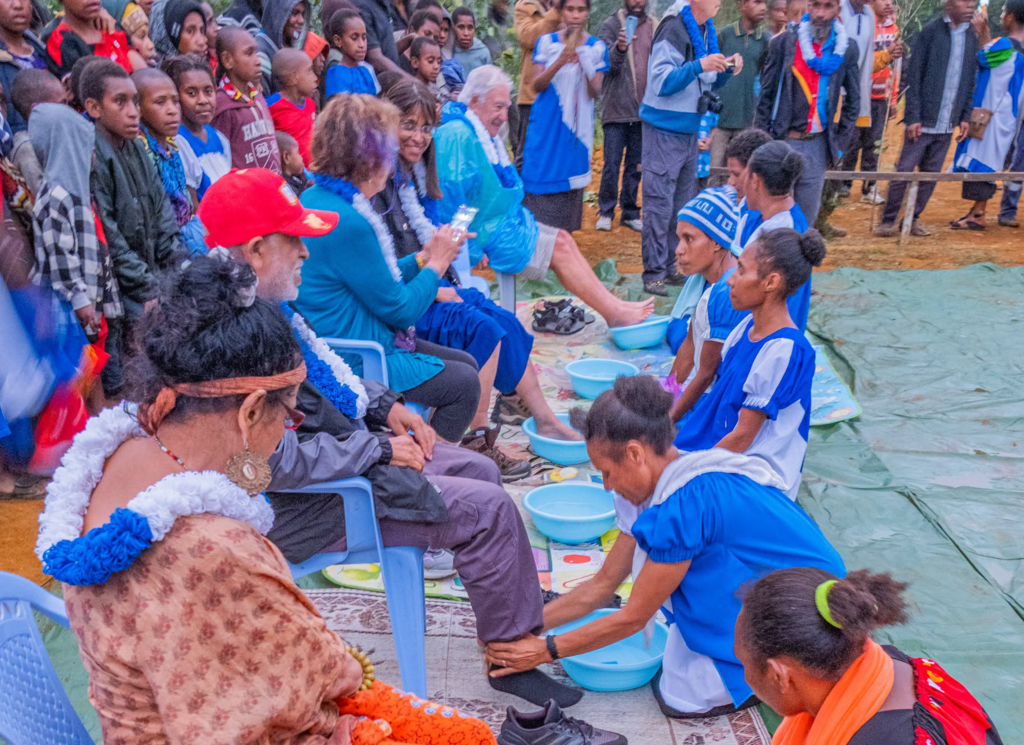
“They were waiting for us with bowls and washed our feet. Then they seated us in a row in front of a huge crowd. In one place there were hundreds of people and in another there were thousands.”
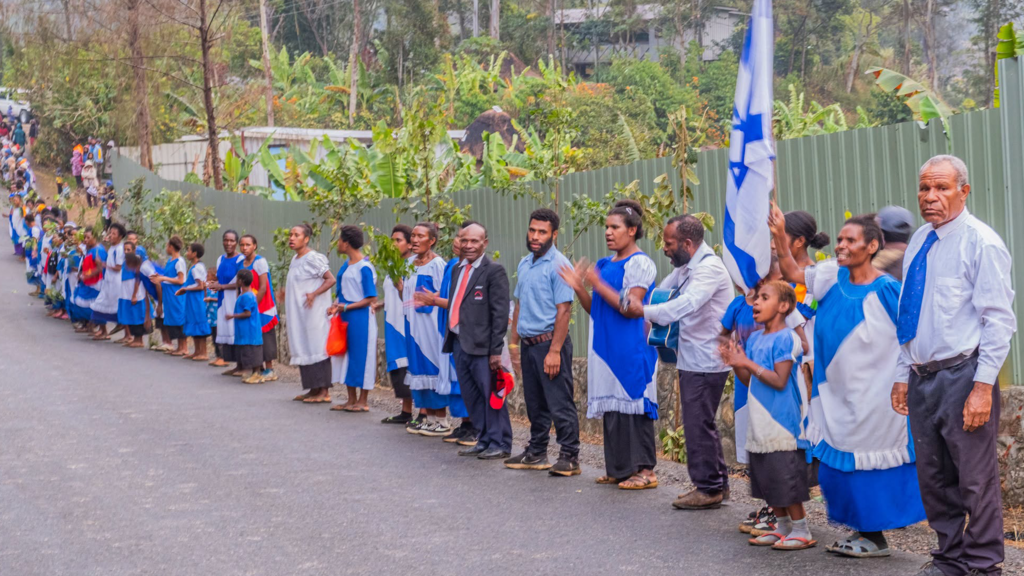
Welcoming the guests from Israel
(Photo: Meir Waxman)
(Photo: Meir Waxman)
The events combined singing and dance performances with Christian messages and support for Israel. “They said: ‘Jesus, we are the children of Israel, we love Israel.’ Then there were local song and dance performances, and then hours more of speeches.”
At the first reception, Waxman was impressed by the effort and affection shown to the Israeli tourists, but the enthusiasm quickly began to fade. “By the second ceremony I realized this wasn’t right, because it wasted three hours in every place,” he said. “It was a bear hug. They turned us into a traveling circus.”
By the fifth reception, in the Hela region, home to the Huli people, the situation reached a breaking point.
“We said in advance: We’re not coming to any more receptions like this,” Waxman said angrily. “And they brought us anyway. We said we weren’t getting off the bus and that we were driving on — and then 300 people surrounded the bus and wouldn’t let it move.”
Amid the chaos, the veteran karate practitioner decided to take matters into his own hands.
“I got down into that mess, into their threatening frenzy,” he said. “I knew there had recently been a war there with the neighboring tribe, and in the villages even small children walk around with machetes. There were places where I had to push people a little to the side, and the community leaders were screaming like crazy. The driver was afraid to move forward and was terrified.
“I started walking backward, centimeter by centimeter, pulling the bus after me. I told myself that if they jumped me, I’d take down the first five. What would happen after that, I didn’t know — and I simply pulled the bus out by force.”
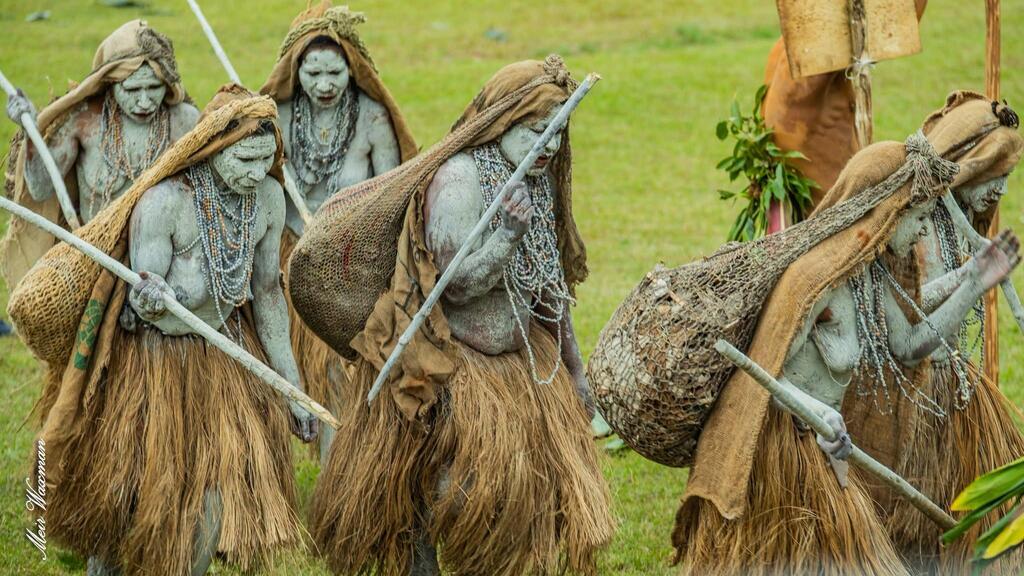
Members of the mudmen tribe
(Photo: Meir Waxman)
(Photo: Meir Waxman)
(Photo: Meir Waxman)
Despite his anger over the itinerary changes and the hours lost, Waxman remains moved by the warmth and affection he received from local residents. “The ordinary people really loved us,” he said. “There were places where they said ‘Israel’ with tears in their eyes. But I didn’t go there to be loved to the skies. I went to see anthropology and document it.”
For Waxman, visiting the Mudmen tribe was one of the highlights of the journey, but it also underscored what he felt was missing from the trip.
“We didn’t have a geographic guide to explain where we were and who these people were,” he said regretfully. “Sometimes we saw two or three tribes in a day. I tried for two days to write everything down, but it became confusing.”
In one village, the group was invited to watch a traditional cooking method. “They made us mumu,” Waxman said. “They heat stones and put meat, potatoes and vegetables into a pit, then stick pieces of bamboo inside and pour water into them. It cooks in steam for three hours. And when we finished eating, the whole village came to eat the leftovers.”
When the veteran traveler is asked what the best part of the journey was, he does not name a particular landscape or festival.
“Anthropology,” he replied. “Seeing the people. I fell in love with these people. They are kindhearted, smiling and friendly, and they don’t look at you like a wallet. Everyone there looks poor, but I didn’t see homeless people, I didn’t see drunks lying on the side of the road, and no one came up to me saying, ‘Money, money.’”
Despite his enthusiasm, Waxman makes clear that this is not a trip for everyone.
“Anyone who doesn’t want to sleep on the floor and shit in a squat toilet — this trip is not for them,” he concluded. “I’ll go back there,” he promised. “I don’t have many years left with these knees, but you know.”