

Easter Island is the most remote inhabited island in the world, located in the southeastern Pacific Ocean, about 2,300 miles west of the South American continent. Now, surprising new findings have emerged about its history since it was first settled by humans.
The first people to arrive in Polynesia—one of the three major island groups in the Pacific Ocean, along with Melanesia and Micronesia—migrated from west to east, rapidly spreading from Tonga and Samoa through central and eastern Polynesia to distant islands like Hawaii, Easter Island (called Rapa Nui in the local language), and New Zealand (known by its Māori name, Aotearoa—“Land of the Long White Cloud”).
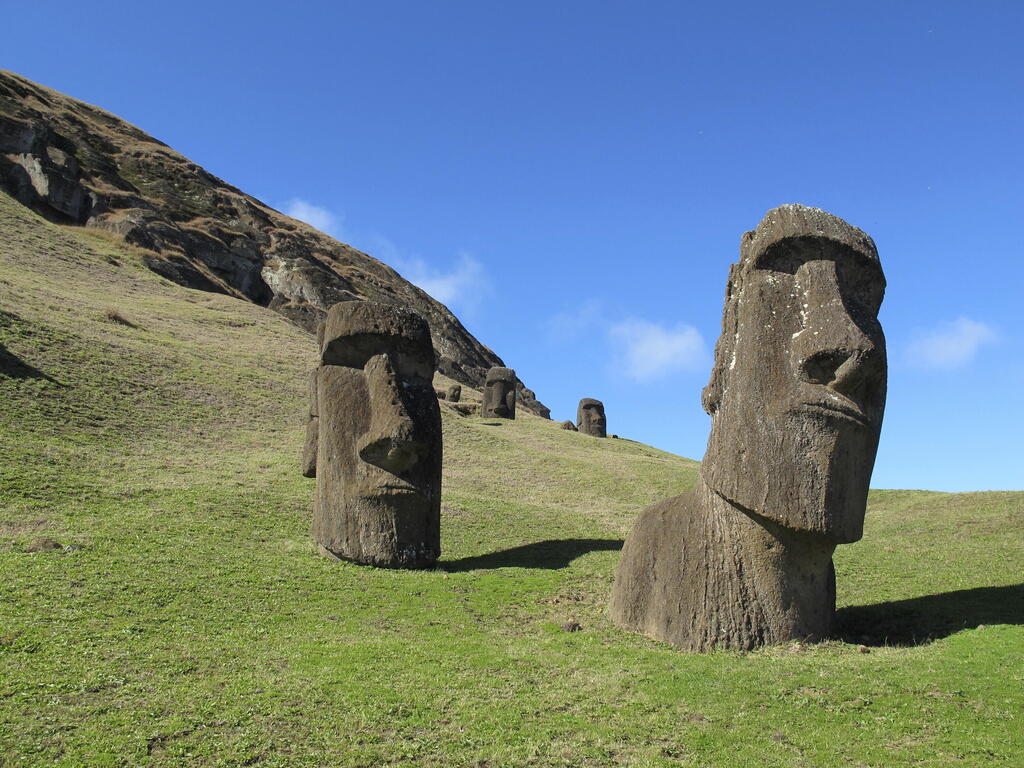
After this initial migration, it was long believed that the islands of eastern Polynesia—especially Easter Island—remained isolated from the rest of Pacific civilization. Yet despite this remoteness, similar ritual practices and monumental structures were observed throughout eastern Polynesia. One notable example is the construction of marae—rectangular forest clearings that served as sacred community spaces, many of which are still considered holy today. Over time, Easter Island developed its own unique features, including the iconic Moai statues erected on ceremonial platforms.
In a new study published in the journal Antiquity, Professors Paul Wallin and Helen Martinsson-Wallin from the Department of Archaeology and Ancient History at Uppsala University reassessed how religious practices spread and evolved across the region. Drawing on archaeological data and radiocarbon dating from settlements, sacred spaces and monuments throughout eastern Polynesia, the researchers challenged long-standing assumptions.
Easter Island
(Video: Big Island Video News)


“The migration process from core regions of western Polynesia like Tonga and Samoa into eastern Polynesia is not disputed,” the authors noted. “However, the idea that Easter Island was colonized just once in the past and then developed in isolation is questionable.”
The researchers identified three distinct phases of ritual activity across eastern Polynesia. The first reflects the west-to-east spread, during which religious life centered on burial rituals and communal feasts—activities rooted in ongoing social interactions at sites marked by stone pillars.
Get the Ynetnews app on your smartphone: Google Play: https://bit.ly/4eJ37pE | Apple App Store: https://bit.ly/3ZL7iNv
The second phase introduced formal ceremonies at designated sacred sites. Radiocarbon dating indicates that the trend toward making these sites more visible began on Easter Island.
Finally, the third phase was defined by increasing isolation, which triggered internal cultural shifts.
As hierarchical social structures developed independently in places like Easter Island, Tahiti, and Hawaii, larger and more elaborate monuments were constructed to assert power. “Our most important finding is that based on carbon-14 dating, we were able to trace an initial west-to-east spread of ritual ideas,” said Wallin. “However, sacred sites in the east date back to earlier periods.”
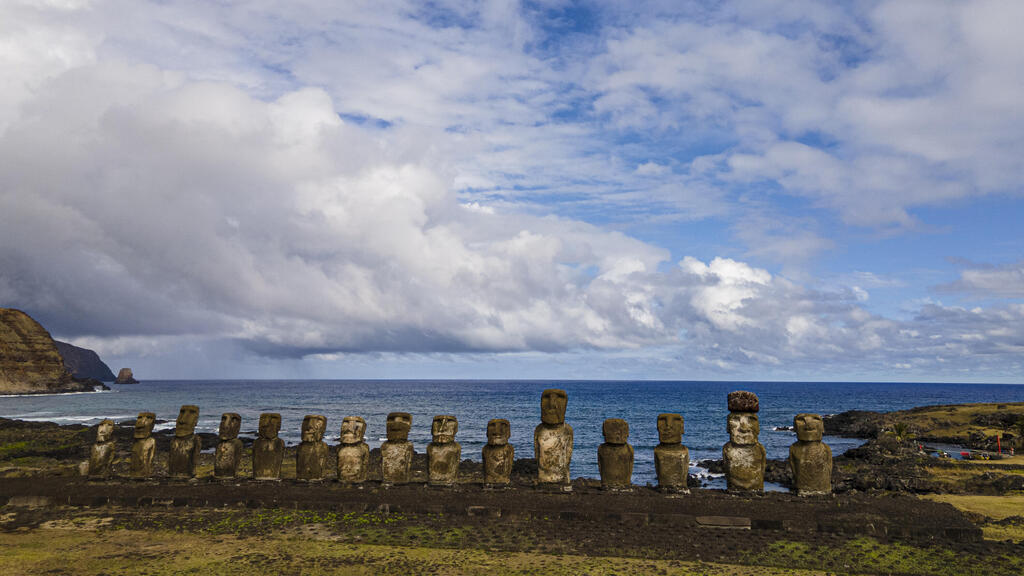
Easter Island
(Photo: Esteban Felix/AP)
While the findings do not dispute that Polynesia was populated from west to east, they show that ritual developments that followed were far more complex than previously believed. The evidence suggests that interaction networks between islands remained strong—and crucially, that new religious ideas also flowed from east to west between roughly 1300 and 1600 CE.
“This contradicts the prevailing assumption about the direction of ritual development in eastern Polynesia,” Wallin concluded. “The findings point to a more complex pattern than previously thought. Initially, ritual ideas did spread from west to east. But later, more sophisticated ceremonial structures emerged on Easter Island, which subsequently influenced other parts of eastern Polynesia in an east-to-west exchange.”