


Criticism of foreign tourists in Thailand, and Israelis in particular, is now spilling into the streets of Phuket. After a series of incidents and reports pushed the issue onto the local agenda, residents are demanding stricter oversight of visitors and, in some cases, a dramatic reduction in how long Israelis should be allowed to stay.
The demand was raised Friday during a protest in Patong, Phuket’s main tourist hub. According to local reports, about 150 people took part, calling on tourists and foreign residents to respect Thai law, culture and the rights of local communities.

At a forum held before the protest, participants argued that some Israelis arriving in Thailand were not coming solely as tourists and said authorities should ensure that those entering the country are “genuine tourists.” Some also complained that visitors stay in inexpensive accommodation, spend mainly at convenience stores and behave in ways locals perceive as arrogant or dismissive of Thai law.
The proposal to limit Israelis to 15 days is not Thai government policy. It is a demand raised by local residents. But it comes at a particularly sensitive moment for Thailand’s entry rules.
The protest took place only days after Thailand’s tourism and sports minister warned that authorities would not hesitate to revoke visas or deport tourists who break the law or cause disturbances. Local media reports on his remarks explicitly mentioned groups of Israeli tourists. At the same time, a civic group called Impatient Thais contacted the Israeli Embassy in Bangkok and asked it to increase awareness among Israelis of the need to respect local laws, customs and culture.
The controversy comes as the number of Israeli visitors to Phuket is rising sharply. According to the Tourism Authority of Thailand’s Phuket office, 16,152 Israelis visited the island in July 2026, up 52.43% from July 2025. Compared with July 2019, before the COVID-19 pandemic, the increase exceeds 1,200%.
That makes Israel one of Phuket’s fastest-growing tourism markets at a time when the island is seeing a slight decline in overall visitor numbers. More than 8 million tourists visited Phuket between January and July, generating about 311 billion baht in tourism revenue.
Israel is also considered an important market for Thailand nationally. The Tourism Authority expects more than 442,000 Israelis to visit the country in 2026, generating about 43.9 billion baht for the Thai economy. Israeli visitors stay an average of about 19.2 days and spend approximately 99,350 baht per trip, according to the authority.
The local protest forms part of a broader debate in Thailand over what kind of tourism the country wants to attract and how far it should go in easing entry rules for foreigners.
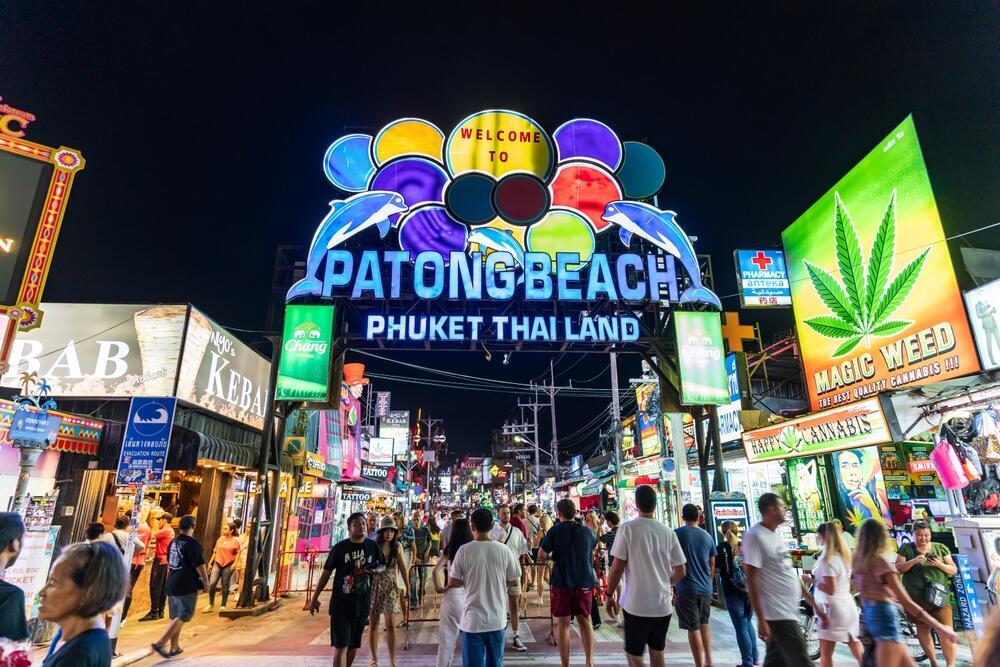
Tourists on Bangla Road, Patong’s main nightlife hub
(Photo: kitzcorner / shutterstock)
In July, the government approved a plan to reduce visa-free stays from 60 days to 30 days for citizens of dozens of countries, including Israel, partly to prevent abuse of the system and address economic and security concerns. The change has not yet taken effect and will only do so after publication in Thailand’s Royal Gazette. The 15-day limit now being demanded in Phuket would go much further than the national proposal.
The economic importance of Israeli tourism complicates the debate. According to the Tourism Authority, 93% of Israeli visitors are independent travelers or digital nomads, and Israel is considered a high-potential market.
Thai authorities have also stressed that their concern is not tourists’ nationality but whether they obey the law. In recent weeks, a senior Interior Ministry official visiting Phuket emphasized that every foreigner in Thailand is required to comply with local law. Authorities have also expanded inspections of hundreds of businesses on the island suspected of potentially violating regulations governing foreign commercial activity.
The message from the streets of Phuket is becoming harder to ignore. Israeli tourism is increasingly valuable to the island’s economy, but as arrivals continue to surge, some residents are demanding much tighter supervision and far shorter stays.