

Itay Shevah, 37, a single tour guide from Jerusalem, turned his journey through South America into an extraordinary challenge: for 120 days, he allowed his social media followers to make every decision for him — from where he would sleep to what he would eat and which experiences he would undergo. The result: a series of extreme adventures that included sleeping on the street, staying in Brazil’s dangerous favelas and hiking barefoot in the mountains.
“I’ve been traveling for as long as I can remember,” Shevah told ynet. “At 25, I went on my first big trip and haven’t stopped since. One of the perks of working as a tour guide in Israel is the off-seasons — so almost every year, I take three to four months off to travel. It’s become a routine part of my life.”
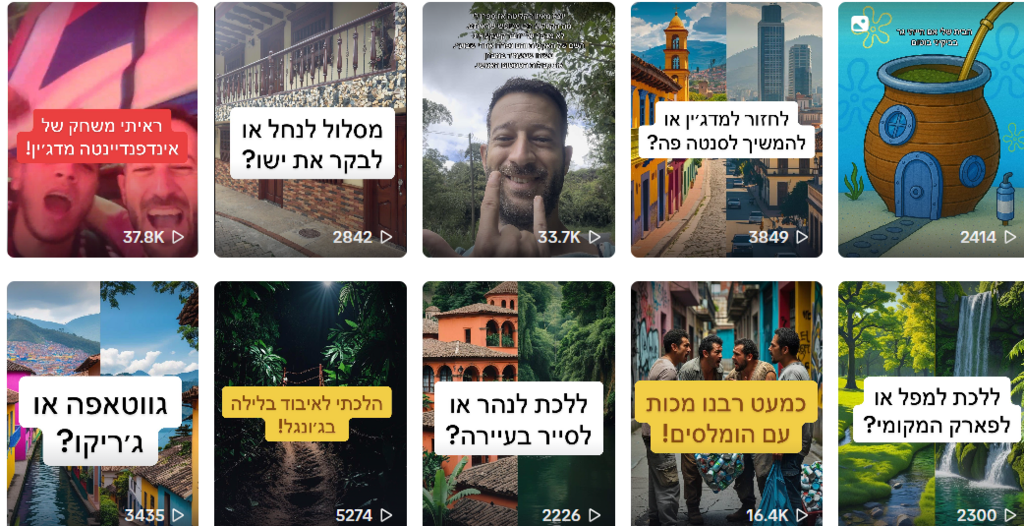
But this trip, he said, was different. “I did a challenge — 120 days where my followers planned my trip. What does that mean? Everything. Where I sleep, which trails I hike. It led to some extreme situations — like sleeping on the street or in favelas.”
One such incident took place when he landed in Brazil in the middle of the night. “I had a hostel booked, but it wasn’t clear whether reception would be open 24/7. Normally, I’d have just slept at the airport, but because of the challenge, I asked my followers: take the risk and go to the hostel, or stay at the airport? They voted for the hostel. When I got there, it was closed. I found a spot on the street and slept there. At 5:30 a.m., two Australians went out to watch the sunrise, saw me sleeping on the ground, and opened the door for me.”
One of the most dramatic moments of the challenge took place in Brazil’s favelas. “They sent me to sleep in a favela — and I was glad they did. It’s a place with completely different rules. For example, you’re not allowed to hit on women — you don’t know who she’s connected to. She could be someone’s ex or the daughter of someone with a weapon. It’s not a place to mess around. If you’re not from there, it can be very dangerous.”
“Because I speak Portuguese, I blended in pretty well. Everyone was surprised, and the experiences were wild. When I started uploading videos from the favela, they blew up — one got 3 million views,” he said proudly. “People criticized me — ‘you’re putting others at risk’ — but it was an amazing experience.”
Another extreme decision driven by Shevah’s thrill-seeking followers was to go on a barefoot trek. “It was something I’d always wanted to try. I posted a poll: barefoot or with shoes? They chose barefoot. It hurt, but it was an incredible experience. I hiked six or seven hours barefoot through a trail in Capilla del Monte, Argentina. Since then, I’ve done about 20 hikes barefoot. I’ve learned to use my feet better, and the grip is much stronger.”
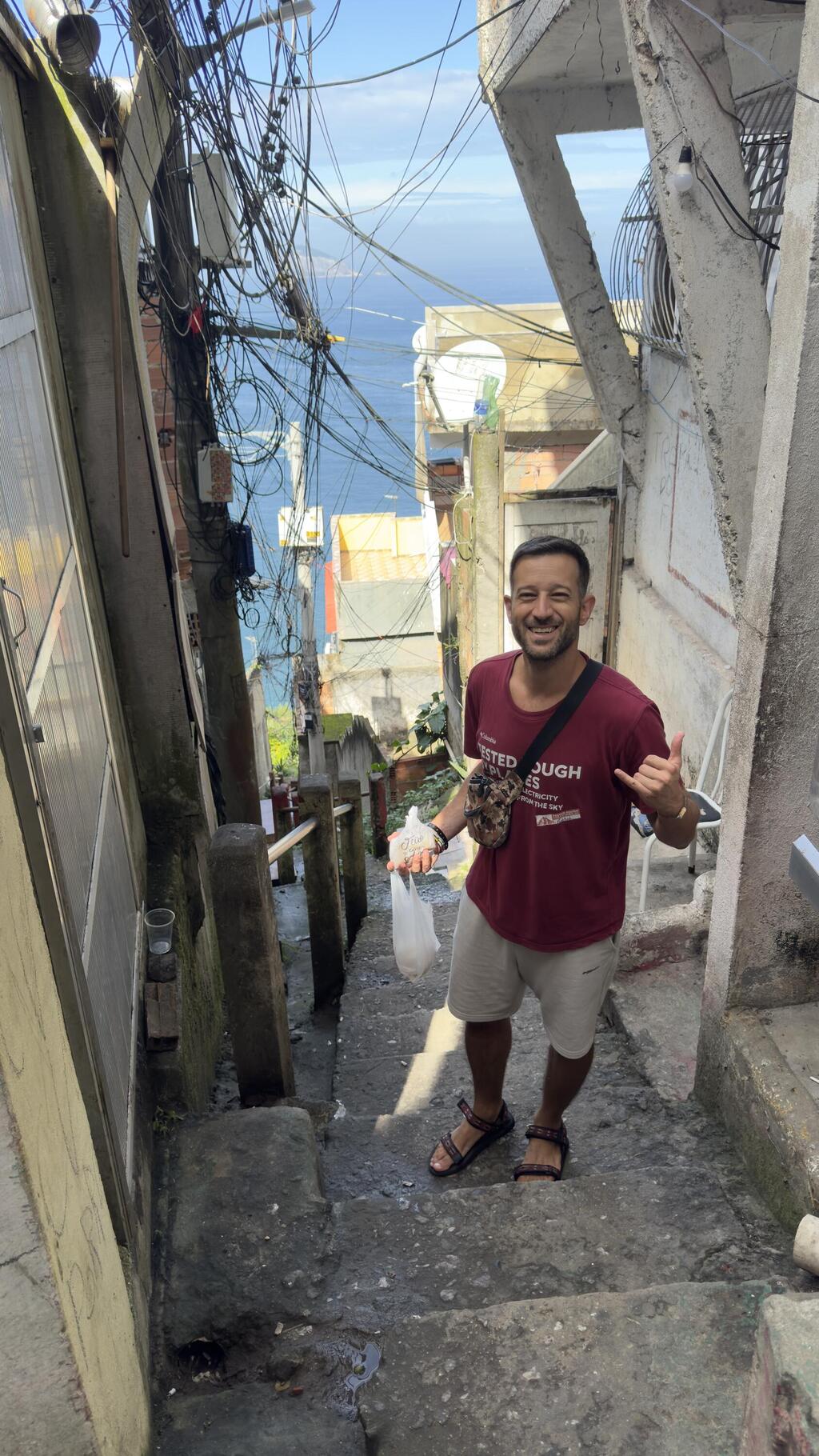
In favela in Brazil
Having traveled for over a decade, Shevah has strong opinions about the new generation of backpackers — and he’s not always impressed. He believes the internet has changed the game, creating a generation of hyper-independent solo travelers who struggle to think for themselves.
“I see too many people traveling on autopilot. I started that way too,” he said with a laugh. “Today, there are WhatsApp groups for travelers — you land in Buenos Aires, join a group, and get everything without thinking. People write: ‘If you didn’t take a selfie at the Perito Moreno Glacier, your trip wasn’t worth it!’ It’s crazy. There’s a lot of FOMO (fear of missing out), and in my opinion, it’s driven by companies looking to make money.”
For his growing audience of followers — many of them post-army Israelis looking to break free from the usual tourist path without giving up a sense of safety — two questions come up repeatedly: how to meet local women, and how to attend a soccer match without getting mugged.
“I don’t teach people ‘how to go to a soccer game,’” Shevah clarifies. “I tell them: come with an open mind and a willingness to act. I have one rule — I don’t do anything locals don’t do.”
He’s also well aware of the risks involved. “I know there’s a chance I’ll get robbed,” he admits. “So I prepare. I carry a backup phone for nights out, in case it gets stolen. I also always ask locals if there’s anything I should be worried about. In many matches, they told me there’s nothing to fear — no one’s pulling a knife or a gun inside the stadium. But in some places, I did see knives. At an Independiente Medellín match in Colombia, the vibe was fun and family-friendly — but there were still lots of people with knives.”
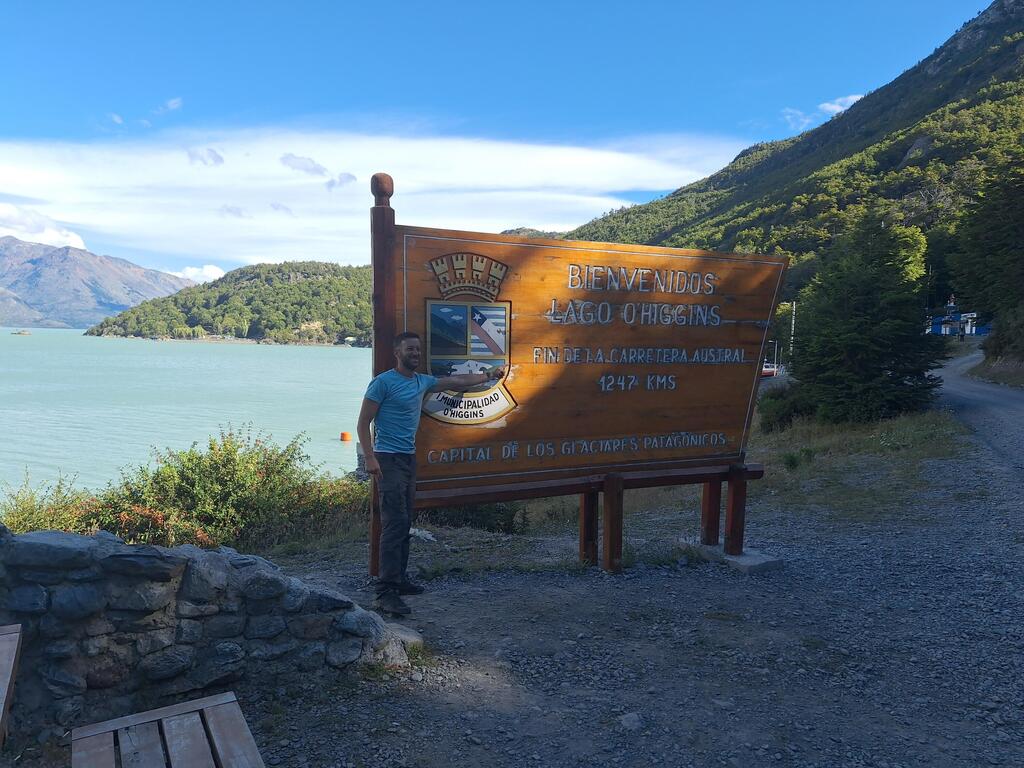
End of the Argentina–Chile road trip
He offers a key tip for thrill-seeking Israelis who like to flirt with danger but only from a safe distance. “If you sit in the hardcore fan section and don’t cheer, they might turn on you. There have been cases where Europeans didn’t participate, and people made faces at them or even pushed them — because from their perspective, you’re taking the seat of a real fan. There are unwritten rules you have to understand.”
Shevah recounts a nerve-wracking experience at a River Plate match — one of Buenos Aires’ two biggest teams. “I have a friend who’s Israeli-Argentinian,” he explains. “He told me that a regular ticket, if you can even get one, goes for $100 to $120. He suggested borrowing someone’s season pass: ‘It’ll cost half as much.’ I said sure, I’m in.”
They met the season ticket holder outside the stadium. “He gave us the passes and explained: there are three checkpoints. The first two are the hardest. At the third one, just hold up the pass and walk through.” But at the third checkpoint — Murphy’s Law for soccer fans — everything fell apart.
“They asked to see the pass and said, ‘That’s not you.’ They pulled me aside. Two administrative staff were sitting there with police. They said, ‘Show us ID.’ I handed over my Israeli driver’s license. They told me: ‘The pass is confiscated.’”
Shevah paints the scene vividly. “I didn’t know what to do. My friend whispered to me: ‘Bro, this is Argentina — beg!’ So I started begging and crying. I told them: I’m from Israel. Back home, people share season passes all the time. These are my last two days in Buenos Aires, and it’s been my dream to see a River match. I even came wearing red.”
Then came the small South American miracle. “One of the staff looked at her boss and said, ‘He came all the way from Israel — how can we not let him in?’ She gave me back the pass and said, ‘Go — quickly.’ I got past the police — I couldn’t believe I was actually getting into the game. Inside — it was incredible. An atmosphere unlike anywhere else in the world.”
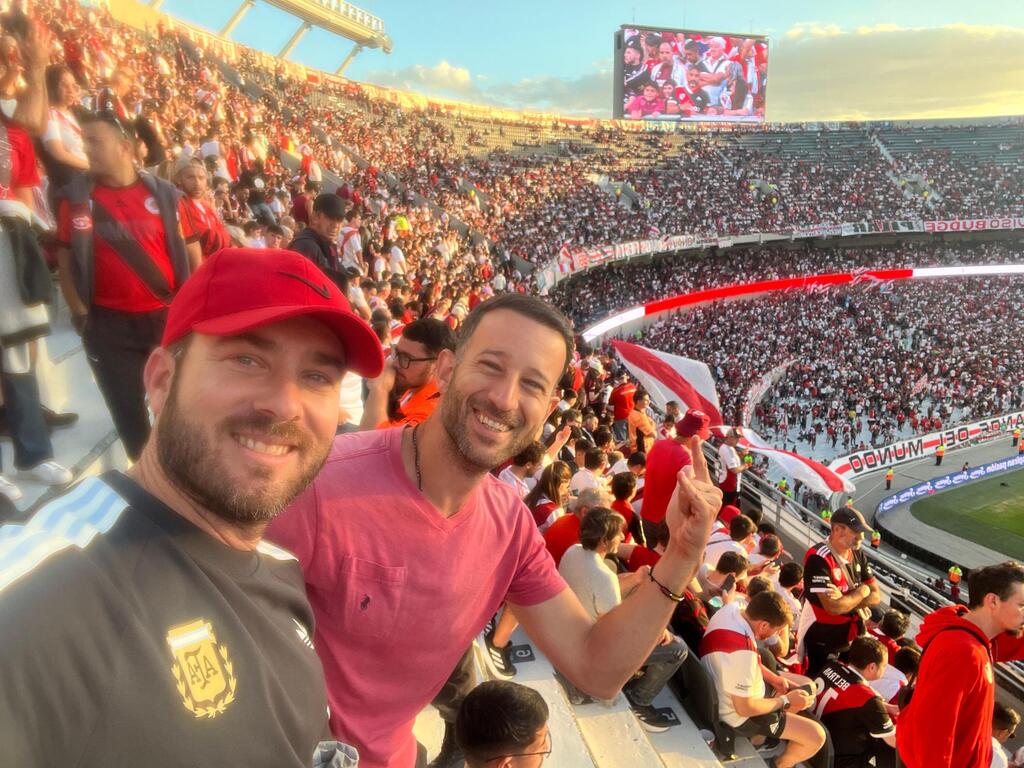
At River Plate soccer match
One of the reasons many travelers fall in love with South America, Shevah says, is the energy of the people — the warmth, the openness, the intensity of life in every corner.
“Brazil is the most liberal country in the world,” he says with authority. “It’s insane how open they are — whether it’s LGBTQ rights or nightlife — everything is intense. The violence is intense, the love is intense.”
In nearly every livestream he hosts, Shevah says, followers flood him with questions about the social scene in South America. “People want to know how to really connect with locals, how to form relationships. I tell them: there’s no magic trick. I stay in local hostels, not in Israeli guesthouses. In Argentina, I lived in a hostel full of Argentinians — I was the only Israeli. I sat with them, talked, got to know them. That’s how real connections happen.
“Then, when we went to a party — it felt natural. I wasn’t meeting strangers but people I’d already bonded with over a couple of days. If you don’t speak the language, if you’re always surrounded by other Israelis, it just won’t happen. You have to step out of your comfort zone and really open up to the local culture.”