

Noga: Tropical sun strikes the moment we step off the plane, a salty sea breeze greeting us at Bali’s airport. I walk down the stairs and turn to Guy behind me, his backpack slung over his shoulders. I smile. “We made it to Bali.” I had been waiting for this trip for so long.
In a few months, we will stand together under the wedding canopy. Knowing we would not be able to travel after the wedding, with me in residency and Guy rotating through hospital shifts, we declared these two weeks our honeymoon.
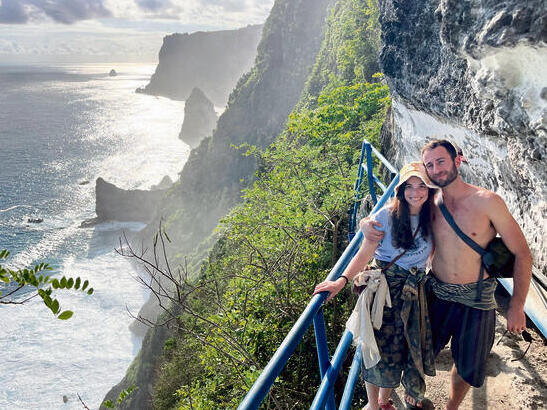
“You’ll see,” Guy said. “This will become a trend. Honeymoon before the wedding.”
Guy: The taxi drivers waiting outside the airport were no match for Noga’s bargaining skills, and we were soon on our way to our first destination. Within minutes we passed an enormous statue of a multi-armed, multi-faced figure with an elephant’s trunk. Along the road stood temples decorated with lion sculptures and what looked like bearded monkeys with terrifying teeth. Flowering plumeria trees surrounded every structure.
“This looks like a special area,” I said in amazement, asking the driver where we were.
“A commercial zone for construction materials and home supplies,” he replied.
A temple next door
Noga: The dominant religion in Bali expresses a unique version of Hinduism, interwoven with elements of Buddhism and local traditions, blended into a remarkable world of rituals and beliefs. Every family has a temple next to the home, every village has a central communal temple, and driving here feels like a continuous tour through sacred sites.
“You cannot separate a Balinese person from their religion,” the driver explained. “Holidays, friends, family, work. Everything includes rituals.”
Traffic ahead slowed to a stop.
“Is there an accident?” I asked.
“No,” he said. “There is a ceremony. They are moving the god. Go and watch.”
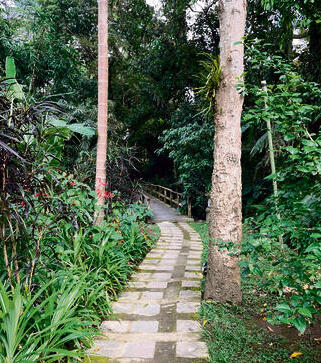
A jungle hiking trail
(Photo: Guy Melamed)
Guy: A long procession of people dressed in festive white walked slowly down the middle of the road. Women in white dresses led the way, balancing offerings and flowers on their heads. Men followed behind, wearing sarong-like garments and brimless caps, carrying enormous structures on their shoulders and playing string instruments and drums.
Noga and I joined, curious and excited.
“What exactly is happening?” I asked one of the participants.
“The god is moving from one village temple to another, and the community accompanies him,” he explained loudly over the music and the whistles of traffic police redirecting cars to the roadside. They, too, were dressed in white.
On the way to Ubud
Guy: Bali lies south of the equator and is home to about 4.5 million people. The official languages are Indonesian and Balinese, and many residents speak English. The main sources of income are tourism and agriculture. The earliest evidence of human activity on the island dates back more than 3,000 years.
Beyond being a paradise of volcanoes, jungles and some of the world’s richest marine life, Bali is also an anthropological gem whose residents take great pride in preserving tradition. As nature researcher Oded Degani told us before the trip, “Tourists do not matter when it comes to rituals. As spectacular as it looks to you, it is completely authentic. Just go with it.”
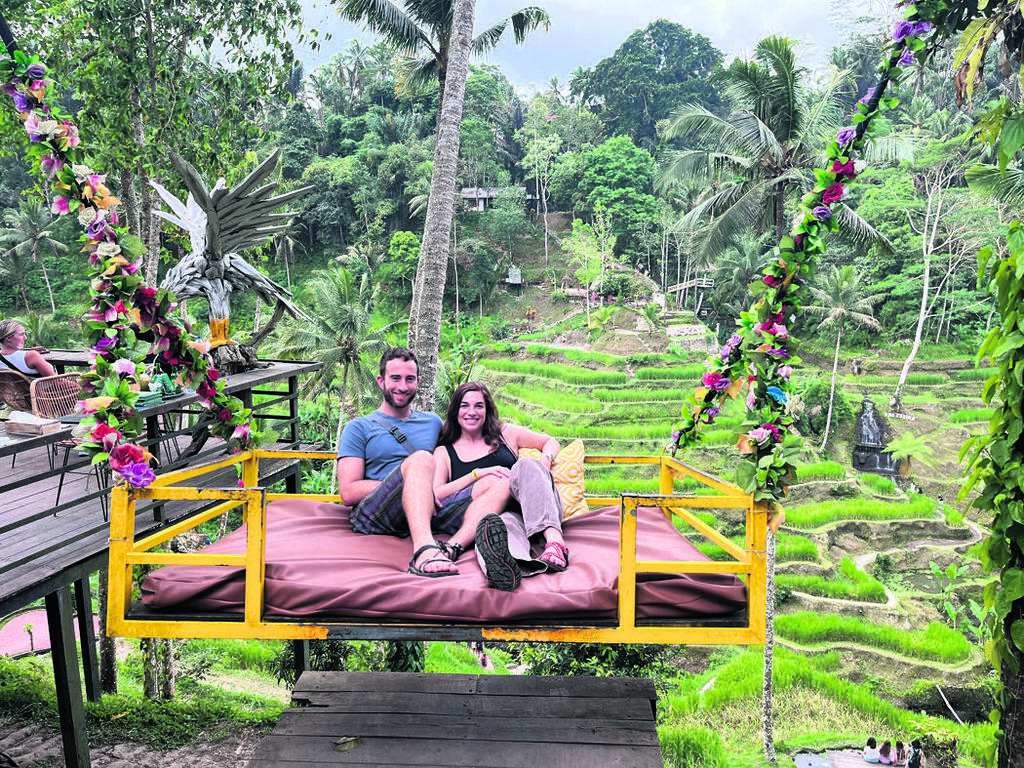
Noga and Guy near the rice terraces
Noga: We arrived at our guesthouse late at night. At first light I opened the window, and the view took my breath away. Low carpets of rice fields stretched across dozens of meticulously carved terraces. Between them, streams flowed down toward the jungle at the edge of the valley. Birds filled the treetops with song, roosters announced the dawn, and low-hanging clouds wrapped the landscape in mystery befitting the town of Ubud.
Guy: We wandered through the narrow lanes of Ubud, located in Bali’s mountainous region. It is considered the island’s spiritual center, as well as a hub of art and creativity. In Malay, the name means “medicine,” and residents believe life here grants healing to those who surrender to the place.
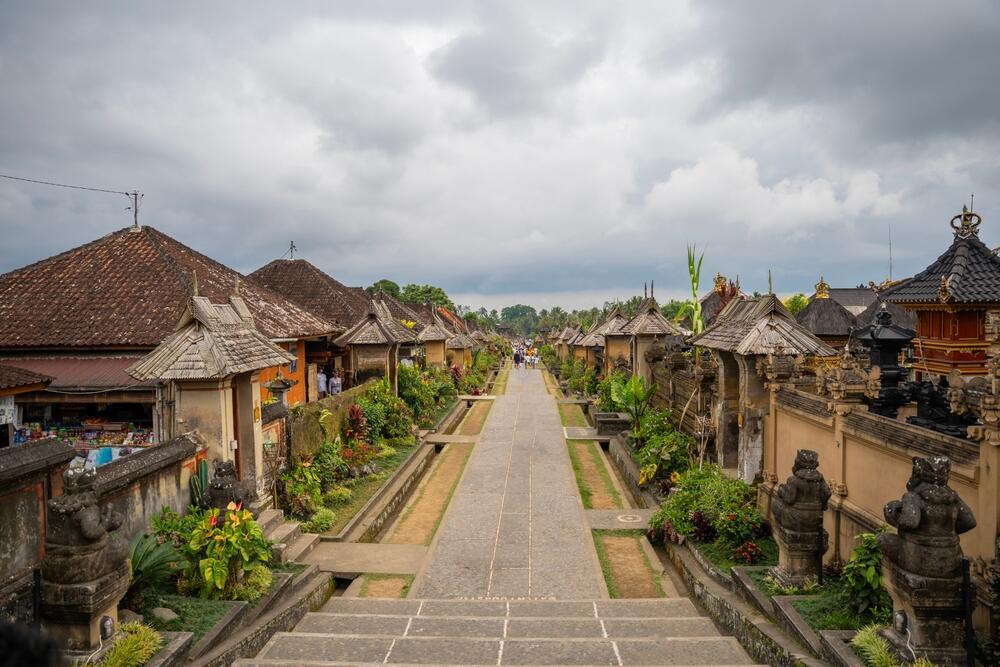
Ubud, the island’s spiritual center
(Photo: The Director Art /Shutterstock)
Every corner offered wood and stone carvings, oil paintings, yoga and meditation centers, restaurants and vibrant nightlife, all interwoven among countless temples, ancient structures, fountains and pools filled with golden koi fish. The highlight for me was everywhere. Balinese massage.
Volcano at sunrise
Noga: “If we want to earn all these massages, we need to walk,” I said, suggesting we climb Mount Batur to watch the sunrise. Guy agreed.
We woke at 2 a.m., drove to the starting point and began the ascent with a local guide.
“The mountain is 1,700 meters high,” the guide, Dors, explained, pointing to the dark horizon filled with stars. “Second only to Mount Agung over there. It last erupted in 2000. Maybe today it will erupt again,” he laughed.
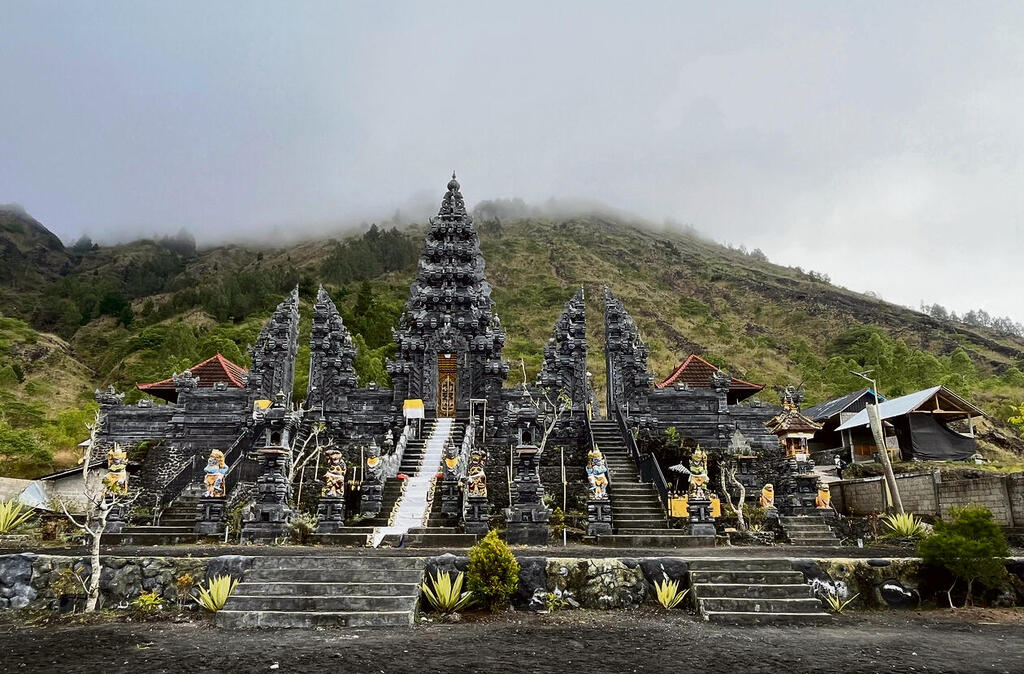
A temple on the slopes of Mount Batur
(Photo: Guy Melamed)
I did not laugh. I looked back, breathing hard, searching for Guy’s gaze. He was still irritated by the early wake-up.
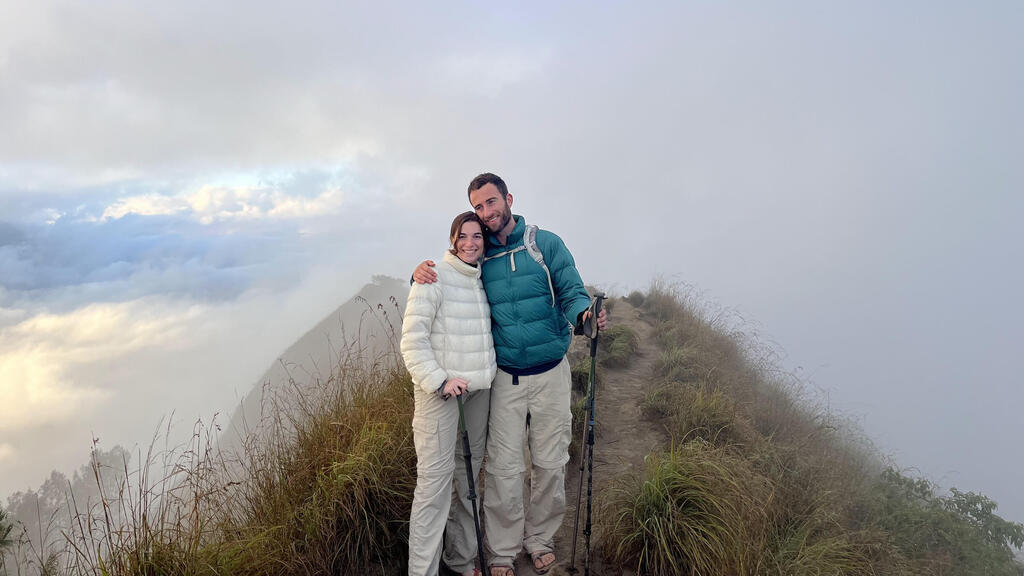
Guy: We sat embracing on the rim of the volcanic crater. Cold wind mixed with bursts of hot steam escaping through cracks in the rock. We held cups of tea Dors had prepared. A red hue spread across the sky, shifting with every new ray of sunlight. Sunrise for breakfast.
Clouds spilled down the slopes toward waking villages below.
“You were right,” I admitted. “It was worth it.”
She smiled in relief, rested her head against my shoulder and watched the sunrise.
Magic beneath the water
Noga: A few days later we continued east to the town of Kubo, where we realized the true magic lay underwater. We put on masks and fins and went snorkeling. The water was still cold against the skin, but our eyes were already celebrating the explosion of color.
The black sand, formed from volcanic basalt, was dotted with hundreds of vibrant corals swaying like treetops in the wind. Schools of fish surrounded me. Suddenly, a massive sea turtle emerged behind me. My heart leapt. I searched for Guy below me near the reef. He pointed upward toward the turtle, his eyes searching for mine.
Guy and Noga: a two-voice travel diary
Guy:That evening we sat at a seaside restaurant. The food was outstanding. Everything was so fresh, the spices intoxicating. Noga, the better cook of the two of us, had not settled for a single cooking class with a local chef and even woke early to visit the pre-dawn market.
After eating enthusiastically, I said, “Every time this came up, I said we would talk about it in Bali. It is time.”
Noga: Most of the wedding arrangements were finalized before the flight. We postponed the conversation about the ceremony itself. Guy comes from a religious family and wants a traditional wedding. Both of us want a ceremony rooted in Jewish tradition, but one that reflects our contemporary values.
So, with a beer in hand and waves crashing against the rocky shore, we outlined our ceremony, until the owner interrupted to apologize that he needed to close.
“Seeing a turtle is a sign of good luck,” he announced after hearing why we were there. “It means you will have a baby boy.”
Stopping time
Guy: We thought nothing could surpass the magic of Bali, until the ferry docked at the neighboring island of Nusa Penida.
“Until three or four years ago, tourists only came here to dive and went straight back to Bali,” explained Hadek, our dive guide. “Once people started posting photos on Instagram, everyone wanted to stay.”
Several small islands lie near Bali. Nusa Penida, home to only tens of thousands of residents, had long relied on work in Bali, returning home every couple of months. The island, an hour by boat from Bali, is very different. The climate is drier, the beaches white, large areas lack infrastructure, and narrow, bumpy roads were built for scooters.
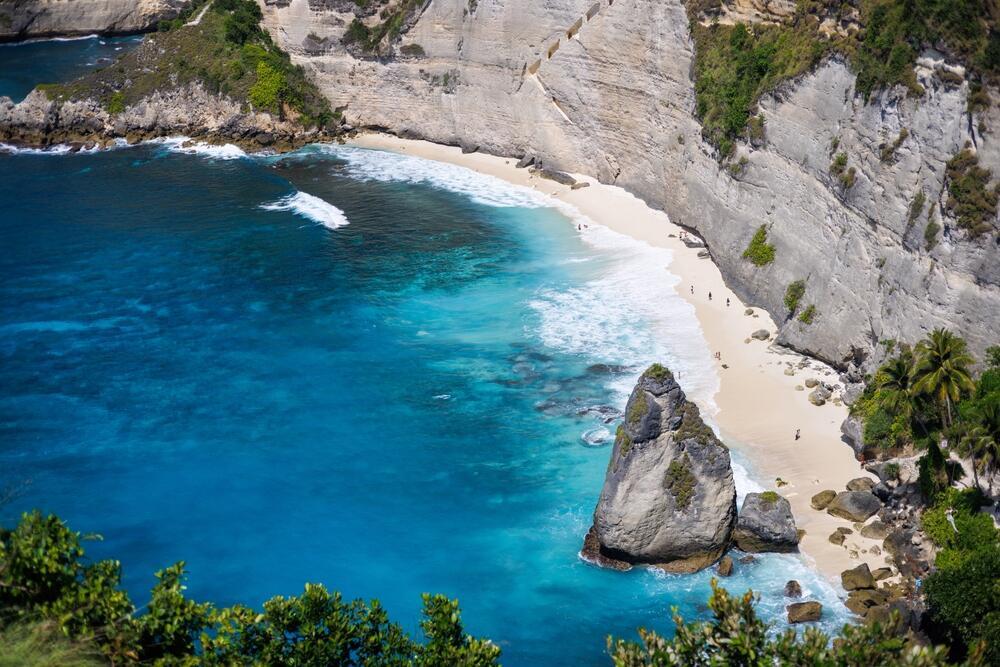
The coastline of Diamond Beach, Nusa Penida
(Photo: Daniel199S / Shutterstock)
Noga: The next morning we headed out to sea with our diving gear. Tides and rapidly changing Indian Ocean currents determine when boats can depart. The small motorboat circled the island. Towering cliffs plunged into turquoise waters, covered in lush vegetation like a blanket. Waves crashed below, sending geysers of spray into the air.
Beneath the surface lies one of the world’s most diverse reefs. But we hoped to encounter one creature in particular. We entered the cold water. After 15 minutes, just as I began to fear she would not appear, a silhouette rose from the depths. A giant manta ray. Its wings moved with elegance, its enormous mouth open as it filtered plankton. It approached me. I froze, suspended between awe and joy, as it passed and disappeared back into the deep.
Guy: “When do we go out to sea tomorrow?” I asked Hadek excitedly as we returned.
“Tomorrow we cannot,” he said. “There is a ceremony. The day after.”
“What ceremony? Can we go once it is finished?”
“Tomorrow is cremation,” he replied.
It took a moment to register.
“Cremation?”
“Yes. Once every five years the entire village gathers and elevates the souls of those who passed in recent years. They become gods. You are invited.”
Noga, listening half-heartedly, immediately asked, “When and where should we be?”
Noga: We got off the scooter in Hadek’s village. No one was around. Only a banner and the sound of prayers accompanied by musical instruments echoed from the outskirts. We followed the sound to a forest clearing, where hundreds of people in traditional dress had gathered. Mothers held babies. Elderly villagers sat quietly waiting.
At the edge of the clearing, elevated on a platform, sat an elderly man adorned with jewelry, murmuring prayers. I approached someone quietly and asked, “Have you seen Hadek, the dive guide? He invited us.”
“There are many Hadeks here,” he replied in fluent English. He turned out to be a geography teacher at the local school and even knew where Israel was.
“Hadek is the traditional name for the third son in every family,” he explained. It was like asking an Israeli if he knew Yossi from Tel Aviv.
“Do not look so worried. You are our guests,” he smiled. “The decorated animal statues are the deceased. A bone from each person is inside. Walk around and take photos. But when the burning begins, step back.”
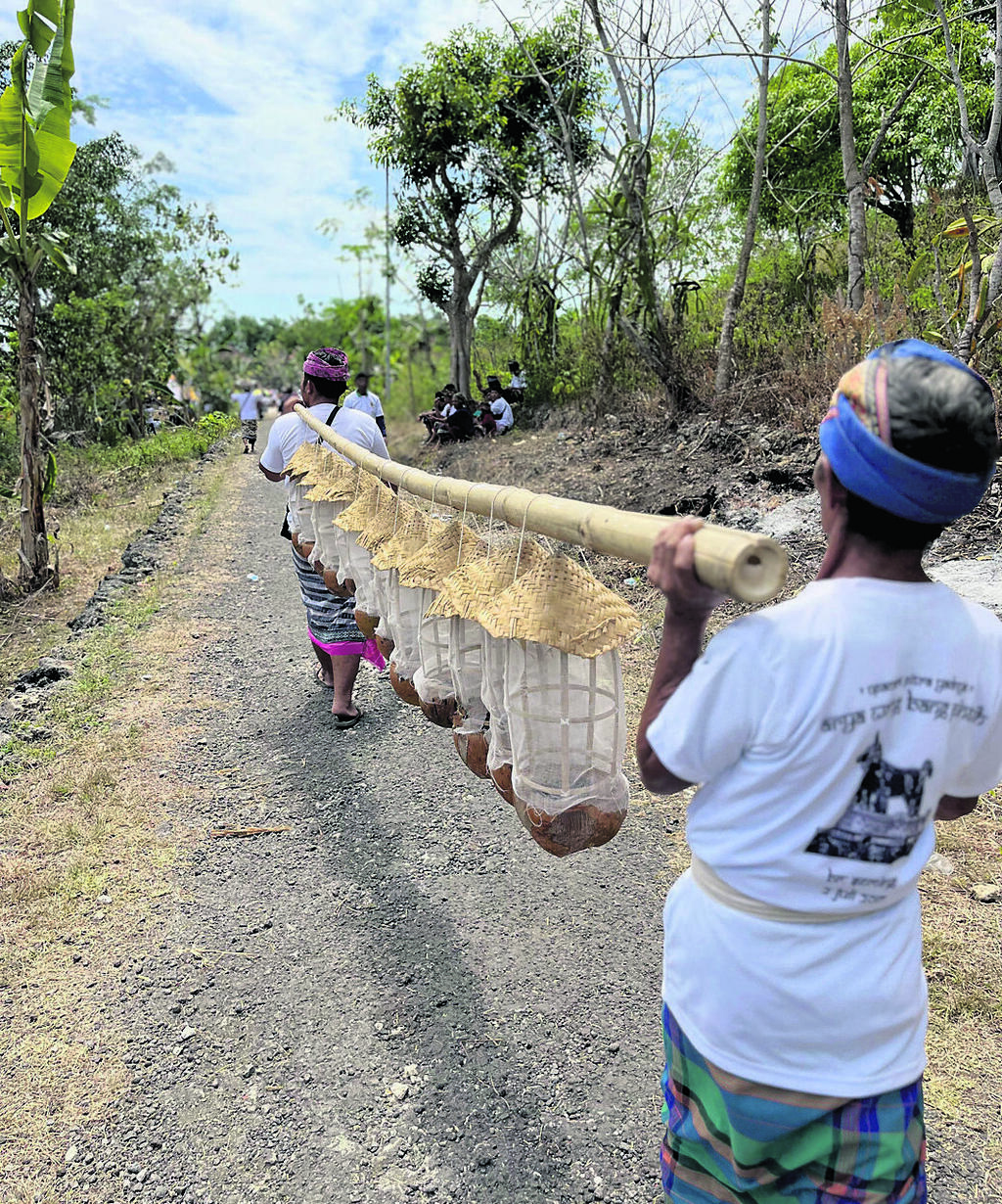
Part of daily life: a religious ceremony in one of the villages
“Now they burn all these beautiful sculptures?” I asked, calculating how long it must have taken to build them.
“Of course,” he said, amused. “But there is still time. We are waiting for the signal from the ceremony leader,” he said, pointing to the elderly man.
“Look at them,” Guy said. “Peak tourist season. The income from these days feeds families for a year, and everyone has been sitting here quietly for half a day, as if time does not exist.”
I thought about his words. “That may be the secret of every ritual,” I said. “Time takes on a different meaning than in ordinary life. It happens in farewell through cremation, on a birthday, and perhaps most of all, under the wedding canopy.”
Tips before you fly
• Even without visa considerations, it is worth combining a flight to Bali with a stopover in Singapore. This reduces airfare costs and adds another destination.
• Bali is stunning year-round, but the dry season from June through September is recommended. During peak season, booking hotels in advance helps reduce costs, especially luxury properties.
• Do not skip the nearby islands. For a more authentic experience, visit Nusa Penida.
First published: 05:59, 12.25.25