

Adventurer Omri Cohen, 31 — a tiger photographer and rock climber — set out with his partner Amit on a challenging 80‑day overland journey across southern Africa, traveling through Botswana, Zimbabwe, Mozambique, Eswatini and South Africa. They drove a well‑equipped four‑wheel‑drive vehicle, undertaking independent safari drives, wild dives and long road trips through the southern deserts.
But when asked to pick one unforgettable moment, Cohen didn’t point to lion sightings or spectacular sunsets; instead, he chose a soothing and deeply moving dip in natural hot springs set amid pristine wilderness in the desert, on the border between South Africa and Namibia.
They also took this video of lions during an independent safari in South Africa's Kalahari Desert
(Video: Omri Cohen)


“Those hot springs are called Riemvasmaak. They’re about 11 hours’ drive from Cape Town, and we reached them toward the end of the trip,” he recalls in a conversation with ynet. “We were tired after many days on the road. Then I got a recommendation from a friend I trust blindly. He looked at me and said, ‘Don’t skip it. Don’t research it. Just go there. Trust me!’ And when someone like that tells you something, you don’t ask questions.”
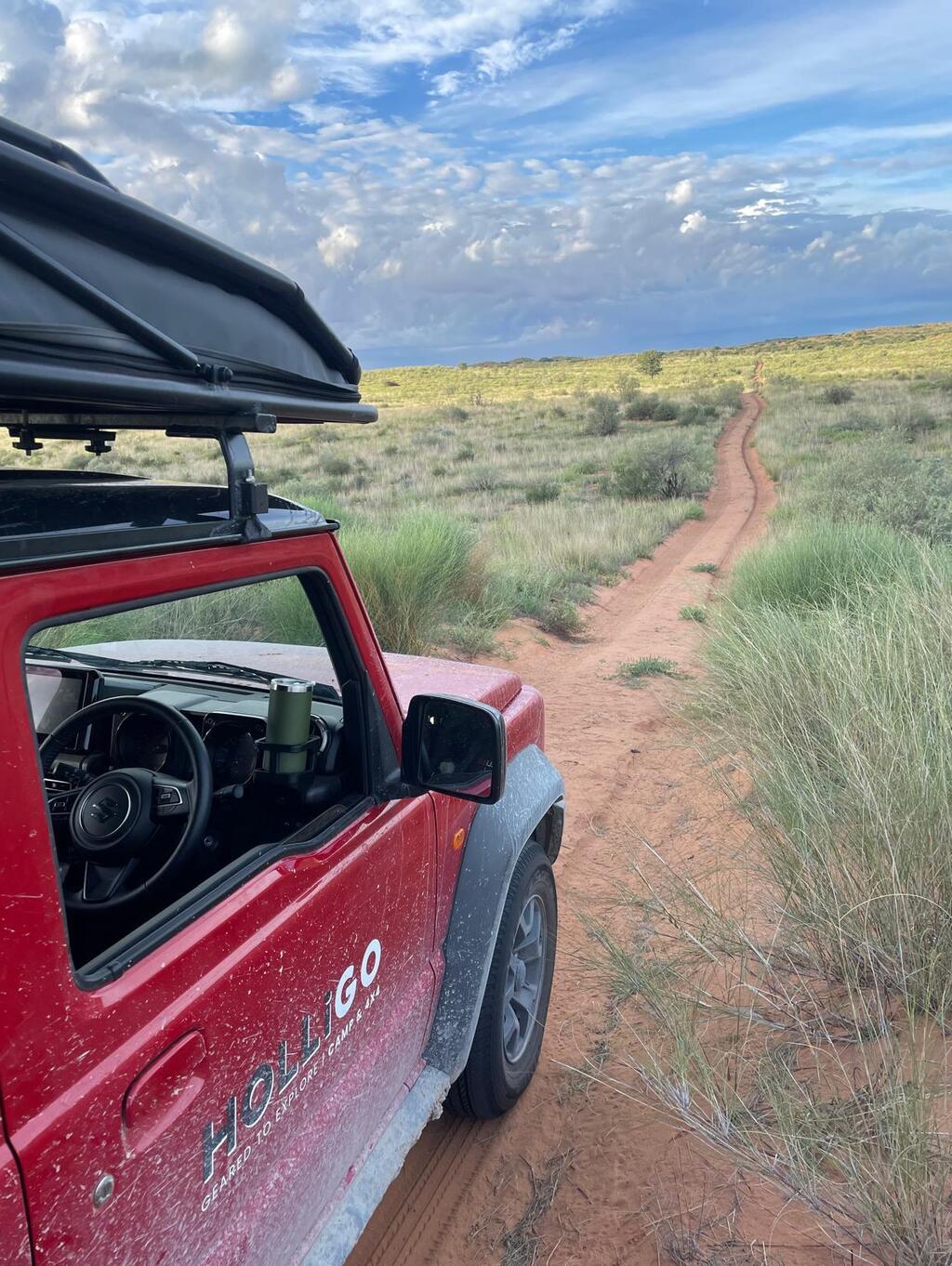
“We drove through incredible dirt tracks — a long journey through untouched orange desert that’s breathtaking. From the road, we were already blown away: you drive for hours and the scenery doesn’t change, and then at some point the road starts descending into a huge wadi, with enormous orange cliffs, and you feel like you’re entering another place.”
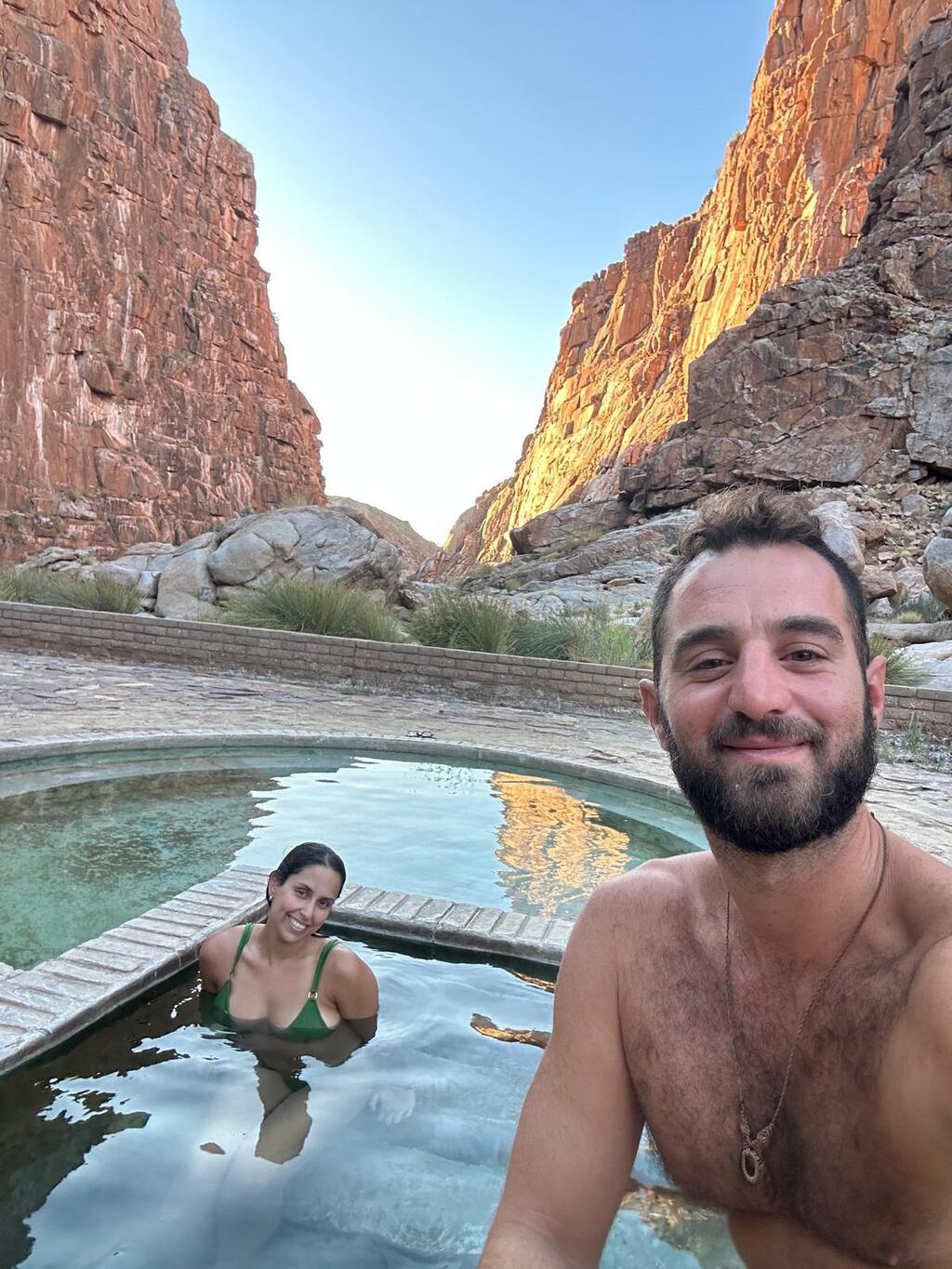
They parked the vehicle at a spot that seemed suitable for camping. “From the moment you park, it’s about a 100‑meter walk. You start walking and suddenly you see the pools. I remember that moment — I was just in shock. It looked like a million dollars, in the middle of nowhere.”
The sight, he says, is paradoxical. “This is a relatively unknown place, but it’s well organized — it’s not some illicit site. There are constructed pools, a small structure with toilets and showers — that’s it. And around it, nothing. Desert. That contrast between the organized pools and the wild desert around them is one of the things that makes the place special.”
Then comes the magical and healing moment of bathing in the geothermal waters. “There are hot springs and cooler springs,” he says. “The hot ones are at a perfect temperature, something like 38°C–39°C. It’s not boiling — you can sit there for a long time without wanting to get out.” The second pool contains cooler water: “About 30°C. Not too cold. Perfect for refreshing in the morning, or after a long session in the hot water.”
The dreamlike desert experience quickly turns into a luxurious ritual. “You cook a little meal, get into the hot springs, move to the cool, back to the hot. Open a bottle of wine. As a couple’s experience — truly nothing compares.”
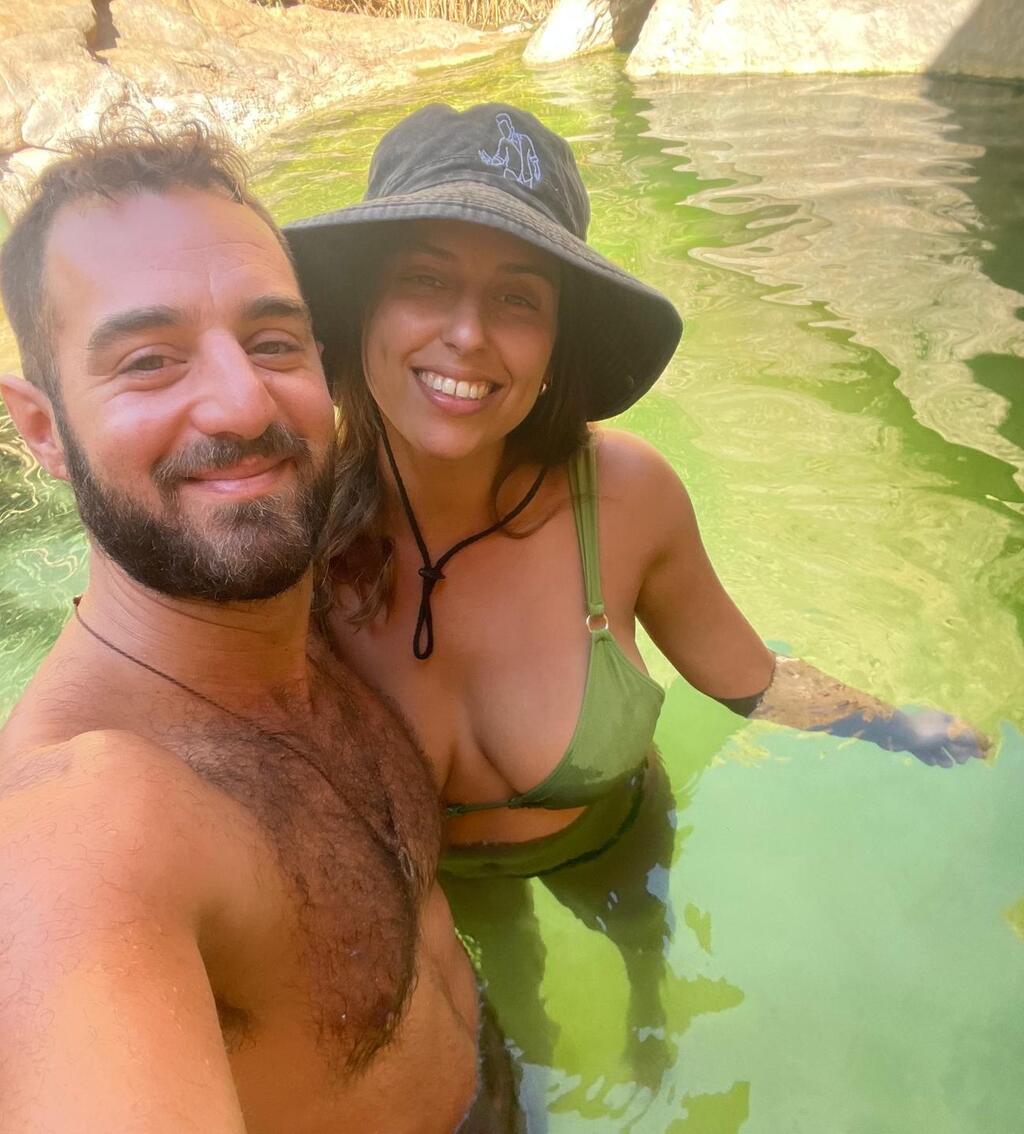
(Photo: Omri Cohen)
Although the site is relatively well organized, it remains wild, and camping nearby includes lion and hyena calls throughout the night. “There’s a lot of wildlife in the area.” Cohen emphasizes the unique situation of camping in the wild in Africa: “There are jackals and sometimes leopards. It’s hard to see them, but you see the signs — tracks, prints. You feel you’re in real wilderness, not a tourist site.” This is also why not everyone visits.
“Those who go there are usually serious travelers — people who go deep into the bush, who cross into Namibia, who do long journeys. This isn’t a place you ‘stop at on the way.’”
When asked if they were afraid to sleep alone in the middle of the desert, he replied: “In populated areas with poverty there’s more theft, but when you go into the desert — remote, wild places — the chance of encountering someone who wants to harm you is very low.” He says fears about strange tribes or unknown people are exaggerated: “Bad people just don’t live in remote areas far from civilization. They have no reason to be there.”
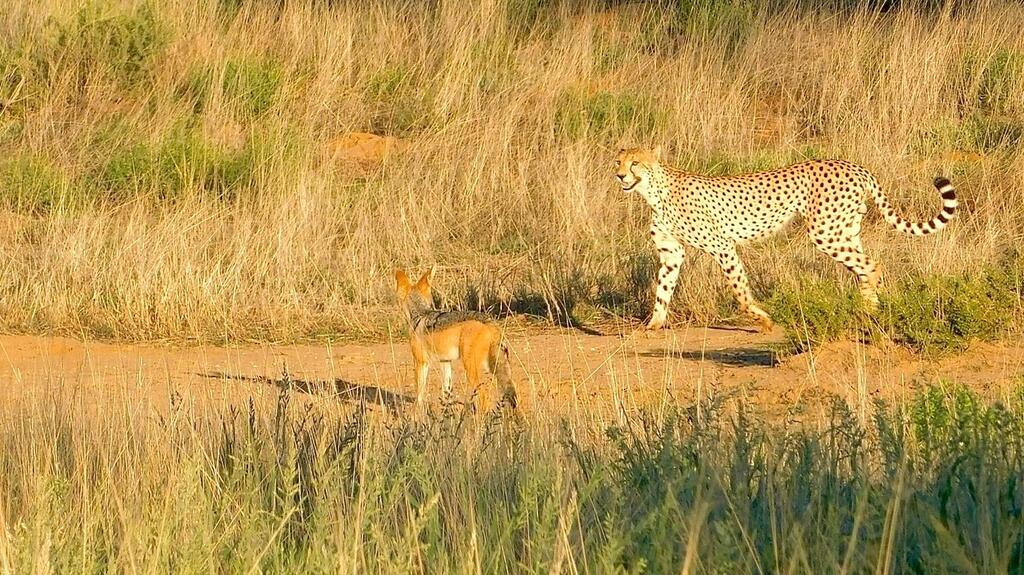
A cheetah and a jackal in the wild
(Photo: Omri Cohen)
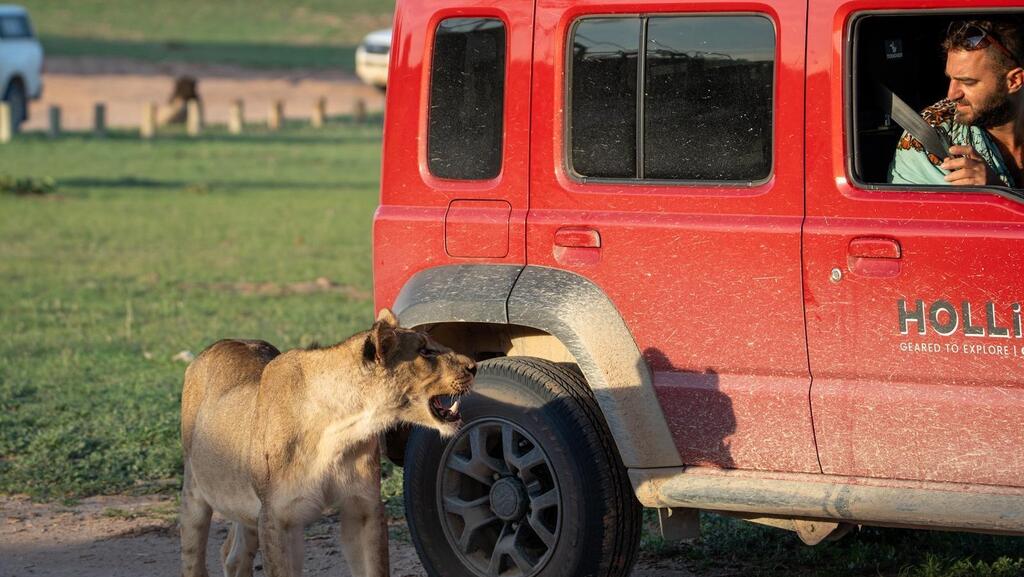
A young and fearless lion
And what about predators? “That’s a matter of knowledge and behavior. In 99% of cases, if you don’t provoke a lion and don’t enter its territory, the chance it will choose to risk itself in a confrontation with a human is very low.”
Cohen stresses: “A human is not natural prey for wild animals. If a leopard sees you — it’s better to just savor the moment. Don’t run, hold your gaze steady, stand confidently, look large and under no circumstances panic.”
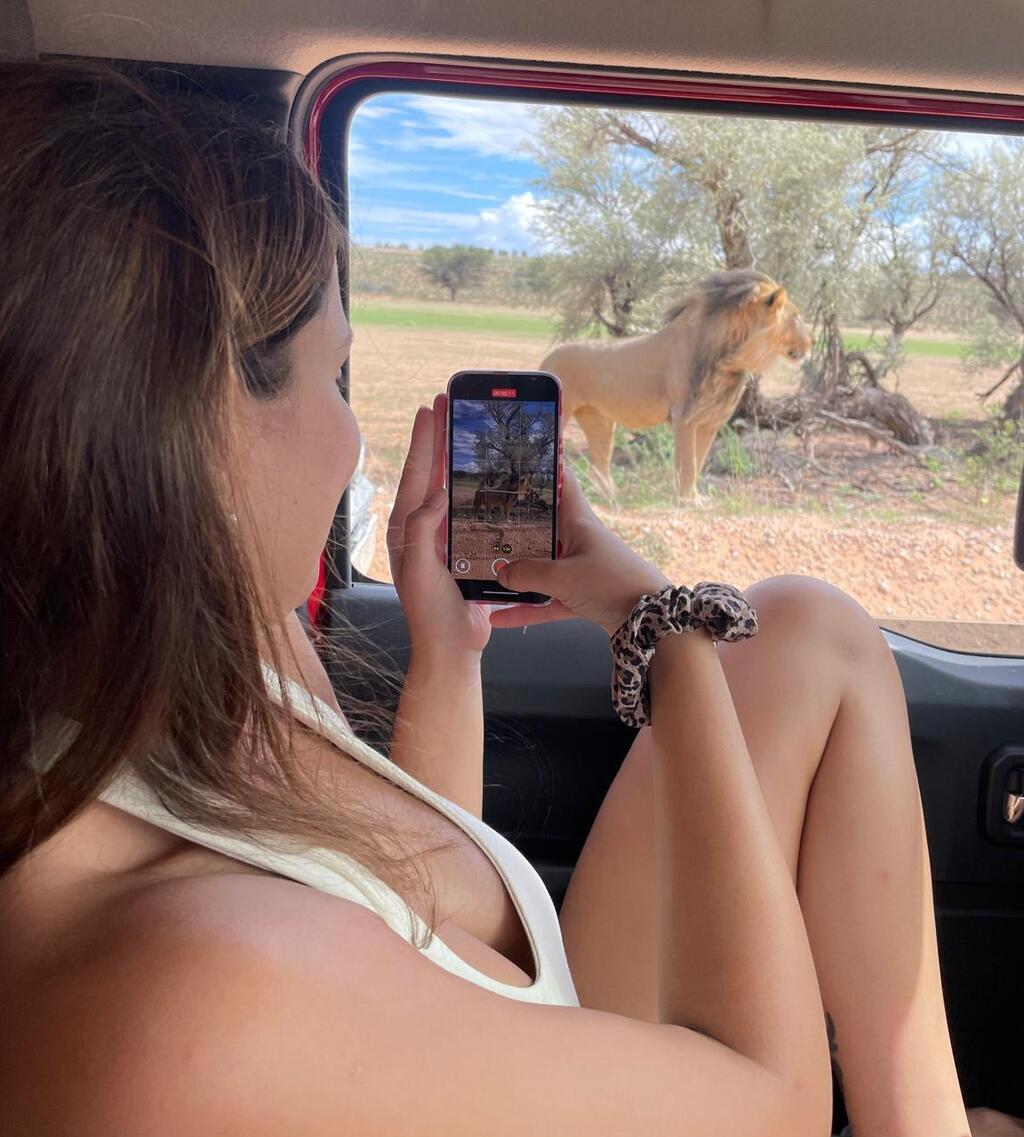
From the safety of the car
(Photo: Omri Cohen)
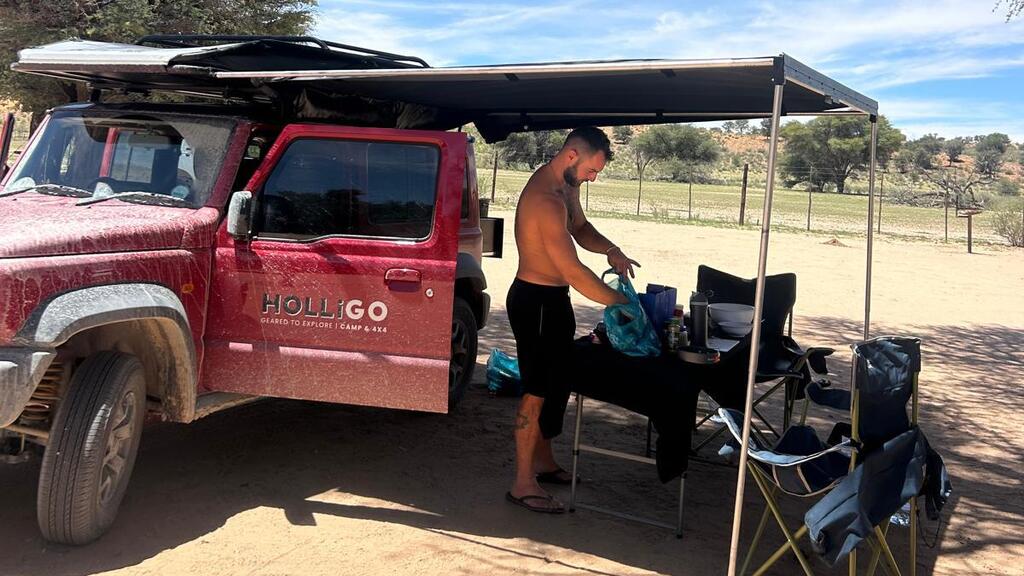
Breakfast on the road
Then comes the African night: lying in the tent, the desert silence all around and many sounds. “Mostly you hear lions and hyenas,” he says with a smile. “Their roar travels very far, and if they’re close you can feel it.”
For those not used to this wild world, the noises can be unsettling. “I assume that my experience and knowledge really helped calm her,” he shares cautiously about his partner. And for first‑time independent safari travelers in South Africa, he has a clear recommendation: “Don’t start off right away in the widest, wildest places. There are enclosed, regulated campgrounds. After you build confidence you can move on.”
Ultimately it’s a matter of perspective. “Fear of Africa, in my view,” Cohen sums up, “often comes from image. When you understand the terrain, the animals and how to handle yourself it stops being scary and becomes exciting. Then you discover that sleeping with lion sounds in the background isn’t a threat — it’s an experience you never forget.”
(Photo: Omri Cohen)
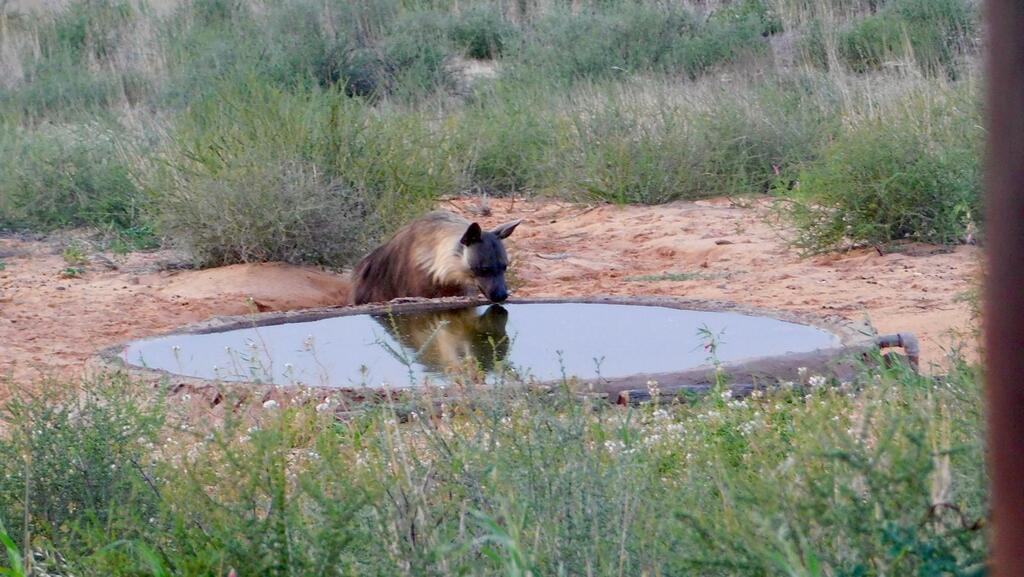
Brown hyena drinking from a waterhole on safari
(Photo: Omri Cohen)
To reach the site you of course need a suitable vehicle, but you don’t have to go extreme. “Any four‑wheel‑drive with decent ground clearance will work,” Cohen reassures. “We were in a Suzuki Jimny. You don’t need some monstrous rig, but definitely four‑wheel drive.”
The weather, he says, is part of the magic. “Most of the year it’s very hot. We were there in the perfect season — about 18°C at night, 33°C during the day. Dry desert and no humidity.”
In terms of expenses, Cohen says: “In Cape Town you can find small four‑wheel drives for about $50–$60 a day. If you want larger, well‑equipped vehicles — which I highly recommend for a couple’s trip — with a roof tent and fridge — it can be $200 or more.”
A successful visit to the Riemvasmaak hot springs requires planning and preparation before venturing into the open desert. You need to stock up on food and drink ahead of time. Cohen advises not to rely on having reception for your mobile phone. “Download maps ahead of time,” he warns with experience. “I use Maps.me. That way even without reception you know where you are and you don’t panic.”
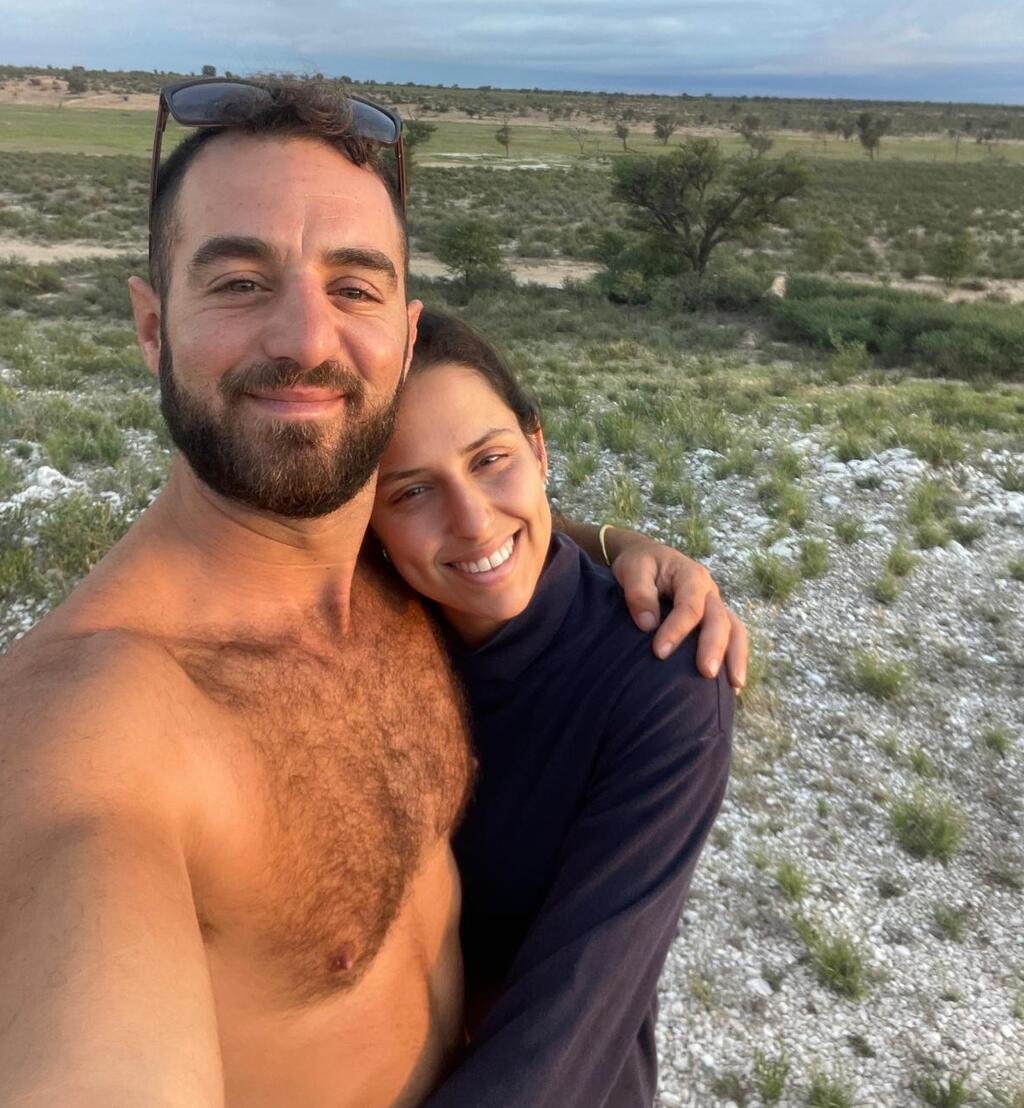
Traveling with your partner is a different experience
(Photo: Omri Cohen)
After many years of grueling solo journeys through dense jungles and mountain peaks, Cohen took this trip with a partner — after years of traveling alone. “When you’re alone you can take risks and stop wherever you break down and sleep less structured,” he says, stressing the significant difference between solo travel and a romantic journey. “When you’re with your partner — you’re responsible for someone else.” The difference is most felt in planning: “You need to make sure the experience you love is also good for her. That you’re not only enjoying — but she’s comfortable too.”
His solution was a looser schedule. “Don’t push too hard. Make sure the days are spaced out. There’s time for quiet, for togetherness, for little stops. Don’t arrive too late to set up camp in the dark — then the vibe becomes tense.”
He also doesn’t hide the challenges. “I told her from the start there would be less ideal days. For example the 11‑12 hour drive from Cape Town to the hot springs. I knew it wouldn’t be fun, but I prepared her for it. I said — it’ll be a hard day, we arrive, we relax, and it’s all good.” According to him, it worked perfectly. “When you prepare ahead — it’s much easier.”
And of course there’s one thing you don’t compromise on during a luxury desert trip as a couple — food. “I did serious shopping in Cape Town. I left with a full fridge — beer, wine, vegetables, eggs, everything. In the African desert there’s no supermarket, and if you didn’t prepare it’s a nightmare.”
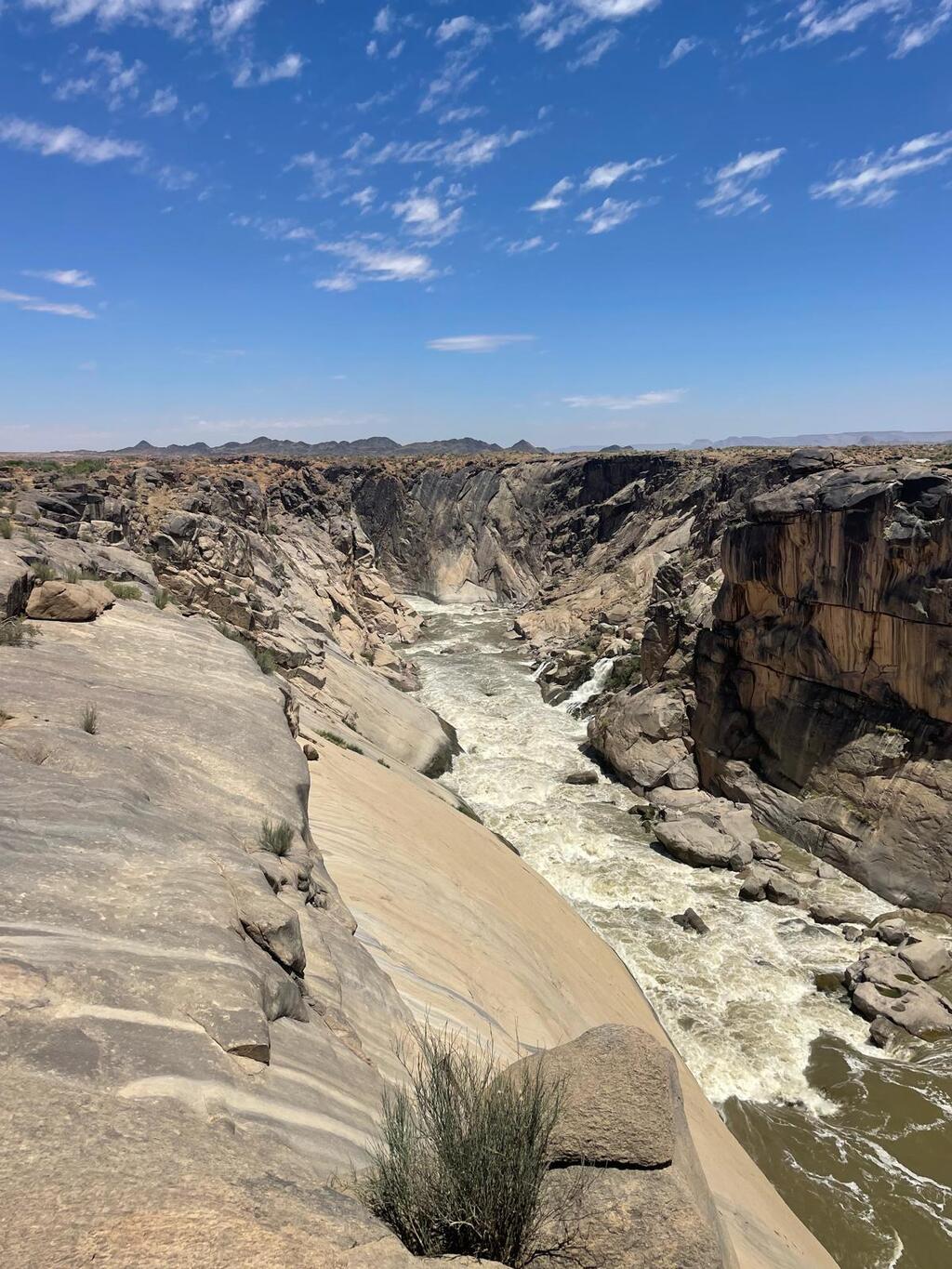
Augrabies Falls on the Orange River
(Photo: Omri Cohen)
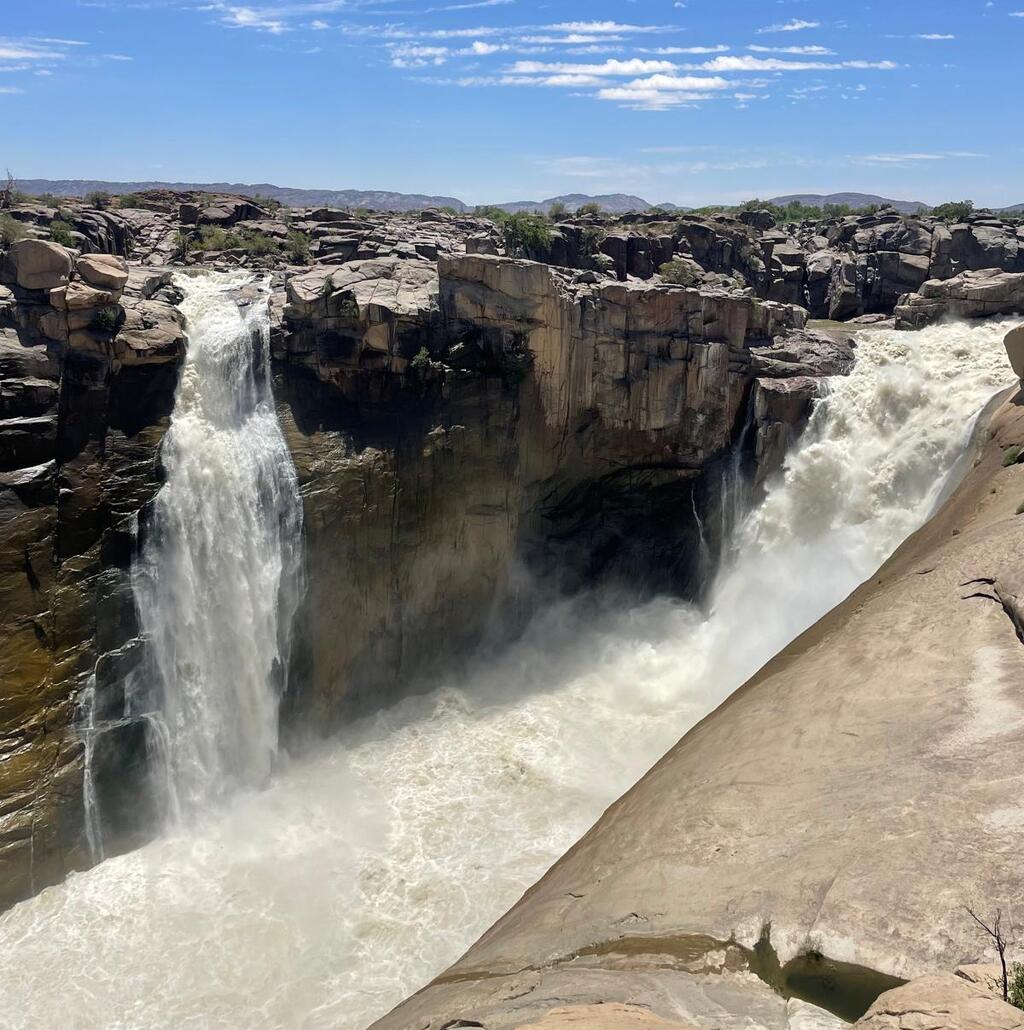
(Photo: Omri Cohen)
For travelers already in the hot springs area, Cohen also recommends visiting the nearby Augrabies Falls on the Orange River. “It’s one of the most powerful waterfalls in the world,” he says. “During the flood season it’s stronger than Niagara. It’s not a waterfall that’s particularly wide or extremely tall — it’s just insanely powerful. It’s a massive river, with crazy flow, dropping into a gorge to create one of the strongest falls in the world.”
From there the journey continues to an exceptional independent safari: Kgalagadi Transfrontier Park. “It’s one of the most unique safaris in Africa,” he says. “It straddles borders — half in South Africa, half in Botswana. As long as you’re inside the reserve you can drive between the countries without passport stamps — and it’s one big area for independent wildlife viewing. You go in with your car, without a guide, load up gear and food — and head out to explore.”
The bottom Line: A stirring dip in the Riemvasmaak hot springs in the South African desert isn’t for everyone, but for those willing to undertake the long drive into the wild and the absolute silence of the desert it offers a uplifting and extraordinary experience that’s hard to replicate anywhere else.
“This isn’t a place you stumble upon by accident,” Cohen concludes. “But once you get there, you quickly understand why they told you not to give up.”