

In the wild Judean Desert, between Nahal Prat and Nahal Makuch and near the community of Maale Michmash, nature carved a striking pool over hundreds of thousands of years. For long stretches, however, it remained dry, waiting for the rare flood that would fill it with fresh water. Recently, it received a welcome revival: water was piped in from the nearby community, benches were installed and trees were planted, turning the dry basin into a dreamlike pool in the heart of the desert. The restoration was carried out as part of an initiative in memory of Sgt. Yehuda Peretz, a Givati soldier who was tragically killed in a car accident last year on his way to his henna celebration, a month before his wedding.
Koby Peled, a fearless travel blogger known online as “Kuku trip,” set out to see whether the site was a mirage and returned to tell us what he found.
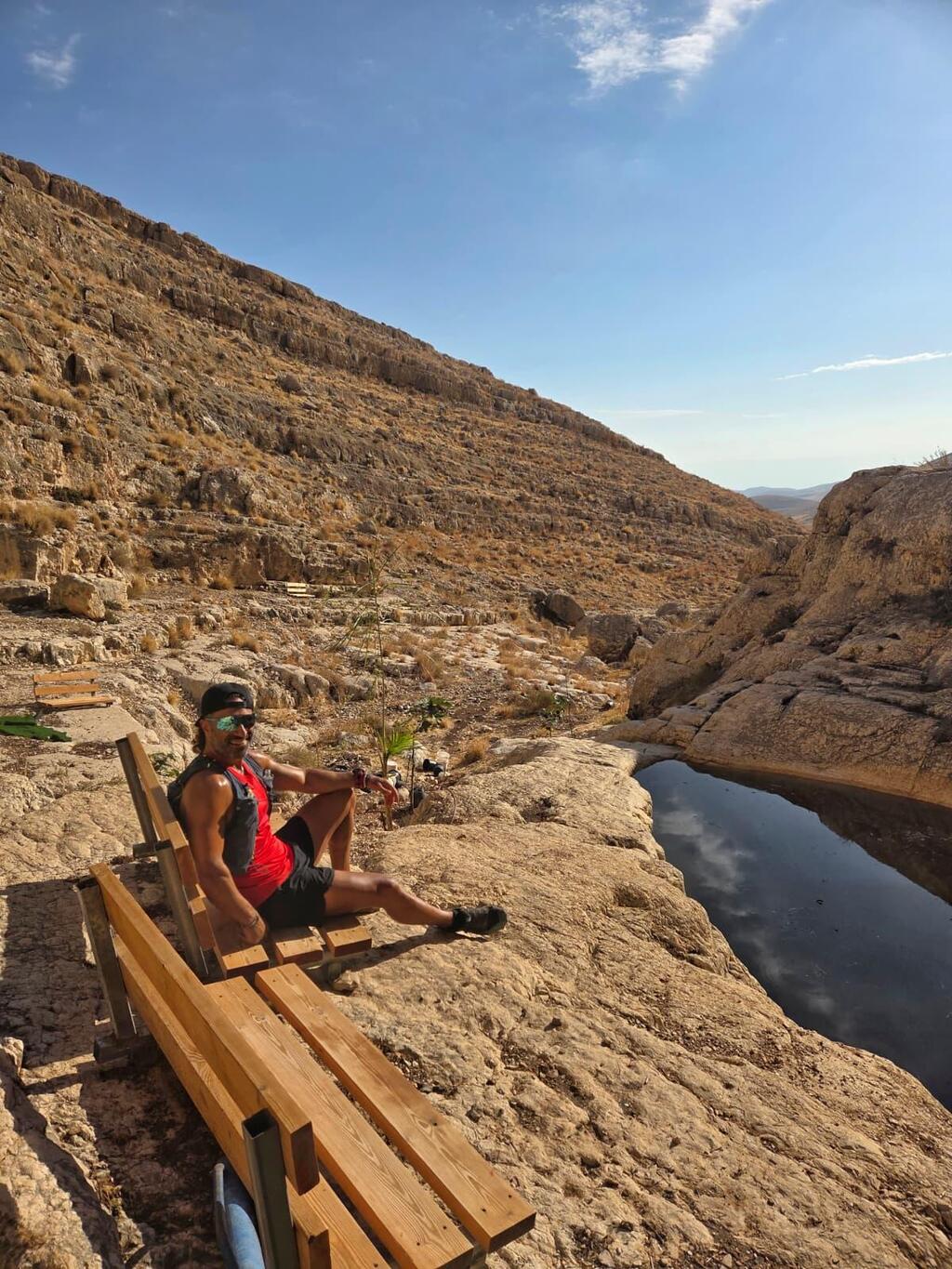
“The pool sits in a tiny channel beneath Mitzpe Dani, between Nahal Michmash and Nahal Prat,” he told ynet. “It’s an unnamed stream, and the closest wadi to it is Nahal Makuch. It’s a chain of natural pools that nature carved into the rock over hundreds of thousands of years. When a rare flood hits, the pools fill with water, but in normal times and during droughts they stay dry.”
Two weeks ago, ynet reported on an artificial water flow into Nahal Zalmon, and now it is the Judean Desert’s turn, halfway between Jerusalem and the Dead Sea. “The locals wanted to commemorate a young man,” Koby said of the unusual water project. “So they ran pipes down from the community above and channeled water into the pool.”
The pool itself — the naturally carved rock basin that can hold water — was always there, he stressed. “It’s a real pool, just dry. If a flood came, it would fill up. But this is a stream that carries water only once in a very long time. The locals simply made use of nature and filled a natural pool, so the water doesn’t seep into the ground and it becomes a beautiful natural-style basin.”
“It’s a completely desert area, exactly what you imagine — yellow, dry, wide open. There’s a clean, narrow canyon, and suddenly there’s water. It’s a relatively large pool, and around it you see unexpected greenery in the middle of the desert. It’s surreal: you walk through the yellow desert, full of thorns and dry brush, and suddenly there are green trees. Seeing a tree in the middle of the desert is strange. Along with watering the trees, they added benches and created a small spot where you can sit out in nature.”
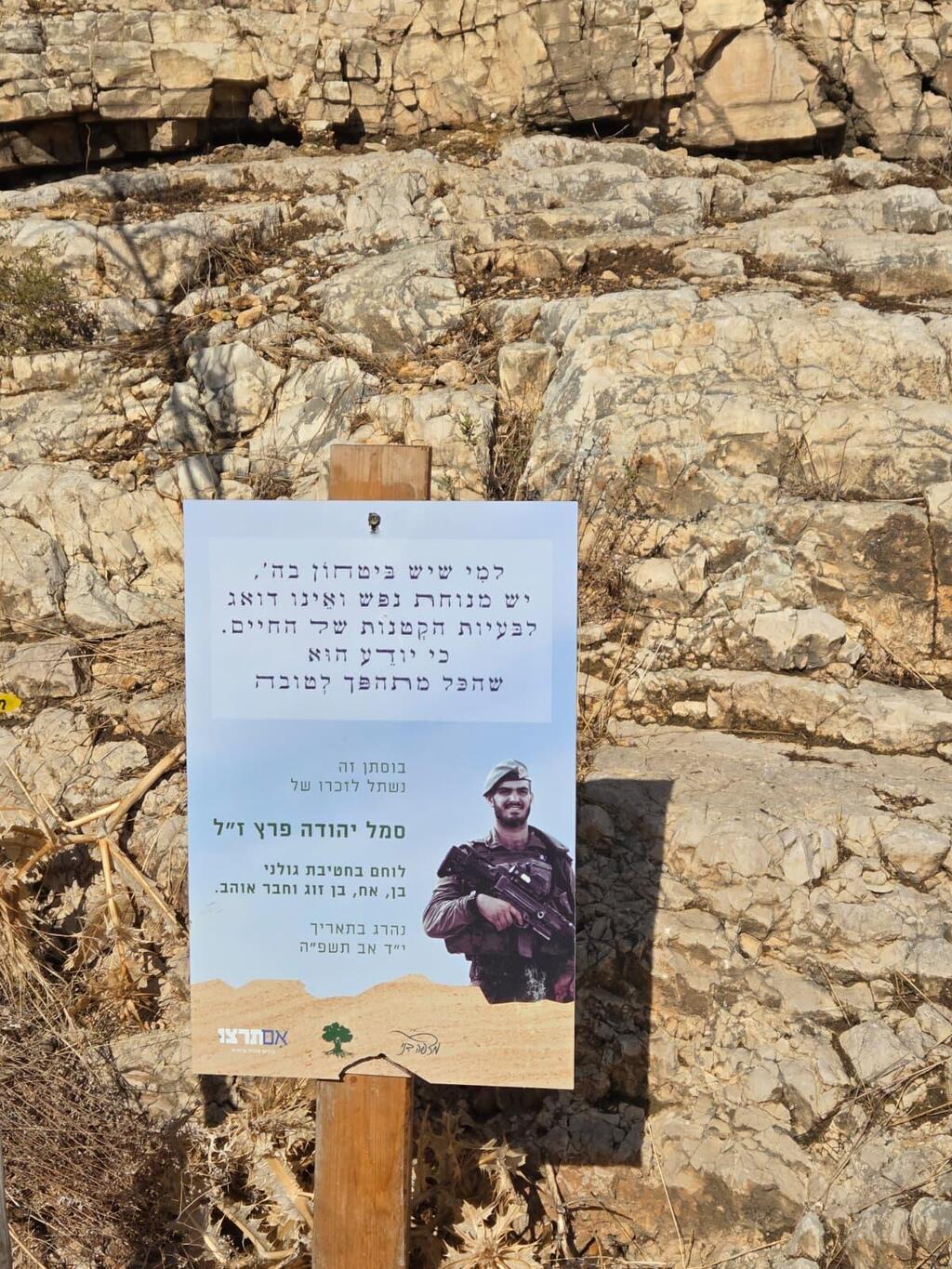
In memory of Sgt. Yehuda Peretz
(Photo: Courtesy of Kuku trip)
It turns out the shape of the pool also catches the eye. “Someone commented that it looks a bit like a map of Israel,” Koby said. “I looked from above and, honestly, it really does.”
The new pool has become a spot for extreme jumpers, but Koby insists on strict safety rules. “Before jumping into any natural water source, I always get in carefully to check the depth,” he said. “It’s important not to act recklessly. Some places don’t change, like big streams, but this is a new site, so I go in, take a dip, check the deeper points, look for rocks or any danger, and only then decide whether to jump. I also check if shoes are needed; sometimes there are rocks. Jumping with shoes is fine, but going barefoot can be trickier.”
And the temperature?
“The water is cold,” he said with a smile. “Not freezing, but very cold. Others may feel it even more. The contrast between the heat outside and the cold water is refreshing. Then you sit on a bench in the sun, warm up and dry quickly. It’s nice.”
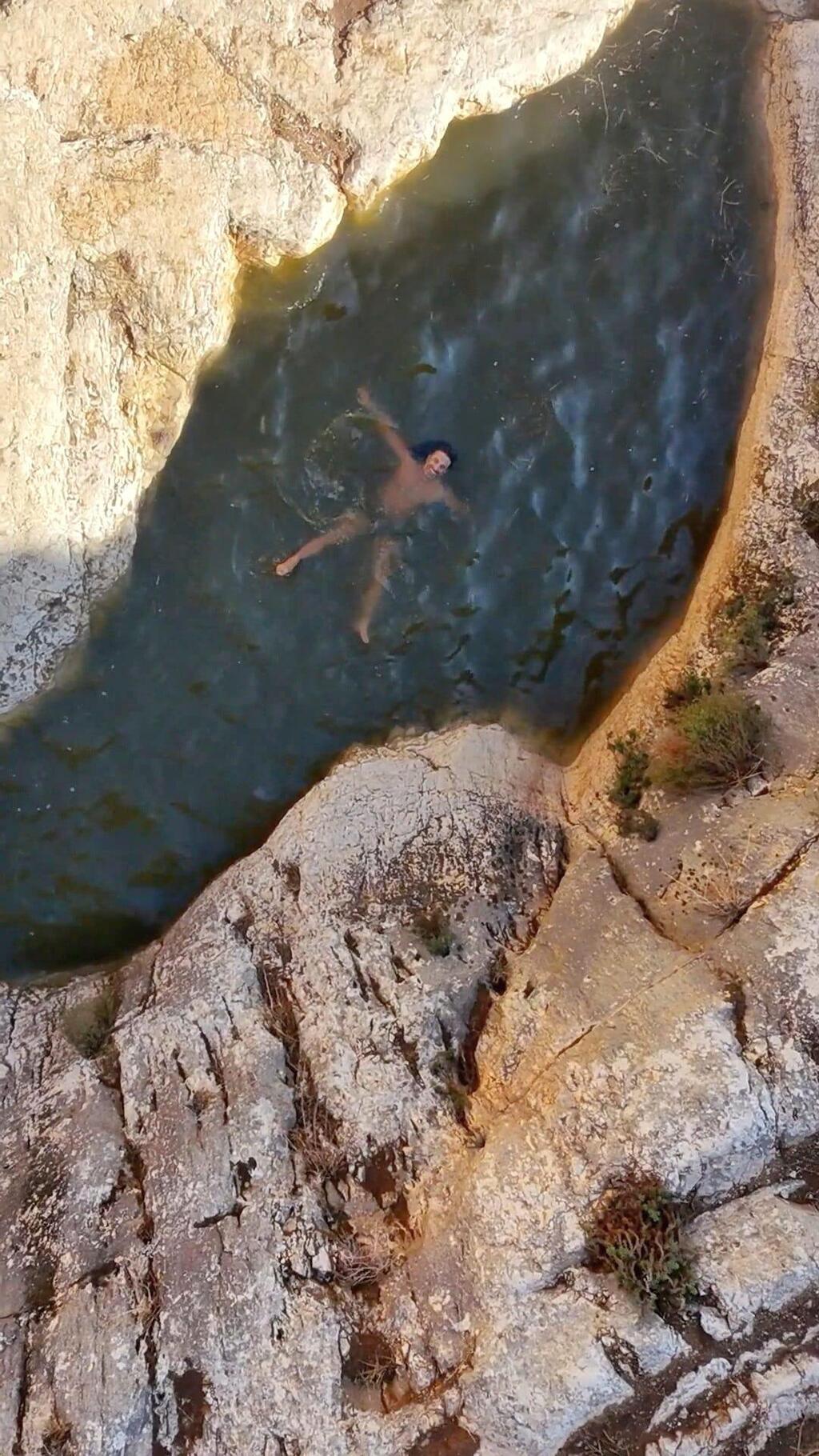
The water is cold, but it's nice
(Photo: Courtesy of Kuku trip)
Although the hike is in a desert area officially located beyond the Green Line, Koby believes the pool is suitable for visitors of all ages, including families with children. “You don’t have to jump,” he laughed. “It’s very easy to reach the pool and get in for a dip,” he said firmly. “The edges are shallow, so you can walk in and stand. You don’t have to go into the deeper area. It definitely works as a family outing, and it’s right next to the popular Nahal Prat nature reserve.”
Still, some ground rules apply. “There are no trash bins,” he noted. “You must take your garbage out with you. Whatever you bring in, you take back. To reach the site safely, you need sandals or shoes, and you should bring plenty of drinking water because even in our winter, desert days are very hot.”
Artificially channeling water into nature is a divisive issue among Israeli spring enthusiasts. Koby is aware of the criticism but speaks as a traveler. “I’m not a geologist, and I can’t tell you whether it will harm the environment,” he admitted. “Some followers told me we shouldn’t play with nature. As a traveler who loves water, I welcome this project.”
In his view, Israel is missing a broader opportunity. “I think streams in the center of the country should be developed, not only remote spots in the desert,” he said. “We’re a country with little water, and travelers searching for pools are willing to walk and work for it. In Europe you see people swimming in streams and sunbathing on the bank. Why can’t we do that along the Yarkon or Alexander rivers?”
How to get there — and why to park at Mitzpe Dani?
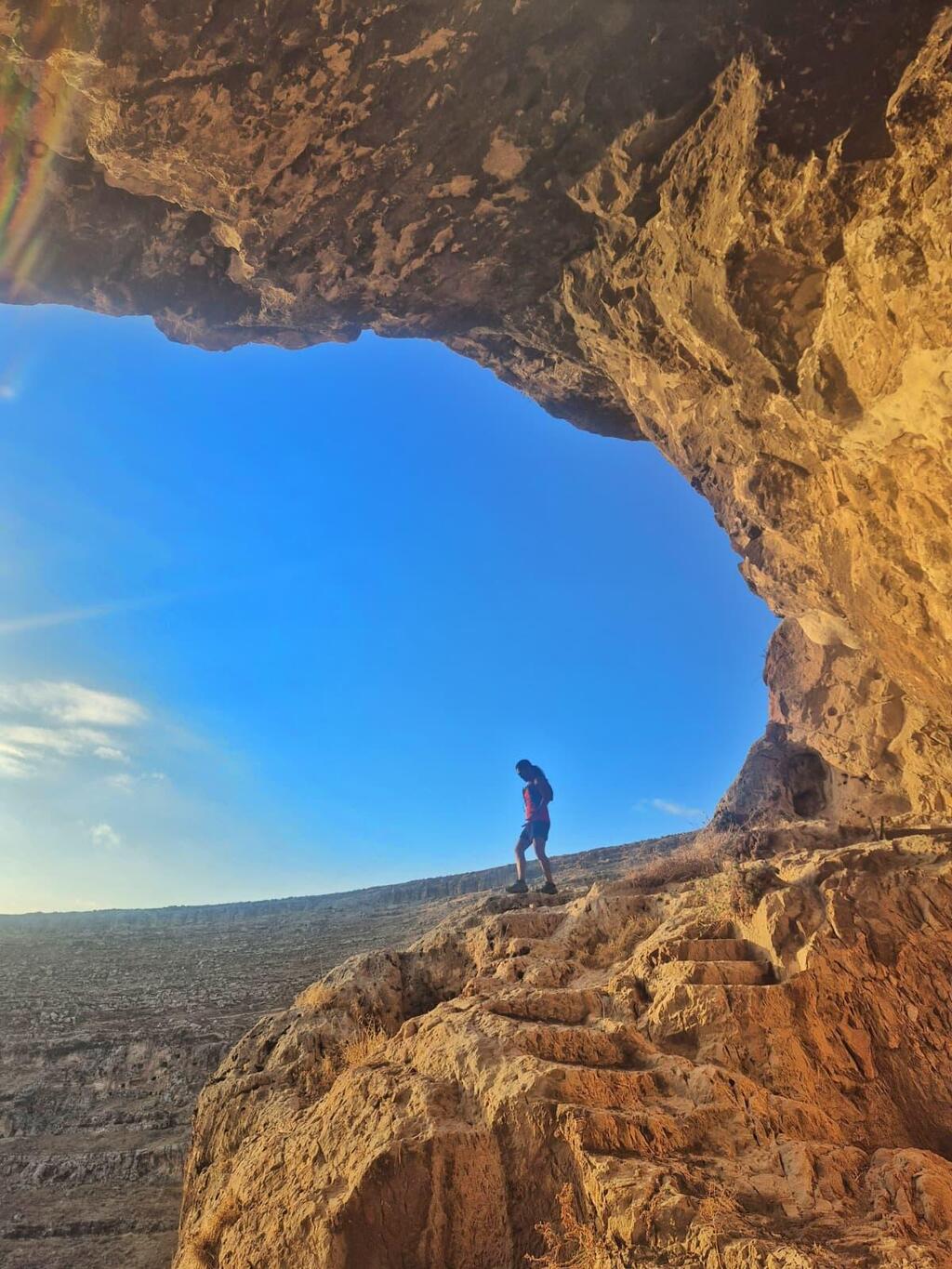
As with any hike in a remote desert area, especially beyond the Green Line, the story begins with finding a safe parking spot. Koby has a strong tip that also comes with a stunning overlook. “Before heading to the pool, the best place to start and park is Mitzpe Dani,” he explained. “It’s close to the pool, the parking is inside the community, and soldiers maintain a visible security presence.”
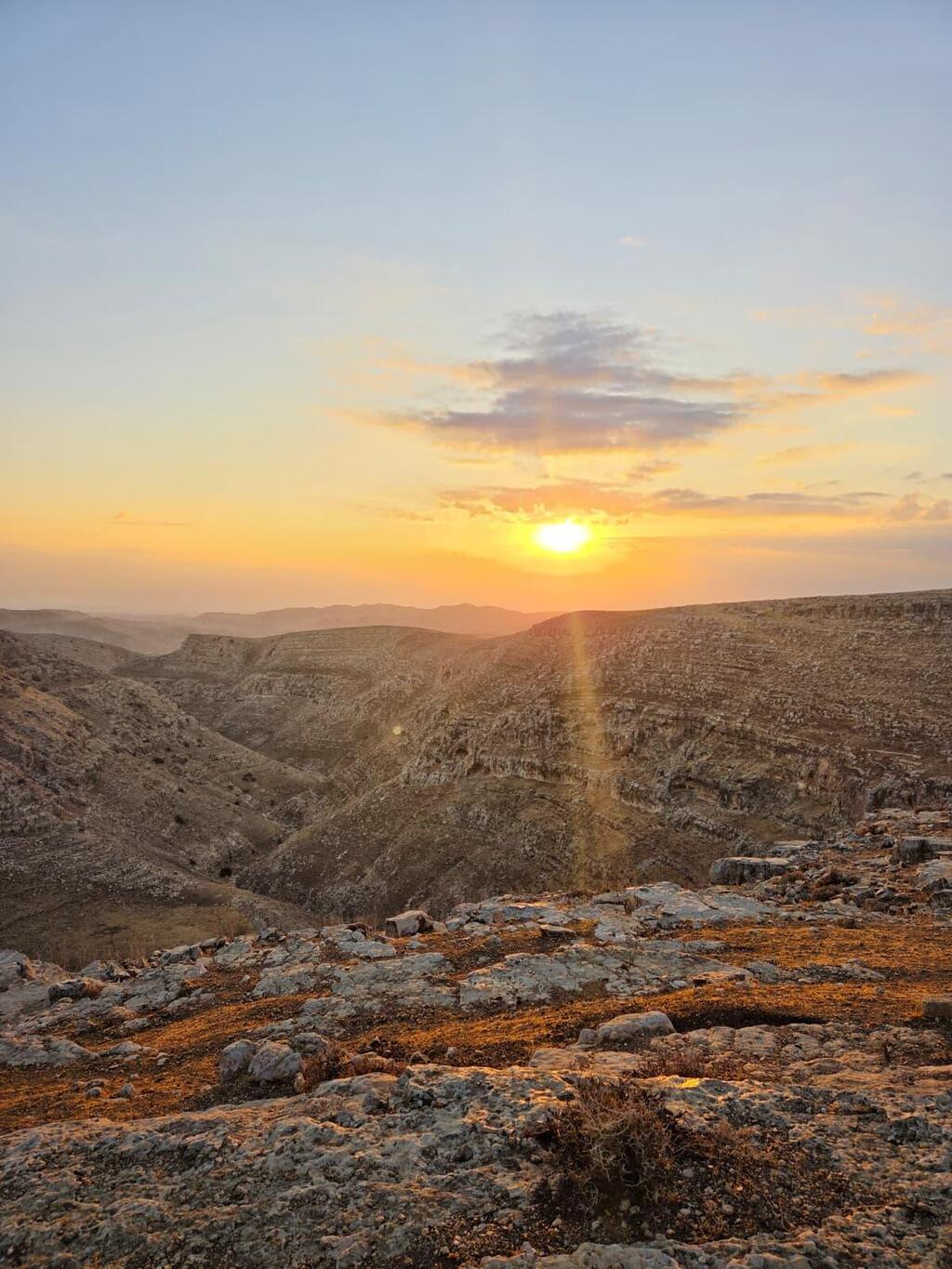
Great viewpoint
(Photo: Courtesy of Kuku trip)
(Photo: Courtesy of Kuku trip)
Beyond being a safe place to park, Mitzpe Dani offers an especially impressive lookout. “You get full 360 degrees there,” Koby said enthusiastically. “Looking west past Maale Michmash, on a good day you can see the entire Israeli coastline and maybe even Modi’in. But the main view is eastward toward the desert, the Jordan Valley and Jericho.”
When it comes to the route, caution is key: avoid using Waze, which may route you through Palestinian towns, unless you are arriving from Jerusalem, where the directions are reliable and safe. “The recommended access to the new pool is via Route 1, from Jerusalem toward the Dead Sea,” the experienced hiker stressed. “Turn left onto the Alon Road (Route 458), which skirts the popular Nahal Prat nature reserve. It’s the safest and most convenient road. You can also come from the north via Anatot and additional Palestinian communities — but I don’t recommend it.”
Once you reach the lookout, things are straightforward. “You arrive at the community’s yellow gate,” Koby said. “You wait at the gate, they see you on camera and open it. You drive a short way to the top; it’s impossible to miss. It’s a very clear lookout point.”
The overlook has simple but pleasant infrastructure. “There’s shade, benches and even a makeshift swing made from a tire,” he said. “IDF soldiers provide security for the community, and no one feels uneasy.”
The pool itself sits about three kilometers below the lookout on the desert slope. “From Mitzpe Dani you look down toward the desert and see one wide, obvious trail,” he said. “That’s where the walking section begins. You go down two kilometers, then turn right and head down toward the streambed. As you get closer, you can see the benches and trees from afar, and the view of the beautiful pool opens up as soon as you reach its edge. It feels like a mirage — water in the heart of the desert in the middle of nowhere. You return the same way.”
Warning: At the restored pool, dedicated to the memory of Yehuda Peretz, there are no lifeguards. Swimming is at your own risk. For security reasons, it is best to reach the site from Route 1 toward the Dead Sea and not rely on navigation apps that may direct you through Palestinian towns.