

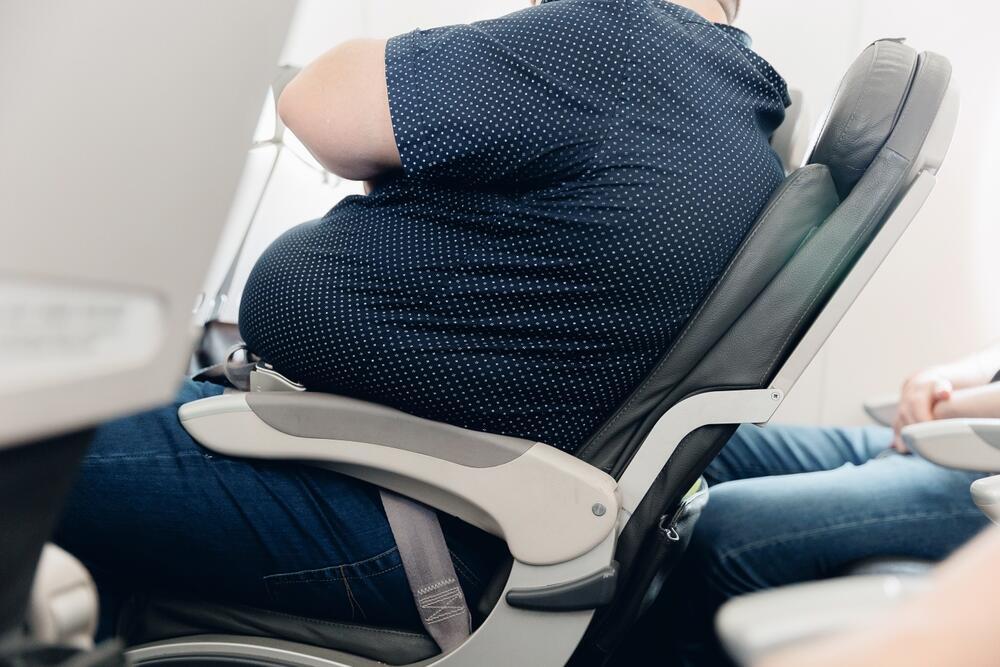
A photo of a large-bodied passenger on a plane, struggling to fit into his seat and visibly spilling into the aisle and the adjacent seat, has resurfaced in recent weeks and sparked one of the most charged debates in the aviation world.
The image was originally posted about 18 months ago by American consumer advocate and journalist Christopher Elliott, founder of a consumer protection nonprofit, after a flight from Helsinki to Copenhagen. Elliott, who was seated several rows away from the passenger, said he did not intend to shame him or encourage attacks against him.
"I felt sorry for him and the guy next to him in the middle seat, both of whom must have felt very uncomfortable for the short flight. Maybe it's time for airlines to address situations like this in a thoughtful and sensitive way," he wrote in the original post. Elliott urged airlines to stop ignoring the changing reality of human bodies and find a more considerate, sensitive and professional way to handle such cases, rather than leaving passengers to deal with the embarrassment on their own.
The photo later gained global attention after it was shared on the Facebook page of Miami hip-hop group Pretty Ricky. In their post, the group, known for the 2000s hit “Grind with Me,” directly called on airlines to find systemic solutions. They wrote that it was time for airlines to prepare an appropriate response for "plus-sized passengers", saying the current situation is difficult also for the people sitting next to them. The group called for a “middle ground” that would allow everyone to fly respectfully.
Should passengers be weighed like luggage? Online uproar
Despite Elliott’s measured intentions, the photo quickly became the focus of widespread public anger. Thousands of users filled social media with harsh comments reflecting deep frustration over cramped airplane cabins and the effect on other passengers’ comfort.
The main argument raised again and again was economic and consumer-based: Many users argued that if a passenger takes up the space of two seats, he should pay for two seats as part of his personal responsibility. Another user went further, suggesting airlines weigh passengers before boarding, as they do luggage, and bar anyone who exceeds the permitted weight from flying unless they bought an additional ticket in advance.
The debate quickly moved beyond questions of cost, becoming personal and offensive. Some users proposed creating special “oversize” sections with wider seats for an extra fee, while others shared unpleasant experiences from flights in which they were forced to squeeze in next to passengers using seat belt extenders.
Some comments veered into criticism of eating habits and lifestyle, with users arguing society should teach better dietary habits to prevent such situations in the first place. The discussion showed how explosive the issue is, and how quickly debate can shift from airline policy, safety and consumer comfort to blatant shaming of large-bodied people. Even practical questions about whether a passenger could use narrow airplane lavatories became part of the bitter public argument.
The fine print of personal space: What happens in Europe?
Behind the online uproar lies a complicated aviation reality in which rules are inconsistent and vary significantly from one airline to another. In practice, many airlines offer solutions, but they usually place full responsibility on the passenger.
At Finnair, for example, official policy states that a passenger who needs extra space may purchase an adjacent seat for an additional fee. But the process is not simple and cannot be completed automatically on the website. The passenger must contact customer service to arrange it. The charge is based on the seat fare minus taxes, but with the full fuel surcharge added. In addition, while the airline provides seat belt extenders, it bars their use in emergency exit rows for safety reasons, further limiting seating options for passengers who need more space.
Other airlines in Scandinavia and Europe offer similar solutions that require planning. Norwegian recommends passengers who need an extra seat book it at least 48 hours before departure through its service center. SAS allows passengers to buy up to two additional seats for personal space. Still, there is a significant consumer catch: The airline says that in operational situations, seating passengers takes priority over keeping an empty seat purchased for extra space.
That means that in cases of flight disruption, delay, aircraft swap or another unexpected operational need, the extra seat may be canceled at the last minute. The passenger would be entitled to a refund, but could find themselves facing the same problem in real time, raising serious questions about how effective the solution really is.
What happens in America, and what is the policy in Israel?
In the United States, the debate has already moved beyond social media and into official policy. Southwest Airlines, long considered one of the more flexible and friendly airlines toward large-bodied passengers, updated its procedures effective January 27, 2026. Under the new rules, any passenger who cannot sit within the boundaries of a single seat with both armrests lowered must buy an additional seat in advance.
While refunds for the second seat were once nearly guaranteed, the policy is now stricter. A refund depends on the flight not being full and on both tickets being purchased in the same fare class. The passenger must also submit a formal refund request within 90 days, making the process more cumbersome and demanding.
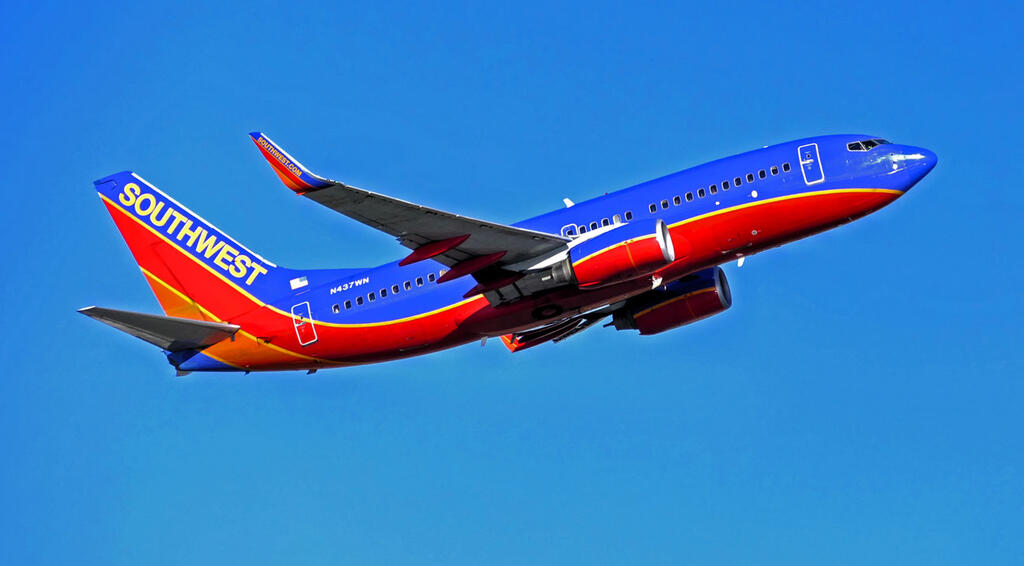
Southwest Airlines recently changed its policy
(Photo: shutterstock)
By contrast with the stricter financial approach taken by most airlines, Canada offers a completely different model that treats the issue as one of accessibility and human rights. On domestic Canadian flights, a principle known as “One Person, One Fare” has been adopted, under which passengers with disabilities who need an additional seat for functional reasons should not pay double fare for the flight.
The arrangement also applies in cases where obesity creates a functional limitation requiring additional space for safe and dignified seating on board. It is an unusual model in which the regulator places responsibility on airlines to provide the extra seat at no additional cost to the passenger, to ensure equality and accessibility, rather than placing the cost on the passenger.
The confusion and lack of uniformity are not accidental. A comprehensive 2026 study that examined the policies of 50 airlines worldwide found that while 86% of airlines publish some information about seating large-bodied passengers, the industry has no common language or clear standard. Some airlines use terms such as “personal comfort,” others refer to “extra space,” and policies on seat belt extenders, additional seats and seating location vary significantly from one airline to another.
Ultimately, the viral photo that sparked online outrage exposed a deeper structural problem: In an era when every inch on a plane is translated into an economic calculation, the human body does not come in one standard size. Until a clear international standard is set, passengers and airlines will continue fighting over the boundaries of a seat, with every flight potentially becoming a painful test of patience, cost and social sensitivity.
And what about Israel?
A review of Israeli airline websites shows only a partial picture. El Al has a general clause stating that the company is not obligated to provide more than one seat per passenger on a single ticket, and that a passenger who requires more than one seat may be charged for two seats.
Israir and Arkia publish general seating procedures and options for purchasing preferred seats, but their public policies do not appear to include a clear, explicit reference to large-bodied passengers or passengers who need an adjacent extra seat. In other words, in Israel too, the issue still appears to be handled more through service centers, availability and case-by-case operations than through a transparent public standard.