

Prehistoric hunter-gatherer communities that lived in the southern Caucasus between about 57,000 and 27,000 years ago may have survived dramatic climatic and environmental changes not only through adaptation to their surroundings but also by maintaining extensive social networks, according to a new study.
The research, led by Dr. Ariel Malinsky-Buller of the Hebrew University of Jerusalem and published in the journal Quaternary Science Reviews, argues that long-distance mobility, knowledge sharing and social connections played a critical role in the resilience of small, dispersed populations across what is now Armenia, Georgia and neighboring regions.
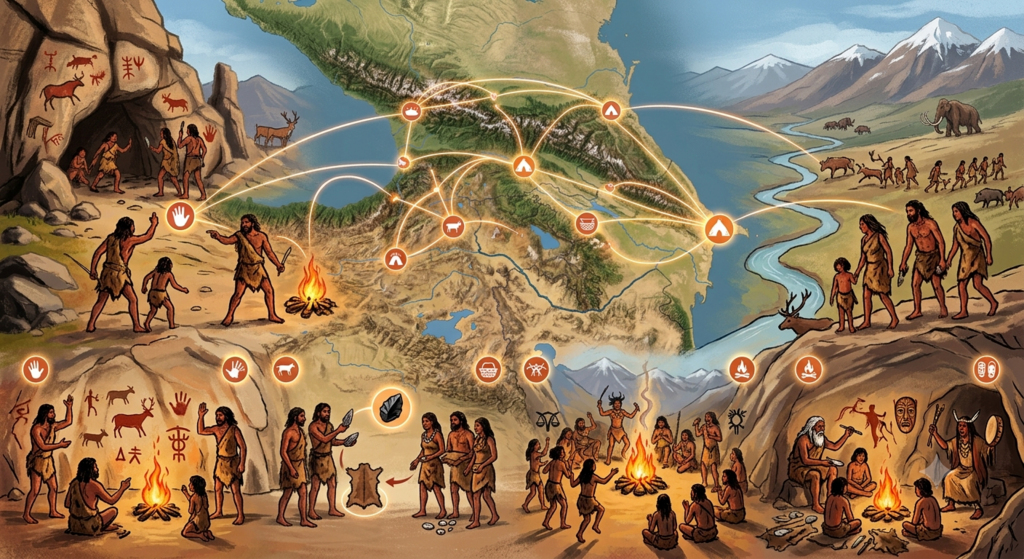
The findings challenge the long-standing view that environmental adaptation alone explains how hunter-gatherer groups endured repeated ecological and climatic shifts during the late Middle and early Upper Paleolithic periods, the researchers said. Instead, they propose that mobility, population size, environmental conditions and social networks should be considered together when reconstructing how ancient communities responded to periods of uncertainty and change.
The study combined archaeological, geological and paleoenvironmental evidence to reconstruct patterns of movement and interaction across the region.
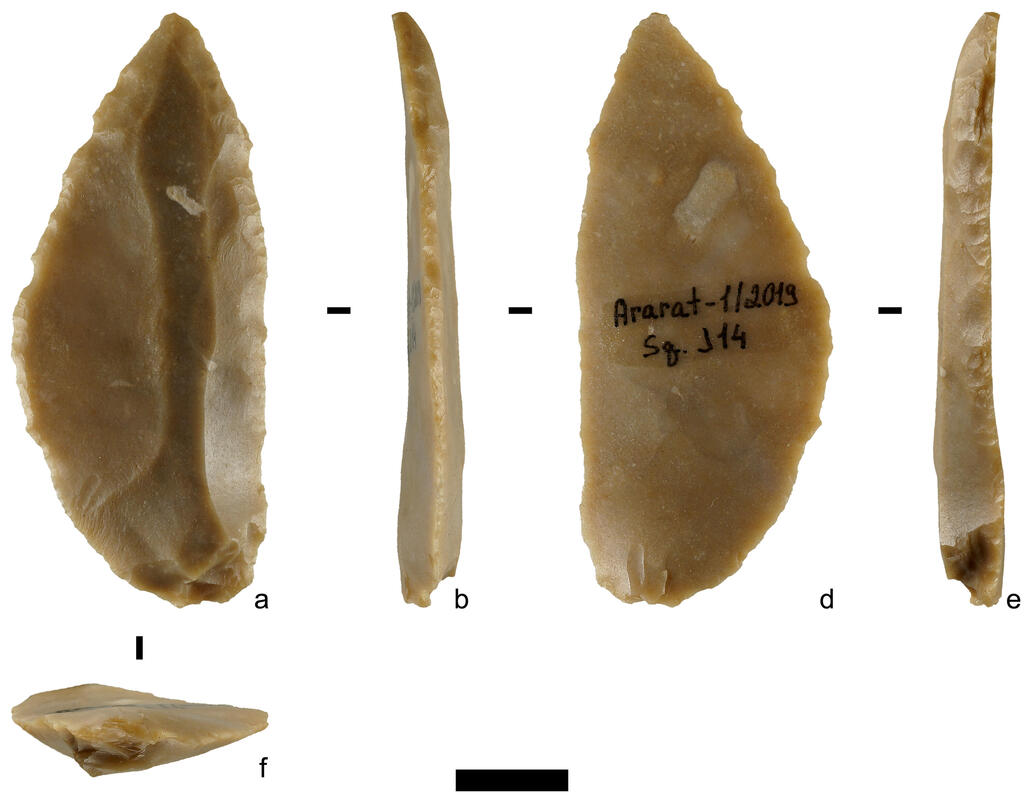
The carefully shaped working edge reflects sophisticated stone-tool production techniques used by prehistoric hunter-gatherers in the southern Caucasus. Artifacts such as this help researchers trace technological traditions and connections between communities across the region
(Photo: Boris Gasparyan)
Although populations were relatively small and sparsely distributed, the researchers found evidence suggesting they were far from isolated. Stone tools and obsidian — a naturally occurring volcanic glass used to make tools — indicate that people routinely traveled between 40 and 200 kilometers (25 to 124 miles), maintaining contacts across broad territories.
Similar stone-tool technologies found throughout the southern Caucasus and the Armenian Highlands also suggest prehistoric communities exchanged knowledge and preserved shared technological traditions over long distances.

Similar stone-tool technologies found across the region suggest that prehistoric hunter-gatherers maintained extensive networks of knowledge exchange despite living in small, dispersed populations
(Photo: Dr. Ariel Malinsky-Buller)
The research also offers a new interpretation of the transition from the Middle Paleolithic to the Upper Paleolithic, one of the most significant periods in human prehistory. Rather than a rapid replacement of one population or culture by another, the evidence points to a more gradual process in which different cultural traditions coexisted and interacted for thousands of years, according to the study.
"Our findings suggest that mobility alone does not tell the full story of prehistoric survival," Malinsky-Buller, who heads the Human-Environment Dynamics Laboratory at the Hebrew University, said in a statement.
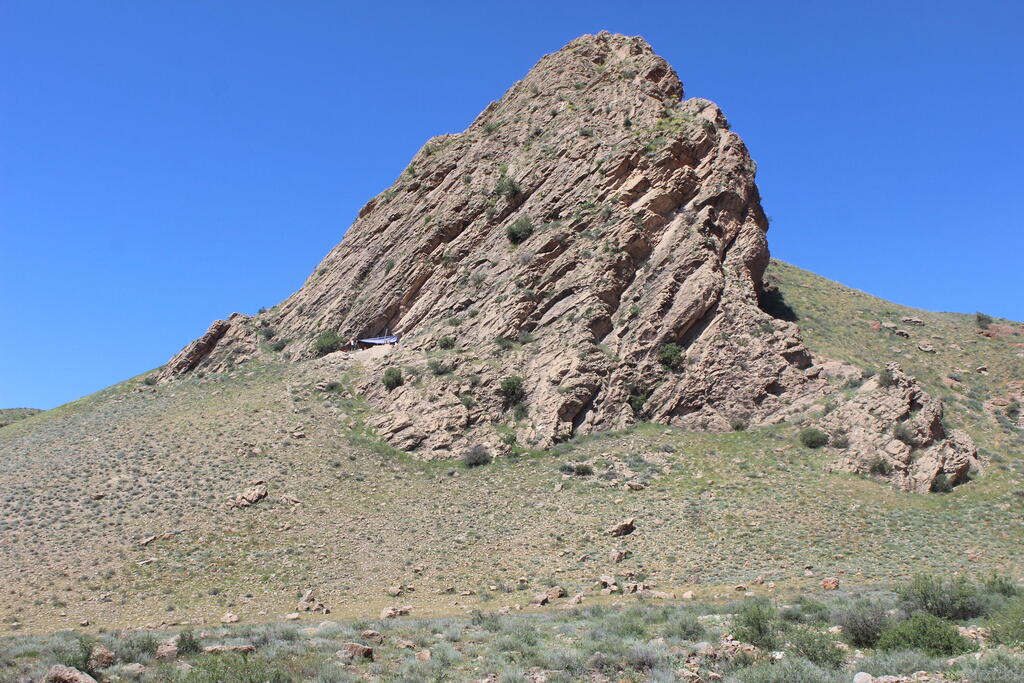
Excavations at the site have uncovered evidence of long-distance mobility and shared technological traditions, helping researchers trace the social networks that connected prehistoric hunter-gatherer communities across the southern Caucasus
(Photo: Dr. Ariel Malinsky-Buller)
"Even in regions with small and dispersed populations, people remained connected through networks of knowledge, technology and social interaction. These connections may have been just as important as environmental adaptation in helping communities endure periods of profound change," he said.
The study was conducted by an international team of researchers from the Hebrew University, the National Academy of Sciences of Armenia, Yerevan State University, the University of Castilla-La Mancha, the University of Algarve, the American School of Classical Studies at Athens, the University of Seville, the University of California, Berkeley, Yale University, the University of Liverpool, the Technical University Bergakademie Freiberg and Royal Holloway, University of London.