

Morning mist slowly lifts over Ethiopia's highlands. The air is thin, the ground blanketed in alpine vegetation, and endless mountain ridges stretch toward the horizon, seemingly untouched by the modern world. It is hard to believe a place like this still exists—wild, remote and largely overlooked by nature enthusiasts around the globe.
Amit Eshel Documents Ethiopian Wolves
(Amit Eshel)


A year ago, award-winning Israeli nature photographer Amit Eshel set out on his first expedition to Ethiopia's highlands with a clear objective: to photograph the Ethiopian wolf, Africa's rarest carnivore.
"I never imagined that during that journey I would discover a place that would make me fall completely in love with it," Eshel says. Since that first visit, he has returned to the East African nation time and again, drawn by what he describes as an unparalleled wilderness.
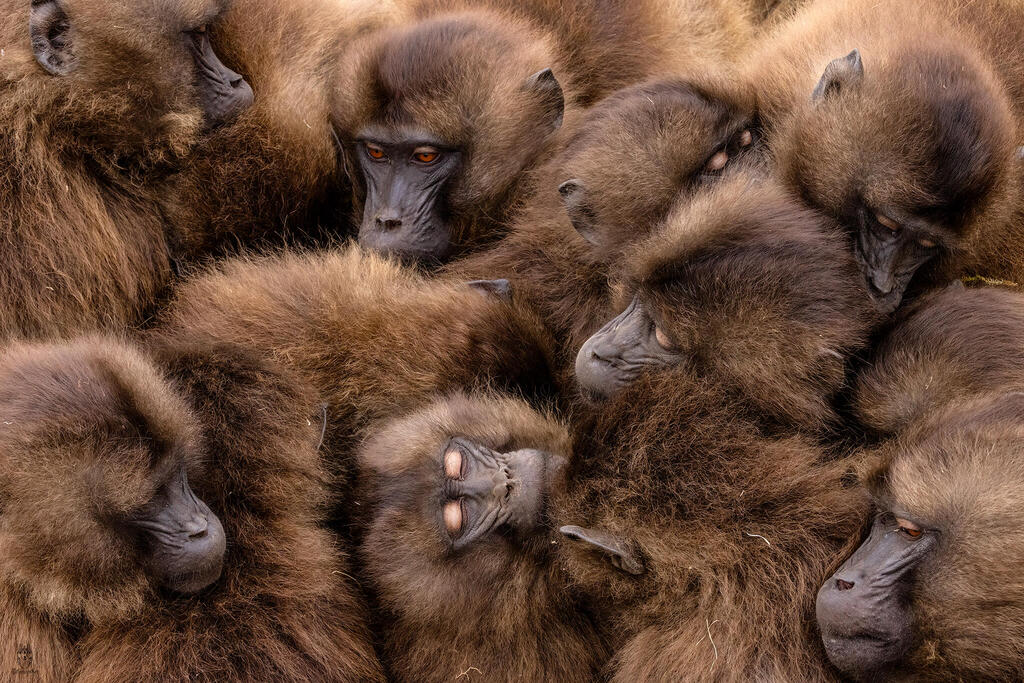
Social interaction among Gelada Monkeys in Ethiopia
(Photo: Amit Eshesl)
"The breathtaking landscapes, the wildlife found nowhere else on Earth, and the feeling of experiencing nature that has remained truly wild and authentic have made Ethiopia one of the greatest natural treasures I've ever encountered," he says.
Eshel's work has earned international recognition, including honors in some of the world's most prestigious wildlife photography competitions, often described as the "Oscars" of nature photography.
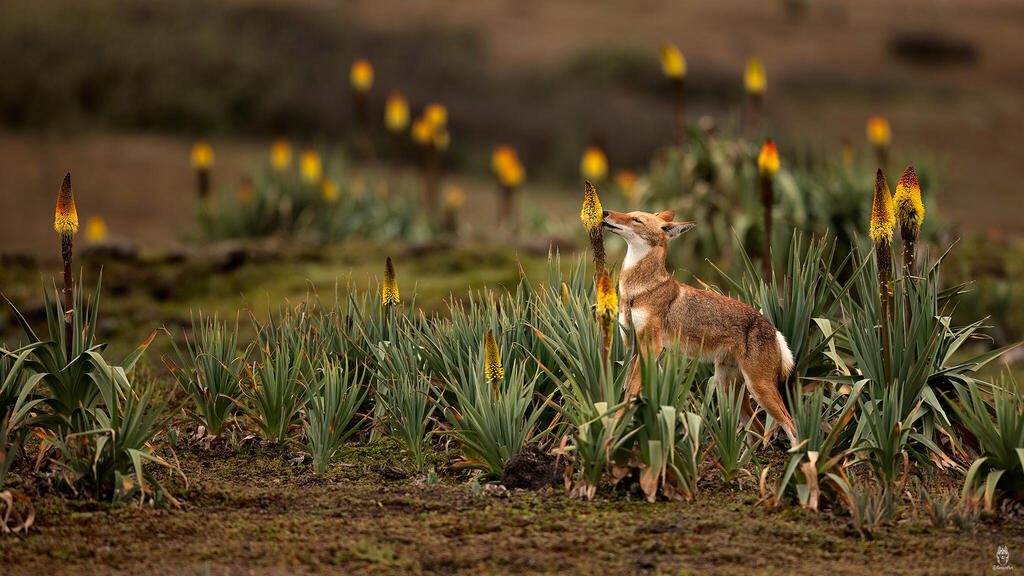
Ethiopian wolf licking nectar from a Red Hot Poker flower
(Photo: Amit Eshel)
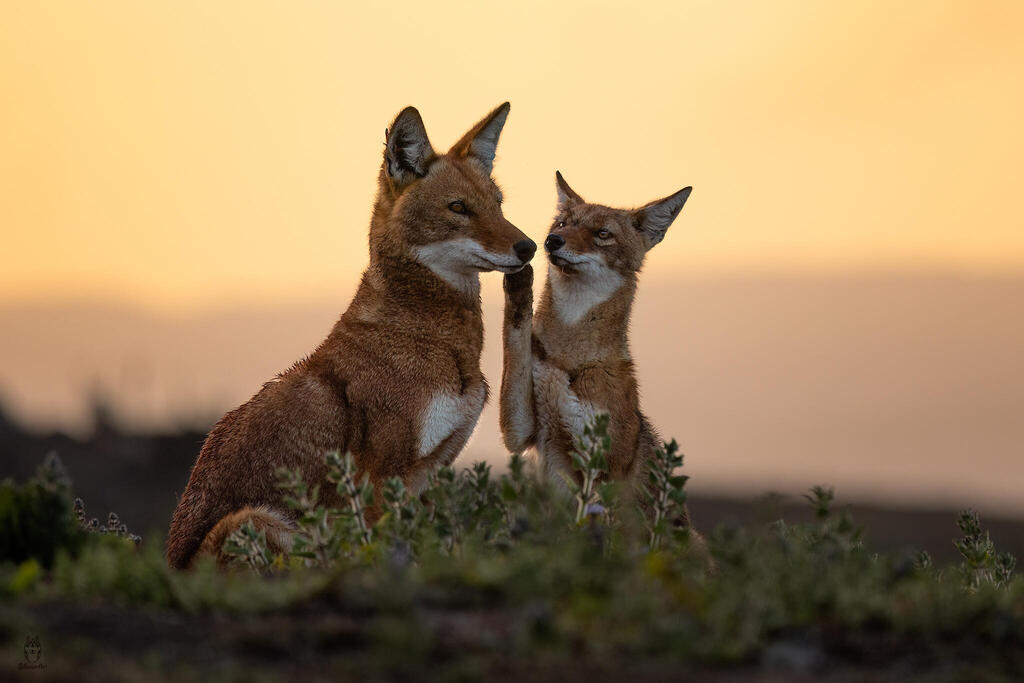
Pair of Ethiopian wolves in the Ethiopian highlands
(Photo: Amit Eshel)
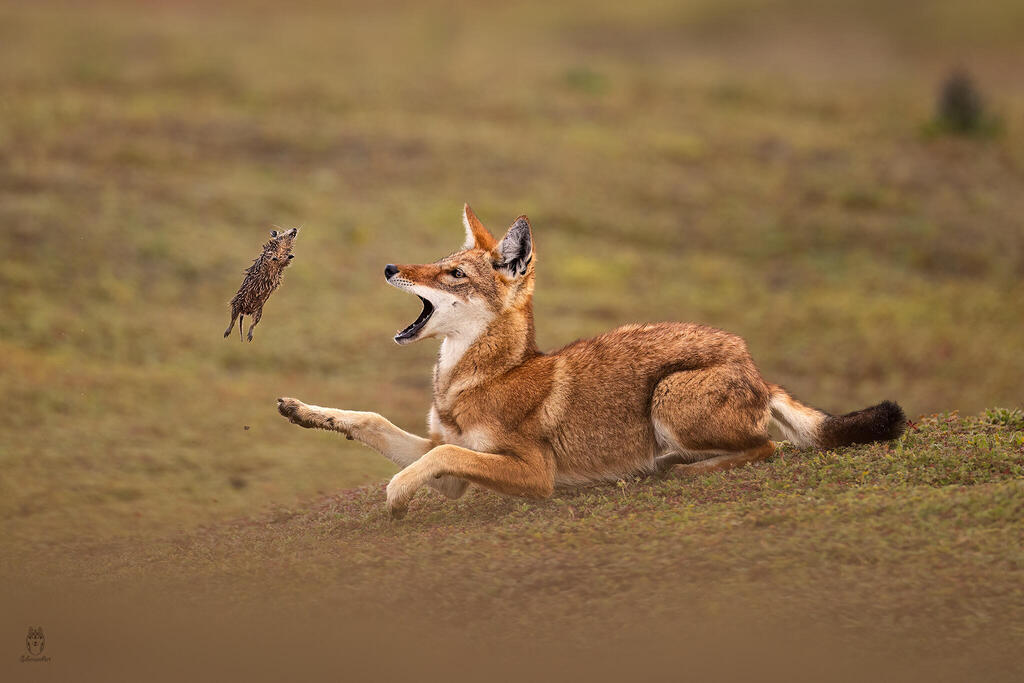
The story begins with Ethiopia's iconic endemic wolf. Fewer than 500 Ethiopian wolves (Canis simensis) remain in the wild today, all of them found exclusively in Ethiopia. Despite its name, the animal differs markedly from the image many associate with wolves. It is slender and elegant, with long legs, a narrow body and striking reddish fur. Living at extreme elevations, it feeds primarily on small rodents.
"I came to Ethiopia hoping to document an extraordinary behavior that had only recently been discovered—a phenomenon that almost no one would have believed had it not been scientifically documented," Eshel says.
"It turns out Ethiopian wolves regularly lick nectar from striking torch lily flowers (Kniphofia), whose brilliant red, orange and yellow blooms resemble flames rising from the ground. As the wolves feed, pollen sticks to the fur around their faces and is transferred from flower to flower."
The result is almost unimaginable: the Ethiopian wolf acts as a pollinator, much like bees or butterflies. It is the first large carnivore ever documented pollinating flowers.
"Fortunately, together with my colleagues, I was able to witness this remarkable behavior both last year and again this year," Eshel says.
"Watching a rare predator wander among colorful flowers while drinking nectar felt almost surreal. We were fortunate to document those moments, and the photographs I captured there have received significant international recognition this year."
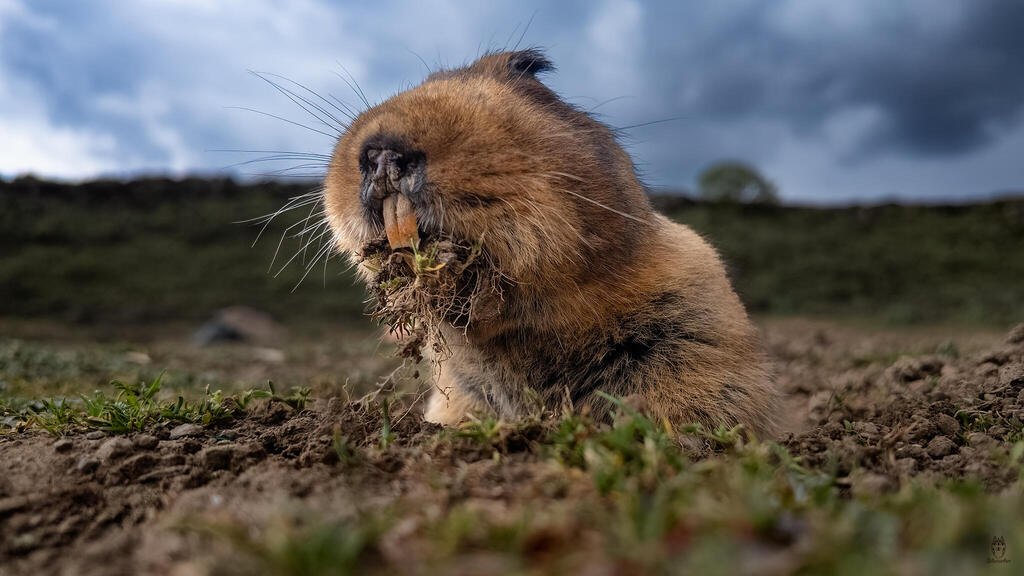
A Giant Ethiopian Mole-Rat emerges from the ground
(Photo: Amit Eshel)
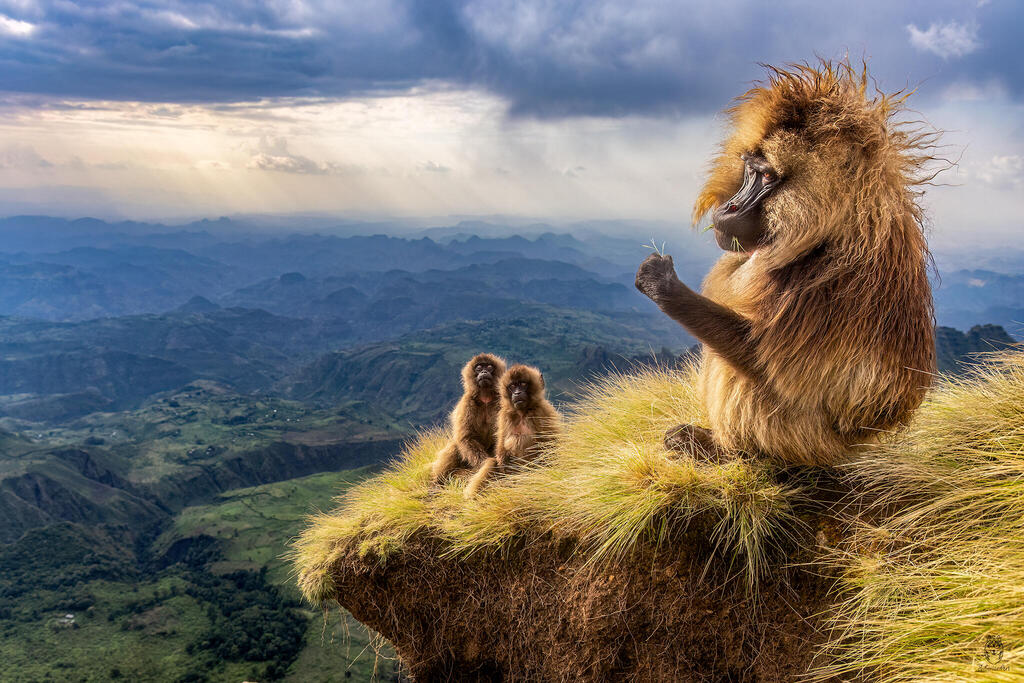
Gelada Monkeys in Ethiopia
(Photo: Amit Eshel)
Most Ethiopian wolves inhabit the Bale Mountains, one of Ethiopia's most spectacular regions. Visitors can observe nearly every aspect of their lives—from precision hunting of rodents to playful pups, parents feeding their young and the intricate social interactions that bind wolf packs together.
But the Bale Mountains are home to far more than wolves.
Among their most unusual residents is the giant mole-rat (Tachyoryctes macrocephalus), a large endemic rodent that spends nearly its entire life underground. It digs extensive tunnel systems and feeds on roots and vegetation. Beyond its unusual appearance, it plays a vital ecological role as one of the Ethiopian wolf's primary prey species, making it essential to the predator's survival.
"We also encountered the mountain nyala (Tragelaphus buxtoni), one of Africa's rarest and most impressive antelopes, found only in Ethiopia's highlands," Eshel says. "Seeing it emerge from the mist among the green slopes was one of those moments that a camera can never fully capture."
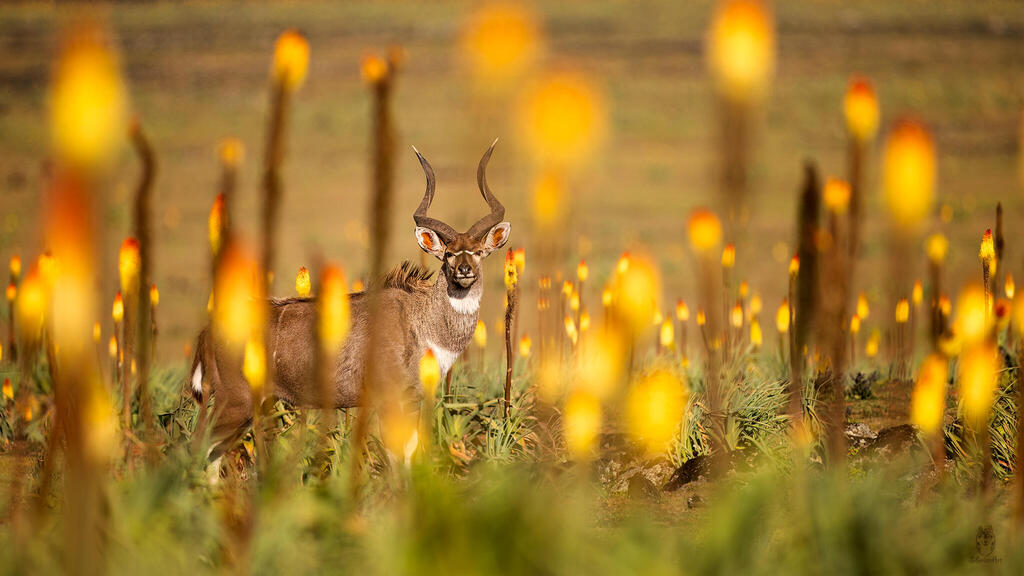
Mountain Nyala amid a sea of red Hot Poker Flowers
(Photo: Amit Eshel)
Amit Eshel's Close Encounter with Gelada Monkeys in Ethiopia
(Amit Eshel)
The journey then continued north to the Simien Mountains, one of Ethiopia's most dramatic landscapes, where towering cliffs and deep valleys create the feeling of stepping into another era. There, Eshel and his companions encountered gelada monkeys (Theropithecus gelada), among Africa's most remarkable primates.
"Geladas live in incredibly complex societies built on strong social bonds," Eshel says. "You can spend hours watching them groom one another, play, strengthen relationships and engage in subtle social interactions. At times, I felt like I was observing a small human society with its own unique dynamics."
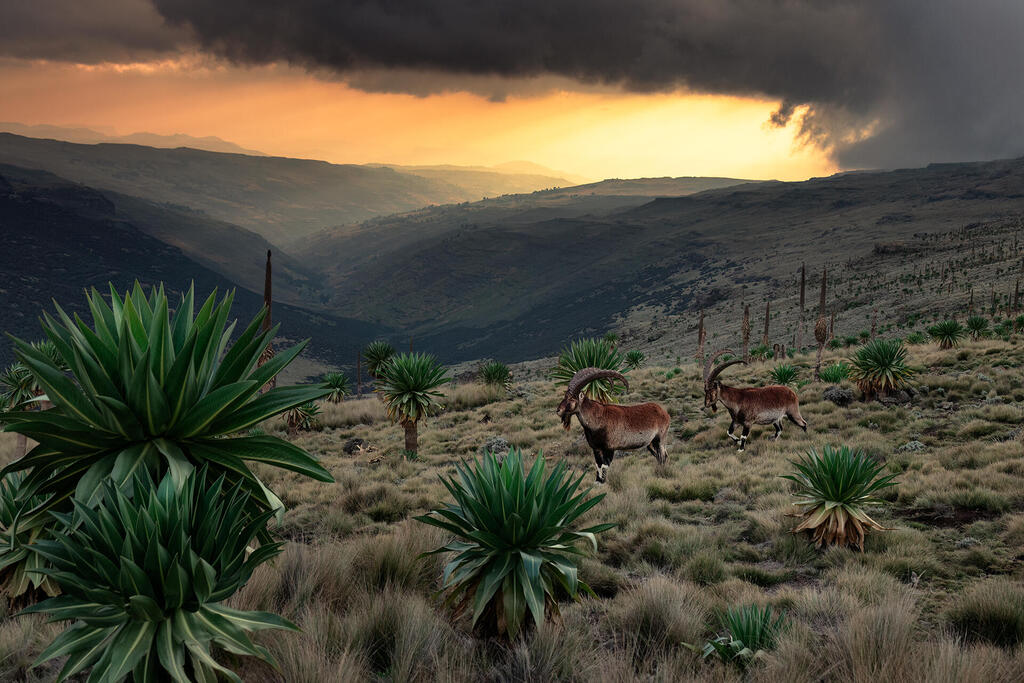
Pair of Ethiopian Ibex
(Photo: Amit Eshel)
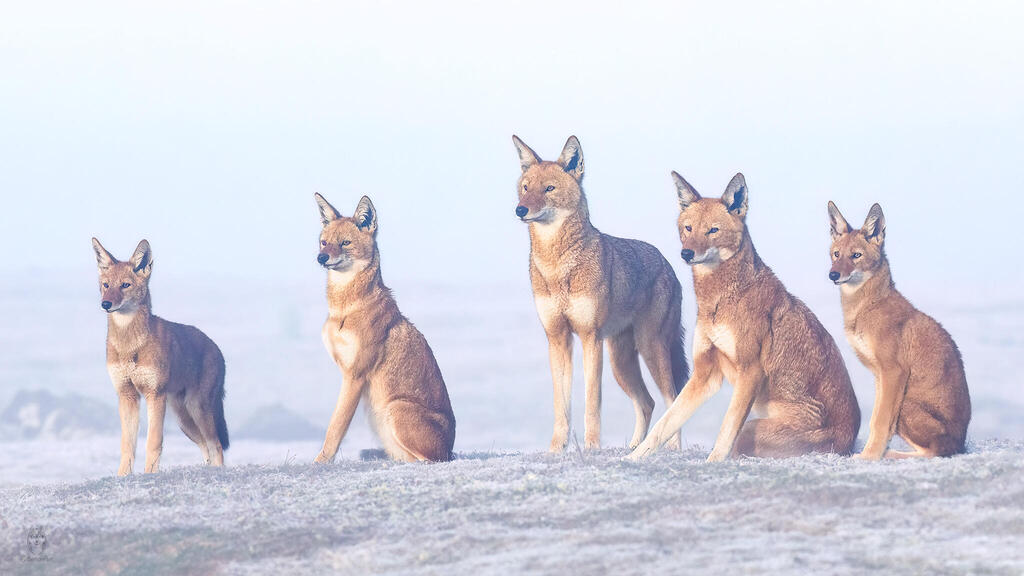
Pack of Ethiopian Wolves
(Photo: Amit Eshesl)
From the Simien Mountains, the expedition climbed even higher in search of the Walia ibex (Capra walie), a critically endangered species found nowhere else in the world. With its massive curved horns and astonishing ability to scale sheer cliffs, it is widely considered one of Africa's most extraordinary mountain animals.
"When I think about Ethiopia today, I don't think only about its wildlife or its landscapes," Eshel says. "I think about a place that still has the power to surprise. A place where you can discover natural phenomena that were unknown until recently and experience nature with an intensity that's becoming increasingly rare. For me, it has become much more than another photography destination. It's a place I simply can't stop returning to—and I already look forward to bringing others there so they can experience one of the world's most extraordinary and underappreciated natural treasures for themselves."
First published: 09:13, 07.11.26