

Friends and comrades of Ghazal Molan, a 19-year-old Peshmerga from Mahabad opposed to the Islamic Republic, laid her to rest on Thursday afternoon in Sulaymaniyah, in the Kurdistan Region, amid deep sorrow, as Islamic Revolutionary Guard Corps (IRGC) drone and missile strikes continued across the area.
Ghazal was critically wounded on Tuesday evening in a drone strike by the Islamic Republic targeting a residential compound housing families of members of the Komala Zahmtkeshan Party of Iranian Kurdistan in Surdash.
Gallery
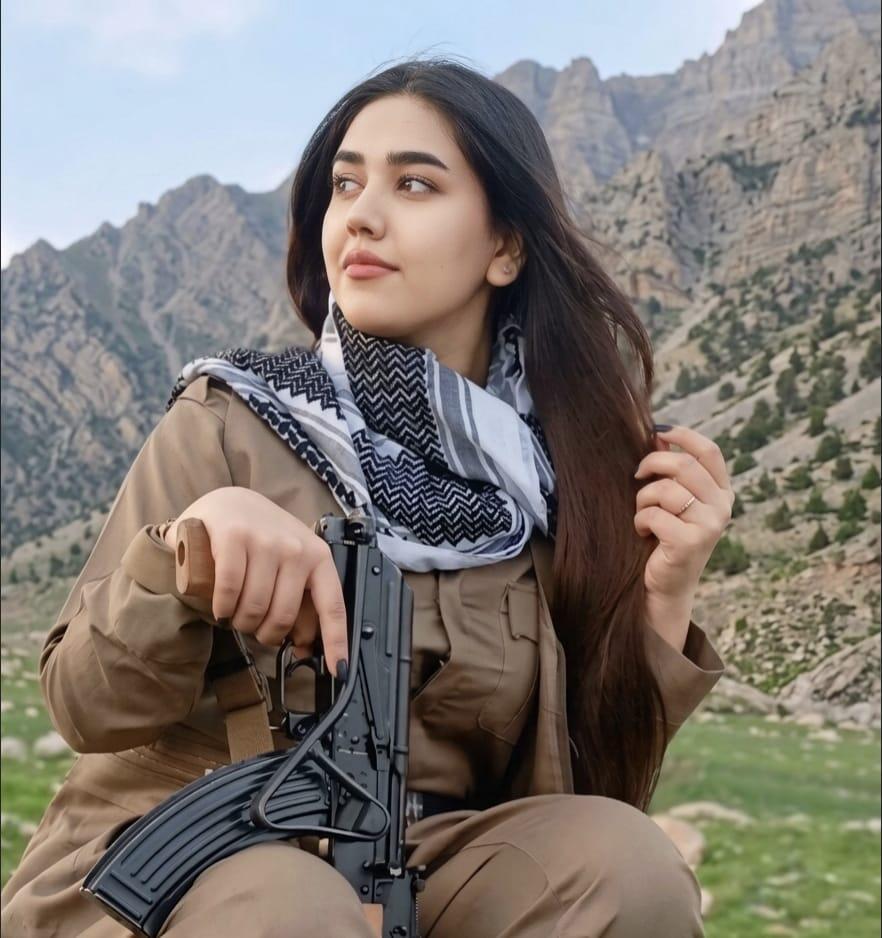
Ghazal Molan, the youngest female Peshmerga opposed to the Islamic Republic, had joined Kurdish armed opposition forces across the border at the age of 18 and died on Tuesday evening
(Photo: Instagram/Ghazal Molan)
Her fellow fighters initially transferred her to a nearby facility, Shorsh Hospital, but due to a lack of adequate medical resources, they were forced to move her to Bakhshin Hospital. There, however, hospital officials, fearing repercussions for treating a Kurdish Peshmerga opposed to the Islamic Republic, refused to admit her.
Shakila Mahdipanah, a civil activist and member of Komala Zahmatkeshan in Surdash who accompanied Ghazal, told The Media Line that despite her deteriorating condition and severe bleeding, staff at Bakhshin Hospital resisted repeated pleas to admit her for 45 minutes. “We had no choice but to take her elsewhere,” she said. “We finally brought her to Faruk Medical Center, but it was too late. Doctors said there was no way to save her.” Ghazal died at the age of 19.
The tragedy did not end there. Staff at the morgue also reportedly refused to accept her bloodied body because she was a leftist Peshmerga. Her companions were forced to prepare her body themselves in a library in Sulaymaniyah, where her husband bid farewell.
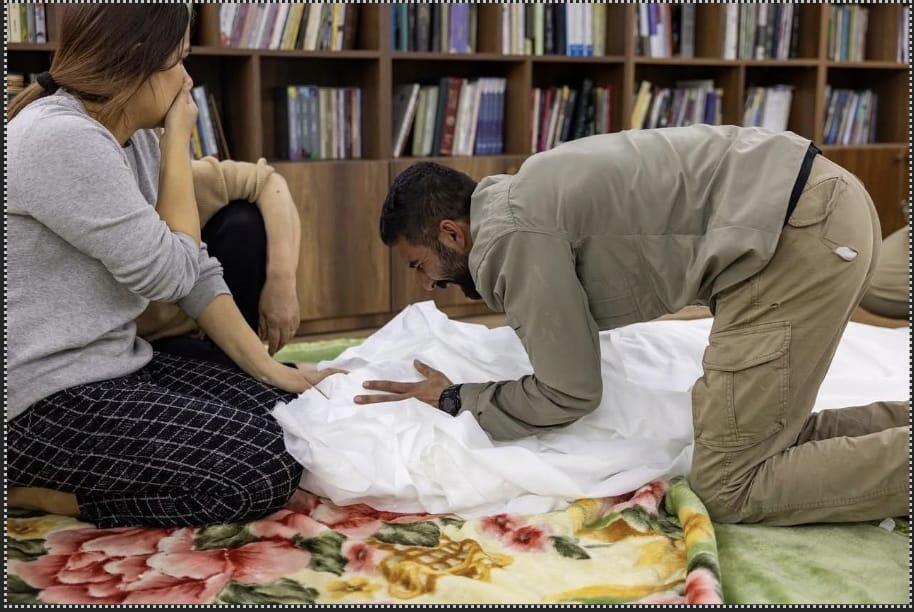
Ghazal’s husband and fellow fighters were forced to prepare her body for burial in a library in Sulaymaniyah after the morgue refused to accept her remains, where her husband bid farewell to her
(Photo: Courtesy)
Even in death, the ordeal continued. On Thursday morning, as her family and comrades prepared to bury her, the IRGC launched a missile strike on the Peshmerga cemetery as an attempt to target additional opposition members, many of them civilians. As a result, Ghazal was ultimately buried in Sulaymaniyah cemetery in a limited ceremony.
This tragedy, which has deeply shaken many across the region, reflects what Kurdish human rights activist Rada Fatehi describes as the Islamic Republic’s broader treatment of Kurdish opponents. Fatehi, whose brother Ramin was arrested during the “Woman, Life, Freedom” protests in Sanandaj and later died under torture, told The Media Line that Ghazal’s decision to take up arms was a powerful act of courage.
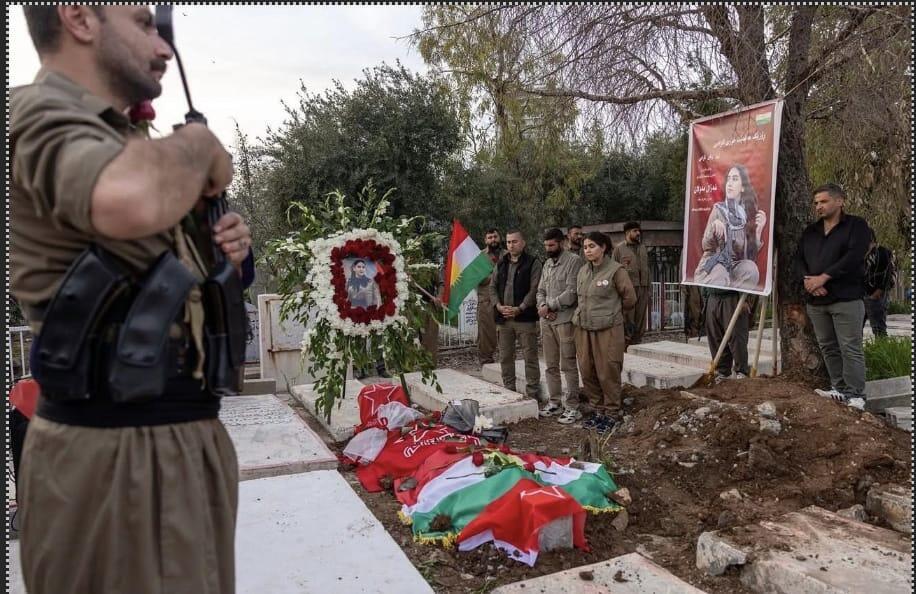
The IRGC struck the Peshmerga cemetery on Thursday morning, forcing her comrades to bury Ghazal later that day in Sulaymaniyah in a brief ceremony
(Photo: Courtesy)
“A young woman who chooses to fight her enemy and leave her country represents extraordinary bravery,” she said. “While her peers elsewhere live in comfort, she sacrificed her life for this struggle.”
Ghazal Molan had left Iran at the age of 18 and joined the Peshmerga forces of Komala Zahmtkeshan, one of the Kurdish opposition groups that has recently united with other major parties against the Islamic Republic.
Fatehi added that while mass protests may not currently be visible on the streets of Iran’s Kurdistan, “people in Kurdistan and across Iran will ultimately confront the Islamic Republic over its crimes, including attacks on Kurdish parties.” She emphasized that IRGC strikes have targeted civilian residential areas in the Kurdistan Region, describing these actions as war crimes.
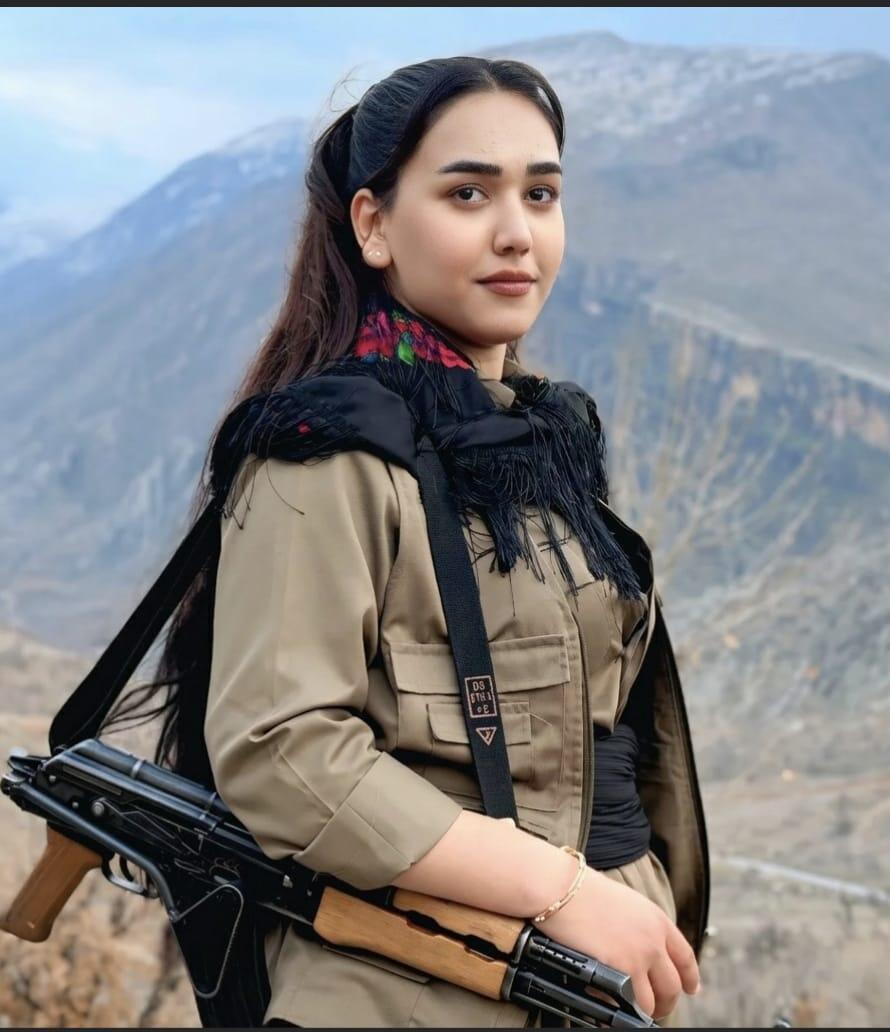
The tragedy of Ghazal’s death has shocked many in Kurdistan and Iran. One of her comrades told The Media Line that both the Islamic Republic and its Islamist affiliates were responsible for her death
(Photo: Instagram/Ghazal Molan)
She also noted that during the 2022 Woman, Life, Freedom uprising, the Islamic Republic similarly targeted Kurdish party bases with missile strikes, recognizing the deep-rooted ties between Kurdish society and political movements. “Neither the people of Kurdistan nor Iranians at home and abroad will remain silent,” she said.
Moslem, one of Ghazal’s comrades, told The Media Line that she had been highly active in the Woman, Life, Freedom protests and was forced to flee Iran after coming under surveillance.
“When she was wounded, the hospital refused to treat her. Even one hospital rejected her because she was a leftist Peshmerga,” he said. “We had to transport her over a long distance. Ghazal, who was kind and beloved, became a victim of the Islamic regime and its allies.”
Since the start of the war, the Islamic Republic has carried out nearly 650 drone and missile strikes against Kurdish opposition bases and residential areas in the Kurdistan Region, with the highest concentration in Erbil and more than 100 incidents in Sulaymaniyah alone. Some of these attacks have been attributed to Iran-backed militias, including Kataib Hezbollah, which is affiliated with the Popular Mobilization Forces. Dozens have been killed and wounded in these strikes.
The Kurdistan Regional Government has condemned the attacks as violations of its sovereignty and that of Iraq, yet strikes continued as recently as Thursday night, including another attack on a Komala base.
Iraq’s new president, Nizar Amidi, has repeatedly stated that his country must not become a battleground for conflict between Iran and the United States. However, like other Iraqi officials, he is expected to maintain a policy of accommodation toward the Islamic Republic, which, through its influence over militias, effectively treats Iraq as part of its strategic sphere.
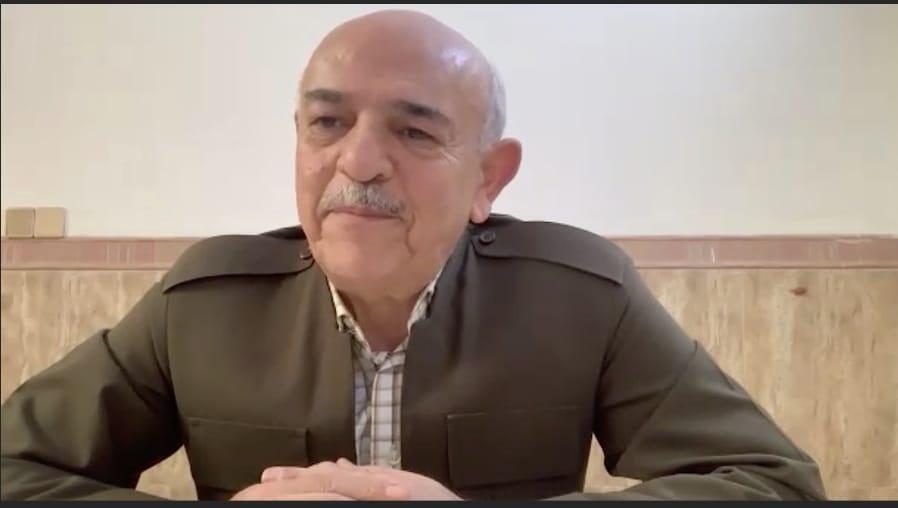
Omar Ilkhanizadeh, deputy secretary-general of Komala in the Kurdistan Region
(Photo: The Media Line)
Omar Ilkhanizadeh, deputy secretary-general of Komala, told The Media Line that the Islamic Republic has historically intensified attacks on Kurdistan whenever domestic unrest escalates.
“For 47 years, the Islamic Republic has relied on militarization, mass arrests, and executions against the Kurdish people,” he said.
According to Ilkhanizadeh, following the “Woman, Life, Freedom movement, the Islamic Republic adopted an even more hostile approach toward Kurdistan and has “used every opportunity to attack us and the Kurdish movement.” He stressed that Kurdish forces represent a key part of any alternative to the Islamic Republic, embodying principles such as pluralism, secularism, and democratic freedoms—qualities that, he said, make them a particular source of fear for the ruling regime.
He also emphasized that Kurdish society remains deeply connected to its political movements and has consistently supported calls for civil resistance, including strikes.
“Kurdistan is one of the main strongholds of resistance in the struggle ahead,” he said.
Responding to claims that there were plans to transfer weapons to Iranian protesters via Kurdish groups, as previously suggested by President Trump, Ilkhanizadeh said he was unaware of any such discussions. “To my knowledge, no such proposal has been made to any Kurdish party within the alliance,” he said. However, he added that Kurdish parties would welcome unconditional US support, arguing that the Islamic Republic is the root cause of war, destruction, and instability in the region.
He also described Israel’s actions following the October 7 terrorist attacks by Hamas and Islamic Jihad, the Islamic regime's allies, as defensive.
As the Islamic Republic intensifies its crackdown in Kurdistan—arresting dozens in recent days—analysts warn that the regime, weakened by the loss of key leaders, is increasingly concerned about the “Kurdish card” and the possibility of a renewed uprising. Such a movement, they say, could mobilize other ethnic groups across Iran—including Baloch, Arabs, Azeris, Turkmen and Lurs—many of whom inhabit the country’s border regions, potentially transforming localized uprising into a nationwide challenge to centralized authoritarian rule.