


“The time is not yet right to begin negotiations between Lebanon and Israel because Hezbollah wants to see what happens with the war in Iran,” a French diplomatic source claimed in a conversation with ynet, adding that “even within the Lebanese government, they are waiting to see how much Hezbollah is weakened. The Lebanese fear a civil war and a direct confrontation with the terrorist organization.
“On the Israeli side, there is no desire to look foolish and enter talks with Lebanon after it became clear that the Lebanese did not deliver the goods and did not dismantle Hezbollah under the November 2024 ceasefire agreement. Beyond that, the war is not yet over and it is impossible to know how badly Hezbollah will be hit, so it is better to keep pounding them.”
IDF forces operating to dismantle Hezbollah infrastructure in soutern Lebanon
(Video: IDF)


According to the source, “Hezbollah bears the primary responsibility for the current escalation, and France recognizes Israel’s right to self-defense because Israel is under Hezbollah fire. Fundamentally, the issue for Lebanon is to restore sovereign security control over its state and move away from a condition of permanent war, which has existed with Israel since 1948. That means reaching the end of the war, not just a ceasefire. It is too early to talk about a peace agreement with Israel, but it is not impossible to achieve, if Lebanon enforces a monopoly on the use of force. The Lebanese have confirmed that they are prepared to enter direct talks with Israel.
“On the Israeli side, they are making clear that Lebanon must first begin doing what it committed to do, and then they can talk. There are no major disagreements between Israel and Lebanon. There are issues relating to the border, but they are limited and solvable.”
A Western source familiar with the details says Syria has managed to foil several attempts to smuggle weapons to Hezbollah from Syrian territory, but in at least a number of known cases, it failed. According to the source, the Lebanese government neither wants nor is able to disarm Hezbollah and fears a civil war, while the United States is too preoccupied with the war in Iran to pay attention to Lebanon.
The source added: “There is heavy pressure on Israel from residents of the north who were not evacuated. This is happening in an election year, and it is influencing politicians to take a hawkish stance in a campaign in which security will be a central issue. The Americans are too busy with Iran and there is no attention to Lebanon, and it is still not clear who is in charge: U.S. Ambassador to Beirut Michel Issa, who is dominant; Tom Barrack is no longer at the forefront, but he still has a say; Dr. Massad Boulos, the Lebanese American Christian businessman and father-in-law of Donald Trump's daughter, is also involved; and there is Secretary of State Marco Rubio, who is very cautious on the Lebanon issue.
“We do not expect negotiations to begin soon. France has conveyed messages to Israel urging it to avoid striking civilian infrastructure. Israel has struck bridges over the Litani, and that creates a serious problem because it will make the return of displaced residents to southern Lebanon impossible. We do not agree with Israel over the strikes on the bridges. But Israel has not struck the seaport or the airport, or water and energy facilities. If it had done so, the state would have collapsed.”
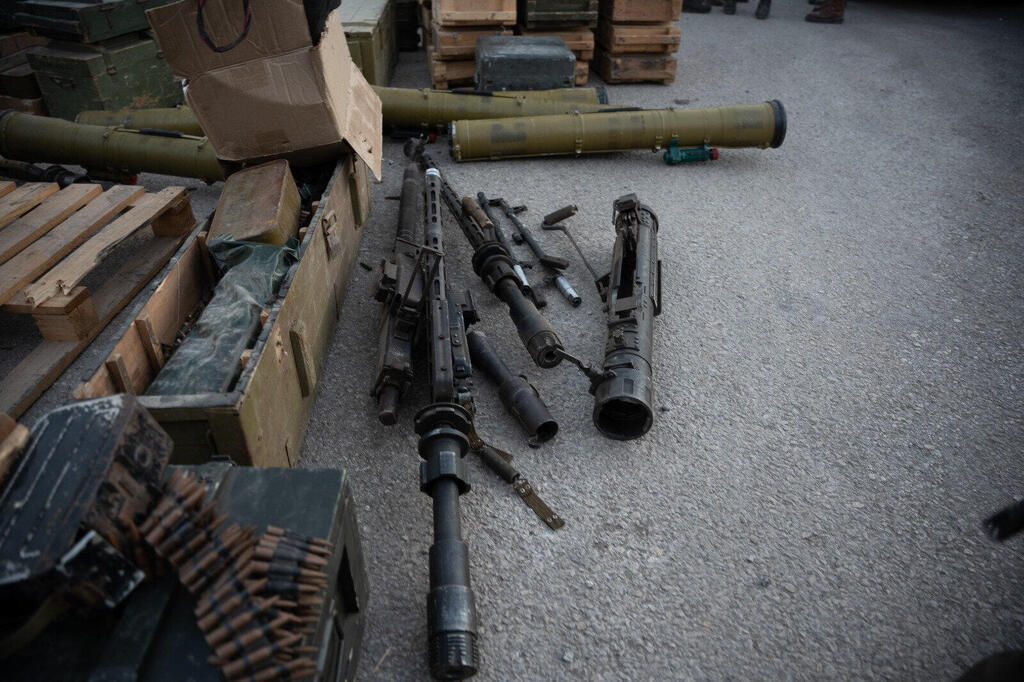
The same source added: “Syria is very important in this region. They are concerned about Hezbollah weapons smuggling, especially the weapons that worry Israel, anti-tank missiles. The Syrians have foiled smuggling attempts. There were Israeli operations in Syria carried out with [President Ahmad] al-Sharaa’s consent. The Syrians, with the agreement of the Lebanese government, do not want the flow of arms from Syria to Lebanon to resume. But in the northern Bekaa area, there are mountains, many crossings and secondary roads. This requires a coordinated struggle.
“The Syrians can cut off Hezbollah’s weapons supply and help turn Hezbollah from an Iran-led terrorist organization into a Lebanese movement, as it always was, but today it is only a proxy. The Syrians are foiling attempts, but that also means there are things they are not foiling.”
Were you surprised by Hezbollah’s condition at the start of this confrontation, given that Israel said it was weakened and deterred?
“I was impressed by what they are doing. I did not expect it. They managed to move weapons back from northern Lebanon to the south. They had transferred a great deal north of the Litani and have now brought it back. They preserved capabilities.
“Unlike the Houthis, who kept leadership in place making political decisions, my sense is that Hezbollah’s leadership prepared far more deeply and that there is less control by the organization’s leadership over field-level ranks. There are also more young officers, who are more politically and religiously motivated and have greater military knowledge.
“If you look at the period after Oct. 7, Hezbollah entered the war cautiously. Nasrallah wanted to preserve the organization’s survival. Here, Hezbollah is deliberately targeting the Israeli civilian population because they are younger and more ideological. That is also how I understand the behavior of the current leadership in Iran. They are more determined to carry out their program and do not take long-term survival into account. Sacrifice is more important.”
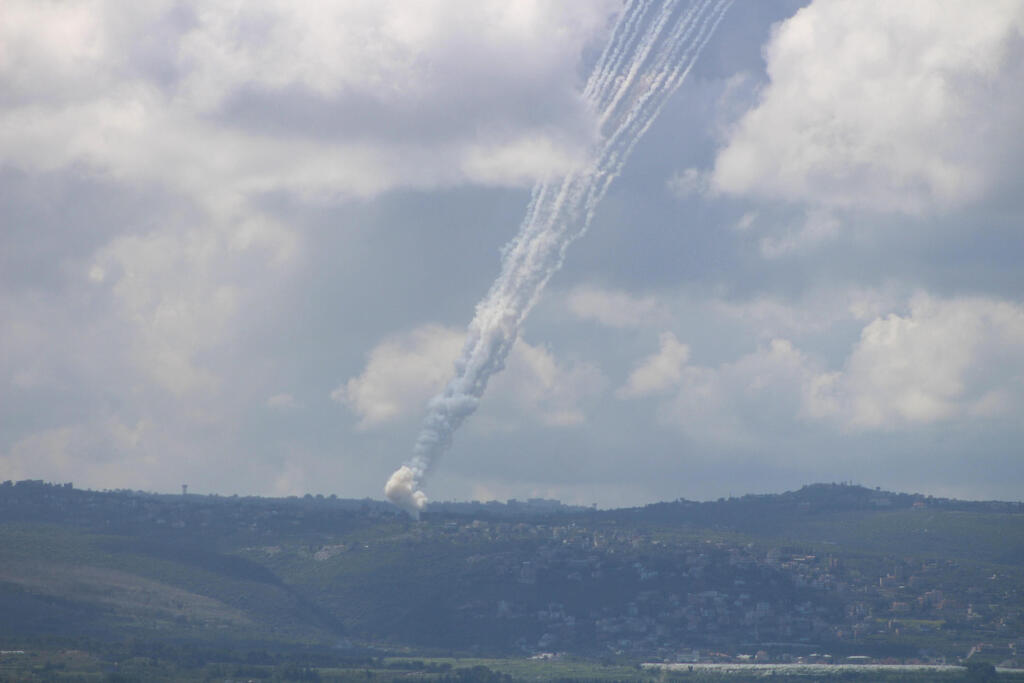
Rockets fired from the Tyre area in southern Lebanon toward Israel
(Photo: KAWANT HAJU / AFP)
The Israeli government is disappointed by the failure to implement the ceasefire agreement.
“Israel told us that when the IDF went into homes in southern Lebanon to search areas the Lebanese army had refused to enter because they were private property, weapons stockpiles were found there.
“My understanding is that the solution to the problem is to integrate Hezbollah into the civilian population, or into the army or the police. I do not believe Hezbollah will be eliminated or destroyed. It is too strong as a movement and embedded in a community that represents half of Lebanon’s population. There will be an obligation to integrate them. It is exactly like Hamas — after two and a half years of war, it still controls half the territory and also controls the people.
“We will have to find a way to strengthen the Lebanese army. We will have to find a way to give the Shiite population better lives, because Hezbollah provides them with jobs, health care and housing, and the Lebanese government does not help them. The economy must be developed and an alternative built. I do not rule out the possibility that at a certain point the Lebanese, even the Shiites, will want to end this war. It will take a few more weeks or months before we know.
“The Lebanese government told the truth in November when it said Hezbollah had to be disarmed — they saw that if that did not happen, Hezbollah would crush the state. And they are telling the truth today when they say they cannot and do not want to do it, and are now simply waiting for Hezbollah to weaken. They fear it would lead to confrontation and that the Lebanese army would lose, and they fear a civil war, because there are a million Shiites within the Sunni and Christian population.”
'Iran will not disappear. There are three possible outcomes there'
The source further explained that across the Middle East, from the Gulf to Israel, countries are now trying to understand how the war with Iran will end and what its regional consequences will be.
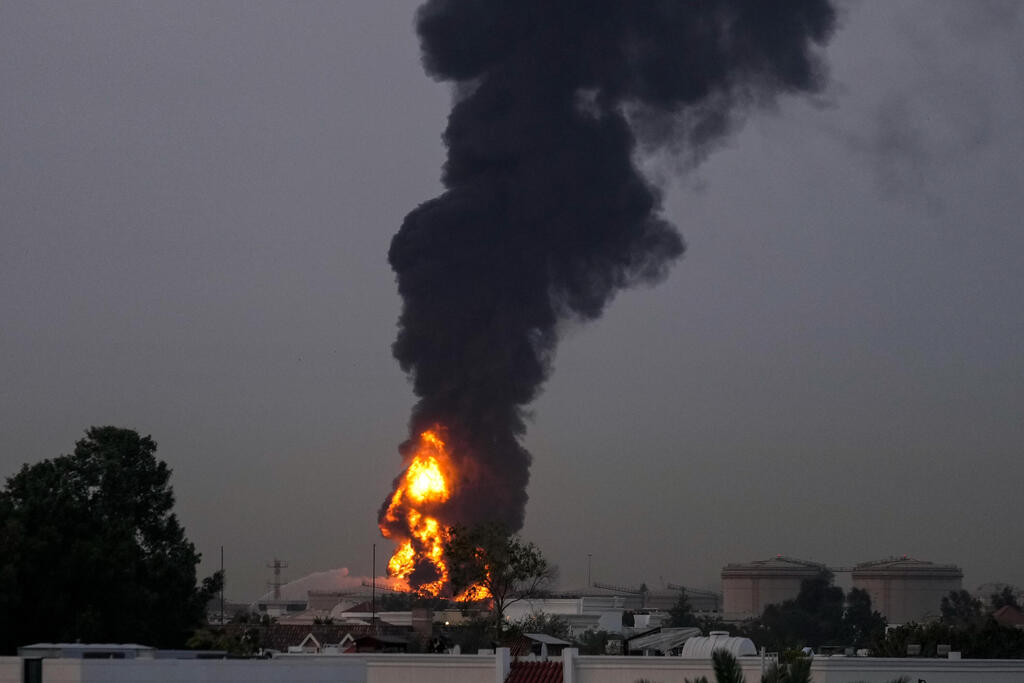
An Iranian attack on Dubai airport
(Photo: AP Photo)
According to the source, Gulf states are also on high alert, with the United Arab Emirates having sustained the most serious damage so far, Saudi Arabia acting with great caution and trying to prevent further escalation, and uncertainty also growing over what could happen inside Iran itself the day after.
“Everyone in the region is waiting to see what the outcome of the war with Iran will be,” the source said. “The Saudis are the most cautious, but they do not like the Iranians firing at them. They are sending messages to the Houthis to stay quiet because they do not want more chaos.
“As for Iran, it will not disappear. It is a country of 90 million people, 80 times larger than Israel and twice the size of France. It is a huge country that hates disorder. That affects their mentality. The people in Iran do not like the regime, but they live with it because there is order. People today are more polarized — those who prefer nationalism versus those who would like to get rid of the regime.
“There are three options at the end of the war: a better government in Iran — I would not put my money on that. The second option is that there is no government at all and it falls into chaos. That is an option. It happened in Libya. Many in Israel like chaos and a prolonged low-level war. I am not sure that is what will happen. More likely is a new version of the authorities, and they will be very radical. If that is what happens, the issue will be their ability to negotiate something that guarantees their survival against the Americans.
“And what matters to the U.S.? Dismantling the nuclear program, the ballistic missile program or reopening the Strait of Hormuz? It is talking about freezing missile production for five years — if you compare that to the nuclear deal, the sunset clause there was longer.”
Did France help Israel intercept drones and missiles?
“All the intelligence we receive from satellites, drones, spy planes and ships in the Middle East — all of it is shared with CENTCOM, and Israel has access to it. I know intelligence sharing remains very active, but I am not sure we were involved in interceptions, because given the state of the war, France has agreements to take part in the defense of the United Arab Emirates, Qatar and Kuwait. You will see many French aircraft flying over Kuwait City, Doha and Abu Dhabi because they are helping defend them.”
Is there still a breakdown in trust between Israel and France?
“It remains difficult — the Israelis are tough. We asked for contact. There were gestures on our part that the Israelis noticed, but that did not change the Israeli anger at France. That is the situation after Oct. 7 and three years of war. It is normal that Israel is angry and that your current government is angry by nature and focused on security. The Israelis remain tough and angry, but we need to bring the sides closer.
“On the issue of disarming Hezbollah, we will not send soldiers, but we can help with intelligence, help on both sides of the Syrian border, bring some security and assist in thwarting smuggling. I believe relations will return to their course after the elections in Israel and the elections in France.”