


A secret network of bank accounts allegedly connected Jared Kushner, senior adviser to President Donald Trump, with powerful Gulf rulers and Prime Minister Benjamin Netanyahu during Trump's first term, according to allegations detailed in a forthcoming book by investigative journalist Matthew Cole, excerpts of which were published by Vanity Fair.
The book claims that at least $2 billion was made available through financial arrangements spanning the United Arab Emirates, Saudi Arabia and Israel, including an alleged $1 billion transfer to an account at Israel's central bank. Kushner's lawyer categorically denied the alleged arrangements.
Gallery
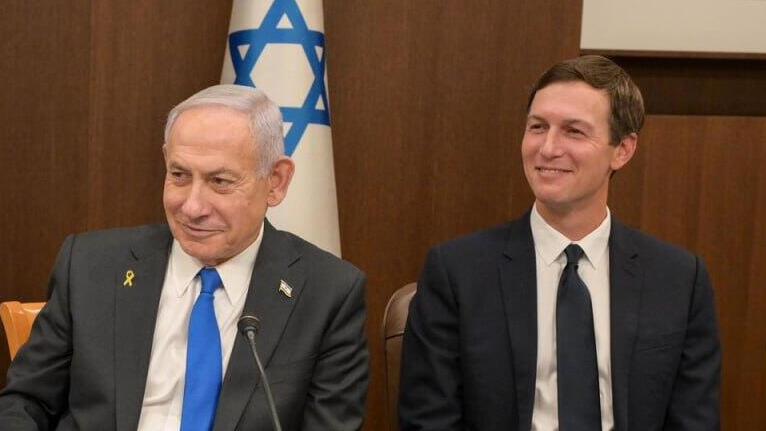
Netanyahu urged Kushner to place $1 billion in secret UAE funds at Israeli bank, book claims
(Photo: GPO)
The claims appear in Cole's book, Princes and Thieves: Jared Kushner and Mohamed bin Zayed's Secret Plot to Remake the Middle East. According to Cole's account, Emirati leader Mohamed bin Zayed and Saudi Arabia's Mohammed bin Salman initially discussed establishing a fund exceeding $10 billion to advance political objectives important to the incoming Trump administration. The plan reportedly narrowed into several accounts allegedly giving Kushner access to foreign funds outside conventional U.S. government oversight.
One of the most significant allegations concerns approximately $1 billion that bin Zayed allegedly transferred to Israel through Azerbaijan in 2018. Citing a person briefed on the arrangement, Cole writes that Netanyahu encouraged Kushner to place the money in an account at the Bank of Israel, where it would appear to be associated with government funds rather than with Kushner personally. The source claimed the money was intended for Kushner's personal benefit, although the book excerpt does not establish how the funds were ultimately used.
The Bank of Israel does not operate personal accounts, and government accounts require authorization from two individuals to conduct transactions. According to Cole, Netanyahu wanted Kushner to inform him before any transfers, with messages allegedly conveyed through David Friedman, then the U.S. ambassador to Israel. One source claimed that significant sums were subsequently transferred through Cyprus. Friedman emphatically denied any knowledge of the alleged arrangement or involvement in transmitting messages, while Kushner's lawyer insisted that "there are no accounts and never were."
How Dutch intelligence allegedly uncovered the financial trail
Cole traces the alleged financial network to an extraordinary intelligence operation that began in late 2017, when the Netherlands' military intelligence service reportedly discovered that a hacker working for Russia's GRU military intelligence agency was preparing to travel to Britain. With British cooperation, Dutch intelligence officers allegedly persuaded the operative to provide access to a Russian intelligence server rather than face arrest. Investigators reviewing material on that server reportedly discovered screenshots from Kushner's iPhone, prompting an effort to determine how Russian hackers had compromised the device.
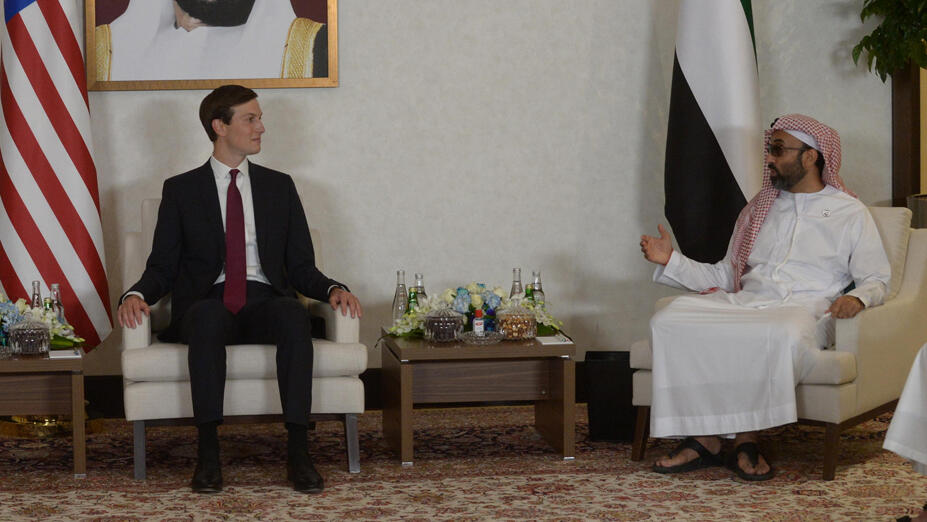
‘Tahnoun bin Zayed gave the authorization.’ Kushner with the UAE ruler’s brother
(Photo: GPO)
By early 2018, Dutch cyber specialists had allegedly found a vulnerability that allowed them to monitor images appearing on Kushner's screen as he used his phone. According to the book, the surveillance revealed that Kushner was accessing a UAE bank account that had received hundreds of millions of dollars through an Azerbaijani bank. The account, identified by Cole as Alpha, was held at First Abu Dhabi Bank and had allegedly received approximately $750 million beginning in 2017, with funding attributed to Saudi and Emirati sources.
The use of Azerbaijan was particularly significant, Cole argues, because certain banks there allegedly facilitate large foreign-currency transfers that obscure the original source of the funds. Rather than transferring Saudi riyals or Emirati dirhams directly to their destination, clients could reportedly use intermediary transactions that delivered equivalent amounts in U.S. dollars. For investigators examining the final transfer, the money could appear to originate from an Azerbaijani institution, concealing the financial arrangements behind it.
The Alpha account was allegedly held by the Watani Al Emarat Foundation, an Emirati government-funded charity, rather than by Kushner personally. Cole alleges that Kushner was made an authorized signatory, giving him potential access to the funds without formal ownership. The foundation, headed at the time by Dherar Belhoul Al Falasi, allegedly served another purpose: facilitating covert Emirati arms purchases and foreign operations. A confidential source cited by Cole described the charity as a vehicle that could reduce scrutiny of sensitive transactions. Kushner's lawyer denied that his client knew Al Falasi, had any connection to the foundation or possessed access to a UAE bank account.
According to Cole, the alleged financial arrangements developed alongside ambitious diplomatic plans involving Washington, Riyadh, Abu Dhabi and Jerusalem. Mohammed bin Salman was seeking to consolidate his position as Saudi crown prince, while bin Zayed wanted the Trump administration to abandon Barack Obama's nuclear agreement with Iran. Kushner, meanwhile, was pursuing an Israeli-Palestinian peace initiative and closer relations between Israel and Gulf states. The book alleges that access to the funds was connected to those overlapping political objectives, although the precise terms of any arrangement remain disputed.
Israeli security arrangements and questions of oversight
Cole's book also describes a third, separate account allegedly established during secret contacts between Israel and the UAE before the countries formally normalized diplomatic relations in 2020. Kushner reportedly helped negotiate an understanding under which Israel would assist the Emirates in defending against a major Iranian military attack. According to Cole, Abu Dhabi deposited additional money into an Israeli central bank account to finance such emergency assistance. The excerpt does not specify the amount involved or establish whether the funds were ever used.
Cole argues that the three alleged accounts effectively created an unofficial financial framework through which Kushner could pursue Middle East diplomacy with senior regional leaders. The arrangements, if substantiated, would raise questions about transparency and government oversight. Kushner was an unpaid senior White House adviser but remained a federal employee subject to financial disclosure requirements, including obligations associated with access to classified information. Cole says four former senior Trump administration officials, including national security advisers and a former CIA director, were unaware of presidential authorization for Kushner to access a foreign government account.
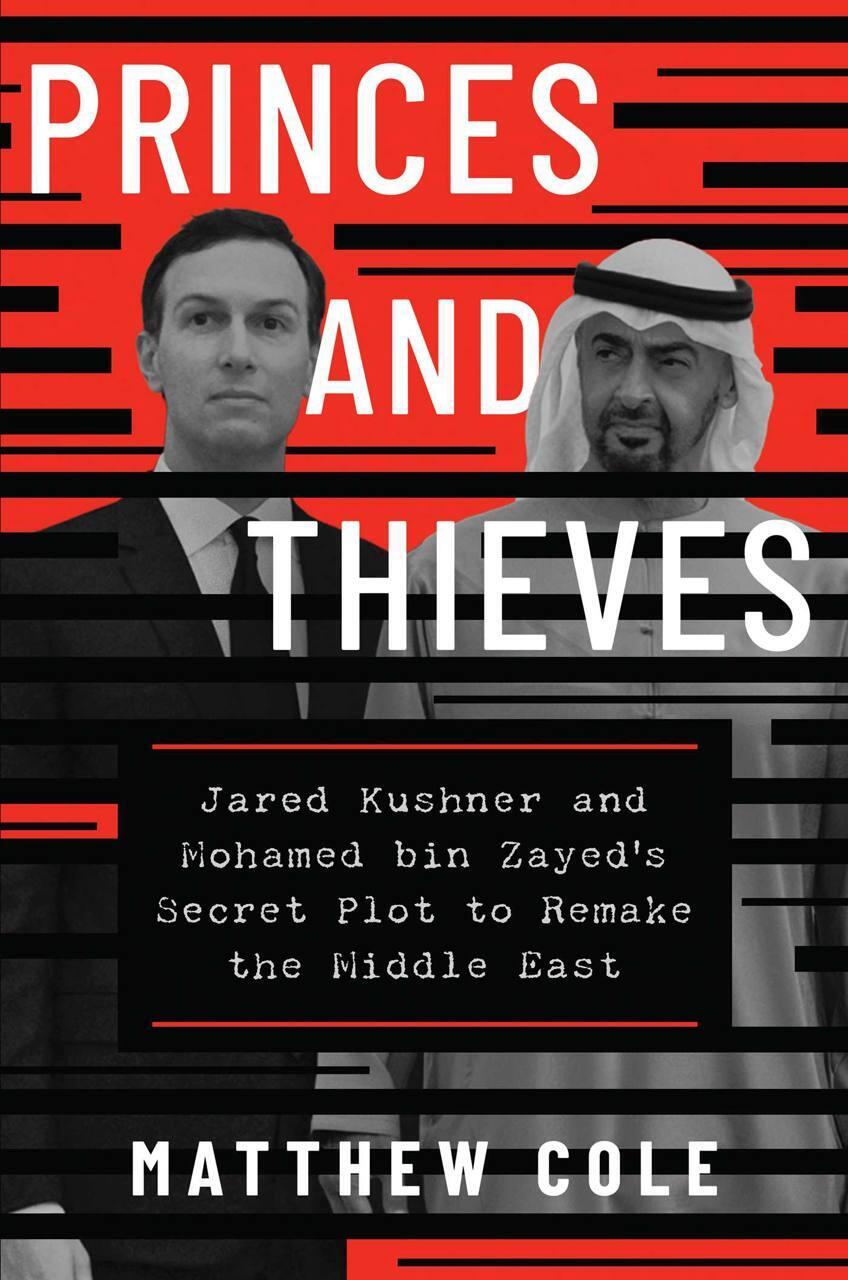
Princes and Thieves
(Photo: Simon & Schuster)
The book excerpt also examines potential legal implications. A former prosecutor who worked on Robert Mueller's investigation told Cole that any agreement to provide official influence in exchange for money could potentially violate federal bribery laws or foreign-agent registration requirements. Such an assessment depends on whether the alleged arrangements existed and what, if anything, was promised in return. The allegations presented in the book do not amount to a judicial finding that Kushner committed a crime, and his attorney denied any legal violations or undisclosed financial arrangements.
Kushner's counsel maintained that his dealings with foreign officials were conducted with Trump's approval and in the interests of the United States. Friedman separately rejected the allegations involving him as entirely false. The competing accounts leave major questions unresolved, including whether the reported bank accounts existed as described, who controlled the funds and whether any money was used for personal purposes. Cole's account, published in excerpt form by Vanity Fair, nevertheless places the alleged financial relationships at the center of the diplomatic efforts that preceded the Abraham Accords, raising questions about whether an undisclosed system of financial arrangements operated alongside official U.S. Middle East policy.