


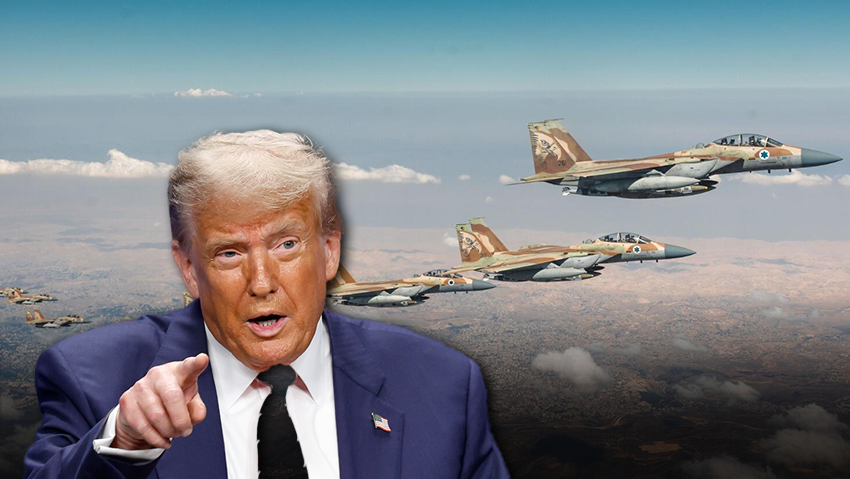
U.S. President Donald Trump on Wednesday revealed new details about a planned Israeli military strike on Iran that was reportedly aborted at the last moment after the ceasefire between the two countries took effect.
Speaking at the NATO summit in The Hague, Trump said Iran had “somewhat, not much, violated the ceasefire,” prompting Israel to dispatch 52 aircraft before he urged them to turn the jets around. He added that it was unclear whether further hostilities between the two countries might erupt in the near future.
Trump spoke to reporters earlier and said that the Iranian nuclear facilities were totally destroyed by the U.S. strike last Friday and that the U.S. "set back the Iranian nuclear program decades." The U.S. president also said that “they’re not going to have a bomb and they’re not going to enrich.” He added that Israel had people in Fordow after the attack who confirmed the destruction
Earlier, the members of NATO pledged to increase their annual defense spending to a total of 5% of gross domestic product (GDP) by 2035 and reaffirmed their commitment to collective defense, stating that "an attack on one is an attack on all."
These investments were needed to face "profound security threats", the leaders said, citing in particular the "long-term threat posed by Russia to Euro-Atlantic security and the persistent threat of terrorism."
Meanwhile, the White House on Wednesday took the unusual step of releasing a report by Israel’s Atomic Energy Commission asserting that recent U.S. airstrikes on Iran’s underground Fordow uranium enrichment site destroyed its critical infrastructure and rendered the facility inoperable.
According to the Israeli report, the combined effect of American strikes on Iranian nuclear facilities and Israeli operations targeting other components of Tehran’s military nuclear program has “set back Iran’s ability to develop nuclear weapons by many years.” The authors added that the achievement could be preserved “indefinitely,” provided Iran does not regain access to fissile material.
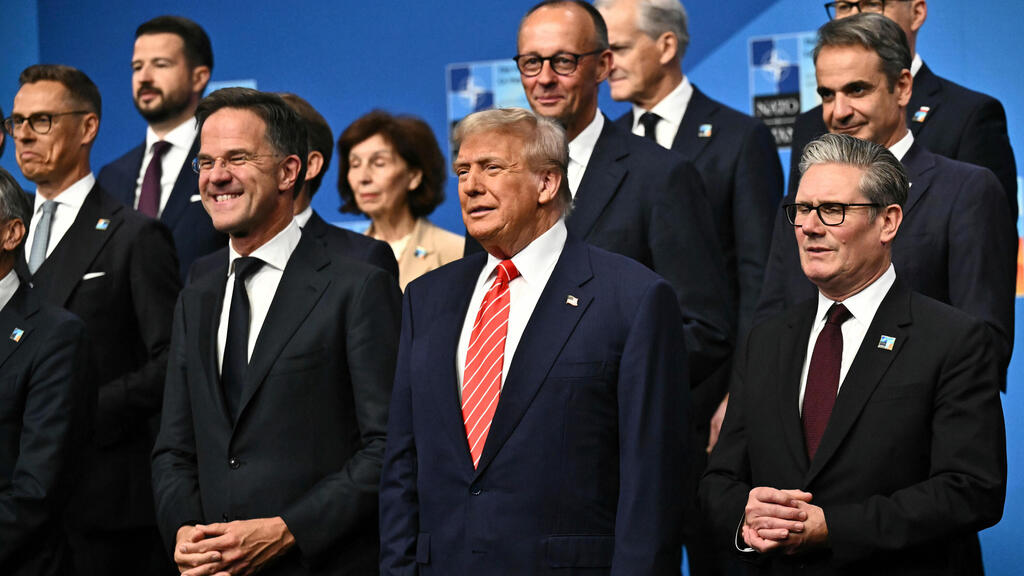
Trump with world leaders at NATO summit
(Photo: Ben Stansall/Pool Photo via AP)
The report was made public following conflicting assessments earlier in the day about the success of the U.S. operation. It was only after the White House released the document that Israel's Prime Minister’s Office issued an official statement echoing its findings.
Later, the White House declared that “Iran and Israel agree — the precision strikes obliterated the Iranian regime’s nuclear facilities.” Iranian Foreign Ministry spokesperson Ismail Baghaei told Al Jazeera that the country’s nuclear sites were “badly damaged,” though he did not provide specific details. “Our nuclear installations have been badly damaged, that’s for sure,” he said, citing ongoing technical assessments by Iran’s Atomic Energy Organization.
Get the Ynetnews app on your smartphone: Google Play: https://bit.ly/4eJ37pE | Apple App Store: https://bit.ly/3ZL7iNv
Earlier, Trump claimed that the sites at Natanz, Fordow and Isfahan were “totally destroyed” and that the operation had pushed Iran’s nuclear ambitions back by decades. He made the remarks following reports by CNN and The New York Times, which cited U.S. intelligence assessments suggesting that while entrances to two facilities had been sealed, most centrifuges remained intact and the damage would only delay Iran’s program by a few months. Trump administration officials have disputed those findings.
Trump also claimed Israeli operatives had been inside the Fordow facility after the strike and would soon provide evidence of “total destruction.” Israeli officials did not confirm that assertion.
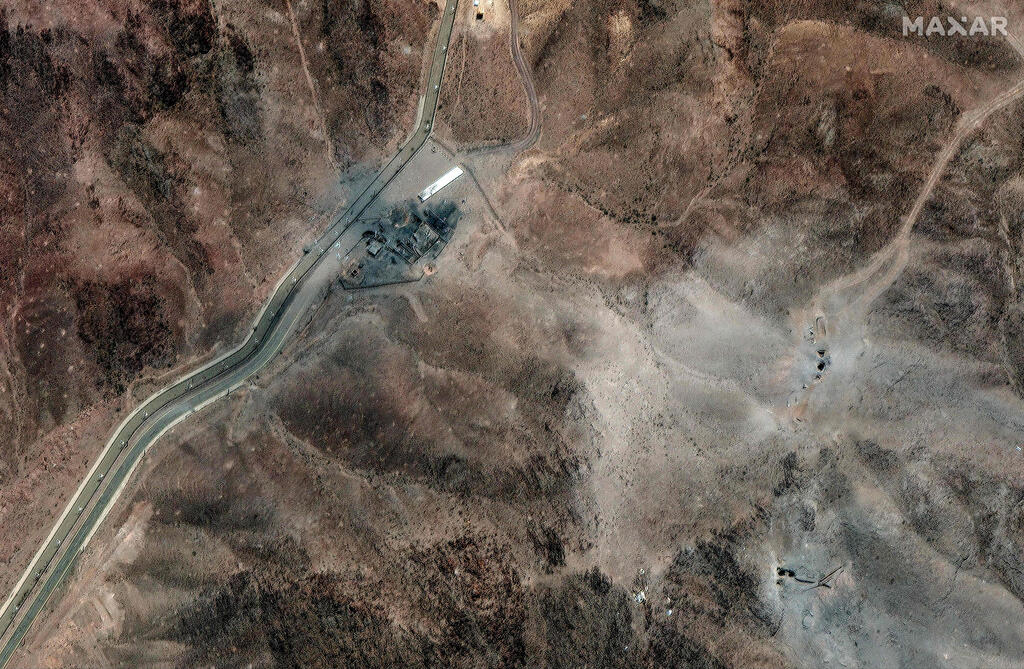
Satellite images of Iran's Fordow nuclear site
(Photo: MAXAR TECHNOLOGIES/Handout via REUTERS, SATELLITE IMAGE ©2025 MAXAR TECHNOLOGIES / AFP)
National Security Adviser Tzachi Hanegbi told Ynet that Iran’s nuclear weapons program suffered a “dramatic blow,” adding that major sites at Natanz, Isfahan and Arak were destroyed. He said the Fordow facility was unlikely to return to operation for a long time.
Israeli security officials told ABC News that a full assessment of the damage would take months, but one official described the outcome at Fordow as “really bad.” Trump acknowledged the post-strike intelligence was inconclusive but maintained the facilities were devastated.
Last weekend, an Iranian official told Reuters that most of Iran’s highly enriched uranium stockpile had been relocated from Fordow ahead of the U.S. strike and was not affected. The attack reportedly involved U.S. B-2 bombers deploying bunker buster munitions.
U.S. intelligence sources cited by CNN and The New York Times believe Iran’s stockpile was untouched and that underground structures survived. A classified American report reportedly concluded that the strikes blocked facility entrances but did not collapse the bunkers. White House Press Secretary Karoline Leavitt confirmed the assessment existed but said the administration rejected its conclusions.