

According to the report, shipments of ammonium perchlorate—a key oxidizer used to fuel hundreds of ballistic missiles—are expected to arrive in Iran in the coming months. One source said some of the material may be diverted to Iran-backed militias, including Yemen’s Houthis.
Gallery
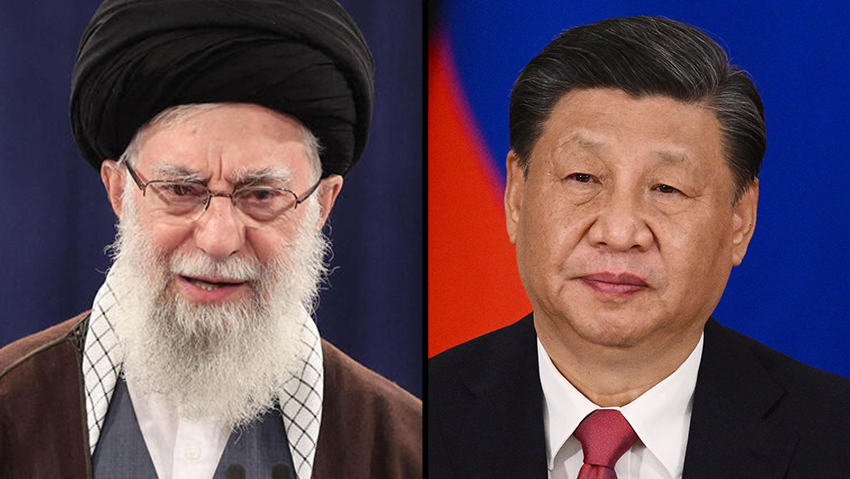
Iran's Supreme Leader Ali Khamenei, Chinese President Xi Jingping
(Photo: Reuters, Alex Kent / GETTY IMAGES)
Ammonium perchlorate is essential for the solid-fuel engines used in Iran’s most advanced missiles. Earlier this year, two Iranian ships loaded more than 1,000 tons of sodium perchlorate in China—a precursor compound for ammonium perchlorate. The cargo was delivered to Iranian ports between mid-February and late March, according to shipping data.
Officials estimate the previous shipment was enough to fuel about 260 short-range missiles. The new ammonium perchlorate deal could supply up to 800 missiles.
The order was reportedly placed by an Iranian company called Pishgaman Tejarat Rafi Novin Co. from a Hong Kong-based firm, Lion Commodities Holdings Ltd. Neither company, nor the Iranian government, responded to requests for comment. China’s foreign ministry claimed it was unaware of the transaction and emphasized its commitment to export controls and international obligations.
The deal was reportedly signed months ago, before U.S. President Donald Trump offered to restart nuclear talks with Iran’s Supreme Leader Ali Khamenei in early March. Iran, which has one of the largest ballistic missile programs in the region, has repeatedly insisted that its missile development is non-negotiable in nuclear negotiations.
Israel reportedly dealt a serious blow to Iran’s missile production capability in an October strike, destroying a dozen “planetary mixers” used to blend missile components. An official told the outlet that Iran is working to repair the mixers and while some of the imported material will remain in-country, some is expected to be sent to militias such as the Houthis.
In November 2022, the U.S. Navy intercepted a vessel in the Gulf of Oman carrying over 70 tons of ammonium perchlorate along a known smuggling route used by Iran to arm the Houthis.
Explosion in Iranian port


“Iran likely needs material from abroad to avoid bottlenecks in its domestic production capabilities,” said Fabian Hinz, a missile expert and Iran researcher at the International Institute for Strategic Studies.
On April 19, the U.S. Treasury Department imposed sanctions on six individuals and six entities based in Iran and China for helping procure missile components, including sodium perchlorate, for Iran’s Islamic Revolutionary Guard Corps (IRGC). Additional sanctions were imposed two weeks later on Chinese and Hong Kong firms aiding Iran’s missile industry.
Get the Ynetnews app on your smartphone: Google Play: https://bit.ly/4eJ37pE | Apple App Store: https://bit.ly/3ZL7iNv
In May, the Treasury added sodium perchlorate to its list of materials tied to Iran’s military and nuclear programs. “Chinese entities and individuals have provided support to Iran’s ballistic missile program, as well as to the Houthis’ missile and UAV production efforts, which is why we continue to identify and sanction them,” a U.S. State Department official said.
Storing these materials in Iran poses safety risks. In April, dozens were killed in an explosion at the Shahid Rajaee port—home to most of Iran’s import containers—caused by IRGC Quds Force personnel mishandling explosives. At least part of the sodium perchlorate imported earlier this year was destroyed in the blast.
“These substances are a major fire and explosive hazard. Iran’s defense industrial complex does not have a strong track record in ensuring safety standards,” said Hinz. Last month, Iranian customs authorities issued an order to expedite the clearance of “hazardous materials.”
Roughly two months ago, UK-based outlet The Times reported that Iran had supplied long-range missiles to Shiite militias in Iraq—a detail confirmed by a senior official in the Wall Street Journal’s latest reporting.
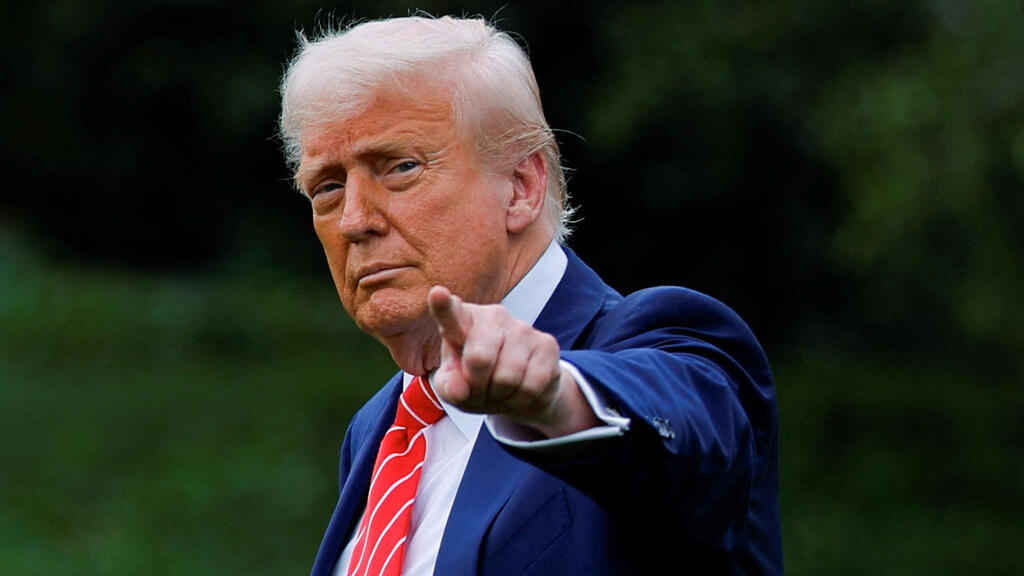
U.S. President Donald Trump
(Photo: REUTERS/Kent Nishimura)
During the ongoing Gaza war, these militias launched mostly drones, with occasional missile fire toward Israel. The attacks largely stopped months ago, even before ceasefires with Hezbollah and Hamas were reached.
On Monday, Reuters reported that Iran was preparing to reject the latest U.S. nuclear proposal. An Iranian diplomat told the agency the offer was a “non-starter,” claiming Washington had refused to compromise on halting uranium enrichment—the core dispute in negotiations.
Despite conflicting statements from Washington, Trump declared on Wednesday that the U.S. would not allow Iran to continue enriching uranium. However, The New York Times reported that the proposal under discussion would, in fact, allow limited enrichment for a transitional period of several years.
That same day, Iran’s Khamenei delivered a harsh speech against the U.S. offer. While not formally rejecting it, he said the proposal undermines Iran’s sovereign right to enrich uranium: “Who are you to tell Tehran whether or not it can have a nuclear program?” he asked, insisting that without enrichment, Iran’s nuclear program would be worthless.