


While Israel’s defense establishment remains understandably fixed on the northern border, Gaza, and Syria, a quieter and more dangerous shift is unfolding a thousand kilometers to the east. The Houthis of Yemen and Iran’s militia network in Iraq are no longer separate problems. They are becoming one. What began as political coordination and mutual declarations of solidarity has hardened into something more concrete: a joint operational presence on Iraqi soil, centered in the fortified militia stronghold of Jurf al-Sakhar in Babil province.
This is not a symbolic office in Baghdad or a temporary media outpost. According to detailed regional reporting, including a late-July 2026 investigation by Asharq Al-Awsat and earlier assessments from the Washington Institute, it is a working command node that brings Yemeni drone expertise into the heart of Iran’s Iraqi infrastructure and places it within much closer range of Israeli cities.
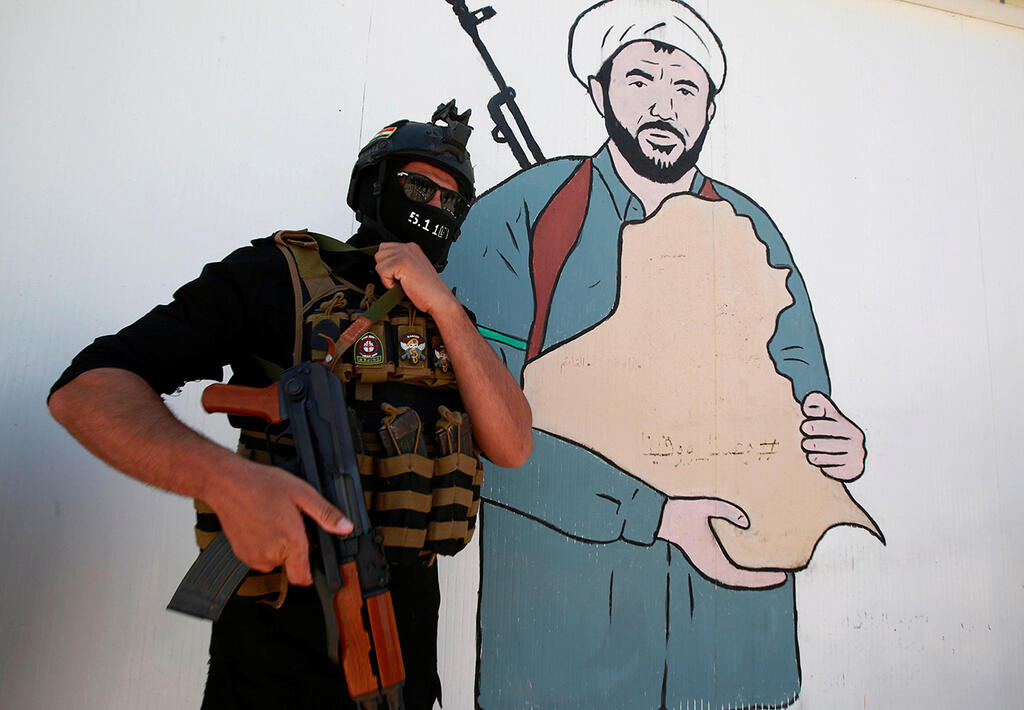
The geography alone should command attention. A long-range drone or cruise missile launched from western or southern Iraq reaches Israeli airspace far faster than one fired from northern Yemen. Early-warning windows shrink. Interception becomes harder. The margin for error narrows for both the Israeli Air Force and the Home Front Command. Iran understands this reality better than most. That is why Houthi specialists are now embedded with Iraqi factions in a place deliberately chosen for its isolation, its dense militia control, and its protection under the umbrella of powerful pro-Iranian groups. Jurf al-Sakhar has long served as a sanctuary for Iran-backed forces. Its distance from central government scrutiny and its access to regional transport corridors make it an ideal environment for covert planning, technical training, and logistical staging.
The structure of this presence is not informal. Regional reporting describes a clear division of labor. A senior Houthi representative, Abu Idris al-Sharafi, manages high-level relations with Iraqi militia leaders and the Popular Mobilization Forces. Specialists such as Abu Ali al-Ezzi focus on drone programs, field training, and the transfer of technical expertise gained through years of asymmetric warfare in Yemen. Logistics coordinators, including figures previously active in Damascus, handle supply corridors that link Syria, Iraq, and Yemen. Intelligence and operational security remain tightly compartmentalized. Financial channels operate through charitable organizations and commercial fronts in Najaf and other urban centers. Money moves through foundations that present themselves as humanitarian and through businesses that include currency exchange offices, shipping firms, and restaurant chains. Technical knowledge moves through trainers. The result is a hybrid capability that is harder to attribute, harder to disrupt, and harder to deter.
This is the point Israel cannot afford to miss. When an attack originates from Iraqi territory using Houthi technology and mixed crews of Yemeni and Iraqi personnel, responsibility becomes deliberately blurred. Strike targets in Yemen, and the Iraqi launch infrastructure remains untouched. Strike inside Iraq, and the political and diplomatic costs rise sharply. Tehran designed this ambiguity. It is a feature of the strategy, not a bug. The goal is to project power while complicating Israel’s response options and diluting the clarity of deterrence.
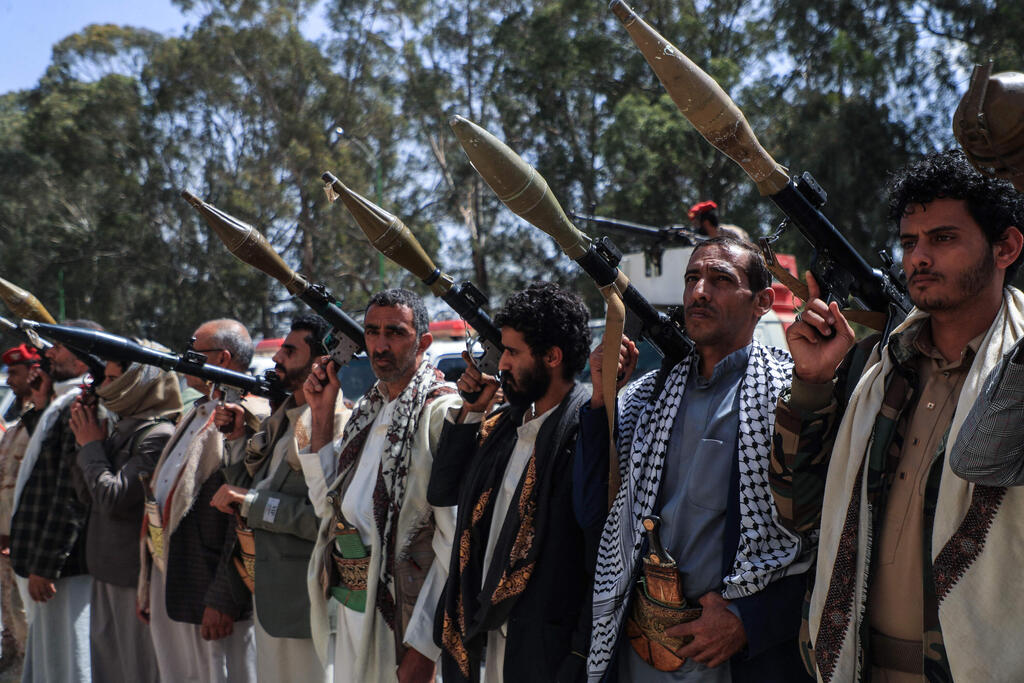
Sanaa, Yemen: Houthi supporters rally in solidarity with Iran
(Photo: Mohammed HUWAIS / AFP)
In late July 2026, Houthi elements had participated in attacks launched from Iraqi territory in coordination with local armed groups, at least against Saudi targets. This is not theoretical. The joint capability is already being tested in regional conflicts. The same networks and the same geographic advantages that threaten Saudi infrastructure can, with only modest adjustment, be directed at Israeli cities.
The Iraqi government, for its part, has proven unable or unwilling to dismantle these enclaves. Official statements about state sovereignty and pledges to prevent non-state actors from using Iraqi territory for external attacks mean little when fortified areas like Jurf al-Sakhar continue to host foreign operatives and facilitate regional operations. Relying on Baghdad to solve this problem through diplomatic pressure or internal reforms is not a serious strategy. The gap between rhetoric and reality on the ground is too wide. Israel must proceed from the assumption that certain parts of central and western Iraq now function as active operational zones under Iranian strategic direction.
Houthi operatives are not only sharing technology and command structures. They are embedding themselves in local networks, including religious and educational circles in places like Najaf. Joint outreach and recruitment efforts through charitable fronts help cultivate a broader base of support and operatives. This social and ideological integration makes the partnership more resilient. It is no longer dependent on a handful of commanders or temporary tactical needs. It is building roots that will be harder for regional intelligence services to uproot.
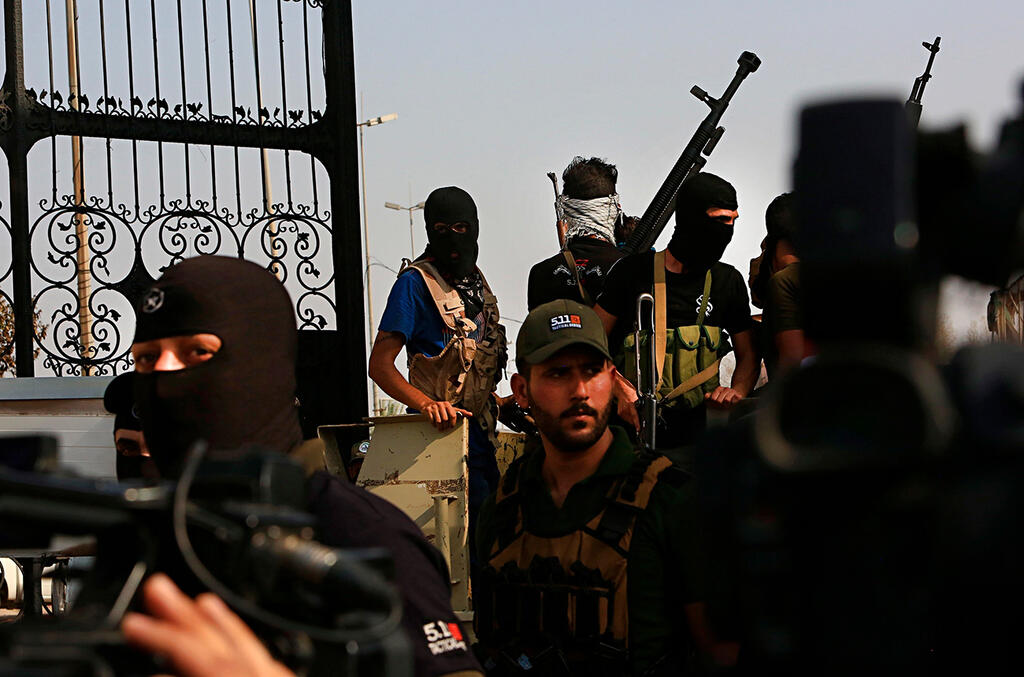
Basra, Iraq: Popular Mobilization Forces (PMF) and Shiite militias
(Photo: AP)
The reality of modern regional security is that localized threats no longer remain isolated. Iran views the Middle East as a single interconnected battlefield. The operational consolidation between Houthi specialists and Iraqi militias in Babil is one more expression of that worldview. Israel’s defense posture must adapt accordingly. Treating the eastern flank as a secondary concern simply because it is quieter than the northern border or Gaza would be a strategic error. The flight times are shorter. The attribution problems are real. The financial and logistical networks that sustain the presence are already in place.
Addressing this challenge requires a calibrated and sustained response. First, Israeli intelligence must expand its coverage of the commercial and financial channels that fund these networks in Najaf, Baghdad, and the surrounding areas. Exposing the fronts that move money and the businesses that provide cover is essential. Second, military planners must refine attribution models capable of identifying the technical signatures of joint drone and missile cells even when organizational lines are deliberately blurred. Third, strategic messaging toward Tehran, Baghdad, and international partners must be consistent and unambiguous. Geographic proxy ambiguity will not provide immunity. Those who host, train, or facilitate attacks against Israel from any territory should understand that the costs will be real and substantial.
State authorities in Baghdad must also be held to account. Allowing sovereign territory to serve as a staging ground for regional aggression cannot continue without consequence. At the same time, Israel must make clear that the presence of foreign strike cells on Iraqi soil will not be treated as an internal Iraqi matter when those cells are directed against Israeli targets.
The eastern flank is no longer theoretical. A new launchpad is being assembled under Iranian supervision, closer to Israeli population centers than previous Houthi capabilities allowed. The combination of Yemeni technical experience and Iraqi geographic positioning creates a more flexible and more dangerous threat than either component alone. Ignoring it because it is not yet the loudest front would leave Israel exposed to a surprise that could have been anticipated.
Amine Ayoub, a fellow at the Middle East Forum, is a policy analyst and writer based in Morocco. Follow him on X: @amineayoubx