

On March 9, Iran formally announced the appointment of Mojtaba Khamenei as the country’s new supreme leader. State media did not say whether the decision had been unanimous, but the public was urged to respect it and preserve the unity of the Islamic Republic. It was also the first time in Iran’s history that a new supreme leader was appointed and then disappeared entirely from public view.
Despite persistent rumors that Mojtaba Khamenei had died, senior Israeli officials now believe those reports were premature. The picture remains murky, however. His medical condition is still unclear, his ability to function is difficult to assess and there are powerful actors with an interest in seeing him removed. The central question is no longer merely whether he is alive, but whether he actually rules Iran.
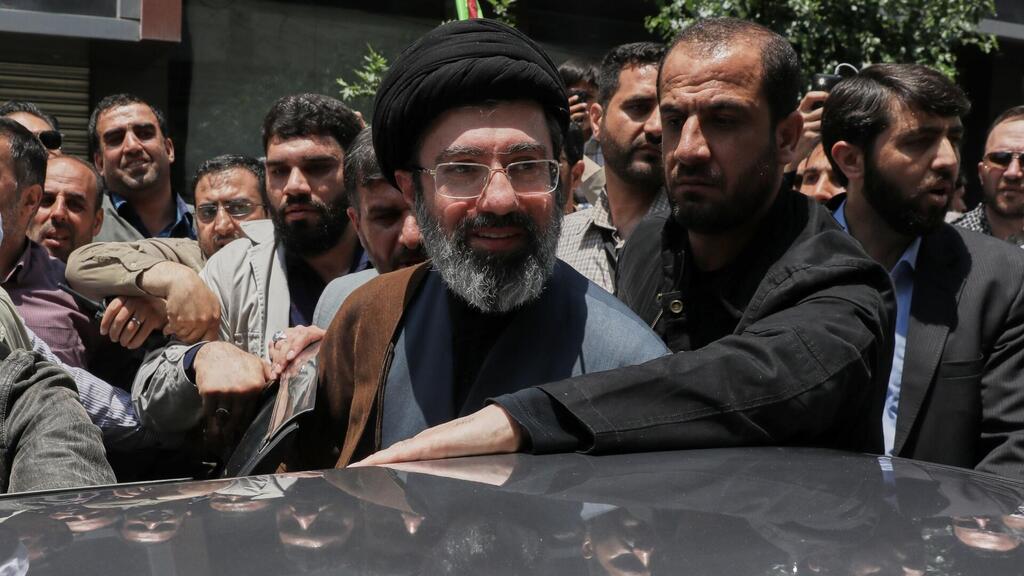
“The big question now is whether we are in the middle of a process that will turn Iran into a state controlled by a military junta, or whether Mojtaba will manage, as his father once did, to accumulate power and become the dominant figure in the system,” said Danny Citrinowicz, a senior researcher on Iran and the Shiite axis at Israel’s Institute for National Security Studies and a former head of the Iran branch in Military Intelligence. “The answer will determine not only Mojtaba Khamenei’s future, but the character of Iran itself.”
The strike that decapitated Iran’s leadership
The Beit Rahbari compound near Palestine Square in central Tehran has long served as the nerve center of Iran’s leadership. It houses the supreme leader and his family, government offices staffed by thousands of officials and the vast hall where the ayatollah traditionally addressed invited audiences. Beneath the complex are numerous shelters.
On Feb. 28, 2026, Ali Khamenei was meeting senior security officials in one of them when a joint Israeli-U.S. strike penetrated deep underground. The attack killed Khamenei, Chief of Staff Abdolrahim Mousavi, Supreme National Security Council secretary Ali Shamkhani, Revolutionary Guards commander Mahmoud Pakpour and Defense Minister Aziz Nasirzadeh, according to the account presented in the report. Khamenei’s wife Mansoureh, his daughter-in-law Zahra, Mojtaba’s wife, and one of their sons were also killed elsewhere inside the compound.
Mojtaba, however, was in a more distant garden within the complex and survived. He was reportedly badly wounded by shrapnel, suffering injuries to his arms and at least one leg, as well as severe facial damage. A former senior Iranian official who had visited Beit Rahbari dozens of times said Mojtaba may no longer be able to write and that it is unclear whether both of his eyes still function.
“I don’t know exactly how serious his injuries are,” the former official said. “I know he cannot write, and I’m not sure both of his eyes are functioning.” According to him, a call for national unity broadcast in Mojtaba’s name after the attack was drafted by three senior officials working inside the leadership compound.
Hidden underground, with messages carried by hand
Mojtaba’s exact location remains unknown. Rumors initially claimed he had been flown secretly to Russia, but both Moscow’s ambassador in Tehran and Iran’s ambassador in Moscow denied the reports. Other accounts placed him in Qom, possibly in an underground hospital, but those reports also appear to have been false.
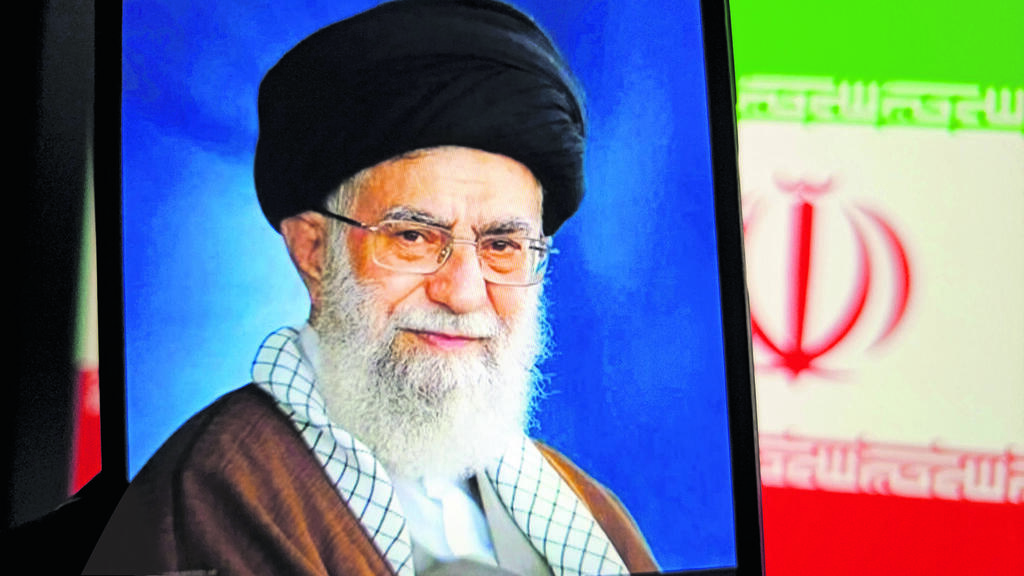
Ali Khamenei
(Photo: FotoField/Shutterstock)
A former senior Iranian official said the secrecy surrounding Mojtaba is extreme. “There is no way to know where he is,” he said. “The compartmentalization is maximum.” According to the official, no electronic devices are used near him for fear of revealing his location. Messages are instead transferred by handwritten notes passed between couriers at predetermined points.
A doctor and nurse reportedly remain with him continuously and do not leave in order to reduce the risk of leaks. “No senior official has seen or met Khamenei since the serious injury,” the former official said. His staff also reportedly includes an official food taster. Every meal is first consumed by the taster and only passed to the supreme leader an hour later if no ill effects appear.
Israeli officials nevertheless believe Mojtaba remains in Tehran. A very senior Israeli source said earlier this week: “Mojtaba Khamenei is in Tehran. He is alive and is managing to function in one way or another.”
A successor who was never meant to inherit
Mojtaba Khamenei was born in September 1969 in Mashhad, the second of six children. After religious high school in Tehran, he joined the military during the Iran-Iraq War, serving in the Habib battalion, an elite Revolutionary Guards unit. He later returned to Tehran and in 1999 moved to Qom to study theology, eventually reaching the clerical rank of Hojjat al-Islam, below that of ayatollah.
Yet despite his relatively modest religious standing, Mojtaba spent decades building influence inside the regime. He lived and worked in Beit Rahbari and served as an informal link between intelligence bodies, the Revolutionary Guards and the Basij militia. Foreign diplomats in Tehran came to describe him as “the power behind the robes.”
He rarely appeared publicly and avoided formal office, but that gave him freedom to move between power centers, cultivate loyalists and promote allies into important positions. One of those allies was former president Mahmoud Ahmadinejad. According to the former Iranian official, Mojtaba played a decisive role in Ahmadinejad’s 2005 election victory, including through alleged manipulation of the vote. Their relationship later deteriorated sharply.
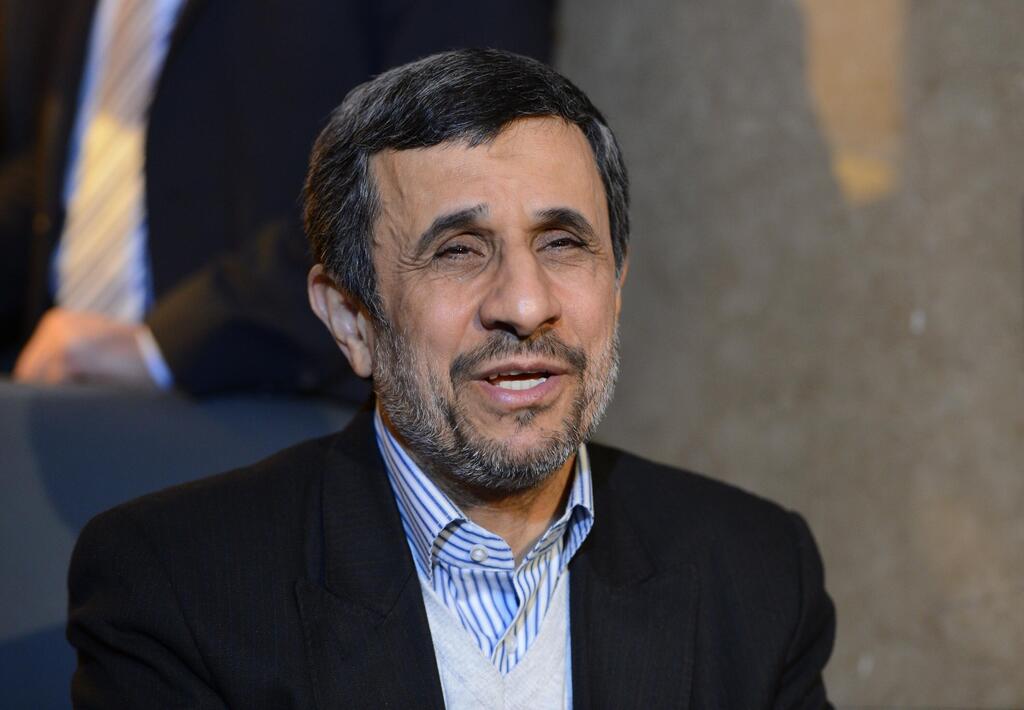
Mahmoud Ahmadinejad
(Photo: Ali Atmaca/Anadolu/Getty Images)
The report also cites leaked intelligence claims about Mojtaba’s private life, including allegations of a same-sex relationship in his youth and conversion-style efforts aimed at changing his sexual orientation. Those claims remain based on intelligence reporting and foreign media accounts cited in the original report.
His father, Ali Khamenei, was said to have kept him under covert surveillance and, shortly before his death, reportedly mentioned three possible successors to associates. Mojtaba was not among them.
The interrupted succession vote
The process that eventually elevated Mojtaba began three days after his father’s death. Iran’s 88-member Assembly of Experts, the body responsible for selecting the supreme leader, initially planned to meet on March 3 in Qom.
The location was chosen partly because officials believed its religious significance would make an American attack unlikely and that Israel would not strike alone. That assumption proved wrong. The old municipal building where the meeting was supposed to take place was destroyed in an Israeli airstrike guided by Israeli intelligence. Assembly members survived because they had been told not to arrive.
The succession process was delayed but continued. Seven candidates were considered, among them conservative cleric Sadeq Larijani, chairman of Iran’s Expediency Discernment Council, and Hassan Khomeini, grandson of Islamic Republic founder Ayatollah Ruhollah Khomeini. Hassan Khomeini’s candidacy was reportedly rejected early because senior figures viewed him as too moderate.
Mojtaba ultimately appears to have benefited from the network he spent decades building across the regime’s security establishment. His long-standing ties to the Revolutionary Guards and Basij may have been decisive.
Is the president meeting a man or a poster?
The opacity surrounding Mojtaba’s condition has only deepened questions over who currently makes decisions in Tehran. President Masoud Pezeshkian recently appeared on state television to deny rumors that he intended to resign over disagreements concerning a possible agreement with the United States.
“I commit to continuing in my position and fulfilling my duties, especially under the current circumstances,” Pezeshkian said. “If I wanted to leave office, I would do so openly and announce it to the public. On the contrary, I am committed to the struggle for the Iranian people and I have no disagreements with any of the policymakers. The army, Revolutionary Guards, presidency and government ministries are working in full harmony.”
A former senior Iranian official said those resignation rumors did not emerge from nowhere. Pezeshkian, 71, is widely considered more moderate and more interested in accommodation with Washington than many of the security figures now dominating Tehran.
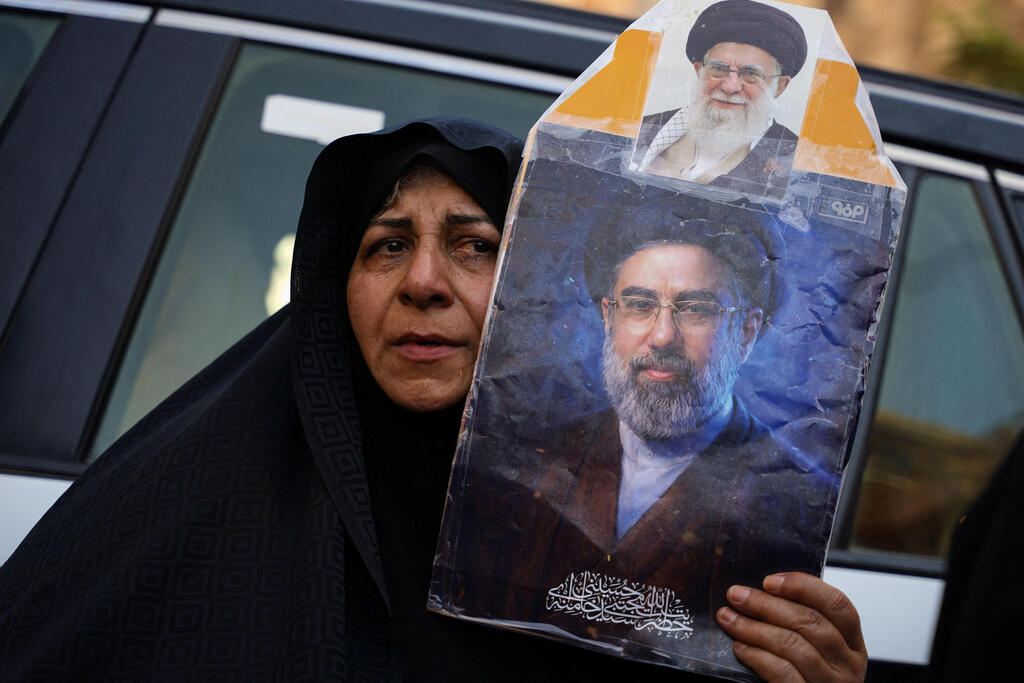
(Photo: Tiba Sadeq/Reuters)
On Monday, Mojtaba’s office announced that he had held a working meeting with Pezeshkian. The statement said the discussion focused on unemployment, shortages, housing, international sanctions and the cost of living, and that the supreme leader again called for national unity. But no images were released.
Official Iranian news agencies claimed the meeting lasted about seven hours, while Mojtaba’s office said two and a half. On social media, critics mocked the announcement, joking that “the president met Khamenei’s poster.” A deputy Basij commander has promised that images of Mojtaba meeting military commanders and appearing among the public will soon be released. So far, none have emerged.
Revolutionary Guards fill the vacuum
Asaf Cohen, former deputy commander of Unit 8200 and former head of the Iran arena in Israeli Military Intelligence, argues that Mojtaba’s role in strategic decision-making may now be minimal.
“In Iran’s opaque reality, it can be assessed that Mojtaba’s weight in strategic decision-making is small, secondary and perhaps nonexistent,” Cohen said. “At best, he receives superficial updates and serves as a rubber stamp after the fact. In the more likely scenario, fateful decisions are made in his name without him even knowing about them.”
According to Cohen, the Revolutionary Guards have moved into that vacuum. “The historic argument between the political leadership and the security establishment has been decided, at least for now. The Revolutionary Guards are dominant in the decision-making process today.”
That raises another question: Why keep up the appearance that Mojtaba is ruling? Cohen says the answer is simple. A formal declaration that Mojtaba is dead or incapacitated would force Iran to choose another supreme leader. A replacement drawn from the traditional religious establishment could potentially act independently and erode the power the generals have accumulated.
“The status quo, in which there is a ‘ghost’ sitting in the supreme leader’s chair, serves them perfectly,” Cohen said. He argues that this also helps explain the Revolutionary Guards’ reluctance to compromise with Washington.
A weaker supreme leader, a stronger military
Citrinowicz also believes the Revolutionary Guards are benefiting from Mojtaba’s ambiguous status. Under both Ruhollah Khomeini and Ali Khamenei, he said, the supreme leader was the final and exclusive authority on strategic questions. For the first time, Iran now appears to have a different leadership structure in which the Revolutionary Guards play a much deeper role.
That does not necessarily mean Mojtaba has no influence. But unlike his father, Citrinowicz said, he does not appear to possess an absolute veto. His position is weakened by three factors: his limited religious legitimacy, his physical condition and the security constraints imposed after his father’s assassination.
It is still possible, however, that Mojtaba could consolidate power over time. Ali Khamenei himself was not initially viewed as the dominant force in Iran after Khomeini’s death. Over the years, he steadily expanded his authority until he controlled virtually every major lever of power. Mojtaba could try to follow the same path.
There are also indications that he may be somewhat more open to reconsidering elements of Iran’s nuclear policy, particularly if he concludes that relentless expansion of enrichment capabilities has brought the country more harm than benefit. But on the regime’s core strategic issues, including missiles, nuclear capabilities and regional influence, he has shown no clear willingness to compromise.
For now, Iran appears to have entered a new era: a weaker supreme leader, a more powerful Revolutionary Guard and a political system in which the identity of the person formally in charge may matter less than the generals acting in his name.
As Cohen put it: “People once said Iran was not a country with a nuclear project, but a nuclear project with a country. Today, one can ask whether Iran is a country with a Revolutionary Guard, or a Revolutionary Guard with a country.”