

An Austrian court has convicted mountaineer Thomas Plamberger of aggravated negligent homicide in the death of his partner, Kerstin Gärtner, who died of hypothermia after being left near the summit of Austria’s highest mountain last year.
The verdict, delivered over the weekend, brings at least a temporary close to a case that has stirred debate in the climbing community and could influence future rulings on criminal responsibility for decisions made in extreme alpine conditions.
The tragedy occurred on Jan. 18-19, 2025, on Grossglockner, which rises 3,798 meters (12,461 feet) above sea level. Prosecutors argued that Plamberger, 39, the more experienced climber who planned the ascent, acted as the “responsible guide” and committed a series of fatal errors.
According to the prosecution, Gärtner, 33, had never undertaken such a long, difficult and high-altitude winter climb. Despite harsh weather conditions, the pair continued the ascent. Grossglockner is considered one of the most challenging climbs in the Austrian Alps and requires advanced equipment, including gear suitable for glacier travel.
Prosecutors said the couple set out two hours later than recommended, did not carry sufficient emergency overnight gear and that Plamberger allowed Gärtner to wear soft snowboard boots, which are not suitable for high-altitude mixed terrain.
When they encountered winds of 74 kph (46 mph) and temperatures of −8°C (17.6°F) — with wind chill making it feel closer to −20°C (−4°F) — prosecutors argued they should have turned back. Instead, they pressed on.
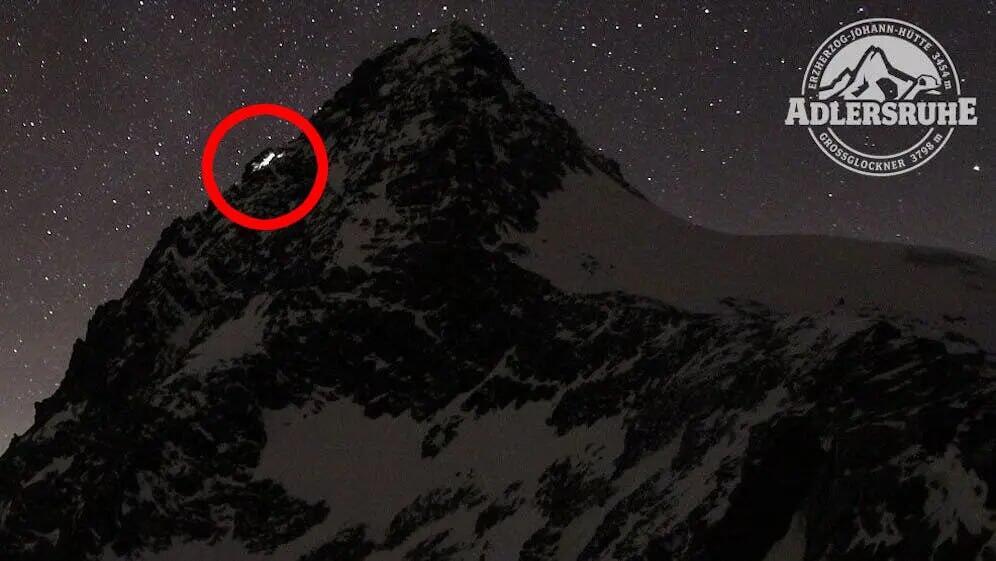
By 1:30 p.m., they had passed the route’s “point of no return,” beyond which retreat becomes extremely difficult. According to the timeline presented in court, the couple became stranded around 8:50 p.m. Prosecutors said Plamberger did not call police or send a distress signal even as a helicopter circled the area around 10:50 p.m. Webcams monitoring the route captured the lights from their headlamps during the ascent.
Plamberger rejected the allegations, saying the trip was planned jointly and that both had sufficient experience and proper equipment. He said that even in the early night hours they felt strong and did not sense distress.
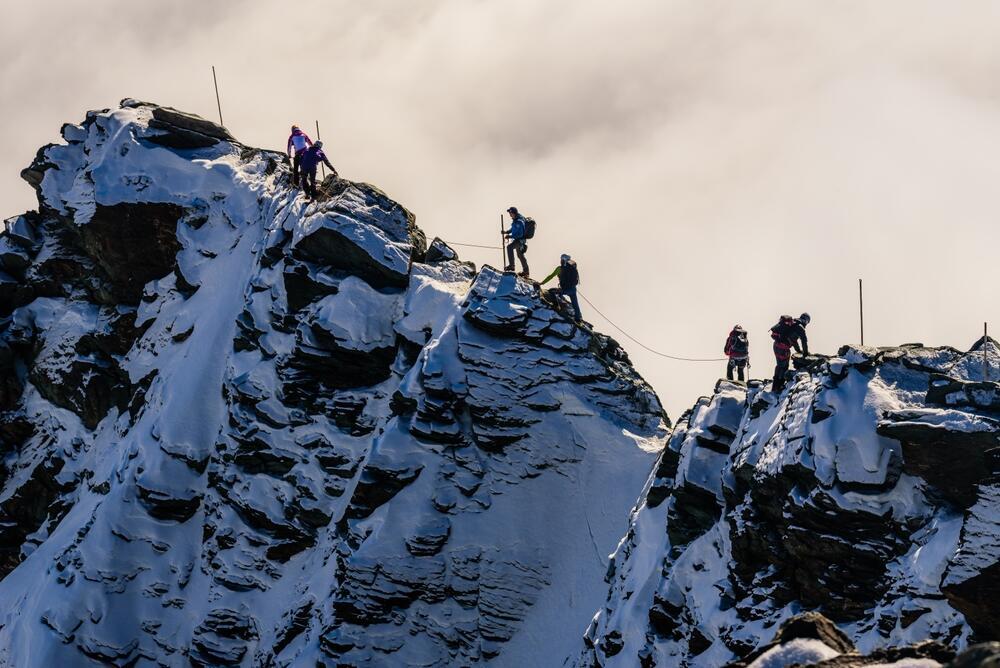
(Photo: Ondrej Bucek/shutterstock)
He testified that only close to midnight did Gärtner’s condition deteriorate dramatically, showing signs of severe exhaustion, at which point it was too late to turn back. At 12:35 a.m., they called the police station responsible for mountain rescue. His lawyer said he requested assistance, but police stated that after the call, Plamberger switched his phone to silent mode and did not answer further calls.
According to prosecutors, the pair continued upward, but about 50 meters (164 feet) below the summit Gärtner could no longer move. At around 2 a.m., Plamberger left her alone and headed to the nearest hut to seek help, without moving her to shelter from the wind, covering her with an emergency blanket or using other equipment to protect her from the cold.
By then, she was reportedly suffering from hypothermia and disorientation. Webcams captured him descending alone. It was not until 3:30 a.m. that he again contacted emergency services to report the situation. By that time, prosecutors said, Gärtner had died of hypothermia.
Given the severe winds, no helicopter could have landed on the mountain that night, meaning staying with her may have been the safer course, authorities said. Plamberger returned to the spot about six and a half hours later and found her dead.
Investigators examined the couple’s mobile phones, sports watches and photographs from the climb, which helped them conclude that Plamberger bore responsibility for her death.
The court opted not to impose the maximum sentence of up to three years in prison. Instead, it handed down a five-month suspended sentence and a fine of 9,600 euros ($10,400). In a statement to the BBC, which followed the case, the court said it took into account that Plamberger had no prior criminal record and had lost someone close to him. It also cited the intense public debate surrounding the case.
Judge Norbert Hofer, himself an experienced mountaineer who works with Tyrol mountain rescue teams, said Plamberger was an excellent climber, while Gärtner was far less experienced. He ruled that the climb should have been canceled given her limited winter experience and that Plamberger’s judgment was flawed.
However, Hofer stressed that he did not believe Plamberger abandoned her intentionally. “I do not see you as a murderer. I do not see you as a cold-hearted person,” he said.
During the trial, Plamberger’s former partner, Andrea, testified that he had left her alone during a climb on the same mountain in 2023. She said she reached her physical limit, felt dizzy and that her headlamp went out, and that she cried and screamed after he disappeared from view while walking ahead.
Judge Hofer questioned Plamberger’s claim that he left Gärtner lying on the slope, noting that rescue photographs suggested she may have fallen. According to testimony, her body was found hanging upside down from a cliff.
“We were stunned that she remained in that position,” one rescuer told the court. “If the wind had been just slightly stronger, she would have fallen over the southern slope.”
Plamberger told the court he deeply regretted what happened and said he loved Gärtner. He described her as very athletic and said they had planned the trip together.
Gärtner’s parents also testified that she had been active in mountaineering since 2020. Her mother, Gertrud, defended Plamberger before the trial, saying it angered her that her daughter was portrayed as naive.
“They always made decisions together,” she told the German newspaper Die Zeit. “If Kerstin had not agreed, they would not have gone on the climb, or her boyfriend would have gone alone. I do not want to accuse him. Many people blaming him have never been in such a situation. It is easy to be a hero from your comfortable home.”
Describing her daughter, Gertrud said: “Kerstin loved to test her limits. But above all, she was a responsible person who loved nature. For her, the mountains were not a place of recklessness but of calm, mindfulness and respect. The fact that she lost her life in the place where she felt most alive is almost incomprehensible to me. I miss her terribly.”