

Leaders from Arab and Muslim countries gathered in Doha for the “Emergency Arab Islamic Summit” on Monday, following an Israeli airstrike targeting senior Hamas figures in the Qatari capital that ended in failure, according to regional sources.
Sheikh Tamim bin Hamad Al Thani, emir of Qatar and summit host, opened the meeting with sharply worded remarks condemning the strike, which he said also involved residences of Hamas leaders and negotiating delegation members.
Israeli airstrike on villa hosting Hamas leaders in Doha, Qatar


He called the attack “treacherous,” claimed it shocked the Gulf state’s citizens and the world, and said it transformed Israel’s war in Gaza into a war of annihilation. Qatar has long served as a mediator, Al Thani noted, facilitating negotiations that led to the release of Israeli hostages and Palestinian prisoners.
He argued that at the time of the strike, Hamas leadership was reviewing a U.S. proposal they had received via Qatar and Egypt — a meeting whose location was, according to him, known to all involved. Al Thani questioned how Israel could engage in peace negotiations while simultaneously attempting to assassinate political leaders. “Persistent and systematic aggression toward a party in negotiations undermines the negotiation itself,” he said.
The emir also accused Israel of seeking to make Gaza uninhabitable as a means of uprooting its population. He warned that Israeli plans to divide Syria will not succeed, and criticized the Israeli government's policies as extremist and “racial terror.” Al Thani said regional peace and stability could have been spared much tragedy if Israel had embraced the 2002 Arab Peace Initiative earlier.
Among summit attendees were leaders from Arab League and Organization of Islamic Cooperation member states. Key figures included Iranian President Masoud Pezeshkian; Saudi Crown Prince Mohammed bin Salman; Jordan’s King Abdullah; Egypt’s President Abdel Fattah el-Sisi; Lebanese President Joseph Aoun; Syria’s President Ahmad al-Sharaa; Iraq’s Prime Minister Mohammed Shia’ al-Sudani; Turkish President Recep Tayyip Erdoğan; Palestinian Authority Chairman Mahmoud Abbas and others.
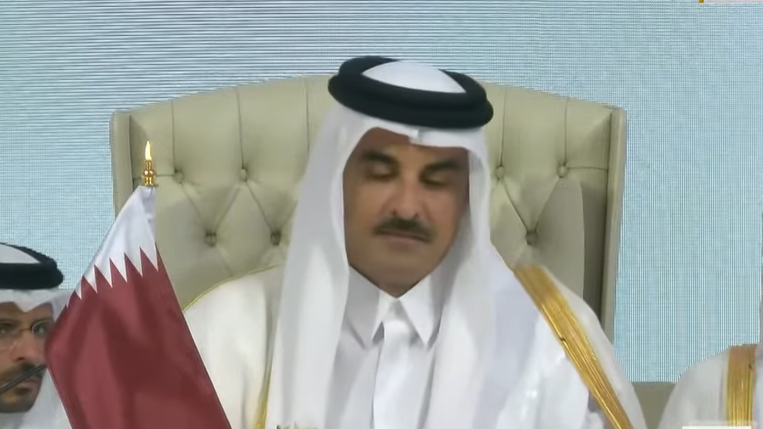
The summit is expected to issue a joint declaration condemning the strike, rejecting what the participants call Israel’s interference with mediation efforts, and warning of repercussions for regional security.
Egypt’s el-Sisi warned that Israel’s “reckless behavior” was escalating the conflict and threatening regional stability. Speaking at the summit, el Sisi called the airstrike in Doha a “serious violation of international law” and a “dangerous precedent,” accusing Israel of seeking to turn the region into a zone where attacks are normalized.
He stressed that Israel's security and sovereignty could not be achieved through force, but only by respecting international law and the sovereignty of neighboring states. “The growing chaos and arrogance of Israel obligate us to develop a common Arab-Islamic vision,” he said.
El Sisi also reiterated Egypt’s opposition to any plan aimed at displacing Palestinians from their land and urged serious action on the Palestinian issue. “Our message today is clear: we will not accept any attack on our sovereignty,” he declared, proposing the creation of an Arab-Islamic consultative mechanism to address regional challenges.
Addressing Israeli citizens directly, el Sisi warned that current policies were undermining the future of peace and threatening not only Israel’s security but that of the entire region. “The consequences will be severe as the region reverts to a state of conflict, undoing generations of peace-building efforts,” he said. “Do not allow the efforts of our predecessors for peace to be in vain.”
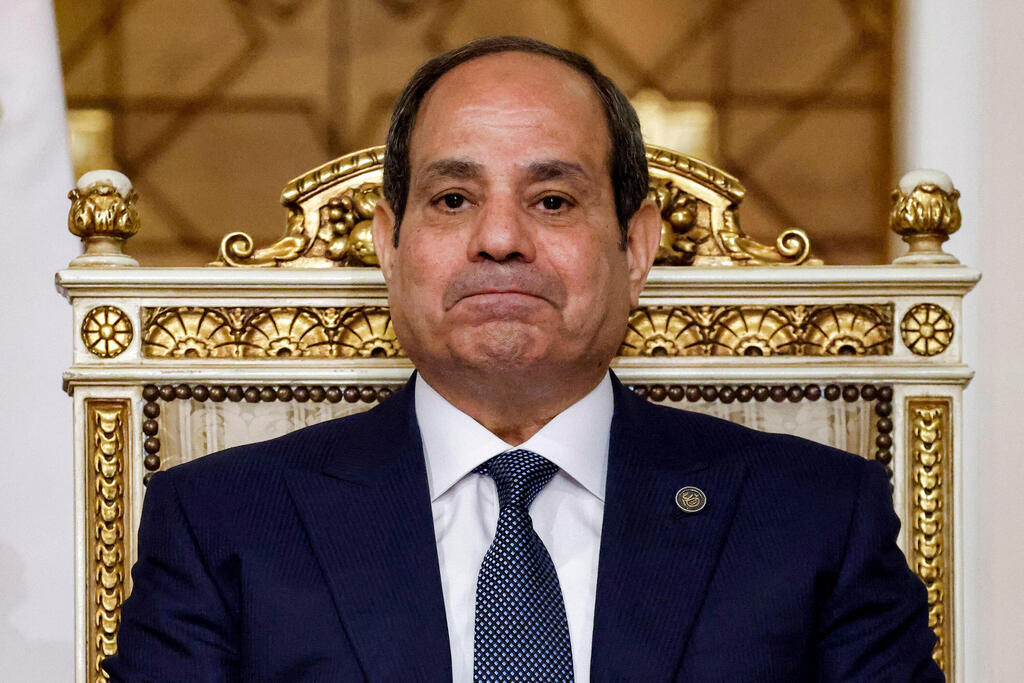
Egyptian President Abdel Fattah el-Sisi
(Photo: REUTERS/Benoit Tessier/Pool)
Jordan’s King Abdullah also condemned the Israeli strike, framing it as part of a broader pattern of aggression since the war in Gaza began nearly two years ago. “Throughout this period, Israel has consistently violated international law and universal human values, acting unlawfully in the West Bank and obstructing the two-state solution,” he said. “Now it has extended its aggression to Qatar’s sovereignty.”
He warned that Israel’s ongoing threats to Lebanon and Syria, along with its actions in Gaza and now Qatar, showed a policy of unchecked escalation. “Israel’s government continues its hegemony because the international community allows it to act above the law,” Abdullah said.
Calling the situation a turning point, the king urged Arab and Muslim nations to reassess their diplomatic and strategic tools. “This summit must yield practical decisions to confront the threat posed by Israel’s extremist government. Its aggression against Qatar proves that this threat knows no borders.”
He called on leaders to deliver a “clear, decisive and deterrent” response.
Turkey’s Erdoğan condemned the Israeli airstrike in Doha as part of what he described as escalating Israeli aggression that now threatens the entire region. “The assault on Qatar has brought Israeli arrogance to a dangerous level,” he said. “The Netanyahu government seeks to continue the massacre of the Palestinian people and drag the region into chaos.”
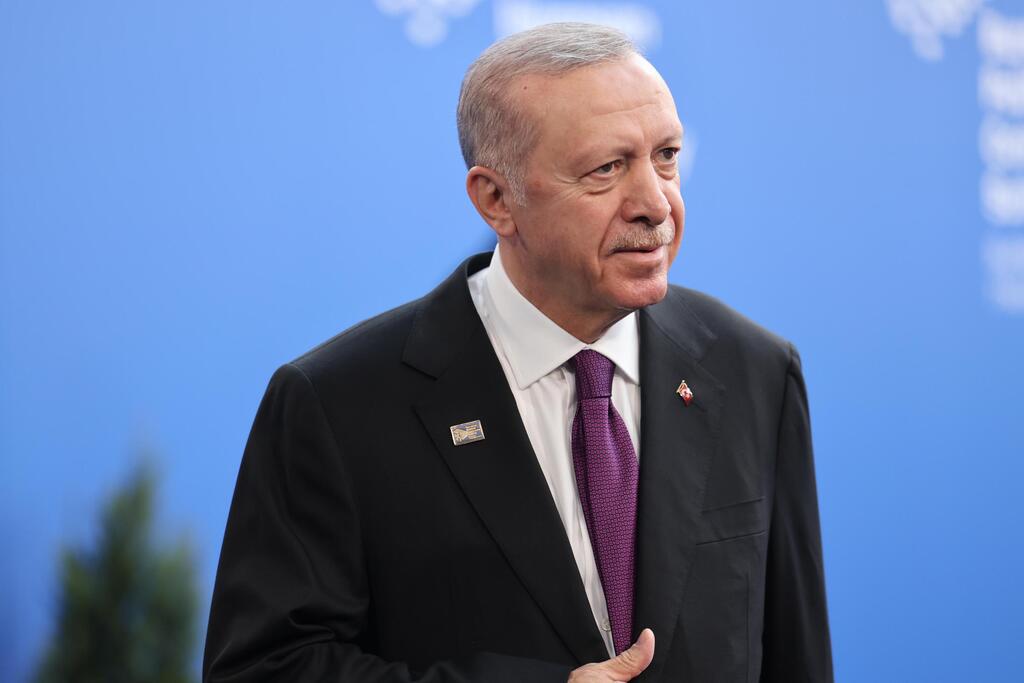
Turkish President Recep Tayyip Erdoğan
(Photo: Janos Kummer, GettyImages)
Erdoğan accused Israeli politicians of promoting the concept of “Greater Israel” and called for senior Israeli officials to be held accountable under international legal mechanisms. He urged Muslim countries to impose economic pressure on Israel, saying past experience had shown such measures to be effective. “We must establish joint cooperation frameworks among Islamic states,” he said. “We cannot accept the displacement of the Palestinian people, genocide or partition.”
Iran’s Pezeshkian echoed the criticism, claiming that the Israeli strike on Qatar was aimed at undermining efforts to halt its military campaign in Gaza. “The leaders of the Zionist entity must be brought to justice,” he said. “No Arab or Islamic country is immune from Israeli aggression. We have no choice but to unite.”
Lebanon’s Aoun said that the Israeli strike in Doha was not only an attack on Hamas leaders but also a blow to the negotiations themselves.
Syria’s al-Sharaa, in a brief one-minute address, said Israeli strikes on Gaza were ongoing and that Israel had been attacking Syria for the past nine months. “We stand with Qatar in the face of this brutal Israeli assault,” he said.
Meanwhile, Reuters reported that a revised draft of the summit’s final resolution warns that the Israeli strike endangers Israel’s ties with Arab nations. The language includes a pointed reference to existing diplomatic agreements with Israel, cautioning that continued aggression could jeopardize them.
The draft declaration reaffirms that the “brutal Israeli attack on Qatar,” along with what it terms as ongoing hostile actions—including “genocide, ethnic cleansing, starvation, siege, and colonizing activities and expansion policies”—pose a serious threat to peace and coexistence in the region. It also warns that such actions could undermine the normalization process with Israel, including both current and future agreements.
Einav Halabi contributed to this report.