

“As a 15-year-old, a friend and I broke into the local grocery store, stole bottles of wine, cartons of cigarettes and cash. A few days later, my father told me I’d been summoned for police questioning. Everything was new and unfamiliar, and I started getting into trouble, including drug offenses.”
That is how Staff Sgt. (res.) N., 22, from a kibbutz in the Golan Heights, described his past. He now works as a dining hall manager at a guesthouse near his home.
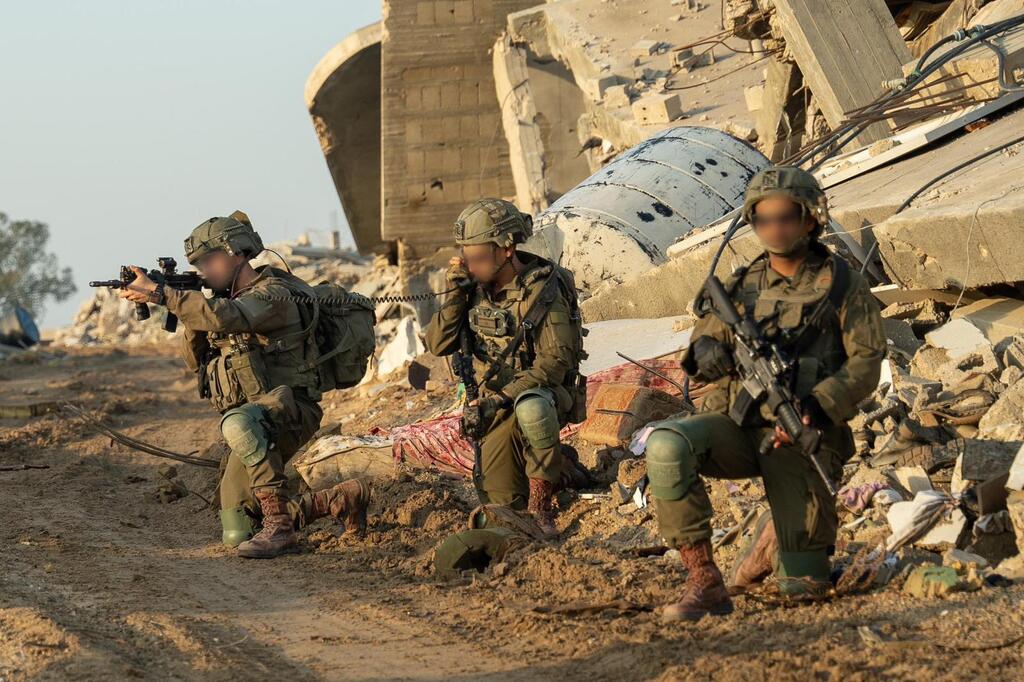
Recently, during his first reserve deployment, N. received the presidential pardon he had requested toward the end of his mandatory military service. As a teenager, he completed a rehabilitation program that included supervision by a probation officer. At 18, shortly before enlistment, he injured his knee, damaging his chances of serving in the IDF. He insisted on trying and was eventually accepted into the Paratroopers reconnaissance unit after successfully completing the selection process.
“On Oct. 7, 2023, I was at home with pneumonia, and when the war broke out, my commander called and asked if I could come and join the forces rushing to the Gaza border area,” he said. “I said of course, and within a short time I found myself fighting with my friends near Kibbutz Re’im.” N. later took part in brigade maneuvers throughout the Gaza Strip and also fought against Hezbollah in southern Lebanon, in addition to serving on the Syrian Golan front.
“One day, toward the end of my regular service, the unit NCO sent me a message summoning me to a committee to expunge my criminal record,” he said. “I sat in front of eight officers, told them everything, and after six months — during my first reserve deployment — I received a message saying I had been granted a pardon by the president. I was the happiest person in the world. Now I can apply for a handgun license, work in security and take professional courses through my job. The criminal record, even though it was supposed to be erased automatically in the coming years, also made me feel embarrassed every time a police officer stopped me for a routine check.”
28 granted pardons this year
N. is not alone. With the fighting easing, the IDF is expanding its pardon program for soldiers who were convicted of criminal offenses as minors but demonstrated relatively good conduct during their military service and returned to a normative path. For the first time, the option has also been opened to reservists.
Staff Sgt. (res.) N.: 'I was the happiest person in the world'
Over the past three years, there has been a drop of more than 50% in the average annual number of soldiers with criminal records who sought and received pardons toward the end of their service, mainly due to the prolonged war that kept many soldiers engaged in operational duties. The program began in 2017.
According to IDF estimates, at any given time there are about 1,000 conscripts serving with a criminal record from before their enlistment, about 250 of whom are in the final six months of service — the period during which they can initiate the pardon and record-expungement process through the president.
Because the initiative is relatively new, the number of soldiers who used it and received pardons averaged about 100 per year in the years before the war. In 2023, the figure dropped to 67, in 2024 to 64, and this year stands at 28 soldiers who have received pardons, with another 22 awaiting decisions.
According to the data, about 90% of soldiers who submit applications receive a positive recommendation from the IDF committee, headed by a reserve brigadier general, which advises the president on granting pardons. In 98% of cases, the committee’s recommendations are approved.
Looking ahead to the coming year, the Personnel Directorate estimates that about 251 conscripts may apply for and receive pardons. Of those, 42 are already in the initial stages of the process and 71 are expected to begin a procedure the military has simplified: The soldier applies through the unit education NCO with a commander’s recommendation for a pardon, along with a power of attorney authorizing the Education Corps to obtain relevant criminal records from the courts and police.
The goal: a better citizen
Much of the IDF's military pardon process is run by the department led by Lt. Hila Yadlin, the army’s criminal record officer, who oversees the project with a team of two to three soldiers. With the expansion of pardon eligibility to include reservists due to their prolonged wartime service, Yadlin hopes the initiative could eventually reach thousands of cases. Some reservists, she said, have already approached her unit after hearing about the program informally.
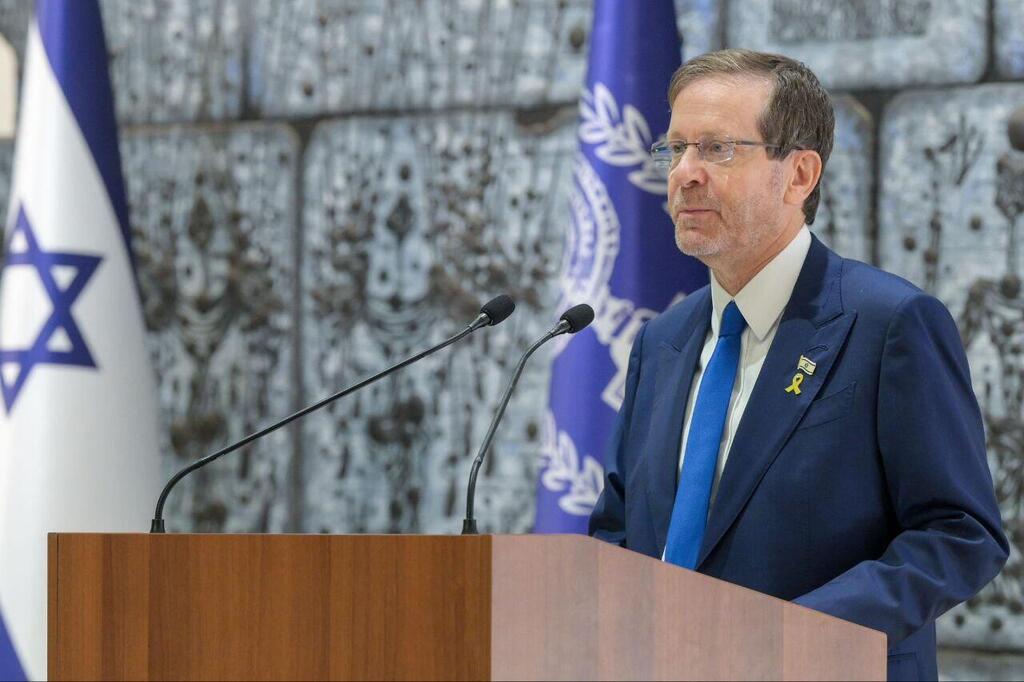
President Isaac Herzog
(Photo: GPO)
“The first condition to even appear before the committee is full remorse and taking responsibility for the offenses,” Yadlin told ynet and its parent newspaper Yedioth Aharonoth. “But it’s not just lip service — they have to demonstrate it through their actions.”
To even enlist in the IDF, such soldiers already had to fight for the opportunity, passing review boards and selection processes while expressing remorse. Except in the most serious cases — such as rape or murder — the military does enlist individuals with prior convictions, typically for offenses such as burglary, violence or minor drug possession or distribution. “They go through an initial screening process, but that alone isn’t enough to qualify for a pardon,” she noted.
“Remorse must be reflected in their behavior throughout their service. If a soldier had more than 21 days of unauthorized absence, ten disciplinary hearings or more than 35 days in detention — especially during the early stages of service — they won’t be eligible for a pardon, unless they are granted an exceptional case review,” Yadlin explained. “A soldier must not have any Military Police investigations pending, unresolved cases or any criminal convictions during their IDF service.”
“Our goal is for the individual to undergo real transformation, become a better citizen and for their military service to serve as a bridge to a successful future in society.”
The military pardon committee, which works in coordination with the Justice Ministry, includes representatives from the Military Advocate General’s Corps, the IDF’s enlistment and placement unit (Meitav) and the Education Corps. It is chaired by Brig. Gen. (ret.) Eli Shermeister, a former combat pilot and chief education officer.
“There’s an ethical and ideological foundation to this effort,” Shermeister said. “Some may ask, ‘Why should the army be dealing with pardons instead of fighting in Gaza?’ But we’re taking the idea of ‘a nation building an army, and an army building a nation’ one step further.”
“The president doesn’t rubber-stamp our recommendations. He reviews them thoroughly,” Shermeister added. “We examine the soldier’s prior penalties or community service, how they performed in pre-military programs and their personal outlook and plans for the future.”
“Sadly, we’ve also had soldiers with criminal pasts who were in the middle of the pardon process when they were killed in action during the war. In those cases, the pardon was granted symbolically.”