

Reservists and active-duty soldiers who served in the IDF’s casualty identification units, along with other personnel stationed at the Shura military base, told the Knesset Labor and Welfare Committee on Sunday about the difficulties they are now facing and called for expanded mental health support. The discussion revealed that hundreds of soldiers who were also students in hesder yeshiva who took part in the identification efforts at the start of the war are not eligible for assistance from the army because they are currently in an unpaid service period (known as shalat).
The hearing focused, among other groups, on approximately 200 hesder soldiers who served at Shura Base in the early days of the war. Media reports and appeals from several lawmakers indicated that these soldiers returned to their yeshivas after about a week of service without receiving a therapeutic support framework.
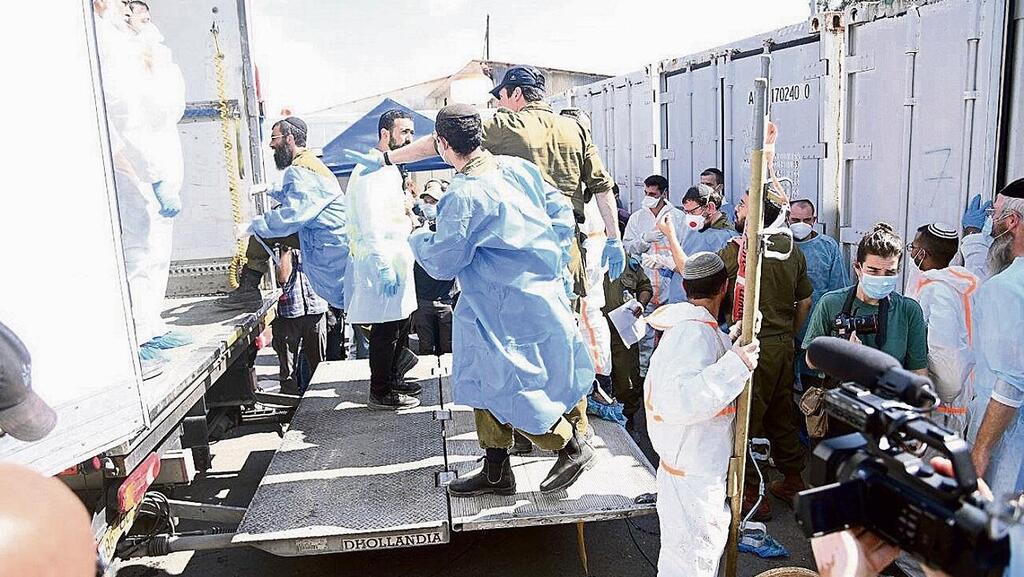
During the discussion it emerged that those who served at Shura for 45 days or more were recognized as eligible for combat-soldier benefits, including in-depth resilience programs and workshops. However, hesder soldiers who served for a shorter period are not entitled to these programs. In addition, they are not eligible to participate in the “Amit Program,” which helps soldiers process service experiences and supports reintegration into routine life.
Other personnel who served at Shura in roles that did not involve direct contact with the deceased also described difficult experiences, noting that they are not entitled to the rehabilitative support provided to other service members.
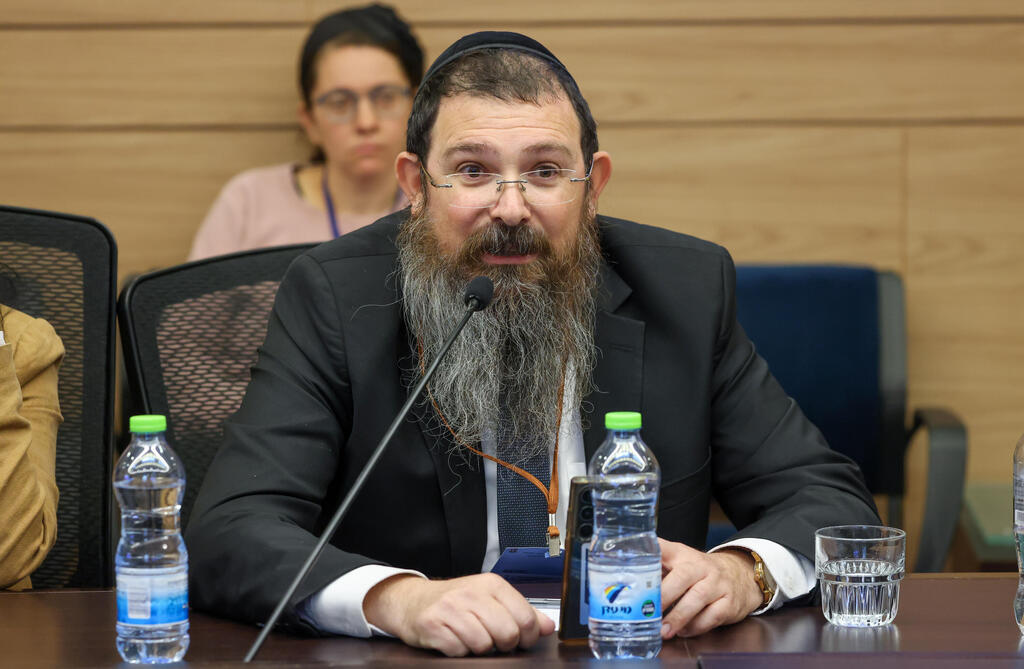
Sharga Dahan, a former military rabbi who served at Shura during the war
(Photo: Noam Moskowitz, Knesset spokesperson)
“We were all there at Shura Base. We went in with one soul and came out with another — new, cracked and aching with the pain of the nation, yet never more proud of our people and our heritage," said Sharga Dahan, a former military rabbi who served at Shura during the war.
"Hesder yeshiva students were called up to assist in unimaginable situations, carrying on their young shoulders the honor of the holy ones. Those who stood beside them, in the silence and the smell that the soul does not forget — invisible people who did their work quietly and modestly — also need strengthening, an embrace and support," he added. "The cleaners in the treatment rooms, cadets who helped maintain order and direct the refrigerated trucks, truck drivers, doctors, construction, electrical and logistics personnel — everyone was there and assisted in everything these processes required. They saw the sights, smelled the smells, felt the intensity and the sanctity. They carry Shura within them every moment. I call on this committee — do not forget them. Do not let them cope alone with a soul that has changed forever.”
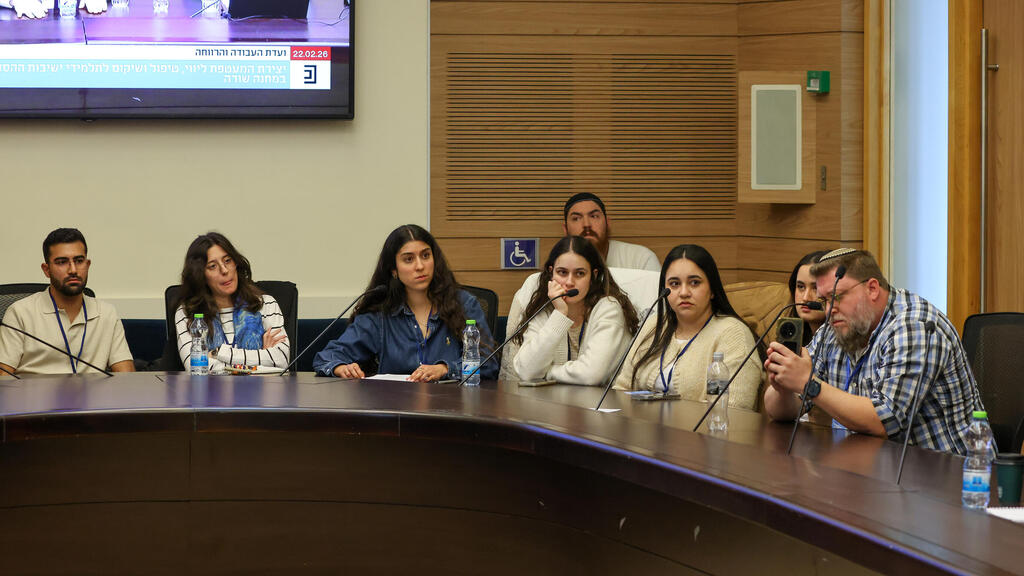
From the discussions of the Knesset Labor and Welfare Committee
(Photo: Noam Moskowitz, Knesset spokesperson)
Noam Ron, who served in reserve duty at Shura, testified about his service at the camp. “I was at Shura for 580 days on behalf of the communications unit. Most of us were reservists, and there were also regular soldiers, all aged 18 to 23. Seven days a week we entered the treatment rooms to handle computers for hours, no matter what was happening inside the room when we were at zero distance. We saw everything, we smelled everything," he described.
"In the first or second week of the war there was one resilience meeting for the entire headquarters together — dozens of people. I did not see a mental health officer until July 2025. Since then I contacted the unit’s resilience personnel every day until they were finally convinced and gave us one two-day resilience workshop — and everything remained open. It accompanies us every day, and we are asking for a response and support framework that will allow us to begin our lives properly,” he said.
Capt. (res.) Shmuel Malul, an officer in the Northern Casualty Identification Unit, said those who served at Shura are not the only soldiers who need assistance. "It is important to remember and point out that it is not just about those serving in the Shura Base, because there are entitlements and benefits that have already been approved for those serving in Shura and not in other places, and it starts with the little things," he explained. "The Northern Division handled hundreds of soldiers, starting with the absorption process, transportation and identification, and separation from families. We are 420 reserve soldiers in the unit and I did over 400 days of reserve in a row, and we also had the cover teams who were not in the first circle, but were there, saw, smelled and experienced everything.".
‘Not the responsibility of the army’
Lt. Col. Uriel Zamir, head of the regular service branch in the Meitav unit, explained that during unpaid service periods, when hesder soldiers are studying at yeshiva, they are not under the army’s responsibility and receive treatment through their health maintenance organizations. He noted that 209 hesder soldiers were deployed to Shura Base at the start of the war, of whom about 101 were directly involved in handling the deceased. According to Zamir, these soldiers are currently being treated by their HMOs, with guidance from the IDF and the Defense Ministry.
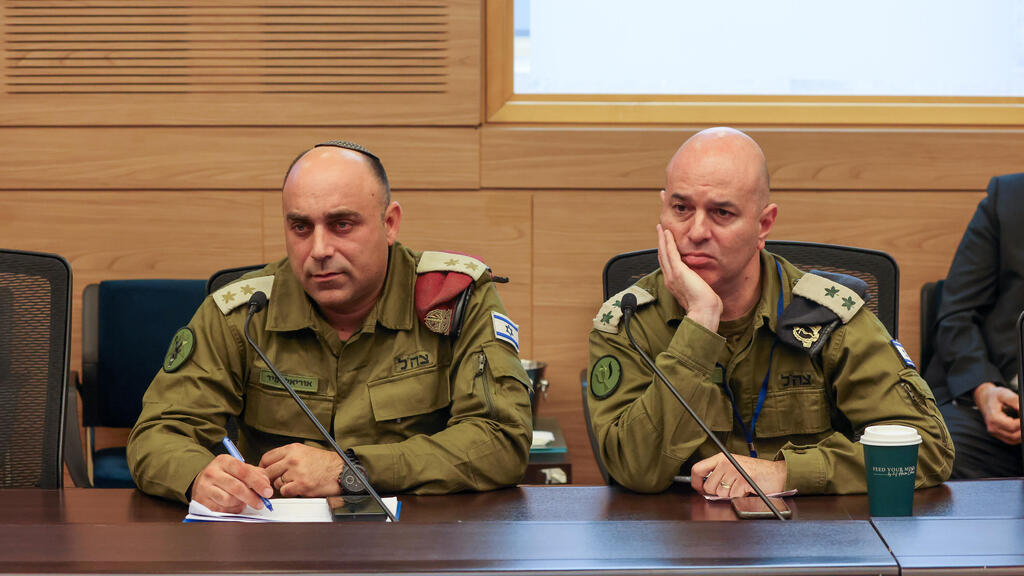
Lt. Col. Uriel Zamir, head of the regular service branch in the Meitav unit, and Lt. Col. Uzi Bechor, commander of the Combat Reaction Unit
(Photo: Noam Moskowitz, Knesset spokesperson)
Zamir added that in September 2024 the IDF issued an open call to anyone who had taken part in activity at Shura to attend a resilience workshop. “A total of 122 soldiers registered, and 98 actually attended — 47% of all the hesder soldiers who served there. Recently we have been working on responses for reservists at Shura, and any response given to them will also be given to the hesder soldiers.”
Lt. Col. Uzi Bechor, commander of the Combat Reaction Unit in the Medical Corps, also addressed the issue. “I agree this is a unique population that carried out a complex role in the war and was exposed in part to traumatic events, and it is our duty to care for them," he said. "As long as a soldier is in service, treatment is provided by a mental health officer. Once a person is discharged, there are two options: the first is within the ‘Amit Program,’ intended for individuals without a clinical diagnosis, which provides holistic responses as well as psychological treatment. The second is for someone with significant symptoms and a diagnosis, who can apply to the Rehabilitation Department for recognition and treatment. As noted, a soldier in unpaid service is not on active duty and treatment is provided through the HMOs. Now we must examine whether this response is sufficient and whether we, as the IDF, need to do more.”
In summing up the discussion, committee chair Michal Waldiger, a Knesset lawmaker from the Religious Zionism party, demanded that hesder soldiers be included in eligibility for the Amit Program as a first step, and that the 45-day service criterion for additional resilience programs be reconsidered.
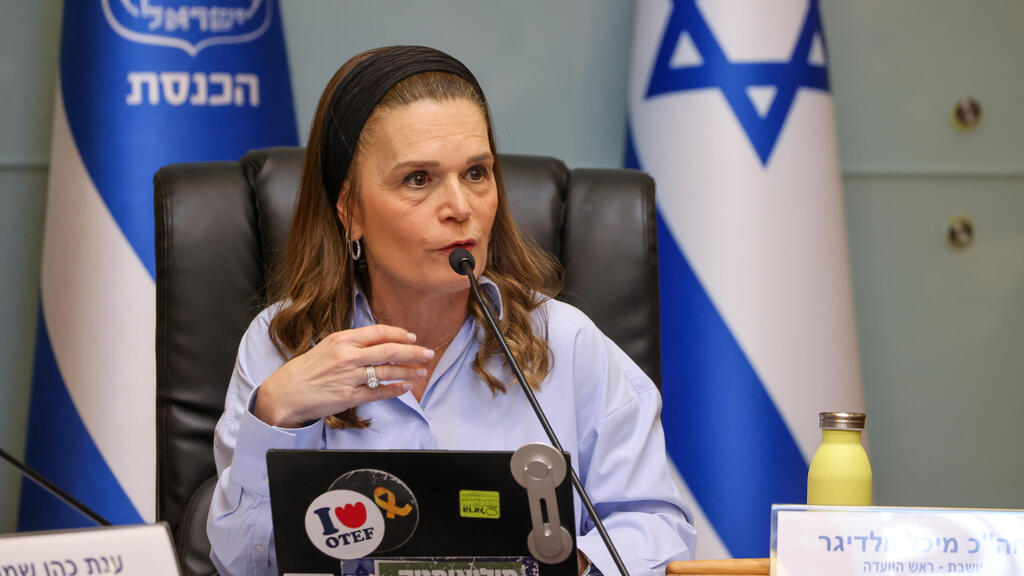
Knesset committee chair Michal Waldiger, a Knesset lawmaker from the Religious Zionism party
(Photo: Noam Moskowitz, Knesset spokesperson)
“We heard here from those who were there," she said. "To distance them is to ignore a significant and acute problem, and if we do so now it will confront us even more forcefully later. Sending such people to seek solutions through the HMOs is wrong — this is the army’s responsibility. Turn to the heads of the yeshivas and find a way to identify everyone who needs mental health treatment.”
Waldiger also called for accelerating the implementation of a dedicated program for the casualty identification units and demanded that the IDF and the Defense Ministry provide the committee with regular updates on the matter.