


Former minister and UN ambassador Gilad Erdan is expected to announce the formation of a new political party in the coming days, marking his return to politics and a planned run in the election for the 26th Knesset.
The announcement has been delayed for about two weeks, but Erdan’s office has approached several venues to arrange a location for the launch, indicating that preparations are in their final stages.
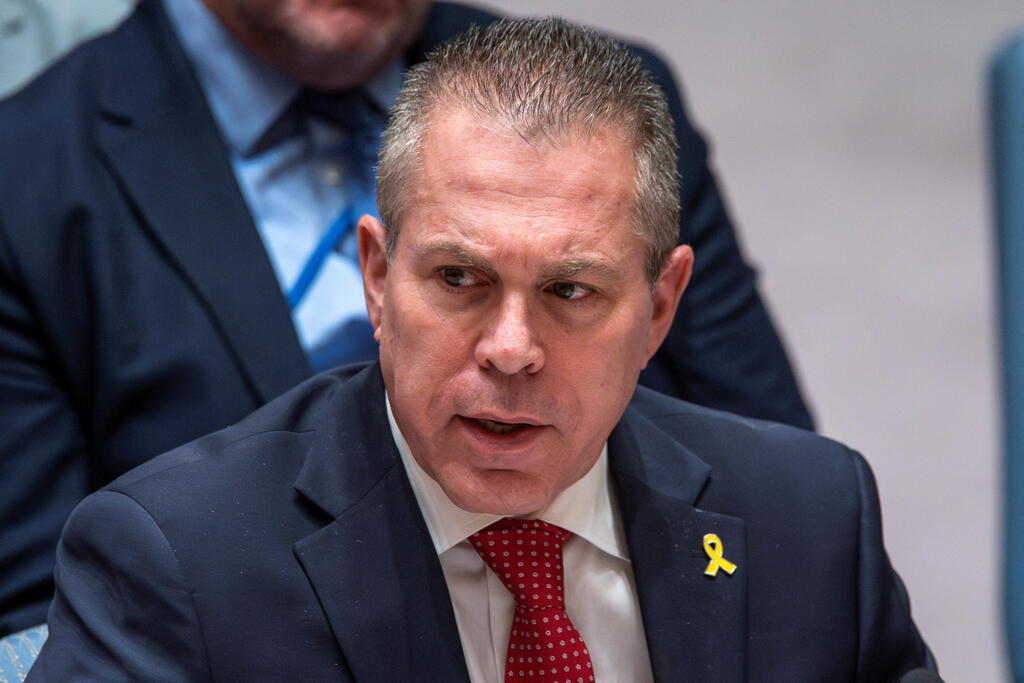
Erdan has spent recent weeks negotiating with a series of political and public figures. The most advanced talks are reportedly with former Knesset Foreign Affairs and Defense Committee chairman Yuli Edelstein, who recently left Likud after more than two decades in the party. Previous reports said Erdan and Edelstein were making significant progress toward establishing a liberal right-wing list together.
Erdan is also in talks with former Beit Shemesh mayor Aliza Bloch and reserve Col. Hezi Nechama. Serious discussions were held with Olympic medalist and judo coach Oren Smadga as well, although the party’s final slate has not yet been settled.
Edelstein is simultaneously holding talks with Blue and White Chairman Benny Gantz and his representatives as part of former minister Ayelet Shaked’s efforts to unite several smaller, predominantly right-leaning parties in what political figures have dubbed the “third bloc.”
Sources involved in the talks, however, say Edelstein currently appears more likely to run with Erdan.
Like other parties seeking to occupy the space between Netanyahu’s coalition and the main opposition parties, Erdan is expected to campaign on a promise to force the establishment of a broad unity government.
His emerging message is that the party will refuse to provide either political camp with the seats needed to form a narrow coalition.
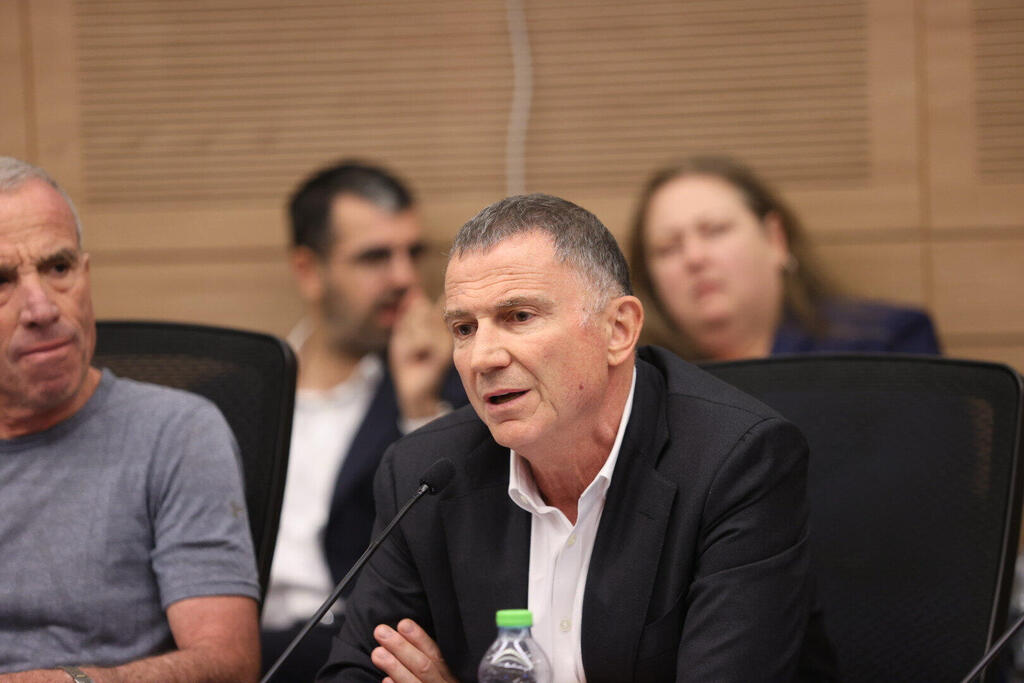
Yuli Edelstein
(Photo: Alex Kolomoisky)
Erdan made that position explicit Sunday after Netanyahu reportedly reversed course during a closed-door discussion on legislation shielding ultra-Orthodox draft evaders from arrest.
“No more buying promises about ‘enlistment,’ and no more buying promises about ‘unity,’” Erdan wrote on X. “We will not sit in anyone’s narrow government.”
The statement revealed the central electoral message behind Erdan’s prospective party: an appeal to former coalition voters who remain on the political right but oppose the government’s reliance on ultra-Orthodox parties and want a broad unity coalition.
Erdan has previously said that a substantial section of the public is dissatisfied with being forced to choose between a right-wing government dependent on ultra-Orthodox parties and an opposition government that could depend on Arab parties. He has described his proposed framework as a “unified right-wing party” focused on equal military service, governance and national reconciliation.
The ‘Netanyahu proxy’ challenge
Erdan will nevertheless have to confront accusations that his party is effectively a proxy for Netanyahu.
He is a former longtime Likud politician, while several figures he hopes to recruit are closely associated with the political right and the national camp.
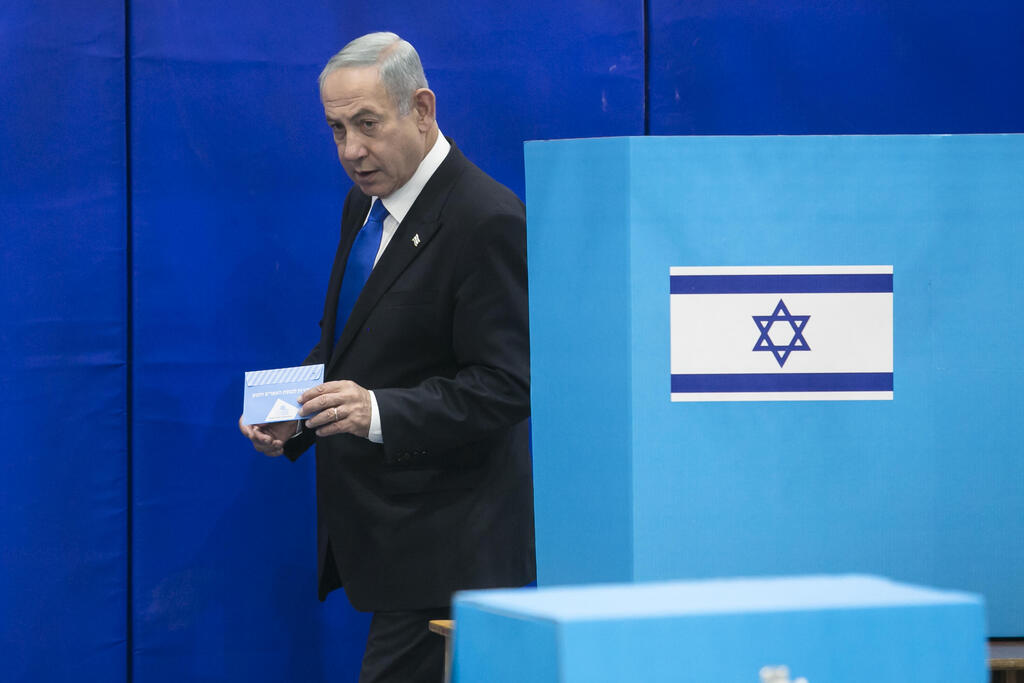
Netanyahu during the 2022 election
(Photo: Amir Levy / Getty Images)
His rivals are therefore likely to argue that even if Erdan campaigns on a unity-government pledge, a party under his leadership could ultimately provide Netanyahu with the final seats needed to assemble a 61-seat coalition.
Erdan’s insistence that he will not join any narrow government is intended to answer that concern, but the issue is likely to remain central to his campaign.
A crowded ‘third bloc’
It is also unclear how much electoral space remains for another small center-right party.
Gantz continues to insist that he will run in the coming election, while former ministers Yoaz Hendel and Chili Tropper have already announced a joint campaign under the banner of the Zionist Home-The Reservists.
Hendel and Tropper have also called for a broad Zionist government, placing them in direct competition with Erdan for moderate right-wing and centrist voters.
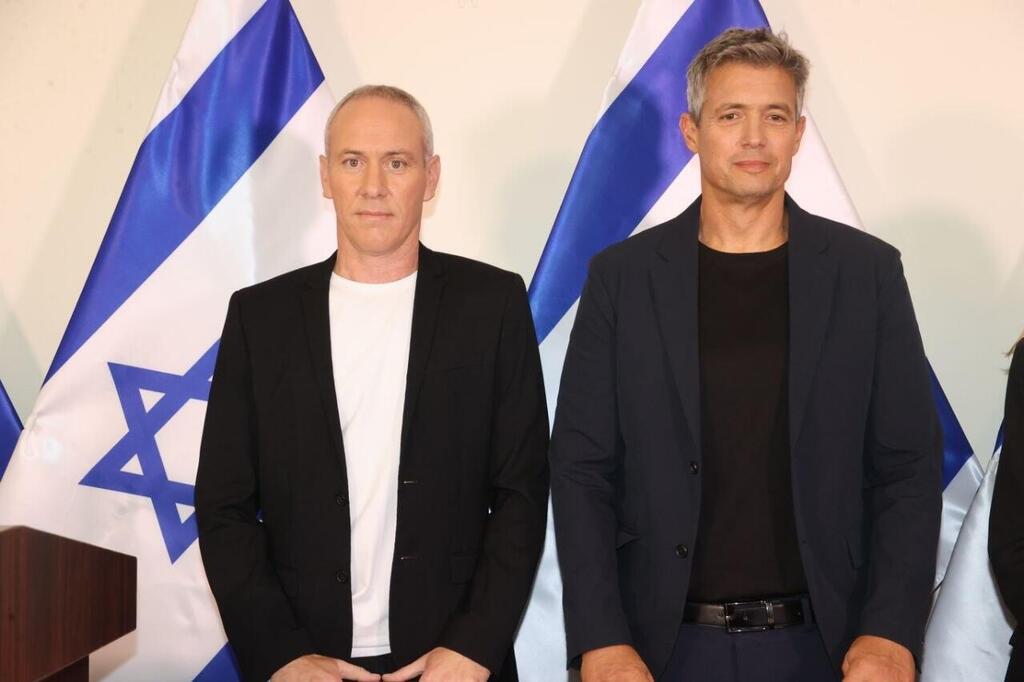
Former ministers Chili Tropper and Yoaz Hendel
(Photo: Moti Kimchi)
Some polls have shown the Hendel-Tropper alliance narrowly crossing the 3.25% electoral threshold with four seats, while others have placed it below the threshold. A recent poll by public broadcaster Kan projected four seats for the party but still left the opposition without a governing majority.
The presence of several parties competing for a similar electorate creates a substantial risk. Under Israel’s electoral system, a small party that fails to cross the threshold effectively removes its supporters’ votes from the distribution of Knesset seats.
Erdan’s challenge will therefore be not only to distinguish himself from Netanyahu, but also to convince voters that his prospective party can survive an increasingly crowded contest and become the force that determines the composition of the next government.