

More than two days have passed without an exchange of fire between Iran and the United States, following nearly two weeks of reciprocal strikes that reached as far as Jordan.
CBS reported Sunday afternoon that U.S. President Donald Trump suspended American bombing operations on Friday, as Israel braced for a major escalation, because senior Omani officials had flown to Tehran for talks.
Trump on Iran: 'They would love to make a deal, I don't its time yet, but im willing to listen'


The United States is closely monitoring the negotiations between Oman and Iran. Two senior regional officials told CBS that the American strikes were deliberately paused to avoid disrupting the delicate face-to-face diplomacy.
They said progress had been made in talks between Oman and Iran over reopening the Strait of Hormuz and regulating territorial shipping lanes in the area.
“Things are moving in a positive direction, but diplomatic efforts need more time to reach an agreement,” the officials said.
An Iranian senior official told Reuters that Tehran would hold its fire as long as the United States did the same.
U.S. Ambassador to the United Nations Mike Waltz also addressed the pause in hostilities. In an interview with Fox News, he said Trump was “giving the talks a little room.”
The Iranian official who spoke to Reuters, however, tempered expectations, saying there was “more skepticism than pessimism.”
Israel’s assessment has not changed and remains that no permanent agreement will be reached between the United States and Iran.
“During the call, we discussed the friendship and relations between Israel and Bahrain, as well as the importance of the U.S.-led Abraham Accords in strengthening security, stability and prosperity in the Middle East,” Herzog said.
“We also spoke about recent developments in the region and the importance of cooperation and dialogue among regional countries. Bahrain is an important partner in shaping the future of the Middle East. I congratulated the king on his bold leadership and vision and expressed my appreciation for his contribution to deepening peace, stability and cooperation between our countries.”
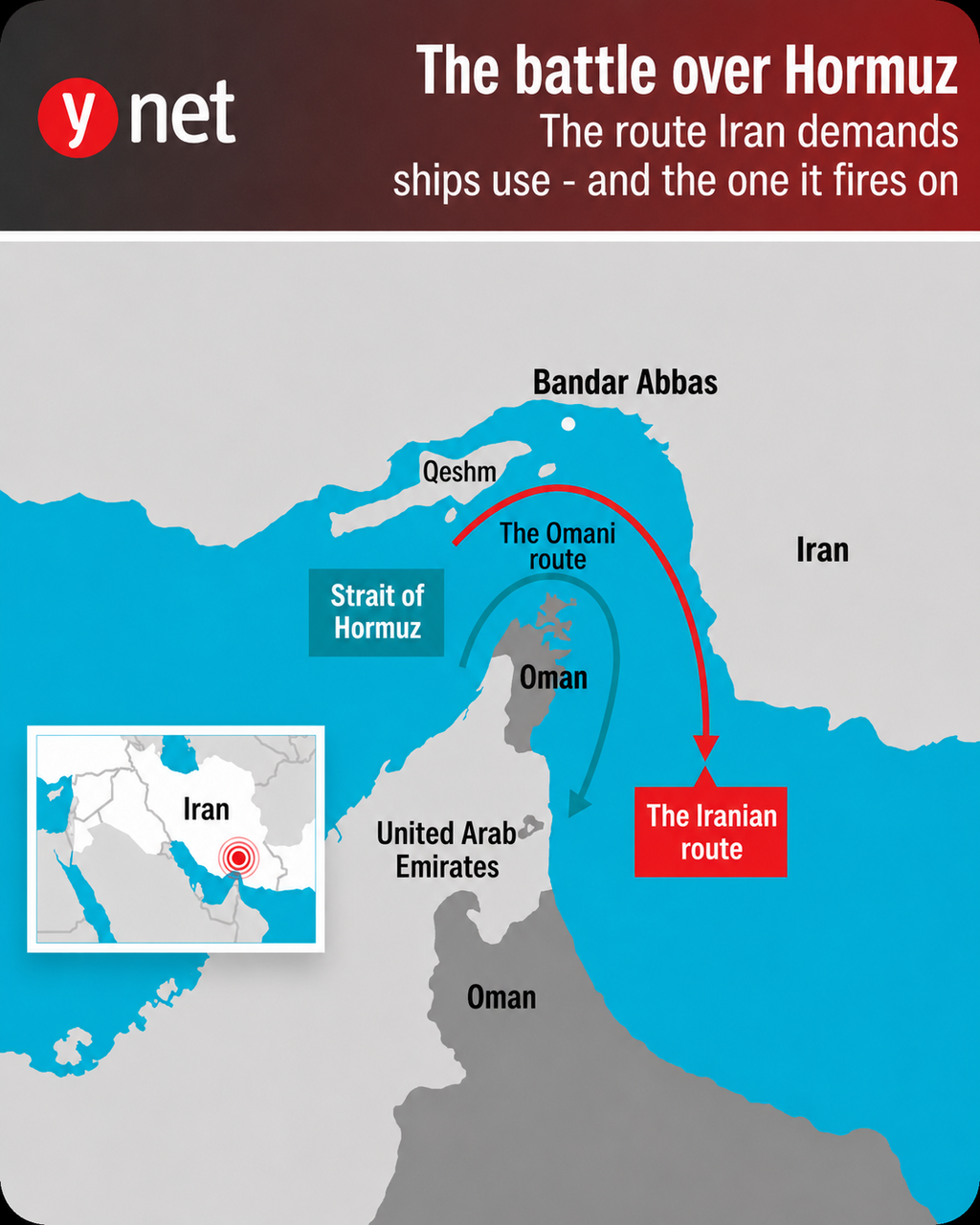
Earlier Sunday, Iranian media reported that an oil tanker that had “deviated from the route” designated by Tehran for passage through the Strait of Hormuz struck a naval mine that exploded, in the first such incident in the area in two days.
Since the ceasefire took effect, Iran has demanded that ships use only the route it designated through the strait. When vessels instead used an alternative route near Oman’s coast, Iran attacked some of them, triggering an escalation with the United States.
Trump recently warned that if those attacks continued, “for every ship attacked in Hormuz, we will destroy a bridge or power station in Iran, including in Tehran.”
Iran, however, claimed the tanker was damaged by a naval mine rather than a direct Iranian attack, leaving it unclear how Trump would respond. Tehran had previously warned that ships deviating from the prescribed route would “bear the consequences.”
The latest U.S. strikes on Iran took place overnight between Thursday and Friday, marking the 13th consecutive night of American attacks.
That night, Trump warned that Iranian funds would be used to pay for any damage caused to ships.
“Until further notice, from this point forward, any damage caused to ships, cargo or anything related to them will be paid for using Iranian money held and controlled by the United States,” he wrote.
“These damages may be very substantial, but nevertheless, it is the fair and just thing to do.”
Earlier Sunday, The New York Times cited a Pentagon official as saying the Iran operation was now “on hold.”
Even before Trump’s decision, CBS reported that senior U.S. officials had warned that the United States could not sustain the current rate of interceptor and precision-munition use for long.
The principal concern involves Patriot and THAAD interceptors, which have been used extensively against ballistic missiles, cruise missiles and drones.