

Coordination of arrival at a checkpoint, instructions on how to load people into a vehicle, and a clear demand for payment — this is how a conversation between a Border Police officer and a broker smuggling undocumented Palestinians sounded, as captured in wiretaps conducted by the Police Internal Investigations Department. The recordings reveal how security checkpoints became open gates, not because of operational failures, but due to security personnel exploiting their authority for illegal profit.
Over the past month and a half, a series of serious cases involving security personnel from various bodies has been exposed: Border Police officers, a police officer who served as a patrolman at the Mateh Yehuda station, a former official in the Civil Administration, and civilian security guards in the settlement of Givat Ze’ev. In all cases, suspects allegedly assisted the infiltration of undocumented Palestinians into Israel in exchange for money, favors and sometimes goods. In the background is the investigation of a combined terror attack in the north, in which Aviv Maor, 18, and Samson Mordechai, 68, were killed. Investigators found that the terrorist, Ahmad Abu al-Roub, 34, from Qabatiya in northern Samaria, allegedly entered Israel about a week earlier through a breach in the Jerusalem area.
Undocumented Palestinians enter Jerusalem
(Video: Liran Tamari)


Just two days ago, State Comptroller Matanyahu Englman published a scathing report pointing to poor preparedness by the police and the security establishment in dealing with illegal crossings in the Jerusalem area and along the seam line. According to the report, large areas are not fenced at all and, even where fences exist, undocumented Palestinians exploit opportunities, climb them using ladders and ropes, and within minutes find themselves in the heart of Jerusalem. At the same time, various actors within the forces tasked with preventing these crossings enabled the activity to continue.
The most serious case was uncovered after a Border Police commander sensed irregular behavior among conscripted fighters at a checkpoint near the village of Beit Iksa, located between the Ramot neighborhood of Jerusalem and Mevasseret Zion. An initial review raised suspicions of systematic criminal activity, and the matter was referred to the Police Internal Investigations Department (Mahash).
Over several weeks, Mahash investigators carried out hundreds of wiretaps, exposing an organized smuggling network. Investigators, accustomed to complex cases, said they were stunned by what they heard: advance coordination with Palestinian brokers, operational instructions on how to pass undocumented Palestinians without inspection, and the collection of cash payments.
According to the investigation’s findings, the Haredi Border Police company was responsible for staffing the Ras Biddu checkpoint, located between the villages of Biddu and Beit Iksa. Biddu is defined by the security establishment as a Hamas-affiliated village from which attackers have previously emerged. In August, one of the soldiers allegedly established contact with local Palestinians and offered to pass undocumented Palestinians without any security screening in exchange for payment.
In one case, according to the indictment, it was agreed that a vehicle carrying seven undocumented Palestinians would arrive at the checkpoint and pass through without any inspection. In another incident, a different soldier present at the checkpoint refused to cooperate and ordered the vehicle to turn around and leave. In a separate case, soldiers grew suspicious of a colleague’s conduct, searched a vehicle before it reached him, and found 1,500 shekels in cash inside, allegedly intended as payment for the deal.
The investigation also revealed that one of the soldiers maintained an intimate relationship with a Palestinian woman from Beit Iksa. As part of the relationship, she sent him nude photos, which he showed to fellow soldiers, and he would meet her in her car near the checkpoint.
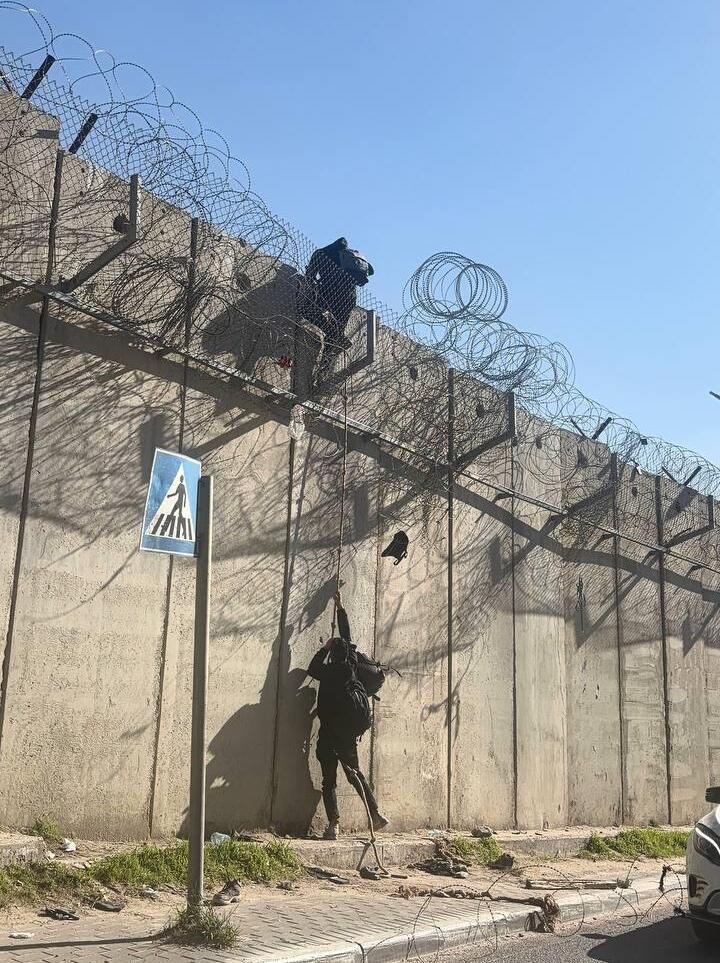
Two Palestinians cross into Israel
(Photo: Liran Tamari)
Another serious incident occurred at the Shuafat checkpoint. There, according to the indictment, two soldiers sought to carry out an act that would “harm the military system,” which they felt was harming them. One approached a Palestinian and offered to allow undocumented Palestinians to pass for 50 shekels per person. Shortly afterward, undocumented Palestinians were smuggled into Jerusalem. Communication with the broker was conducted via Telegram and a dedicated operational phone.
The methods of transferring money varied: sometimes cash was hidden inside an ID card belonging to one of the passengers; sometimes it was placed on the back seat; and in other cases it was handed over directly during fictitious inspections at the checkpoint.
Shortly before the Haredi Border Police company affair, Mahash filed an indictment in the Jerusalem District Court against a police officer who served as a patrolman at the Mateh Yehuda station and others. They are accused of forging entry permits to Israel and selling them to Palestinians. According to the indictment, the officer contacted various individuals and offered entry permits for about 5,000 shekels. Some permits were forged with the help of another person, while others were signed using the names of police intelligence coordinators without their knowledge or consent, using police stamps.
A friend of the officer testified that he was asked to prepare false documents based on details provided to him, and said the two went together to the Beit Shemesh police station, where the officer used a police stamp. According to the testimony, the officer then returned to his vehicle with cash.
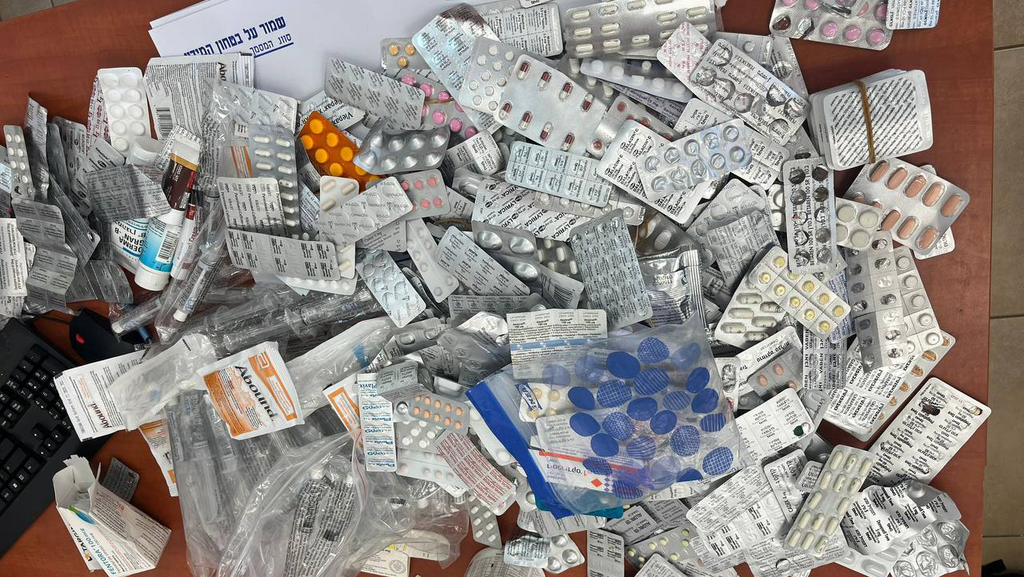
Dangerous drugs found on former Civil Administration official suspected of trafficking them
Mahash emphasized that the officer’s claim that he acted within his duties to obtain intelligence information does not align with the evidence. Investigators say he acted with sophistication, used concealment methods, signed documents in the names of other police officers, and created a false impression of legitimate police activity. During court proceedings, it emerged that he planned to issue about 300 additional entry permits. He is also accused of transporting another defendant through a crossing into Israel using a police vehicle, without a permit, in exchange for money. That individual remained in Israel illegally for about two weeks.
His attorney, Oshri Ben Yishai, said that “unequivocal evidence was presented to the court showing that individuals involved in the affair provided my client with information that led to the arrest of undocumented Palestinians, and that his version of events is not baseless.”
Another case was uncovered in a deep investigation by the fraud unit of the Judea and Samaria District, in cooperation with the Tax Authority’s Yahalom unit and the enforcement division of the Health Ministry. According to investigators, a Jerusalem resident in his 40s, who previously held managerial roles in the health system and the Civil Administration, forged more than 100 entry permits for Palestinians.
The suspect allegedly presented undocumented Palestinians as patients requiring medical treatment, enabling their entry into Israel. According to suspicion, after leaving his role in the Civil Administration he continued criminal activity, this time in the pharmaceutical field, including trafficking in dangerous drugs, forging prescriptions, and forging doctors’ signatures. A raid on his home uncovered a large quantity of medications.
In another investigation, led by the central unit of the Jerusalem District, it was revealed that civilian security guards employed by an external security company in Givat Ze’ev allegedly assisted Palestinians in entering Israel by bypassing the Ofer checkpoint. The undocumented Palestinians were transported along Route 443, transferred to Israeli vehicles, and entered through the Ayalot Basin gate in Givat Ze’ev, a gate designated for residents only and without inspection.
Investigators estimate the guards received tens of thousands of shekels in return. Seven suspects were arrested — five guards and two residents of the territories. Indictments are expected to be filed in the coming weeks.