

One month after the start of the campaign against Iran, IDF forces operating in southern Lebanon are continuing to expand a security zone, with officials indicating the military is likely to remain in the area for months or longer.
A security official said the Lebanese government is unable to disarm Hezbollah, and that the IDF’s presence deep inside Lebanese territory is expected to continue “for at least several months and possibly years.” Even in the event of a ceasefire, the military is not expected to withdraw, defense officials said.
Alpine troops enter Lebanon
(Video: IDF)


Forces on the ground are operating under heavy fire, including artillery, rockets and anti-tank missiles. Soldiers often receive only seconds of warning for incoming fire, with little time to reach shelter. Those who can take cover in armored vehicles, while others seek protection behind rocks or buildings.
Since the start of the ground maneuver, Hezbollah has been pushed back but continues to launch sustained attacks, firing hundreds of rockets daily at both IDF forces and northern communities, along with drones and anti-tank missiles.
Five soldiers have been killed during the fighting in southern Lebanon and more than 30 have been wounded.
Security zone expands as IDF pushes deeper
The objective of the operation is to establish a buffer zone deeper inside southern Lebanon, aimed at reducing fire toward northern Israel. While Hezbollah has largely avoided close combat, it continues to attack from a distance.
The IDF is also carrying out operations to gain fire control over the area, including destroying infrastructure and clearing weapons. Soldiers described the advance as methodical and at times slow, with limited direct resistance but ongoing threats from indirect fire.
“We flatten what we can,” one soldier said. “This is a combat zone that is being reshaped.”
IDF strikes in Beirut
Military officials have called on political leaders to secure an agreement that would ensure Hezbollah is disarmed. However, questions remain about the army’s ability to sustain a prolonged presence, particularly amid manpower challenges.
The IDF chief of staff recently warned that the military could face significant strain without changes to conscription and reserve policies, including the extension of mandatory service and broader enlistment.
Government signals broader goals in Lebanon
Israel has not formally outlined its full objectives in Lebanon but has emphasized expanding the security zone to reduce threats, including anti-tank fire and potential cross-border attacks.
Prime Minister Benjamin Netanyahu said the goal is to fundamentally change the situation in Lebanon, linking it to the broader conflict with Iran.
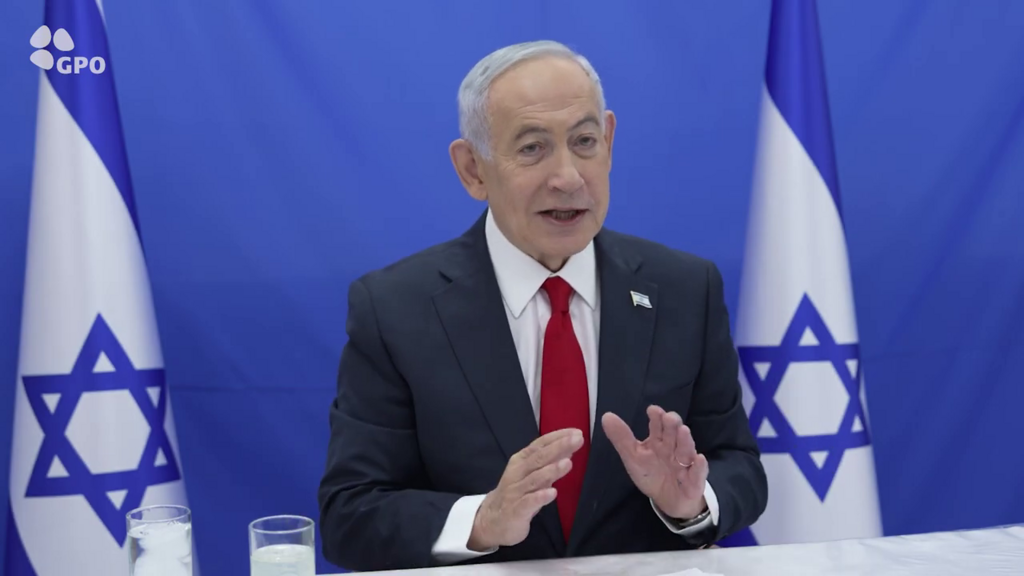
Prime Minister Benjamin Netanyahu speaking to local leaders in northern Israel
(Photo: GPO)
“The issue of disarming Hezbollah is before us,” he said. “We are determined to do everything to change the situation in Lebanon at its core.”
Officials have also described a more ambitious goal of clearing southern Lebanon of weapons up to the Litani River and maintaining control over key areas.
According to Israeli officials, Hezbollah remains weakened but retains significant capabilities, including weapons supplied by Iran in recent months.
US role and regional dynamics
Israel is working to ensure that any potential ceasefire with Iran is not tied to halting operations in Lebanon, while Iran has sought to link the two fronts.
Western diplomats said the United States is currently focused on Iran and has given Israel relative freedom of action in Lebanon, with the condition that strikes avoid civilian infrastructure.
Some officials have raised the possibility that U.S. pressure could eventually limit Israeli operations, though others suggest regional actors may support continued action against Hezbollah.
More than 600,000 residents have been displaced from southern Lebanon, according to Israeli estimates, a factor officials say could influence future negotiations as pressure on Hezbollah increases.