

The IDF said 433 ultra-Orthodox men enlisted in dedicated Haredi military tracks in the April-May draft cycle, a 24% increase from the same period last year.
The latest cycle included a record 272 combat soldiers, the military said. The Hasmonean Brigade, the IDF’s new ultra-Orthodox brigade, also recorded a high of 96 combat trainees.
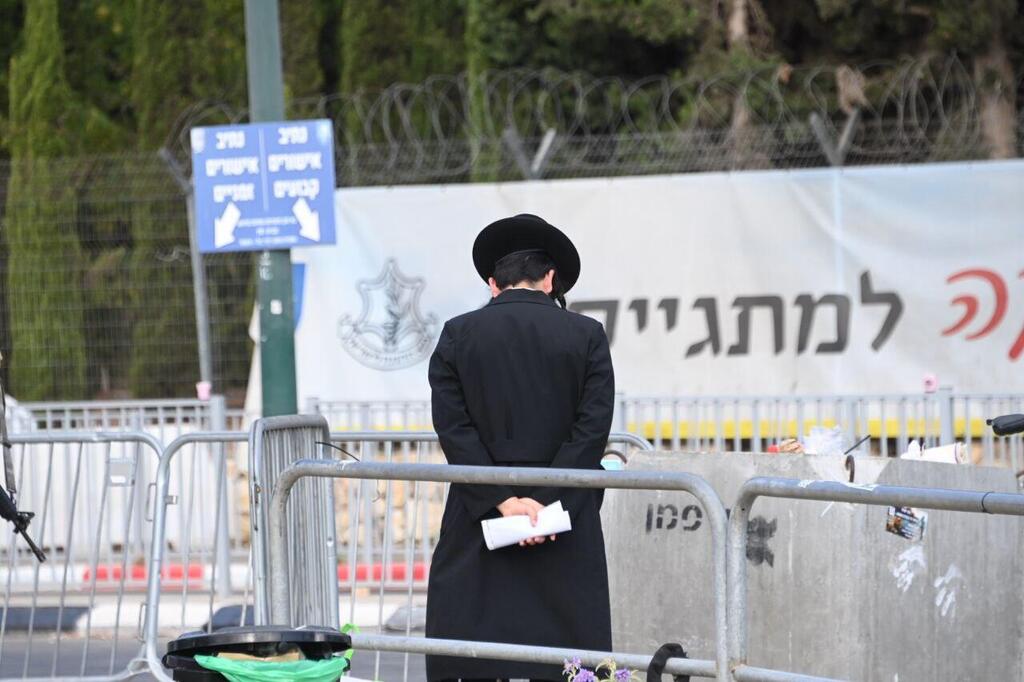
An ultra-Orthodox man outside an IDF recruitment office
(Photo: Yair Sagi)
The figures come as Israel faces a deep political and social battle over ultra-Orthodox enlistment. Military service is mandatory for most Jewish Israelis, but Haredi men have long received exemptions for full-time religious study — an arrangement under growing pressure during the war, as the IDF says it needs more troops.
Despite the increase, IDF officials said the army can absorb thousands more ultra-Orthodox recruits in dedicated tracks. The military said it is prepared to staff three additional companies in the Hasmonean Brigade.
“If thousands come, we are ready with command teams and dedicated infrastructure for all of them,” IDF officials said.
In recent months, the military has appointed a chief of staff adviser on Haredi affairs and worked to open additional tracks in combat, facility security and combat-support roles. The IDF said commanders who do not come from a Haredi background but will command soldiers in these programs underwent special training to understand ultra-Orthodox culture and the needs of Haredi soldiers.
Haredi tracks have also opened at the military court in Ofer Prison, where ultra-Orthodox soldiers serve in clerical and legal assistant roles. The IDF said the Negev unit designated for Haredi soldiers has room for the immediate placement of 30 more troops.
The army is also opening programs such as “kollel on base,” aimed at recruiting Haredi men for facility security. Under the program, soldiers would have time for Torah study between guard shifts.
“In this role, the service is week on, week off, and the day will be divided between study time and guard duty,” IDF officials said. “This is a role that is always hard to recruit for, and it will solve part of the manpower shortage.”
Officials said every new track is based on operational need. “We don’t fill quotas for no reason,” the officials said. “Every track that opens goes through all the approvals to ensure people are being recruited to places where there is a need.”
Brig. Gen. Shay Tayeb, head of the IDF’s planning and manpower administration division, praised the new recruits. “I greatly appreciate the new enlistees,” Tayeb said. “Their service in the IDF is a central part of building the force and protecting the security of the State of Israel, and many of them are doing so as pioneers in their families and communities.”
He said the increase in enlistment reflects the effort to broaden recruitment and the military’s growing ability to absorb ultra-Orthodox men while fully preserving their way of life. “However, the operational need is much broader, and so is the absorption capacity,” Tayeb said.