

In October 2024, an employee at a major New York investment firm received what appeared to be a message from the company's CEO. "We need to bring you into a deal we're working on," it read. "The companies involved require you to sign a nondisclosure agreement." The employee was instructed to contact a lawyer at a prominent law firm supposedly handling the confidential transaction. But the CEO and lawyer were impostors, and the deal did not exist. The employee had already authorized a $2.85 million transfer when the company's operations department stopped the payment at the last moment.
Other companies were not so fortunate. According to an indictment unsealed Thursday in federal court in Manhattan, an international network allegedly stole more than $129 million from businesses worldwide using advanced artificial intelligence to impersonate executives and lawyers. Three men have been charged, including two Israelis: Sharon Hazan, 54, and Guy Sheetrit, 42, who also resides in the United Arab Emirates. The third defendant is Jacob Soall, 41, who lives in Spain and the United Kingdom.
Gallery
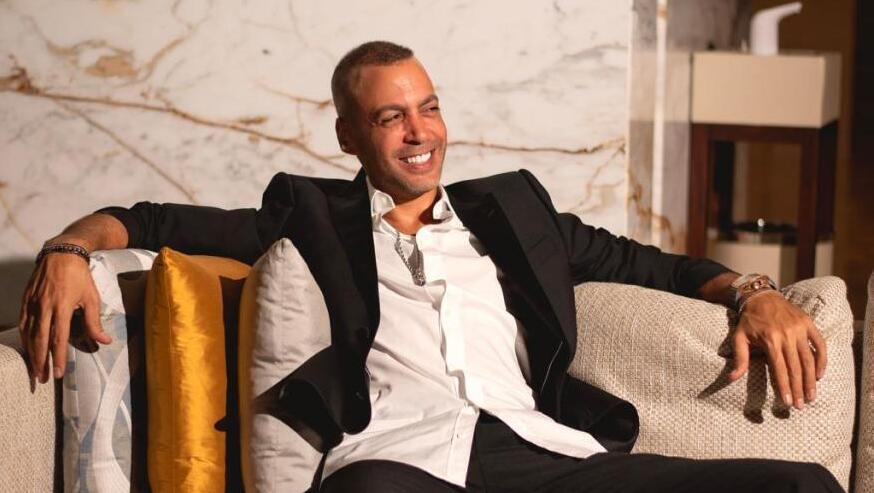
Guy Sheetrit, one of two Israelis charged in the $129 million AI fraud case
(Photo: LinkedIn)
Prosecutors say the defendants and their associates targeted employees authorized to transfer large sums of company money, impersonating their chief executives using AI-generated voices and, in some cases, faces. They sometimes sent messages through electronic signature platforms such as DocuSign before arranging phone or video calls. Employees were then directed to consult lawyers supposedly working for major international law firms. Those lawyers were also impostors, and the employees were instructed to transfer millions of dollars into accounts controlled by the alleged fraud network.
‘I'm number one in the world at money laundering’
One of the defendants, Sharon Hazan, allegedly operated under several aliases, including "Superman Cash," "Impossible Mission," "Fat Boy" and simply "Ron." According to prosecutors, Hazan was primarily involved in laundering proceeds from the fraud, and he was hardly modest when discussing his purported expertise.
The indictment alleges that Hazan boasted of laundering money since 1994 and claimed to have laundered more than $400 million in just the previous three years. He also reportedly described himself as "number one all over the world" among professional money launderers.
This is not Hazan's first encounter with the U.S. justice system. In 2008, he was convicted in federal court in New York of conspiracy to commit bank fraud.
British corporate records also identify Hazan as a former director of Get Media Services, an information technology consulting company registered in 2020. His listed address at the time was in Tel Aviv. The company was dissolved in 2021.
A new Mercedes every year and a $200,000 computer
The second Israeli defendant, Guy Sheetrit, built a career in digital marketing as the founder and CEO of Over The Top SEO. On the company's website, he describes himself as a successful entrepreneur with international business operations, including interests in cybersecurity and artificial intelligence. In March this year, the company announced the launch of a division intended to help businesses improve their visibility in responses generated by AI platforms such as ChatGPT and Gemini.
Sheetrit has previously spoken extensively to the media about his business success and the extravagant lifestyle it afforded him. In a 2017 interview with luxury lifestyle website JustLuxe, he said he drove a Mercedes-Benz S65 AMG worth approximately $296,000.
"Mercedes is and always has been my best friend. So I get a new one every year," he said.
He also described owning a vintage gold Rolex reserved for special occasions, an internet domain-name collection he valued at more than $25 million and a preference for first-class flights or private jets when travel was urgent.

Guy Sheetrit, founder and CEO of Over The Top SEO, who previously spoke publicly about his luxury lifestyle
(Photo: LinkedIn)
Among the luxuries he listed were a custom-built $200,000 computer equipped with six monitors, a concealed swimming pool designed to look like an ordinary floor, a gym, wet and dry saunas and a home theater with an enormous screen.
"Never be afraid of spending money," he advised aspiring entrepreneurs in the interview, describing spending as essential to making money.
In another interview published in 2019, Sheetrit recalled receiving his first computer from his father at age nine and realizing that he did not need school to learn about the world. Asked about his guiding business principles, he emphasized the importance of understanding the rules governing any system and using them to one's advantage rather than trying to circumvent them.
A handwritten script designed to prevent suspicion
The third defendant, Jacob Soall, also known as "Seba Clarke" and "Rocky Balboa," allegedly specialized in impersonating British lawyers. Investigators discovered a handwritten script titled "Lawyer Call," containing instructions for persuading employees to transfer money without consulting anyone else.
The script included an explanation that the company targeted for acquisition was publicly traded, meaning disclosure of the supposed transaction could trigger suspicions of insider trading. If an employee asked why colleagues were unaware of the deal, the impostor was instructed to explain that they had not yet signed nondisclosure agreements.

(Illustration: AI-generated image)
The alleged victims included a Missouri hospital system that lost approximately $4.83 million, a Rhode Island bank that lost $2.68 million and a California hospital system that lost nearly $3 million. A British financial technology company lost $11.58 million, a Massachusetts mutual fund company lost $4.64 million and even a Florida pet food manufacturer was deceived into transferring $5.24 million.
Prosecutors say the stolen money was transferred to bank accounts in the United States, Spain, Portugal, Greece, the United Arab Emirates, Singapore, Austria, Slovakia and China. The funds were then converted into cryptocurrencies in an alleged effort to conceal their origins and distribute the proceeds among members of the network.
Three arrests and pending extradition requests
All three defendants were arrested in recent months. Soall was detained in Spain in June, Hazan was arrested in Spain in August and Sheetrit was arrested in the United Kingdom in September. U.S. authorities have submitted extradition requests for all three, which remain pending.
Each defendant faces seven federal charges, including conspiracy to commit wire fraud, wire fraud, aggravated identity theft and money laundering offenses. Several of the charges carry maximum prison sentences of 20 years. The charges remain allegations, and all three defendants are presumed innocent unless proven guilty.
The FBI has highlighted the case as an example of how emerging technology can be exploited to carry out large-scale financial fraud. The alleged perpetrators did not need to hack into the targeted companies' bank accounts. Instead, employees transferred the money themselves, believing they were following legitimate instructions from their own chief executives.
Investigators are now seeking to identify additional victims and have urged businesses that suspect they were targeted to contact the FBI. The case illustrates how convincingly fabricated voices, faces and corporate identities can turn ordinary financial authorization procedures into a vulnerability worth millions of dollars.