

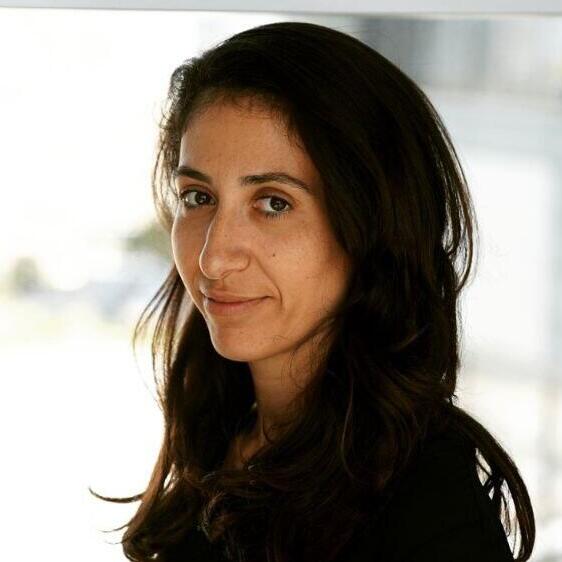
Maj. Ella Waweya, deputy head of the Arabic media branch in the Israel Defense Forces Spokesperson’s Unit and known as “Captain Ella,” will replace Lieutenant Colonel Avichay Adraee, who has served as the IDF’s Arabic-language spokesman for the past 20 years.
Waweya had effectively been groomed for years to succeed Adraee, who has held the post since 2005 and was widely described as the most recognizable Israeli figure in the Arab world. She joined the IDF’s Arabic-language spokesperson unit in 2013 and said in an interview last July at the Security and Service Conference hosted by ynet and the Institute for National Security Studies (INSS) that “the media arena is a battlefield. It is a war that is no less difficult than other arenas.”
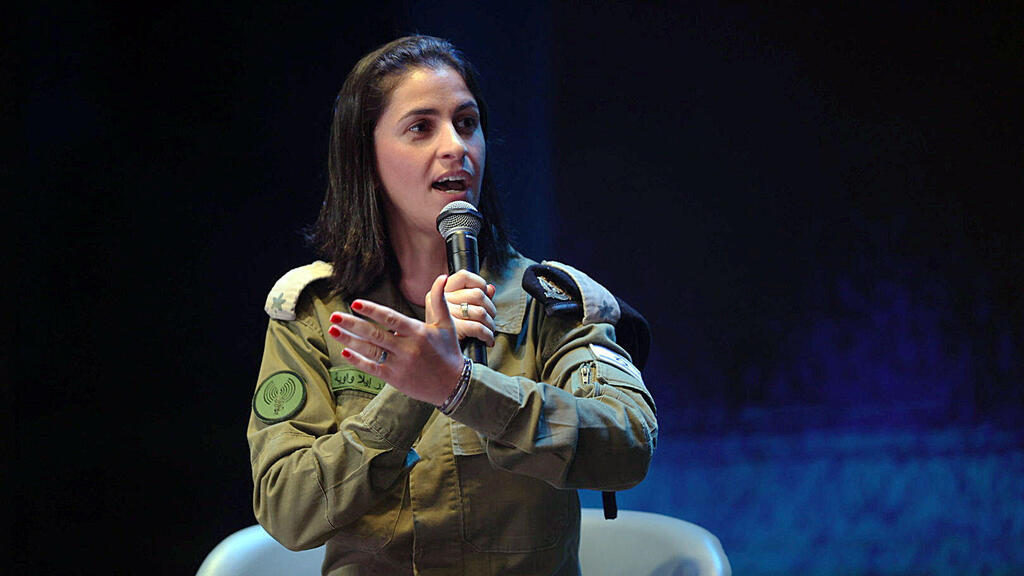
Waweya, who was born into a Muslim family in the Arab Israeli city of Qalansuwa, added at the time: “When we look today on October 7, when Hamas terrorists entered the Gaza border communities and Israel, they came in with cameras, with the aim of shaping consciousness and building a cycle of hatred. We ultimately come to show our truth. We expose what the other side is doing and present our truth, and we do it with courage. This is very important and, as I said, it is no less important and no less a battle over consciousness and over our truth.”
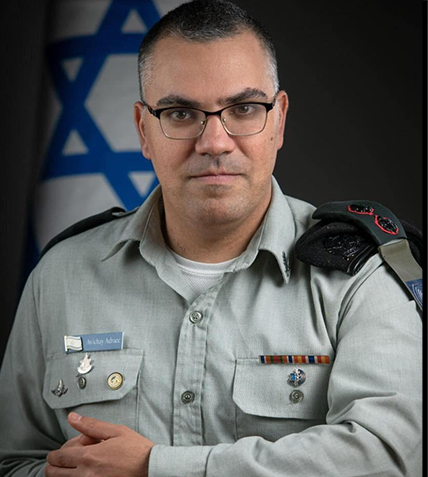
Lieutenant Colonel Avichay Adraee
(Photo: IDF)
According to Waweya, “we are present in every home in the Middle East. Our tools are both the classic, traditional media in the Arab world and social media, which has become an inseparable part of our lives. Today we see that every citizen, every resident, every person in the street who has a camera and a phone has effectively become a reporter or journalist, and we need to come and present something different. That ‘something different’ is not manipulation but something that shows the larger, broader picture.”
Asked about her roughly half a million followers on TikTok, she said: “I am also on Facebook, Twitter and Instagram. Each of these platforms has its own audience. On Twitter you find opinion leaders and journalists. On Facebook, when I look at the data, I see people connected to the Abraham Accords,” referring to the normalization agreements between Israel and several Arab states. “On TikTok, the arena is more West Bank and Gaza,” using the Israeli term for the West Bank, “and on Instagram it is mixed — from the West, from Israel and from Arab society in general, including Lebanese. The target audience is the Arab audience in the Middle East.”